The Fastest Energy Coordination Since 1974
On Monday morning, French President Emmanuel Macron picked up the phone and convened an emergency call of G7 finance ministers. Brent crude had just hit $119.50 a barrel — a level not seen since Russia’s invasion of Ukraine — and the Strait of Hormuz, through which 20% of the world’s oil flows daily, was effectively closed for the tenth consecutive day.
The call was organized within hours of the price spike. It was the fastest emergency energy coordination since the International Energy Agency was founded in 1974, in the aftermath of the Arab oil embargo.
The outcome: G7 nations said they “stand ready to take necessary measures, including to support global supply of energy such as stockpile release.” Translation — they’re not releasing reserves yet, but the gun is loaded.
Three G7 countries, including the United States, have already expressed support for tapping stockpiles. U.S. officials are floating a release of 300 to 400 million barrels — roughly a quarter to a third of the entire IEA strategic reserve system.
The question is no longer whether reserves will be released. It’s how much, how fast, and whether it will be enough.
What Strategic Petroleum Reserves Actually Are
Strategic petroleum reserves are government-owned crude oil stockpiles maintained specifically for supply emergencies. The concept was born from the 1973 Arab oil embargo, when OPEC weaponized oil exports against Western nations supporting Israel. The IEA, founded the following year, requires its 32 member countries to maintain at least 90 days of import protection in emergency reserves.
Who Holds What
The combined IEA strategic reserve system holds approximately 1.2 billion barrels across 32 countries. The largest holders:
- United States: 416 million barrels (58% of 714 million barrel capacity)
- China: ~400 million barrels (not an IEA member, but maintains its own SPR)
- Japan: ~324 million barrels (~200 days of import cover)
- Germany, France, Italy, UK, Canada: Combined hundreds of millions in public and private stocks
The U.S. reserve sits at just 58% capacity — a direct legacy of the Biden administration’s historic 2022 drawdown, when nearly 300 million barrels were sold to combat post-Ukraine price spikes. President Trump pledged to “fill our strategic reserves up again right to the top” in his January 2025 inaugural address, but refilling has proceeded slowly. As of March 2026, the SPR remains roughly 300 million barrels short of full capacity.
This matters. If the U.S. agrees to lead a coordinated release, it will be drawing from a reserve that is already 42% depleted.
Why This Time Is Different
The Biggest Oil Disruption in History
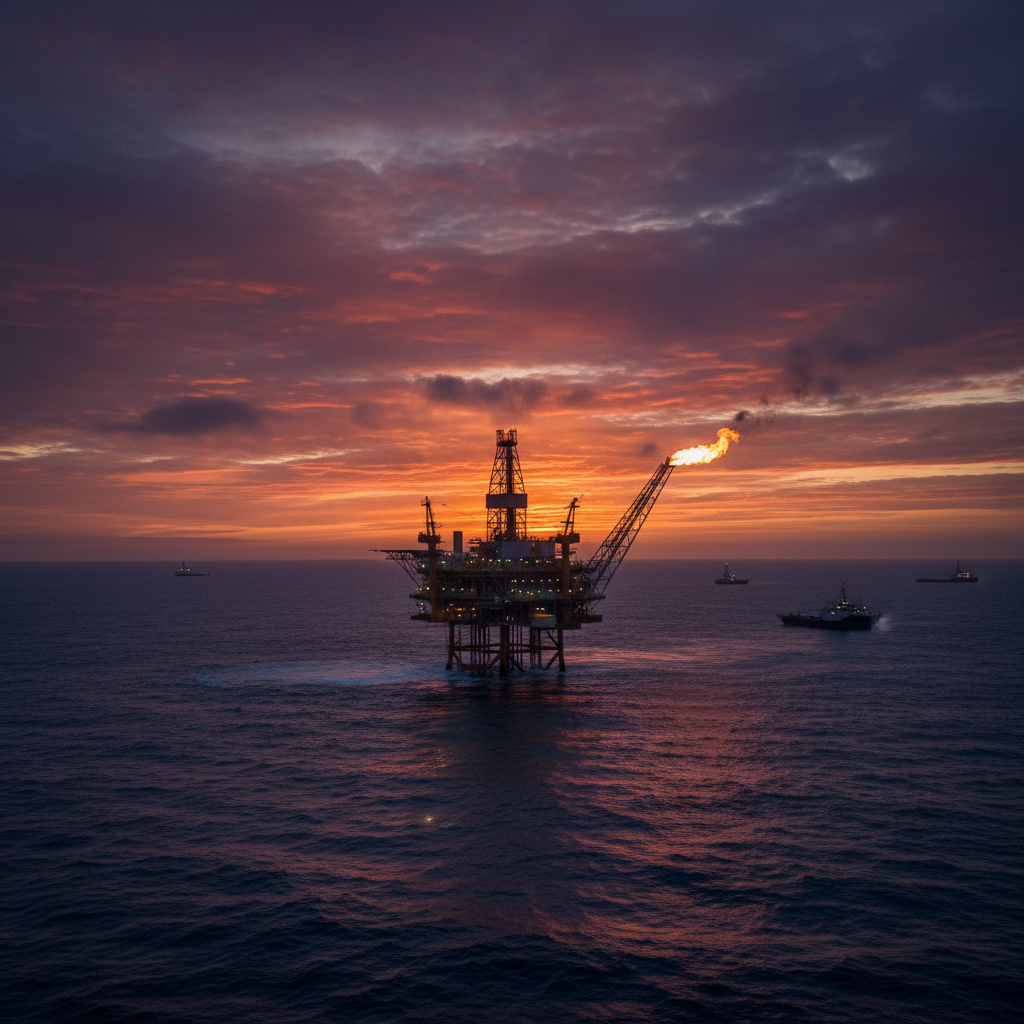
The current crisis dwarfs every previous oil supply shock. According to Rapidan Energy Group, the Strait of Hormuz closure has disrupted approximately 20% of global daily oil consumption — nearly three times the scale of the 1973 Arab embargo (which disrupted ~7%) and more than double the 1956 Suez crisis.
The disruption cascade extends beyond Iran:
- Kuwait declared force majeure and began cutting production — starting at 100,000 barrels/day, expected to triple. Kuwait is OPEC’s fifth-largest producer at 2.6 million barrels/day.
- UAE started reducing output as storage tanks filled.
- Iraq held back production as storage capacity hit limits.
- Saudi Arabia shut its largest refinery after drone attacks.
- Qatar closed the world’s largest liquefied natural gas export plant.
Tanker traffic through the Strait dropped by approximately 70% in the first days, then collapsed to effectively zero. Over 150 ships anchored outside the strait rather than risk transit.
Previous Releases — A Track Record
The G7 has tapped reserves before. The results have been mixed:
2011 — Libya Crisis: The IEA coordinated a release of 60 million barrels (30 million from the U.S. alone) after Libyan production went offline. The effect was modest — prices dropped temporarily but recovered within months as the underlying supply disruption persisted.
2022 — Russia-Ukraine War: President Biden authorized the largest SPR release in history — 180 million barrels over six months, at a rate of 1 million barrels per day, sold at an average price of $96/barrel. The Treasury Department estimated the release lowered gas prices by 13 to 31 cents per gallon. However, it also drained the reserve to levels not seen since the 1980s.
The proposed 2026 release — 300 to 400 million barrels — would be roughly double the 2022 drawdown and six times the 2011 response.
The Price Timeline: From $67 to $120 and Back
The oil market over the past 10 days has been the most volatile since the Gulf War:
| Date | Event | Brent Price |
|---|---|---|
| Feb 27 (pre-war) | Normal trading | ~$67 |
| Feb 28 | US-Israel strikes begin | $75 |
| Mar 1 | Iran retaliates, Hormuz threats | $82 |
| Mar 3 | Hormuz effectively closed | $95 |
| Mar 5 | Kuwait force majeure | $98 |
| Mar 7 | Saudi refinery shut | $105 |
| Mar 8 | Full Gulf disruption | $112 |
| Mar 9 AM | Peak fear, Hormuz zero traffic | $119.50 |
| Mar 9 PM | Trump “very complete” + G7 reserve talk | $88-100 |
The $53 round trip from $67 to $120 and back toward $88 in ten days represents the most extreme crude oil volatility in at least three decades.
What It Means for Your Wallet
Gas Prices
The national average gas price hit $3.48 per gallon on Monday — up nearly 50 cents from a week earlier, according to AAA. The biggest single-day spike since March 2022 saw prices jump 11 cents overnight.
Analysts put the probability at 80% that the national average will hit $4 per gallon within the next month if Hormuz remains disrupted. In California, where prices already carry a state premium, drivers are already paying above $4.50.
The Inflation Multiplier
Oil does not just power cars. It powers the economy.
The International Monetary Fund estimates that every sustained 10% rise in oil prices adds 0.4 percentage points to inflation and reduces global growth by 0.15%. With Brent currently trading near $100 — roughly 50% above pre-war levels — the arithmetic is stark:
- Direct impact: Gasoline and heating fuel prices up 15-25%
- Transport costs: Diesel fuels trucking, shipping, and aviation. Higher diesel means higher prices for everything that moves.
- Food inflation: Oil is a key input in fertilizer production. Rising oil prices flow into food costs within 60-90 days.
- Fed policy: A sustained $100/barrel keeps headline inflation above 3% through 2026, potentially delaying Federal Reserve rate cuts that markets have been pricing in.
Barclays estimates that oil at $100 could lift U.S. headline CPI by 0.5-0.8 percentage points over the next two quarters. Fears of 1970s-style stagflation — simultaneous inflation and economic contraction — are now being discussed seriously for the first time in decades.
The G7’s Dilemma
The math seems simple: release reserves, flood the market, prices drop. But three complications make this harder than it appears.
Problem 1: Reserves Can’t Replace Production
Strategic reserves are a buffer, not a substitute. The Hormuz closure removes approximately 20 million barrels per day from global markets. Even a historically large release of 2-3 million barrels per day would offset only 10-15% of the lost supply. Reserves buy time. They do not solve the underlying disruption.
Problem 2: The Refill Problem
The U.S. SPR is already at 58% capacity. A massive drawdown would push it toward levels where the reserve can no longer fulfill its core mission — protecting against a true existential supply emergency. Every barrel released now is a barrel that isn’t available for whatever crisis comes next.
Trump has so far downplayed the need to tap reserves, preferring to emphasize that the war will end “very soon” and that American domestic production can compensate. But U.S. production, while at record levels near 13.5 million barrels per day, cannot single-handedly replace 20% of global supply.
Problem 3: Political Coordination
France holds the G7 presidency and pushed hard for Monday’s call. Three countries support a release. But the G7 operates on consensus. Monday’s meeting ended with the group saying it was “not there yet” on a coordinated release — strong language for a body that typically papers over disagreements.
The energy ministers will reconvene Tuesday morning for a more technical discussion. The expectation is that a release will be announced within days, not weeks. Markets are already pricing it in — which is partly why Brent pulled back from $119 to around $100 on Monday afternoon.
Key Findings
The disruption is unprecedented. Twenty percent of global oil supply has been offline for 10 days — nearly three times the 1973 embargo and the largest single supply shock in history.
Reserves are a stopgap, not a solution. Even a 400-million-barrel release covers only weeks of disrupted supply. The real fix is reopening the Strait of Hormuz.
The U.S. SPR is already depleted. At 58% capacity, a major drawdown would leave the reserve at levels not seen since its early years in the 1980s.
Inflation is the sleeper risk. Oil at $100 (as of March 10) adds 0.4-0.8 points to CPI, delays Fed rate cuts, and flows into food and transport costs within 90 days.
Gas prices are heading to $4. AAA data shows an 80% probability of $4/gallon within a month if disruptions persist.
The G7 will act — the question is when. Three countries support a release. Energy ministers meet again Tuesday. An announcement is expected within days.
What to Watch This Week
- Tuesday: G7 energy ministers’ meeting — the decision point for a coordinated release
- Wednesday: U.S. EIA weekly petroleum status report — first data showing Hormuz impact on inventories
- Ongoing: Trump-Putin diplomatic channel — the fastest path to reopening Hormuz is ending the war
- Thursday: U.S. CPI data — first inflation reading since oil spiked above $100
The last time the world faced an oil shock of this magnitude, it reshaped the global economy for a decade. Whether the G7’s strategic reserves can prevent a repeat depends on decisions being made this week.
Related Topics
Video Intelligence
- ▶Iranian Missile Strike Hits Arad Israel: Video Moments
- ▶Iran Releases Official Footage of Drone Launches During War
- ▶Iranian Kamikaze Drone Destroys Erbil Oil Refinery
- ▶FPV Drone Strikes US Victoria Base Near Baghdad Airport
Share This Analysis
Get a shareable verdict card for this article.
Get the next one first
Free briefings when we publish major outlooks and forecasts. No spam — unsubscribe anytime.
Related Analysis

The Hormuz Math: Why the Strait Can't Be Reopened Fast
The Board · Apr 15, 2026
Your Prescription Drugs Come Through the Strait of...
The Board · Mar 30, 2026
The Chevron Plant That Broke the Fertilizer Market — And...
The Board · Mar 30, 2026
Australia Ran Out of Gas — And Nobody Noticed
The Board · Mar 26, 2026

Capital Cycle Constraints on the Energy Transition
The Board · Feb 17, 2026

90-Day Famine Clock: The Global Food Crisis Nobody Sees
The Board · Mar 25, 2026
Trending on The Board
Houthis Take Perim as Saudis Halt Pipeline 2026
Geopolitics · Sep 13, 2026

The Hidden Gold Demand Behind the $6,000 Target
Markets · Sep 17, 2026
How a Stablecoin Funded Moldova's 2026 Election
Geopolitics · Sep 19, 2026
How CENTCOM Is Brokering an Israel-Saudi Pact
Defense & Security · Sep 19, 2026

Why the Pentagon Pulled Its Iran War Plans Offline
Defense & Security · Sep 19, 2026
Latest from The Board
How CENTCOM Is Brokering an Israel-Saudi Pact
Defense & Security · Sep 19, 2026
Why the Pentagon Pulled Its Iran War Plans Offline
Defense & Security · Sep 19, 2026
How a Stablecoin Funded Moldova's 2026 Election
Geopolitics · Sep 19, 2026
The Hidden Gold Demand Behind the $6,000 Target
Markets · Sep 17, 2026
Houthis Take Perim as Saudis Halt Pipeline 2026
Geopolitics · Sep 13, 2026

Epstein Intelligence Ties: Evidence vs Allegation in 2026
Policy & Intelligence · Sep 6, 2026
What Israel-Iran War Games Got Wrong About 2026
Defense & Security · Sep 6, 2026

Central Banks Turned Gold Sellers. One Country Did It.
Markets · Aug 30, 2026