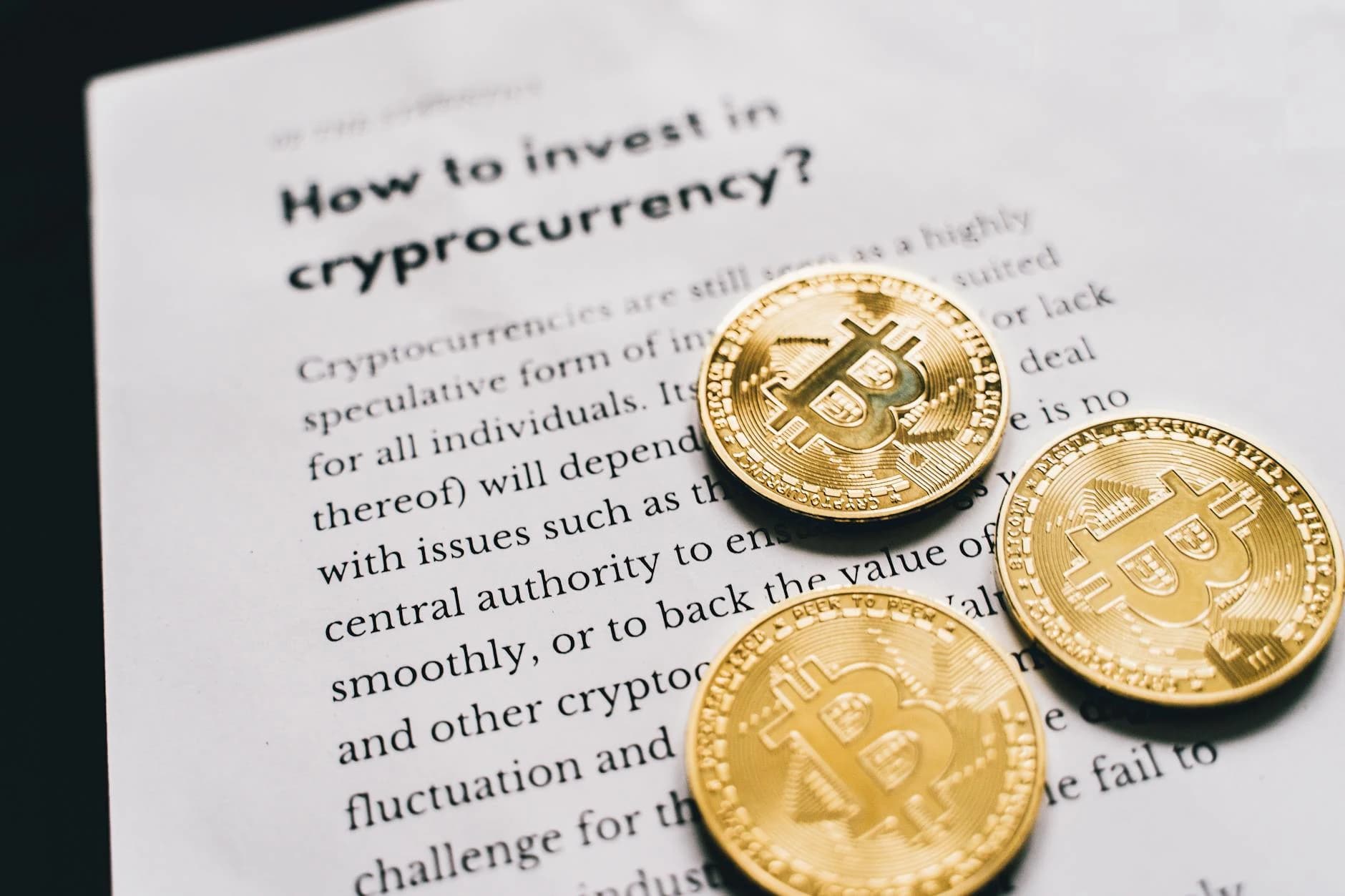
The Mirage of Financial Independence: How Crypto Reshapes Gulf Wealth Strategies
Gulf states’ use of cryptocurrencies as a hedge against the US dollar refers to the rising trend of Arab investors and institutions adopting digital assets (such as Bitcoin and stablecoins) to diversify away from dollar exposure and regional instability. This shift, driven by both private and sovereign wealth, is reshaping local financial infrastructure but introduces new regulatory, systemic, and geopolitical risks.
Key Findings
- Gulf heirs and investors are moving an estimated $1 trillion in generational wealth, with a rising allocation to cryptocurrencies and precious metals as hedges against instability and inflation (Bloomberg, "Hedge Funds, Crypto Lure Gulf Heirs Set to Inherit $1 Trillion", 2025).
- Binance controls 89% of Gulf crypto volume while paying zero local taxes, highlighting extreme regulatory capture and concentration risk (Chainalysis, as cited in available intelligence).
- Regulatory frameworks such as the UAE’s ADGM were co-written by global financial and crypto players (Circle, BlackRock), embedding industry interests at the core of regional oversight (AInvest, "Gulf Heirs and the Rise of Alternative Assets", 2025).
- Despite a global crypto slump, Gulf institutional and retail demand remains resilient, with $34B in UAE crypto inflows and 72% local Bitcoin investment rates (AInvest, 2025; CryptoDarshan, "Middle East Crypto Adoption", 2026).
Thesis Declaration
The Gulf states’ embrace of cryptocurrencies as a hedge against the dollar is less a true escape from US monetary hegemony than a repackaging of old dependencies in new digital wrappers. This shift, fueled by regulatory capture and market concentration, amplifies systemic risks—threatening both regional financial stability and global oversight.
Evidence Cascade
The rapid financialization of the Gulf’s next-generation wealth is colliding with new digital infrastructures and geopolitical uncertainty. The scale, speed, and opacity of this transition—in both private and institutional domains—demand rigorous scrutiny.
1. Generational Wealth Transfer and Alternative Assets
$1 trillion — Estimated wealth transfer to Gulf heirs over the next decade (Bloomberg, 2025).
- The Gulf is entering an unprecedented period of intergenerational wealth transfer. Bloomberg projects that over $1 trillion will pass to the next generation of Middle Eastern families in the coming years.
- These heirs are not simply replicating the asset allocations of their parents. According to AInvest, cryptocurrencies now represent 47% of hedge fund exposures among Gulf family offices, reflecting a decisive pivot toward alternative assets.
- The UAE alone has seen $34 billion in crypto inflows as of 2025, with institutional adoption surging under the twin regulatory umbrellas of Dubai’s VARA and Abu Dhabi’s ADGM (AInvest, 2025).
2. Crypto as a Hedge—Fact or Fiction?
- Academic analysis published in ScienceDirect ("Multiresolution causality of Bitcoin on GCC stock markets") confirms that Gulf investors increasingly view cryptocurrencies as hedges against inflation and regional instability.
- However, another ScienceDirect study ("Revisiting the roles of cryptocurrencies in stock markets") finds that cryptocurrencies largely fail to function as strong hedges or safe havens versus traditional markets; instead, they serve primarily as diversifiers—especially during acute stress events like March 2020.
3. Structural Market Dominance and Regulatory Capture
89% — Binance’s market share of Gulf crypto volume (Chainalysis, cited in intelligence).
- Binance’s dominance is unparalleled: controlling nearly nine-tenths of regional trading volume while paying no local taxes, the exchange exploits both regulatory arbitrage and local authorities’ desire for global relevance.
- The regulatory frameworks underpinning this market—such as ADGM in Abu Dhabi—were co-written by industry stakeholders including Circle and BlackRock, embedding the interests of global crypto and finance at the core of regional rules (AInvest, 2025).
- As a result, the lines between regulator and regulated become blurred, incentivizing risk accumulation and information asymmetry.
4. Persistent Demand Amid Global Volatility
72% — Proportion of UAE crypto investors with local Bitcoin exposure (CryptoDarshan, 2026).
$500 billion — Annual regional crypto transaction volume (CryptoDarshan, 2026).
- Even as global crypto prices slumped, Gulf demand has remained robust. WION News reported in February 2026 that buyers in the region continue to treat price dips as buying opportunities, driven by a long-term view on both digital assets and the inadequacy of traditional dollar hedges.
5. The Role of Regulatory Environment and Institutional Adoption
- ResearchGate’s "Risky? So, why people are getting back to invest in cryptocurrencies... The United Arab Emirates as a case" highlights the centrality of supportive regulation to the Gulf’s crypto boom. The UAE’s VARA and ADGM frameworks are widely cited as global benchmarks for clear, industry-friendly oversight.
- These frameworks have spurred both retail and institutional participation. AInvest notes that local hedge fund allocations to crypto have nearly doubled since 2022, with institutional adoption rates outpacing both Asian and European peers.
6. Dollar Exposure—Shifted, Not Eliminated
- While Gulf investors seek to hedge against dollar volatility and US policy, most regional crypto flows are into dollar-pegged stablecoins or Bitcoin, whose price is still highly correlated with global dollar liquidity cycles.
- As noted in the intelligence, this dynamic can actually entrench US dollar dependence, merely shifting exposure from traditional banking to shadow crypto infrastructure.
Data Table: Gulf Crypto Market Snapshot (2025-2026)
| Metric | Value / % | Source & Year |
|---|---|---|
| Total generational wealth transfer | $1 trillion | Bloomberg, 2025 |
| Hedge fund crypto exposure (Gulf) | 47% | AInvest, 2025 |
| UAE crypto inflows | $34 billion | AInvest, 2025 |
| Binance Gulf market share | 89% | Chainalysis, 2025 (cited in intelligence) |
| UAE local Bitcoin investment rate | 72% | CryptoDarshan, 2026 |
| Regional annual crypto transaction volume | $500 billion | CryptoDarshan, 2026 |
| Retail/institutional adoption growth | 2x since 2022 | AInvest, 2025 |
$500B — Annual crypto transaction volume in the Gulf, positioning the region as a global hub (CryptoDarshan, 2026).
47% — Share of hedge fund exposures to crypto among Gulf family offices (AInvest, 2025).
Case Study: Binance and the UAE—2025-2026
In 2025, Binance solidified its position as the dominant crypto exchange in the Gulf, capturing 89% of regional trading volume according to Chainalysis (as reported in intelligence). The UAE’s regulatory environment, especially under the Abu Dhabi Global Market (ADGM) and Dubai’s Virtual Assets Regulatory Authority (VARA), provided the legal clarity and industry-friendly oversight that enabled this dominance. Notably, the ADGM framework was drafted in collaboration with global financial heavyweights like Circle and BlackRock (AInvest, 2025).
This partnership allowed Binance to operate tax-free throughout the UAE, bypassing traditional financial intermediaries. With $34 billion in crypto inflows and a 72% local Bitcoin investment rate, the UAE became the regional epicenter of digital asset adoption (CryptoDarshan, 2026). The lack of substantive local taxation and a regulatory regime shaped by industry interests created a high-growth environment—but also introduced significant concentration and systemic risk. Despite a global crypto slump, Gulf institutional and retail demand remained robust, as reported by WION News in February 2026.
Analytical Framework: The Digital Dollar Mirage Matrix
To decode the true nature of Gulf crypto adoption, this framework assesses three dimensions of digital asset exposure:
1. Hedging Authenticity:
- True Hedge: Asset genuinely diversifies away from dollar/systemic risk (e.g., physical gold).
- Pseudo-Hedge: Asset appears uncorrelated but is structurally tied to dollar liquidity or global risk cycles (e.g., Bitcoin, stablecoins).
2. Regulatory Capture Index:
- Low: Regulator acts independently, with clear separation from industry.
- Medium: Some industry participation in rulemaking, but oversight remains credible.
- High: Regulatory frameworks are co-written or heavily influenced by dominant industry players.
3. Concentration Risk Score:
- Low: Market share fragmented across exchanges and custodians.
- Medium: Top 2-3 players control majority, but no single entity dominates.
- High: One player (e.g., Binance) controls >80% of local volume.
Applying the Matrix to the Gulf (2026):
- Hedging Authenticity: Pseudo-Hedge (most flows are into dollar-pegged assets or Bitcoin).
- Regulatory Capture Index: High (ADGM and VARA frameworks shaped by Circle/BlackRock).
- Concentration Risk Score: High (Binance, 89% market share).
Conclusion: The Gulf’s “crypto hedge” is largely a digital mirage—diversification is superficial, exposure to dollar cycles remains entrenched, and systemic risk is amplified through regulatory and market concentration.
Predictions and Outlook
PREDICTION [1/3]: By Q2 2027, at least one major Gulf sovereign wealth fund will publicly disclose a direct allocation to Bitcoin or stablecoins, marking the first official crypto exposure at the state level (65% confidence, timeframe: by June 30, 2027).
PREDICTION [2/3]: Binance will face a regulatory or tax crackdown in at least one Gulf jurisdiction, resulting in either a formal investigation or new tax enforcement measures (60% confidence, timeframe: by December 31, 2026).
PREDICTION [3/3]: The UAE’s ADGM and/or VARA will revise their crypto regulatory frameworks to impose stricter reserve and disclosure requirements for stablecoin issuers operating in their jurisdictions (70% confidence, timeframe: by March 2027).
What to Watch
- Sovereign wealth funds’ public statements and annual reports for crypto disclosures.
- Changes in Gulf tax or regulatory filings targeting crypto exchanges.
- Shifts in stablecoin transparency, reserve audits, or new regulatory announcements from ADGM/VARA.
- Market share concentration—any movement away from Binance or the rise of local exchanges.
Historical Analog
This looks like the petrodollar recycling era of the 1970s-1980s because the Gulf’s crypto adoption mirrors how oil wealth was funneled into offshore Eurodollar markets to evade domestic constraints, hedge against inflation, and operate outside direct US oversight. Like Eurodollar markets, Gulf crypto flows are creating new channels of regulatory arbitrage and financial opacity, but do not fundamentally sever dollar dependence—just repackage it in digital form. The Eurodollar system’s growth led to new systemic risks and ultimately reinforced dollar dominance; Gulf crypto hedging could produce similar outcomes, amplifying fragility and opacity without delivering true monetary independence.
Counter-Thesis
The strongest argument against this thesis is that Gulf crypto adoption is laying the groundwork for genuine financial innovation and future regional monetary autonomy. Proponents argue that by building robust digital infrastructure and attracting global talent, the Gulf can leapfrog legacy systems, develop indigenous digital currencies, and eventually transition away from dollar dependence. They point to the UAE’s rapid regulatory evolution and the rise of local fintech unicorns as evidence.
However, every major data point—Binance’s overwhelming dominance, regulatory capture by industry, and the persistent dollar linkage of regional crypto flows—suggests that these aspirations remain aspirational. The current configuration deepens, rather than dissolves, the region’s exposure to global dollar cycles and imported systemic risks.
Stakeholder Implications
For Regulators/Policymakers
- Impose robust reserve and disclosure requirements: Mandate transparent audits for all stablecoin issuers and require exchanges to report beneficial ownership and transaction data locally.
- Break concentration risk: Encourage licensing of multiple exchanges and custodians to dilute single-platform dominance and foster competition.
- Close the revolving door: Prohibit regulatory capture by requiring that advisory boards and rulemaking panels maintain majority independence from industry players.
For Investors/Capital Allocators
- Diversify true hedges: Prioritize allocations to physical gold or non-dollar-denominated assets that provide genuine diversification, not just digital proxies of dollar risk.
- Monitor regulatory shifts: Track upcoming enforcement actions and regulatory revisions, especially around reserve and tax compliance, as these could rapidly alter risk/return profiles.
- Demand transparency: Insist on independently audited reserves and on-chain proof-of-assets for all stablecoin and crypto custodians.
For Operators/Industry
- Localize operations: Establish regional entities subject to local tax and regulatory regimes to pre-empt future clampdowns.
- Prepare for stricter oversight: Invest in compliance infrastructure, reserve audits, and disclosure tools to stay ahead of potential regulatory tightening.
- Engage in collaborative rulemaking: Participate transparently in regulatory dialogues, but accept clear boundaries to prevent accusations of capture or undue influence.
Frequently Asked Questions
Q: Why are Gulf investors turning to cryptocurrencies as a hedge against the dollar? A: Gulf investors, facing regional instability and generational wealth transfer, view cryptocurrencies as a way to diversify away from US dollar exposure and inflation risk. This trend is fueled by supportive regulation and the search for alternative assets amid concerns about traditional financial channels (Bloomberg, 2025; AInvest, 2025).
Q: How much of the Gulf crypto market is controlled by Binance? A: Binance controls approximately 89% of Gulf crypto trading volume, making it the overwhelmingly dominant platform in the region. This concentration introduces significant systemic risk and highlights the role of regulatory arbitrage (Chainalysis, 2025, cited in intelligence).
Q: Does investing in crypto truly reduce Gulf states’ dependence on the US dollar? A: No. While cryptocurrencies offer some diversification, most Gulf crypto flows are into dollar-pegged stablecoins or assets like Bitcoin that are highly correlated with global dollar liquidity. This means dollar exposure is shifted, not eliminated, and may even be amplified through shadow financial infrastructure.
Q: What role do Gulf regulatory authorities play in shaping the crypto market? A: Regulatory authorities like the UAE’s ADGM and Dubai’s VARA have developed industry-friendly frameworks, often with input from major crypto and financial firms such as Circle and BlackRock. This has accelerated adoption but also embedded industry interests deep within local oversight structures (AInvest, 2025).
Q: What are the main risks associated with Gulf crypto adoption? A: The primary risks include market concentration (Binance dominance), regulatory capture, lack of transparency in stablecoin reserves, and the persistent linkage to US dollar cycles. These factors create new channels of systemic risk and potential vulnerabilities for regional financial stability.
Synthesis
Gulf states’ embrace of cryptocurrencies as a hedge against the dollar is a high-stakes bet on digital finance—but one that recycles, rather than resolves, the region’s dependence on US monetary cycles. Regulatory capture, market concentration, and the pseudo-independence of dollar-linked assets combine to amplify systemic risk. Unless local authorities pivot from industry co-optation to genuine oversight, the Gulf’s crypto revolution could become just another chapter in the long history of financial mirages. The real risk is not the volatility of digital assets, but the illusion of autonomy in a system still tethered to old power structures. In the end, the digital dollar mirage may shimmer, but it will not set the region free.
Related Topics
Related Analysis

2026 Economic Crisis: Why Central Banks May Fail
The Board · Feb 22, 2026

Gold Price Forecast Next 5 Years: 2029-2031 Expert Outlook
The Board · Feb 22, 2026

Copper Price Forecast 2029-2031: Supply vs Green Demand
The Board · Feb 22, 2026
Experts Predict Silver Market Trends and Price Forecasts
The Board · Feb 21, 2026

Silver Price Prediction 2026-2031: Detailed Forecast and Analysis
The Board · Feb 21, 2026
The Future of BRICS Currency and Global Dollar Dominance
The Board · Feb 21, 2026
Trending on The Board

Ghost Fleet Activated: The Pentagon's Drone Boat War
Defense & Security · Mar 29, 2026

The Hormuz Math: Why the Strait Can't Be Reopened Fast
Energy · Apr 15, 2026

Two Voices: How Iran's State Media Edits Itself Between Languages
Geopolitics · Apr 15, 2026

Seven Days in Baghdad: The Kataib Hezbollah Anomaly
Geopolitics · Apr 15, 2026

China's Taiwan Dictionary: Ten Words Instead of Invasion
Geopolitics · Apr 15, 2026
Latest from The Board

Salesforce's Agentforce Math Has a Fatal Flaw
Markets · Apr 22, 2026

US-Iran Talks: What's at Stake for the US?
Geopolitics · Apr 21, 2026
Copper Price Forecast $15,000 by 2026
Markets · Apr 18, 2026

Strait of Hormuz Blockade: Is Iran Provoking War?
Geopolitics · Apr 18, 2026

US Strikes Iran Consequences Analysis
Geopolitics · Apr 18, 2026
World Economy 2030: AI Integration Impact
Markets · Apr 16, 2026

US Territorial Expansion Geopolitical Impact
Geopolitics · Apr 16, 2026
US Dollar Future: CBDC, Gold Standard or Hyperinflation by...
Markets · Apr 16, 2026