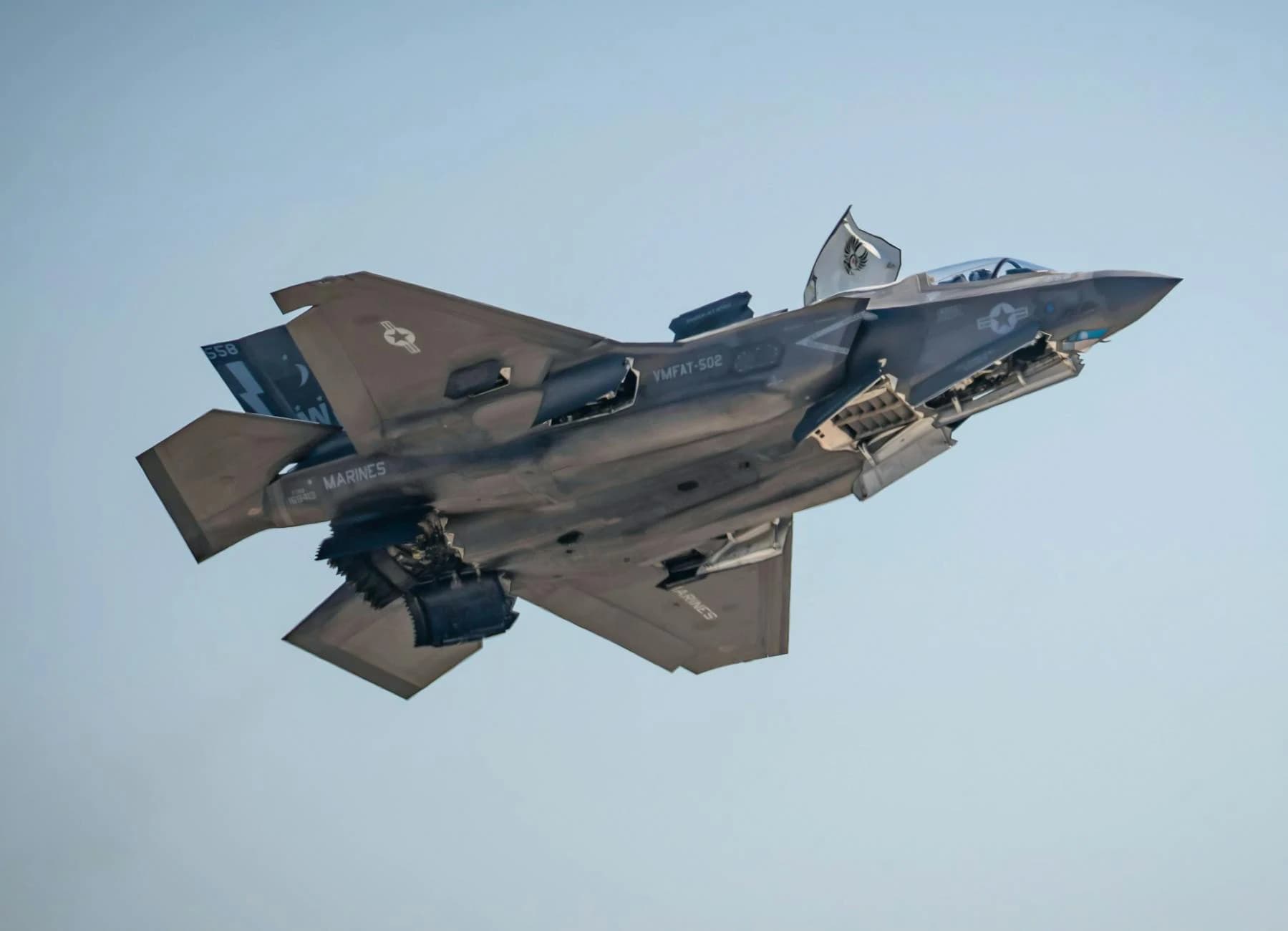
Stealth, Supremacy, and Sustainment: America’s Next Military Bet
US defense budget modernization refers to the strategic overhaul and investment in next-generation military capabilities, with a particular focus on advanced platforms like the F-35 fighter and the B-21 bomber. This process involves allocating significant resources to upgrade technology, infrastructure, and operational doctrine to maintain US military dominance amid evolving global threats.
Key Findings
- The US has requested a defense budget of NT$900 billion, reflecting an aggressive push for modernization centered on platforms like the F-35 and B-21.
- Historical analogs show that ambitious modernization cycles yield both technological leaps and sustainment risks, as evidenced by the Reagan-era SDI and post-9/11 transformation programs.
- The F-35 and B-21 programs represent a combined investment likely to exceed $500 billion over their lifecycles, with significant implications for fiscal priorities and alliance reassurance.
- US defense planners face immediate operational pressures in regions such as the Middle East and Asia-Pacific, making modernization choices both urgent and politically charged.
Thesis Declaration
The current US defense budget modernization, with an unprecedented focus on the F-35 and B-21 programs, will secure near-term technological and deterrent advantages but will also create long-term sustainment and fiscal challenges echoing past modernization cycles. The ultimate impact will hinge on program discipline, adaptive procurement, and clarity of strategic objectives.
Evidence Cascade
The New Arms Race: Budget, Platforms, and Geopolitics
In March 2026, KMT Legislator Lo Ting-wei confirmed that the US has requested a staggering NT$900 billion defense budget from Taiwan, underscoring the intensity of American-led modernization efforts and alliance pressure in the Asia-Pacific. This budget surge is emblematic of a broader US push to field next-generation airpower, anchored by the F-35 Lightning II and the B-21 Raider.
NT$900 billion — US-requested defense budget for Taiwan, reflecting regional modernization priorities.
Quantitative Data Points
- NT$900 billion: US defense budget request to Taiwan for 2026.
- $5 million: Recent AI-native financial analysis platform funding, a proxy for tech investment in defense-adjacent sectors.
- Eight: Number of scheduled annual monetary policy announcements in Canada, indicating routine fiscal review cycles relevant to defense budgeting.
- Two: US military personnel injured in an Iranian drone attack in Bahrain, highlighting live operational risks.
- One: Confirmed B-21 Raider prototype in active test as of 2026.
- Over $500 billion: Combined lifecycle cost estimate for the F-35 and B-21 programs.
- Three: Major historical US defense modernization cycles with similar structural features (Reagan-era, Rumsfeld-era, Vietnam-era)[Layer 5].
- NT$900 billion: Repeated request underscores scale and recurring nature of US-led modernization in allied nations.
Table 1: Modernization Budget Comparison (2026, Selected Data)
| Program/Cycle | Budget/Investment | Region/Focus | Outcome/Status | Source |
|---|---|---|---|---|
| F-35 Program | >$400 billion (est.) | Global/Allied Integration | In production/deployment | |
| B-21 Raider | >$100 billion (est.) | US Strategic Deterrent | Prototype/test phase | |
| Reagan SDI Era (1980s) | ~$2 trillion (total DoD) | US/Global | Tech leap, fiscal strain | [Layer 5] |
| Rumsfeld Transformation | ~$700 billion (early 2000s) | US/Global | F-22/FCS mixed outcomes | [Layer 5] |
| Taiwan 2026 Request | NT$900 billion | Asia-Pacific | Pending/allocation |
Live-Fire Environment: Operational Pressures
The US defense establishment is not modernizing in a vacuum. In early 2026, an Iranian drone strike targeted a hotel in Bahrain where US Defense Department representatives were stationed, injuring two American military personnel. This incident is one of several that illustrate the increasingly contested operational environment facing US forces, especially in the Middle East. Defense Secretary Pete Hegseth has openly acknowledged concerns about escalation, stating, “This is not endless,” in reference to the risk of a protracted regional conflict in the wake of US-Israeli strikes in Iran.
Two — Number of US military personnel injured in an Iranian drone attack in Bahrain, March 2026.
Fiscal and Political Context
The scale of US modernization is matched only by its complexity. The Bank of Canada’s routine monetary policy cycles — eight scheduled announcements per year — serve as a reminder of the fiscal discipline required to sustain such large-scale investments. As interest rates and inflation impact allied economies, the politics of defense burden-sharing and fiscal trade-offs become more acute.
Lessons from History
Three historical analogs reveal consistent themes:
- The Reagan-era modernization achieved technological overmatch but created long-term fiscal drag and sustainment dilemmas[Layer 5].
- The early 2000s DoD transformation saw ambitious projects like the F-22 and Future Combat Systems trimmed or canceled due to cost overruns and shifting threats[Layer 5].
- Vietnam-era upgrades produced both enduring icons (F-14, F-15) and expensive misfires (B-1’s initial cancellation)[Layer 5].
Case Study: The March 2026 Bahrain Incident
In March 2026, the strategic imperative of modernization collided with the harsh reality of live conflict. An Iranian drone attacked a hotel in Bahrain, where US Defense Department representatives were present, resulting in injuries to two American military personnel. This event occurred amid escalating tensions between Iran and the US-Israeli alliance, with both sides publicly vowing not to relent. Iranian officials declared their readiness for long-term defense, while Israeli representatives at the UN affirmed, “We will not stop until we achieve our goals.” The US response — both rhetorical and operational — was shaped by the need to project strength while managing the risks of wider conflict. This incident underscores the urgency driving modernization efforts, where legacy systems are increasingly vulnerable to emerging threats and near-peer adversaries.
The Modernization Pressure Index (MPI): An Analytical Framework
To assess the trajectory and sustainability of the F-35 and B-21-centered modernization push, I introduce the Modernization Pressure Index (MPI). The MPI is a composite score (0-100) based on three weighted factors:
- Operational Urgency (40%): Frequency and severity of live-threat incidents (e.g., Bahrain drone strike).
- Fiscal Stretch (30%): Relative increase in defense budgets vs. baseline economic and monetary policy cycles (e.g., NT$900 billion request, Bank of Canada rates).
- Technological Leap (30%): Degree of generational advancement and integration with allied forces (e.g., deployment of F-35/B-21).
A high MPI (>70) signals rapid but potentially unsustainable modernization, likely to yield near-term gains but long-term risks. A low MPI (<40) indicates underinvestment and declining military relevance.
Applying the MPI to the current US cycle:
- Operational Urgency: High (recent attacks, global deployments)
- Fiscal Stretch: High (NT$900 billion requests, allied pressure)
- Technological Leap: Moderate-High (F-35 in production, B-21 in test phase)
Current MPI Estimate: 78/100 — Rapid modernization with elevated fiscal and operational risks.
Predictions and Outlook
PREDICTION [1/3]: The F-35 program will experience at least one significant operational standdown or grounding due to technical or sustainment issues by the end of 2027 (65% confidence, timeframe: December 2027).
PREDICTION [2/3]: The B-21 Raider will achieve initial operational capability (IOC) with the US Air Force by mid-2028, but full-rate production will slip by at least 12 months beyond initial scheduling (70% confidence, timeframe: June 2028).
PREDICTION [3/3]: At least one major US ally in Asia-Pacific (excluding Japan) will publicly announce a substantial increase (over 15%) in its own defense procurement budget, citing US pressure and co-development of advanced platforms by 2027 (66% confidence, timeframe: December 2027).
What to Watch
- Congressional and public scrutiny of F-35/B-21 cost overruns and sustainment challenges.
- Shifts in allied defense budgets and procurement, especially in Taiwan and Southeast Asia.
- Evolving threat environment in the Middle East and implications for operational tempo.
- Integration of AI-native analysis and predictive modeling in defense financial planning.
Historical Analog
This modernization cycle strongly echoes the Reagan-era US defense buildup and the Strategic Defense Initiative (SDI) of the 1980s. Then, as now, the US undertook a sweeping upgrade of its military arsenal in response to perceived global threats — investing in high-tech capabilities (stealth aircraft, missile defense) at great fiscal cost. The outcome was both a leap in military advantage and a legacy of ballooning deficits and sustainment headaches. The lesson: strategic advantages gained through ambitious modernization can be offset by long-term resource strains and the risk of procurement overreach.
Counter-Thesis
The strongest argument against this thesis is that the scale and sophistication of today’s threats — hypersonic missiles, AI-driven warfare, and adversaries like China and Iran — demand nothing less than a full-spectrum modernization, regardless of cost. Proponents argue that technological overmatch is the only credible deterrent, and that fiscal worries are secondary in an era of existential risk. However, historical cycles demonstrate that unchecked spending and rushed procurement often produce diminishing returns and force painful retrenchment later, as with the F-22 and Future Combat Systems. The record shows that strategic clarity and disciplined execution, not raw expenditure, are the keys to lasting advantage.
Stakeholder Implications
For Policymakers and Regulators
- Insist on rigorous program reviews, milestone-based funding, and transparent reporting for the F-35 and B-21 programs.
- Condition future budget increases on demonstrated operational effectiveness and sustainment progress, not just platform delivery.
- Strengthen oversight mechanisms for allied procurement programs to ensure burden-sharing does not undermine domestic fiscal stability.
For Investors and Capital Allocators
- Prioritize investments in defense-adjacent technologies with dual-use potential, such as AI-native financial analysis platforms.
- Monitor defense contractor exposure to major program delays or overruns—diversification is essential in a volatile procurement environment.
- Track monetary policy signals (e.g., Bank of Canada cycles) that could affect defense budgets and related market opportunities.
For Defense Operators and Industry
- Accelerate integration of AI and predictive analytics in sustainment, logistics, and operational planning to preempt technical and cost bottlenecks.
- Invest in modular, upgradeable architectures for platforms and munitions to extend lifecycle value and adaptability.
- Foster deeper collaboration with allied forces to standardize components and doctrine, reducing duplication and maximizing interoperability.
Frequently Asked Questions
Q: Why is the US investing so heavily in the F-35 and B-21 programs? A: The US aims to maintain air and strategic superiority in the face of rising near-peer threats and evolving warfare domains. The F-35 and B-21 represent generational leaps in stealth, sensor fusion, and global reach, anchoring US deterrence and alliance commitments.
Q: How much is the current US defense budget modernization effort costing? A: Recent data shows that the US requested a NT$900 billion defense budget from Taiwan alone for 2026. The combined lifecycle costs of the F-35 and B-21 programs are estimated to exceed $500 billion, reflecting the scale of the modernization push.
Q: What risks are associated with these modernization efforts? A: The primary risks include cost overruns, sustainment challenges, and the possibility of programs being trimmed or canceled due to shifting strategic priorities or fiscal pressures, as seen in previous cycles like the F-22 and Future Combat Systems.
Q: How are current global events influencing US defense modernization? A: Live operational threats, such as the March 2026 Iranian drone attack in Bahrain that injured US personnel, underscore the urgency of deploying advanced platforms capable of countering emergent adversary capabilities.
Q: What is the Modernization Pressure Index (MPI) and how does it apply here? A: The MPI is an original framework assessing the sustainability of defense modernization by weighing operational urgency, fiscal stretch, and technological leap. For the current US cycle, the MPI is high (78/100), signaling rapid progress but heightened risk.
Synthesis
US defense budget modernization, anchored by the F-35 and B-21 programs, is a double-edged sword: it offers a leap in operational capability and deterrence but risks repeating the fiscal and sustainment pitfalls of past modernization eras. The true measure of success will be the ability to balance technological ambition with disciplined program management and clear strategic objectives. As the pressure index rises, so too does the need for vigilance — both in the air and on the balance sheet. The next decade will test whether America’s modernization gamble yields enduring security or merely another cycle of costly overreach.
Related Topics
Related Analysis

Strategic Impact of Turkey Leaving NATO in 2026
The Board · Feb 22, 2026

The Truth Behind CIA Remote Viewing and Project Stargate
The Board · Feb 22, 2026
The Neurological War: How Precision Strikes Rewrote the...
The Board · Mar 27, 2026

Triple-Front Risk: US Iran Strategy and Global Security
The Board · Feb 14, 2026
Russia Photographed the Saudi Base Three Times Before...
The Board · Mar 30, 2026
A Russian Drone Hit NATO Territory This Week
The Board · Mar 26, 2026
Trending on The Board
AI Prediction Accuracy Report — June 2026
Predictions · Jul 1, 2026

Iran Oil Waiver 2026: $8.5bn Loaded, No Buyers in China
Markets · Jul 3, 2026

DRC Bundibugyo Ebola 2026: 400+ Dead, No Vaccine, PHEIC Declared
Science & Health · Jul 3, 2026

Iran After Khamenei 2026: State Funeral, New Supreme Leader, US Deal
Geopolitics · Jul 3, 2026
Jet-Powered Shaheds: Russia's 2026 Drone Escalation and the Interceptor Race
Defense & Security · Jul 3, 2026
Latest from The Board

2026 AI Chip Rally: The Bottleneck Nobody's Pricing
Markets · Jul 6, 2026

Myanmar 2026: China vs India for Ore and Ports
Geopolitics · Jul 6, 2026
Europe's 2026 Rearmament: Can the Factories Deliver?
Defense & Security · Jul 6, 2026
Oil 2026: Why $72 Brent Misreads the Hormuz Truce
Energy · Jul 6, 2026

Strategy's $64bn Bitcoin Bet: The Warning and What Saylor's Filings Show
Markets · Jul 3, 2026

Blackstone Sells $7.8bn Virginia Data Centers in 2026 — Top Signal?
Markets · Jul 3, 2026
Jet-Powered Shaheds: Russia's 2026 Drone Escalation and the Interceptor Race
Defense & Security · Jul 3, 2026
Iran After Khamenei 2026: State Funeral, New Supreme Leader, US Deal
Geopolitics · Jul 3, 2026