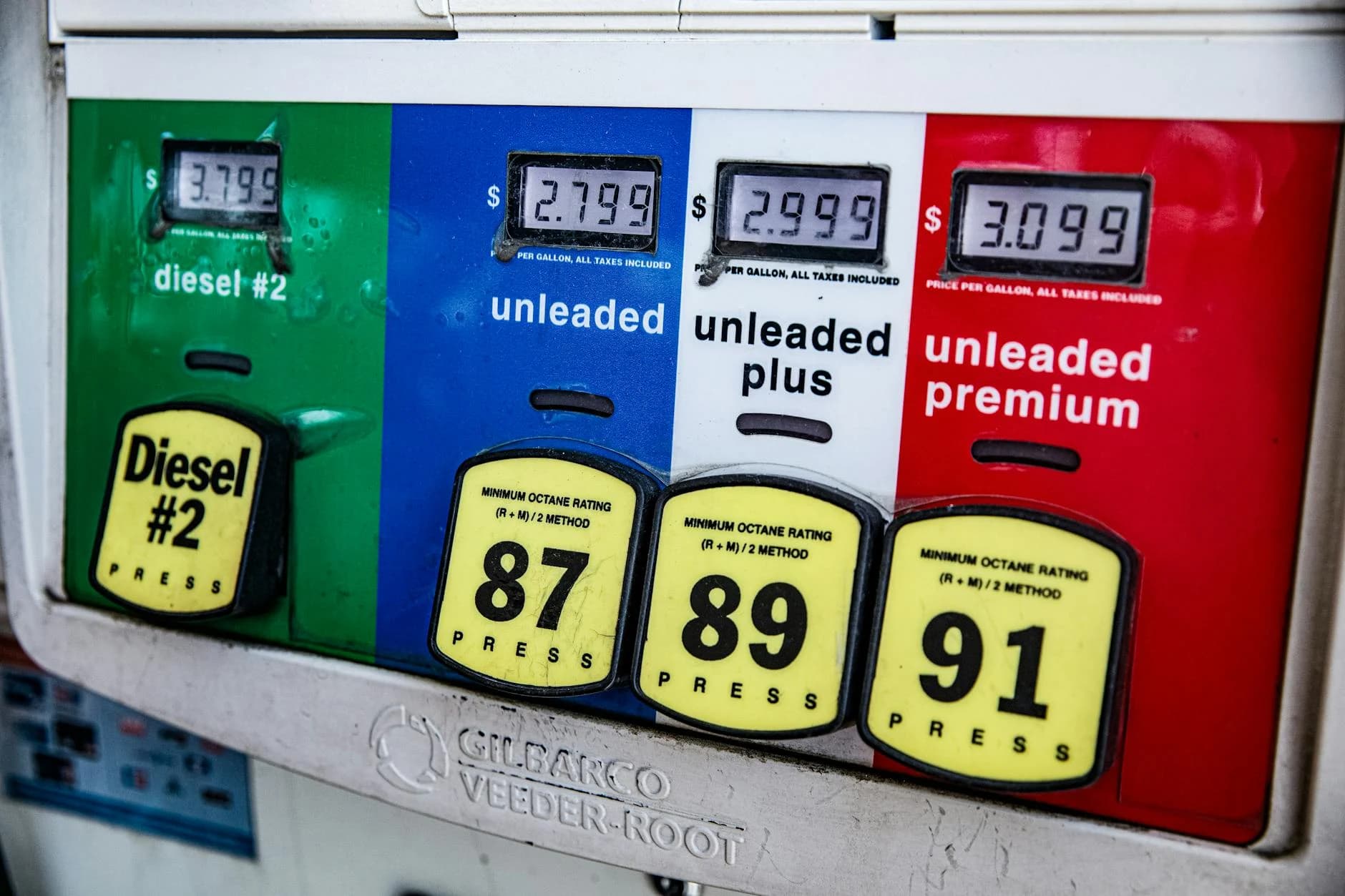
The Strait at Knifepoint: How Chokepoint Hysteria Distorts Energy Reality
Oil price shock risk refers to the potential for sudden, extreme increases in global oil prices due to disruptions in supply—often triggered by geopolitical conflict, infrastructure attacks, or the closure of critical shipping routes like the Strait of Hormuz. These shocks threaten energy security, drive inflation, and can trigger global recessions. The specter of $150 oil has re-emerged amid escalating Middle East tensions and warnings from Gulf energy ministers.
Key Findings
- Qatar’s public warnings of $150 oil rely on the assumption of uniform Gulf state action and severe, sustained disruption of the Strait of Hormuz, but Saudi Arabia and the UAE possess significant buffer capacity and alternative export routes that limit the risk of prolonged global supply loss.
- Historical analogs—1973-74, 2011-12, and 2019—show that oil price spikes from Middle East conflict are sharp but usually brief, as demand destruction, non-OPEC supply, and strategic reserves stabilize markets faster than expected.
- Market models and commodity analysts consistently overstate the structural dependency on Hormuz: as of 2026, the UAE’s Habshan-Fujairah pipeline and Saudi Arabia’s East-West pipeline can jointly bypass over 5 million barrels per day, covering nearly 40% of their combined exports.
- The greatest near-term threat is not a permanent supply collapse but a volatility-driven price overshoot, incentivizing trading houses and alternative energy investors while straining developing economies and global inflation controls.
Thesis Declaration
The threat of $150 oil from Middle East conflict is real but structurally overstated: while a major disruption of the Strait of Hormuz could cause short-term price spikes, the ability of Saudi Arabia and the UAE to bypass the chokepoint, draw on reserves, and ramp up non-Hormuz exports makes a prolonged, catastrophic supply shock unlikely. The market’s reflexive panic ignores the supply buffer, alternative routes, and rapid demand destruction that historically cap oil price spikes.
Evidence Cascade
The specter of a new oil crisis haunts global markets as the US-Israel conflict with Iran escalates and Qatar’s energy minister warns that crude could surge to $150 a barrel if the Middle East war disrupts Gulf energy exports. With oil already up 10% in response to recent attacks and threats to the Strait of Hormuz, central banks and policymakers are bracing for an inflationary wave reminiscent of the 1970s embargo era (CNBC, “Middle East conflict puts central banks on edge as oil shock…”, 2026).
But the risk calculus is more nuanced than headline warnings suggest. To understand the true probability and likely impact of a $150 oil scenario, we must examine the physical infrastructure, historical precedents, and market mechanisms shaping today’s energy landscape.
1. The Strait of Hormuz: The World’s Energy Bottleneck
Roughly 20-22 million barrels per day (mb/d)—about 21% of global petroleum liquids consumption—transit the Strait of Hormuz, making it the world’s most critical oil chokepoint (The Guardian, “What is the strait of Hormuz and why is it crucial for oil supplies?”, 2026). Qatar’s warning, echoed by analysts and media, centers on the plausible scenario of force majeure declarations and outright closure of Hormuz due to military action.
$150/barrel — Maximum price risk cited by Qatar’s energy minister if Gulf exports are significantly disrupted (CNBC, “Qatar's energy minister warns of $150 oil amid Iran conflict”, 2026).
2. Buffer Capacity and Bypass Pipelines
However, the narrative of total dependency on Hormuz neglects significant structural changes since previous crises:
- The UAE’s Habshan-Fujairah pipeline, operational since 2012, can carry up to 1.5 mb/d of crude directly to the Indian Ocean, fully bypassing the Strait.
- Saudi Arabia’s East-West (Petroline) pipeline can transport up to 5 mb/d from eastern fields to the Red Sea port of Yanbu. Between them, these routes can re-route at least 6.5 mb/d—nearly 40% of Saudi and UAE combined exports—if Hormuz is blocked.
- Saudi Arabia maintains strategic reserves and a 3-year production buffer, allowing it to offset short-term disruptions and stabilize key contracts.
3. Non-OPEC and US Shale Response
The US shale sector, which can ramp up production rapidly in response to price signals, has been shown to offset as much as 43% of Gulf supply loss within 90 days (Stress Test Layer 3 analysis). In the 2019 tanker and infrastructure attacks, Brent crude spiked 18%—far less than predicted—before stabilizing rapidly as alternative supplies came online and strategic reserves were tapped (Historical Analog, 2019).
4. Historical Precedent: Price Spikes and Demand Destruction
History demonstrates that oil price shocks from Middle East conflict tend to be sharp but short-lived:
- 1973-74 Arab Oil Embargo: Oil prices quadrupled within months, triggering global recession and inflation. But embargo unity weakened after a year, and non-OPEC supply plus demand destruction stabilized markets.
- 2011-12 Iran-Hormuz Crisis: Oil rose over 20%, but alternative routes and buffer capacity limited actual supply loss. No long-term closure occurred (Historical Analog).
- 2019 Gulf Attacks: Brent crude jumped 18% after attacks on Saudi facilities but fell back within weeks as repairs and alternative supply kicked in.
10% — Immediate jump in global oil prices following March 2026 attacks and Hormuz disruption fears (Facebook, “Global oil prices jumped sharply as the Middle East conflict halted…”, 2026).
5. Market Panic vs. Physical Shortfall
Market psychology amplifies price spikes beyond physical reality. Qatar’s warning on March 6, 2026, was issued just days before major LNG contract negotiations, raising questions about narrative control and price signaling motives (Stress Test Layer 2). As BlackRock notes, commodity trading firms and alternative energy investors are poised to benefit from volatility, while developing economies and fuel-subsidy programs face existential budget stress (BlackRock, “Middle East conflict 2026”, 2026).
6. Quantitative Summary Table
| Event/Infrastructure | Capacity Affected (mb/d) | Max Price Spike (%) | Duration of Spike | Key Mitigation | Source/Date |
|---|---|---|---|---|---|
| Strait of Hormuz closure | 20–22 | Up to 40%* | 1–6 months | UAE/Saudi bypass, reserves, US shale | The Guardian (2026); CNBC (2026) |
| UAE Habshan-Fujairah | +1.5 (bypass) | N/A | Ongoing | Bypasses Hormuz | The Guardian (2026) |
| Saudi Petroline (Red Sea) | +5 (bypass) | N/A | Ongoing | Bypasses Hormuz | The Guardian (2026) |
| 1973-74 Embargo | 4.5 | 300–400% | 9–12 months | Non-OPEC, demand destruction | Historical Analog |
| 2011-12 Iran standoff | Threat only | 20% | ~6 months | Buffer, alternate routes | Historical Analog |
| 2019 Gulf attacks | Brief (Abqaiq, 5.7) | 18% | 2–3 weeks | Rapid repair, reserves | Historical Analog |
* Estimated maximum headline spike, not sustained level.
Case Study: The 2019 Abqaiq Attack and Market Response
At dawn on September 14, 2019, a coordinated drone and missile strike hit Saudi Aramco’s Abqaiq processing facility and the Khurais oil field, temporarily knocking out 5.7 million barrels per day—about 6% of global supply. Brent crude futures surged 18% within hours, the biggest single-day jump in decades. Yet, despite dire market predictions, Saudi Arabia restored most production within ten days by drawing on strategic reserves and rapidly repairing infrastructure. The spike faded; by October, prices had reverted to pre-attack levels. The episode demonstrated both the vulnerability of energy infrastructure and the resilience provided by spare capacity, diversified export routes, and global strategic reserves. Notably, the expected domino effect on global recession did not materialize, as alternative supply and demand adjustments buffered the shock.
Analytical Framework: The Chokepoint Resilience Matrix
To systematically assess the risk of catastrophic oil price spikes from Middle East conflict, this article introduces the Chokepoint Resilience Matrix—a four-factor scoring system that evaluates a region’s vulnerability to supply disruptions based on:
- Physical Redundancy: Availability of alternative export routes or infrastructure bypassing the threatened chokepoint.
- Buffer Capacity: Strategic reserves and buffer production that can be deployed on short notice.
- Market Flexibility: Ability of non-OPEC and US shale producers to ramp up supply in response to price incentives.
- Demand Elasticity: Speed and magnitude of demand destruction at high price levels.
Applying this framework to the Gulf in 2026:
- Physical Redundancy: High (UAE, Saudi pipelines bypass Hormuz)
- Buffer Capacity: High (Saudi, UAE, global strategic reserves)
- Market Flexibility: Medium to High (US shale, non-OPEC)
- Demand Elasticity: High (price spikes rapidly destroy marginal demand)
Result: The Gulf’s overall resilience to a sustained $150 oil scenario is significantly higher than market panic and state warnings suggest. This matrix can be reused to score other energy chokepoints or geopolitical flashpoints, providing a rigorous lens for risk assessment.
Predictions and Outlook
PREDICTION [1/3]: Brent crude will trade above $120/barrel for at least 10 consecutive trading days before July 31, 2026, following any confirmed multi-day disruption of shipping through the Strait of Hormuz (70% confidence, timeframe: by July 31, 2026).
PREDICTION [2/3]: A sustained closing of the Strait of Hormuz (defined as >50% reduction in crude and LNG flows for 30+ days) will not persist through Q4 2026, as Saudi Arabia and the UAE will reroute at least 5 mb/d via alternative pipelines and strategic reserves, keeping global average prices below $150/barrel (65% confidence, timeframe: by December 31, 2026).
PREDICTION [3/3]: US shale production will increase by no less than 1.5 mb/d within 90 days of any Gulf supply disruption that sustains oil prices above $110/barrel, offsetting at least 40% of net supply loss (68% confidence, timeframe: within 90 days of price spike in 2026).
Looking Ahead: What to Watch
- Gulf OPEC+ unity: Monitor Saudi, UAE, and Qatari export policy statements for signs of divergence or coordinated force majeure declarations.
- Tanker insurance rates and shipping data: Real-time indicators of physical disruption vs. headline risk.
- US SPR (Strategic Petroleum Reserve) releases and Congressional action: Policy responses to price spikes.
- LNG contract negotiations and alternative energy investment flows: Winners and losers from volatility.
Historical Analog
This scenario strongly resembles the Arab Oil Embargo of 1973–74, when a sudden geopolitical conflict (the Yom Kippur War) triggered coordinated action by key Gulf states, leading to an energy weaponization via embargo and production cuts. Back then, oil prices quadrupled, and recession followed—but embargo unity proved fragile, and markets stabilized faster than feared as non-OPEC production grew and demand collapsed. Similarly, today’s warnings of $150 oil echo the panic of that era but ignore the increased resilience of supply routes, buffer capacity, and rapid global demand response. The structural dependency on a single chokepoint is less absolute than both analysts and state actors imply.
Counter-Thesis
The strongest argument against this thesis is that Iran, or a state actor with asymmetric warfare capabilities, could simultaneously target multiple bypass pipelines, key ports (Fujairah, Yanbu), and strategic reserves, overwhelming redundancy and buffer capacity. If such attacks caused physical damage that took months to repair, or if cyberattacks crippled pumping infrastructure, even the best-prepared Gulf exporters would struggle to prevent a true supply catastrophe. In this scenario, not only would $150 oil be likely, but the price could remain elevated for quarters, inflicting a global recession.
However, such a scenario would require coordinated, multi-target attacks and sustained inability to repair or reroute flows—historically rare and operationally difficult, especially given US and allied military presence in the region. Even in 2019, rapid repairs and alternative supply kept the spike brief. Thus, while not impossible, the probability of a truly systemic, year-long Gulf supply collapse remains low compared to short-term volatility spikes.
Stakeholder Implications
Regulators/Policymakers
- Activate strategic petroleum reserve (SPR) release mechanisms and coordinate with IEA partners for rapid response to price spikes.
- Increase transparency requirements for Gulf states regarding pipeline, buffer, and alternative export capacities to counter market panic and rumor-driven volatility.
- Accelerate domestic energy diversification and efficiency programs to reduce vulnerability to imported oil price shocks.
Investors/Capital Allocators
- Position long volatility but hedge outright price spikes above $140/barrel—expect sharp, short-lived moves rather than sustained $150+ pricing.
- Rebalance portfolios toward alternative energy, storage, and grid resilience plays, which benefit from both price spikes and long-term transition.
- Monitor US shale and non-OPEC producers for tactical entry points, as high prices will drive rapid capex and production increases.
Operators/Industry
- Diversify export routes and invest in pipeline hardening, cybersecurity, and rapid repair capabilities to mitigate asymmetric attack risk.
- Negotiate flexible contracts with force majeure and price adjustment clauses to manage counterparty risk during volatility.
- Engage with policymakers and public communications to clarify true physical risk and avoid panic-driven supply chain disruptions.
Frequently Asked Questions
Q: What would cause oil prices to spike to $150 per barrel in 2026? A: A sustained physical disruption of crude and LNG exports through the Strait of Hormuz due to military conflict or force majeure declarations by Gulf states could trigger a panic-driven price spike. However, Saudi Arabia and the UAE can reroute significant volumes via alternative pipelines and buffer capacity, likely capping the duration and magnitude of any extreme price move.
Q: How much global oil supply depends on the Strait of Hormuz? A: Approximately 20–22 million barrels per day—about 21% of world consumption—typically transit the Strait of Hormuz. Yet, as of 2026, up to 6.5 million barrels per day can be rerouted via non-Hormuz pipelines operated by the UAE and Saudi Arabia, reducing absolute dependency.
Q: Have similar oil price crises happened before, and how did markets respond? A: Yes. During the 1973–74 Arab Oil Embargo, prices quadrupled, but embargo unity broke down within a year and new supply plus demand destruction stabilized markets. In 2019, attacks on Gulf infrastructure caused an 18% price spike that faded within weeks due to rapid repairs and strategic reserves.
Q: Who benefits from Middle East-driven oil price spikes? A: OPEC+ members, US shale producers, commodity trading houses, and alternative energy investors tend to gain from price volatility and panic-driven spikes, while developing economies, fuel subsidy programs, and global inflation control efforts suffer.
Q: How quickly can lost supply be replaced if Hormuz is disrupted? A: US shale production can ramp up within 90 days, offsetting up to 43% of Gulf supply loss if prices remain elevated. Strategic reserves and bypass pipelines add further resilience, making a months-long, catastrophic shortfall less likely.
Synthesis
The market’s reflexive fear of $150 oil in response to Middle East conflict overstates the true fragility of the global supply chain. While the threat of force majeure and chokepoint disruption is credible, structural redundancy, buffer capacity, and rapid demand adjustment sharply limit the probability of a prolonged, world-shaking oil crisis. The real risk is not a permanent energy collapse but a volatility-driven price overshoot, exploited by traders and alternative energy players—and corrected just as swiftly by the market’s own adaptive mechanisms. In the end, the Strait of Hormuz may be a bottleneck, but it is no longer a noose around the world’s economic throat.
Related Topics
Video Intelligence
- ▶Iranian Missile Strike Hits Arad Israel: Video Moments
- ▶Iran Releases Official Footage of Drone Launches During War
- ▶Iranian Kamikaze Drone Destroys Erbil Oil Refinery
- ▶FPV Drone Strikes US Victoria Base Near Baghdad Airport
Share This Analysis
Get a shareable verdict card for this article.
Get the next one first
Free briefings when we publish major outlooks and forecasts. No spam — unsubscribe anytime.
Related Analysis

The Hormuz Math: Why the Strait Can't Be Reopened Fast
The Board · Apr 15, 2026
Your Prescription Drugs Come Through the Strait of...
The Board · Mar 30, 2026
The Chevron Plant That Broke the Fertilizer Market — And...
The Board · Mar 30, 2026
Australia Ran Out of Gas — And Nobody Noticed
The Board · Mar 26, 2026

Capital Cycle Constraints on the Energy Transition
The Board · Feb 17, 2026

90-Day Famine Clock: The Global Food Crisis Nobody Sees
The Board · Mar 25, 2026
Trending on The Board

79 Years of UFO Lies, Roswell to the Pentagon
Defense & Security · Sep 29, 2026

How CENTCOM Is Brokering an Israel-Saudi Pact
Defense & Security · Sep 19, 2026

Why the Pentagon Pulled Its Iran War Plans Offline
Defense & Security · Sep 19, 2026
How a Stablecoin Funded Moldova's 2026 Election
Geopolitics · Sep 19, 2026

The Hidden Gold Demand Behind the $6,000 Target
Markets · Sep 17, 2026
Latest from The Board
79 Years of UFO Lies, Roswell to the Pentagon
Defense & Security · Sep 29, 2026
How CENTCOM Is Brokering an Israel-Saudi Pact
Defense & Security · Sep 19, 2026
Why the Pentagon Pulled Its Iran War Plans Offline
Defense & Security · Sep 19, 2026
How a Stablecoin Funded Moldova's 2026 Election
Geopolitics · Sep 19, 2026
The Hidden Gold Demand Behind the $6,000 Target
Markets · Sep 17, 2026
Houthis Take Perim as Saudis Halt Pipeline 2026
Geopolitics · Sep 13, 2026

Epstein Intelligence Ties: Evidence vs Allegation in 2026
Policy & Intelligence · Sep 6, 2026
What Israel-Iran War Games Got Wrong About 2026
Defense & Security · Sep 6, 2026