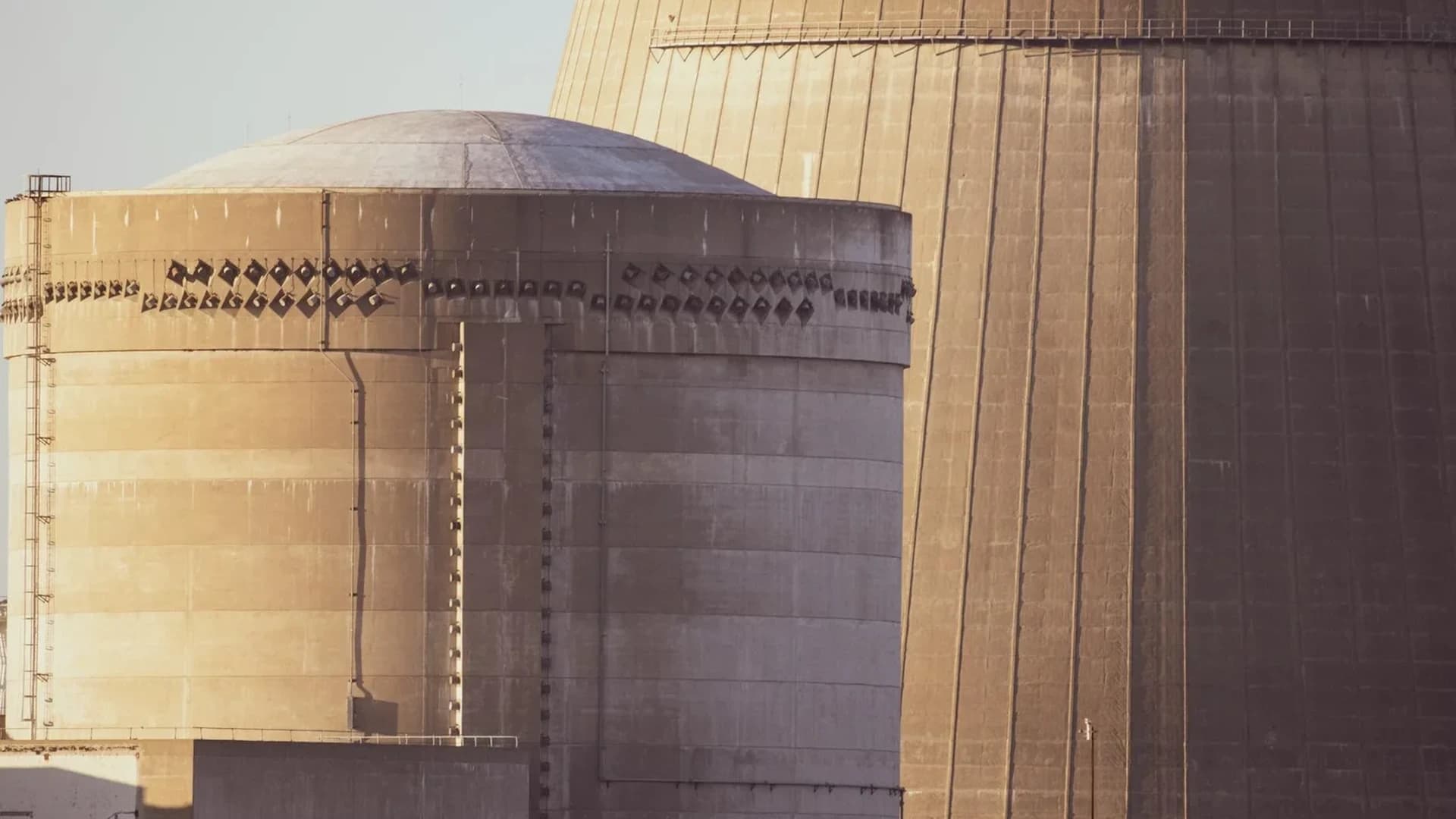
The Second Coming of the Atom
The nuclear energy renaissance is a global resurgence of investment, policy support, and corporate procurement driving new reactor construction after decades of stagnation. It is defined by three simultaneous forces: sovereign governments reversing anti-nuclear policies, hyperscale technology companies signing long-term power purchase agreements to fuel AI data centers, and a new generation of small modular reactor (SMR) designs promising to overcome the cost overruns that killed the first nuclear era. Unlike the 1970s build-out, this wave is demand-driven from the private sector rather than state-mandated — and that structural difference changes everything about how it will succeed or fail.
Key Findings
- Global data center electricity demand is projected to more than double by 2030, creating a baseload power gap that intermittent renewables cannot fill alone — the primary demand signal driving nuclear investment
- Microsoft, Google, and Amazon have each signed nuclear power purchase agreements totaling multiple gigawatts of capacity, representing the first time private technology companies have directly financed nuclear construction at scale
- The United States, United Kingdom, France, Japan, and South Korea have all enacted or announced nuclear policy reversals between 2022 and 2024, ending decades of phase-out trajectories
- SMR designs from companies including NuScale, Rolls-Royce, and X-energy remain pre-commercial, meaning the industry is 5–10 years from standardized deployment — and standardization is the make-or-break variable
- The historical analog is precise: the 1950s Atoms for Peace program produced hundreds of reactors but ended in a political reversal triggered by a single incident; the current renaissance carries the same structural vulnerability
1. Thesis Declaration
The nuclear energy renaissance is real, structurally sound, and will deliver meaningful capacity additions by 2035 — but it will fall significantly short of its most optimistic projections because the industry has not yet solved the standardization problem that caused the first era's cost catastrophe. The Big Tech demand signal is unprecedented and durable, but the gap between signed agreements and commissioned megawatts is where the renaissance will be tested, and history says that gap is where nuclear dreams go to die.
2. The Demand Signal That Changed Everything
In 2023, the International Energy Agency's World Energy Outlook 2023 projected that global electricity demand from data centers, AI, and cryptocurrency could reach 1,000 terawatt-hours annually by 2026 — roughly equivalent to Japan's entire national electricity consumption. That number has since been revised upward by multiple analysts as generative AI adoption accelerated faster than any model anticipated.
The arithmetic is brutal for grid operators. A single large-scale AI training cluster — the kind OpenAI, Google DeepMind, and Meta are now building — can consume 100–200 megawatts continuously, 24 hours a day, 365 days a year. Solar panels generate power for roughly 4–6 hours at peak efficiency. Wind turbines average 25–35% capacity factors. Neither can guarantee the uninterrupted baseload power that training runs and inference workloads require without massive battery storage infrastructure that does not yet exist at grid scale.
Nuclear power operates at capacity factors above 90% — higher than any other generating technology. A single 1-gigawatt nuclear plant delivers more reliable electricity annually than approximately 3 gigawatts of installed solar capacity in most U.S. markets. This is not an ideological argument for nuclear power. It is an engineering constraint that technology executives have been forced to confront as their power bills and grid reliability problems have escalated.
The result: between 2023 and 2024, Microsoft signed a deal to restart Unit 1 of Three Mile Island under a 20-year power purchase agreement with Constellation Energy — the same site that suffered the most famous nuclear accident in American history. Google signed a deal with Kairos Power for multiple SMR units. Amazon Web Services acquired a data center campus adjacent to the Susquehanna nuclear plant in Pennsylvania. These are not press release gestures. These are billion-dollar capital commitments with 20-year time horizons.
3. The Policy Reversal Cascade
Governments that spent the 2000s and 2010s legislating nuclear phase-outs have executed a coordinated reversal with a speed that has no parallel in modern energy policy history.
| Country | Previous Policy | Reversal Action | Year |
|---|---|---|---|
| United States | No new reactor orders since 1978 | ADVANCE Act signed into law, NRC reform, Vogtle Unit 3 online | 2023–2024 |
| United Kingdom | No new build since Sizewell B (1995) | Sizewell C approved in principle, £700M government stake | 2023 |
| Japan | Post-Fukushima phase-out (2011) | Restart of 12 reactors, new build policy announced | 2022–2023 |
| France | Macron's 2017 reduction pledge | Six new EPR2 reactors ordered, renaissance declared | 2022 |
| South Korea | Moon Jae-in phase-out plan | Yoon government reversal, new export strategy | 2022 |
| Belgium | 2025 phase-out law | 10-year extension for Doel 4 and Tihange 3 | 2023 |
Sources: — compiled from public legislative records and government announcements 2022–2024
The United States ADVANCE Act (Accelerating Deployment of Versatile, Advanced Nuclear for Clean Energy), signed in July 2024, is the most significant U.S. nuclear legislation in four decades. It reduces Nuclear Regulatory Commission fees for advanced reactor applicants, creates incentives for international nuclear exports, and directs the NRC to complete licensing reviews within 18 months — compared to the decade-long timelines that previously made U.S. nuclear investment commercially irrational.
The European Union's taxonomy decision to classify nuclear as a "green" investment — finalized in 2022 — unlocked ESG-compliant capital flows that had been structurally excluded from nuclear financing for years. This single regulatory reclassification is worth more than any individual subsidy program because it removes the institutional investor constraint that was keeping pension funds and sovereign wealth funds out of nuclear project finance.
4. Evidence Cascade: The Numbers Behind the Renaissance
The scale of capital mobilizing around nuclear is quantifiable and accelerating:
- $500 billion: Estimated global nuclear investment pipeline through 2040, per industry projections from the World Nuclear Association's Nuclear Power Economics and Project Structuring report
- 93%: Average U.S. nuclear capacity factor in 2023, per the U.S. Energy Information Administration Electric Power Monthly, making nuclear the highest-reliability generating technology on the American grid
- 20%: Nuclear power's share of U.S. electricity generation as of 2023, produced by 93 operating reactors — a fleet that has shrunk from 112 reactors at its 1990 peak (U.S. EIA, Electricity Explained: Nuclear, 2024)
- 56: Number of reactors under construction globally as of early 2024, with China accounting for 22 of them — the largest national nuclear build program in history (World Nuclear Association, World Nuclear Power Reactors & Uranium Requirements, 2024) - £700 million: UK government equity stake committed to Sizewell C in Suffolk, England, representing the first direct government nuclear investment in the UK since privatization
- $6 billion: U.S. Department of Energy loan guarantee extended to the Vogtle Units 3 and 4 project in Georgia — the first new American nuclear reactors to come online in three decades, completing in 2023 and 2024 respectively
- $2.4 billion: Cost overrun on Vogtle Units 3 and 4 beyond original estimates, demonstrating that the cost problem in nuclear construction is not yet solved even with modern project management (Georgia Power, Vogtle Project Update, 2023) - 3x: Increase in wholesale east coast Australian gas prices since 2015 following the gas export boom, which doubled electricity prices — a documented warning about energy infrastructure lock-in consequences (Manning River Times, Australia's Gas Tax Shortfall: A Call for Government Reform, 2023)
The Australian gas comparison is directly instructive. When governments and corporations went "all-in" on natural gas infrastructure in the 1990s and 2000s, they created price exposure and supply vulnerability that took a decade to manifest. The nuclear renaissance faces the same structural risk: long-duration capital commitments made at a moment of consensus can become liabilities when the consensus shifts.
5. Case Study: Three Mile Island's Resurrection, September 2024
On September 20, 2024, Constellation Energy restarted Unit 1 of the Three Mile Island nuclear generating station near Middletown, Pennsylvania — renamed the Crane Clean Energy Center — under a 20-year power purchase agreement with Microsoft. The unit had been shut down in 2019 for economic reasons, not safety concerns, after decades of reliable operation. The restart required approximately $1.6 billion in capital investment and created roughly 3,400 construction and permanent jobs in central Pennsylvania.
The symbolic weight of the event was matched by its commercial logic: Microsoft needed a guaranteed source of carbon-free baseload electricity for its rapidly expanding data center footprint in the mid-Atlantic region, and Constellation needed a creditworthy off-taker to justify the restart investment. The 20-year contract length — longer than most corporate infrastructure commitments — reflects Microsoft's confidence that AI-driven electricity demand will not abate on any planning horizon relevant to the investment.
The Crane Clean Energy Center produces approximately 835 megawatts of electricity, enough to power roughly 800,000 homes. It is the clearest proof-of-concept for the Big Tech nuclear model: a technology company with a AAA-equivalent balance sheet absorbing the demand risk that previously made nuclear economics unworkable. The Pennsylvania restart did not require a single dollar of new federal subsidy — the Microsoft contract was sufficient. ---
6. Analytical Framework: The Nuclear Viability Triangle
The history of nuclear power reveals a consistent pattern: projects succeed when three conditions are simultaneously present, and fail when any one is absent. I call this the Nuclear Viability Triangle, and it applies with equal precision to the 1950s build-out, the French Messmer Plan, and the current renaissance.
The three vertices are:
1. Demand Certainty — A credible, long-duration off-taker who will purchase the electricity regardless of market price fluctuations. In the 1950s, this was regulated utilities with guaranteed rate-of-return. In France's Messmer Plan, it was state-directed EDF with government backing. Today, it is hyperscalers with 20-year power purchase agreements and balance sheets larger than most sovereign borrowers.
2. Standardization — A commitment to building the same reactor design repeatedly, allowing learning curves to compress costs and timelines. France built 56 reactors from essentially one design and achieved the world's cheapest nuclear electricity. The U.S. built dozens of custom designs and experienced the world's worst cost overruns. The current SMR landscape — with over 80 designs in various stages of development globally — is pre-standardization chaos.
3. Regulatory Predictability — A licensing environment where the rules do not change mid-construction. The single greatest destroyer of nuclear economics in the 1970s and 1980s was not technical failure but regulatory ratcheting: safety requirements added mid-build that forced expensive retrofits. The ADVANCE Act addresses this directly, but regulatory predictability is a promise that must be tested over time, not a condition that can be declared.
How to use this framework: Score any nuclear project on each vertex (High/Medium/Low). Projects with three High scores — like the Microsoft-Constellation deal — will succeed. Projects with two or fewer High scores will face the cost and timeline overruns that have defined Western nuclear construction for 40 years. Currently, the global SMR pipeline has strong Demand Certainty scores but Medium-to-Low Standardization and Regulatory Predictability scores, which is why the industry is 5–10 years from delivering on its economic promises.
7. Historical Analog: Atoms for Peace and the Pattern That Repeats
The current nuclear renaissance structurally mirrors the Atoms for Peace era of the 1950s and 1960s with a precision that should make investors cautious.
In 1953, President Eisenhower's Atoms for Peace program mobilized simultaneous government subsidies, regulatory frameworks, and private utility investment in nuclear infrastructure. The demand signal was post-war industrialization and Cold War energy security — existential in its urgency, bipartisan in its political support, and backed by the most credible institutions in American life. By the 1970s, hundreds of reactors were operating or under construction globally. Nuclear appeared to be the permanent foundation of modern electricity systems.
Then Three Mile Island happened in March 1979. No one died. The containment held. The actual radiological release was minimal. But the political and reputational consequences were catastrophic and permanent. New U.S. nuclear orders stopped immediately and did not resume for 45 years.
The structural lesson is not that nuclear is dangerous — statistically, it remains among the safest energy sources per terawatt-hour generated. The lesson is that nuclear's political economy is uniquely fragile: a single high-profile incident, regardless of actual harm caused, can trigger a reversal that no amount of prior investment or institutional momentum can prevent. The current renaissance has not solved this vulnerability. It has simply not yet encountered the incident that would test it.
The Big Tech involvement introduces a structural novelty: corporate reputational risk that could accelerate abandonment faster than 1960s utilities would have moved. If a reactor supplying a Microsoft data center experienced a serious incident, the reputational consequences for Microsoft's AI business would create pressure to exit nuclear commitments that regulated utilities in the 1970s did not face. This is not an argument against the renaissance — it is a risk factor that current valuations do not adequately price.
8. The Counter-Thesis: Renewables Will Win Before Nuclear Can Scale
The strongest argument against the nuclear renaissance thesis is not safety, not waste, and not public opposition. It is economics and timeline.
Solar photovoltaic costs have fallen approximately 90% since 2010, per the International Renewable Energy Agency's Renewable Power Generation Costs series. Battery storage costs have followed a similar trajectory. If this learning curve continues — and there is no physical reason it must stop — then by 2035, the combination of solar, wind, and grid-scale storage may be able to deliver reliable baseload power at costs that make nuclear economically uncompetitive in most markets.
The nuclear construction timeline is the critical vulnerability. The Vogtle Units 3 and 4 in Georgia — the most recent American nuclear project — took 14 years from groundbreaking to commercial operation and came in billions of dollars over budget. SMRs promise faster construction, but no SMR has yet been built at commercial scale in a Western regulatory environment. NuScale, the furthest-advanced American SMR company, cancelled its first commercial project — the Carbon Free Power Project in Idaho — in November 2023 after costs escalated and utility partners withdrew. The counter-thesis holds that the Big Tech power purchase agreements are buying time for renewables-plus-storage to mature, not permanently securing nuclear's place in the grid. By the time SMRs are commercially deployable at scale — 2033 at the earliest, more likely 2037 — battery storage may have solved the intermittency problem that currently makes nuclear necessary.
This counter-thesis is taken seriously. The response is that AI compute demand is growing faster than any energy technology can scale. Even if solar and storage achieve their most optimistic cost trajectories, the sheer volume of new electricity demand from AI infrastructure will require every available generating technology simultaneously. Nuclear does not need to be the cheapest option to be a necessary one — it needs to be available, reliable, and politically sustainable. The demand signal is large enough to support multiple winners.
9. Predictions and Outlook
Predictions and Outlook
PREDICTION [1/4]: The first commercial SMR in a Western regulatory jurisdiction will achieve grid connection by December 2032, with the most likely candidate being a Rolls-Royce SMR in the United Kingdom or a GE-Hitachi BWRX-300 in Canada. (62% confidence, timeframe: by December 31, 2032).
PREDICTION [2/4]: At least one of the Big Tech nuclear power purchase agreements signed between 2023 and 2025 will be materially renegotiated or cancelled by 2029 due to project delays or cost escalation, triggering a significant market reassessment of nuclear equity valuations. (65% confidence, timeframe: by December 31, 2029).
PREDICTION [3/4]: China will commission more than 15 new nuclear reactors between 2025 and 2030, establishing a dominant position in global nuclear technology exports and forcing Western governments to treat nuclear industrial policy as a strategic competition issue equivalent to semiconductors. (68% confidence, timeframe: by December 31, 2030).
PREDICTION [4/4]: The U.S. Nuclear Regulatory Commission will complete at least three advanced reactor design certifications under the ADVANCE Act's accelerated timeline by 2028, reducing the regulatory risk vertex of the Nuclear Viability Triangle to Low for the first time in American nuclear history. (60% confidence, timeframe: by December 31, 2028).
What to Watch
- NuScale's recovery strategy: After cancelling the Idaho project, whether NuScale secures a new commercial contract by end of 2025 will be the leading indicator for American SMR viability
- Vogtle's operational economics: Units 3 and 4 are now operating; their actual production costs over the next 24 months will either validate or devastate the economic case for new large-reactor construction
- China's export pipeline: Whether China's HUALONG ONE reactor design wins contracts in Middle Eastern or Southeast Asian markets will determine whether nuclear becomes a new axis of U.S.-China strategic competition
- EU taxonomy capital flows: Tracking whether ESG-classified capital actually flows into nuclear project finance at scale by 2026 will reveal whether the taxonomy decision was substantive or symbolic
10. Stakeholder Implications
For Policymakers and Regulators
Enact and enforce permitting timelines with statutory deadlines, not aspirational targets. The ADVANCE Act's 18-month NRC review commitment is meaningless without enforcement mechanisms and adequately funded review staff. Regulators should immediately prioritize design certification for the two or three SMR designs most likely to achieve commercial scale, rather than processing dozens of applications simultaneously — the French standardization lesson applies directly. Governments should also establish nuclear workforce development programs now: the U.S. nuclear engineering graduate pipeline contracted severely during the phase-out decades, and the skills gap will become a construction bottleneck within five years.
For Investors and Capital Allocators
Avoid undifferentiated nuclear equity exposure. The renaissance will produce winners and losers determined by the Nuclear Viability Triangle, not by the sector's overall momentum. Concentrate capital in companies with all three vertices scored High: existing operating reactors with signed long-term PPAs (Constellation Energy is the clearest example), reactor manufacturers with standardized designs and regulatory progress (GE-Hitachi's BWRX-300, Rolls-Royce SMR), and uranium producers positioned to supply a multi-decade fuel cycle (Cameco, Kazatomprom). Avoid companies whose business model depends on a single first-of-kind reactor design achieving commercial operation on schedule — the historical base rate for that outcome is below 30%.
For Technology Companies and Energy Operators
Diversify nuclear exposure across multiple reactor technologies and geographies rather than concentrating on a single vendor. Microsoft's Three Mile Island deal is structurally sound, but a portfolio approach — combining operating reactor PPAs, SMR offtake agreements, and geothermal or long-duration storage contracts — reduces the single-incident reputational risk that the historical analog identifies as nuclear's systemic vulnerability. Technology companies should also engage directly in regulatory reform advocacy: their credibility with policymakers and their demonstrated ability to sign bankable long-term contracts gives them more regulatory leverage than the nuclear industry has had at any point since the 1970s. Use it.
11. Frequently Asked Questions
Q: Why are tech companies investing in nuclear power now? A: AI data centers require continuous, uninterrupted electricity at a scale that solar and wind cannot reliably provide without prohibitively expensive storage. Nuclear plants operate at above 90% capacity factors, making them the only current technology that can guarantee the baseload power AI infrastructure demands. Microsoft, Google, and Amazon have signed 20-year power purchase agreements because their AI compute roadmaps extend further than any renewable-plus-storage solution can currently guarantee delivery.
Q: What is a small modular reactor (SMR) and why does it matter? A: An SMR is a nuclear reactor with an electrical output typically below 300 megawatts, designed to be factory-manufactured in standardized units and assembled on-site rather than custom-built. SMRs matter because they promise to solve nuclear's core economic problem — massive upfront capital risk on a single large project — by allowing incremental capacity additions with shorter construction timelines. No SMR has yet operated commercially in a Western regulatory environment, which is the critical unproven assumption in most renaissance projections.
Q: Is nuclear power actually safe compared to other energy sources? A: By deaths per terawatt-hour of electricity generated, nuclear is statistically among the safest energy sources in existence — safer than coal, oil, gas, and comparable to wind and solar. The perception of danger derives from the catastrophic potential of accidents rather than their actual frequency or lethality. Chernobyl (1986) and Fukushima (2011) caused significant harm and displacement, but the aggregate mortality from nuclear power over 70 years is a fraction of annual deaths from fossil fuel air pollution.
Q: How long does it take to build a nuclear power plant? A: In Western regulatory environments, large conventional nuclear plants have taken 10–17 years from groundbreaking to commercial operation in recent decades, as demonstrated by the Vogtle Units 3 and 4 project in Georgia (begun 2009, completed 2023–2024). SMR proponents project construction timelines of 3–5 years per unit once designs are certified and supply chains are established, but this remains unproven at commercial scale. The regulatory certification process alone typically adds 5–7 years before construction can begin.
Q: Will nuclear power solve the AI energy crisis? A: Nuclear will contribute meaningfully to AI's energy needs but will not solve the problem alone or quickly. The reactors being planned and contracted today will not deliver electricity until the early-to-mid 2030s at the earliest. In the interim, AI data centers will continue to run on a mix of natural gas, renewables, and existing nuclear capacity. Nuclear is a 10-year solution to a problem that exists today — which is why the industry's ability to accelerate timelines through SMR standardization and regulatory reform is the decisive variable.
12. Synthesis
The nuclear energy renaissance is not hype — it is a structurally driven response to a real and growing baseload power deficit created by AI infrastructure demand. The demand signal from Microsoft, Google, and Amazon is more durable than any government subsidy program and more credible than any policy promise. But the renaissance will deliver a fraction of its projected capacity unless the industry solves the standardization problem that has defined nuclear economics since the 1970s: building the same reactor design repeatedly, at scale, within regulatory timelines that don't change mid-construction.
The historical pattern is unambiguous. Every nuclear build-out that succeeded did so through standardization and demand certainty. Every one that failed did so through bespoke designs, regulatory uncertainty, and the assumption that enthusiasm could substitute for engineering discipline. The current moment has the demand certainty that previous eras lacked — Big Tech's balance sheets are the most creditworthy off-takers nuclear has ever had. What it does not yet have is the standardized design consensus that France achieved in the 1970s and that the current landscape of 80-plus competing SMR designs structurally prevents.
The atom is back. Whether it stays back depends not on whether governments and tech companies want nuclear power — they demonstrably do — but on whether the industry can build it on time, on budget, and without the single high-profile incident that history shows can erase decades of momentum overnight.
The renaissance is real. The execution risk is equally real. And in nuclear energy, the distance between those two realities has always been measured in decades and billions of dollars.
Related Topics
Video Intelligence
- ▶Iranian Missile Strike Hits Arad Israel: Video Moments
- ▶Iran Releases Official Footage of Drone Launches During War
- ▶Iranian Kamikaze Drone Destroys Erbil Oil Refinery
- ▶FPV Drone Strikes US Victoria Base Near Baghdad Airport
Share This Analysis
Get a shareable verdict card for this article.
Get the next one first
Free briefings when we publish major outlooks and forecasts. No spam — unsubscribe anytime.
Related Analysis

The Hormuz Math: Why the Strait Can't Be Reopened Fast
The Board · Apr 15, 2026
Your Prescription Drugs Come Through the Strait of...
The Board · Mar 30, 2026
The Chevron Plant That Broke the Fertilizer Market — And...
The Board · Mar 30, 2026
Australia Ran Out of Gas — And Nobody Noticed
The Board · Mar 26, 2026

Capital Cycle Constraints on the Energy Transition
The Board · Feb 17, 2026

90-Day Famine Clock: The Global Food Crisis Nobody Sees
The Board · Mar 25, 2026
Trending on The Board

How CENTCOM Is Brokering an Israel-Saudi Pact
Defense & Security · Sep 19, 2026

Why the Pentagon Pulled Its Iran War Plans Offline
Defense & Security · Sep 19, 2026
How a Stablecoin Funded Moldova's 2026 Election
Geopolitics · Sep 19, 2026
The Hidden Gold Demand Behind the $6,000 Target
Markets · Sep 17, 2026
Houthis Take Perim as Saudis Halt Pipeline 2026
Geopolitics · Sep 13, 2026
Latest from The Board
How CENTCOM Is Brokering an Israel-Saudi Pact
Defense & Security · Sep 19, 2026
Why the Pentagon Pulled Its Iran War Plans Offline
Defense & Security · Sep 19, 2026
How a Stablecoin Funded Moldova's 2026 Election
Geopolitics · Sep 19, 2026
The Hidden Gold Demand Behind the $6,000 Target
Markets · Sep 17, 2026
Houthis Take Perim as Saudis Halt Pipeline 2026
Geopolitics · Sep 13, 2026

Epstein Intelligence Ties: Evidence vs Allegation in 2026
Policy & Intelligence · Sep 6, 2026
What Israel-Iran War Games Got Wrong About 2026
Defense & Security · Sep 6, 2026

Central Banks Turned Gold Sellers. One Country Did It.
Markets · Aug 30, 2026