BOARD SYNTHESIS — Final Verdict
Executive Summary
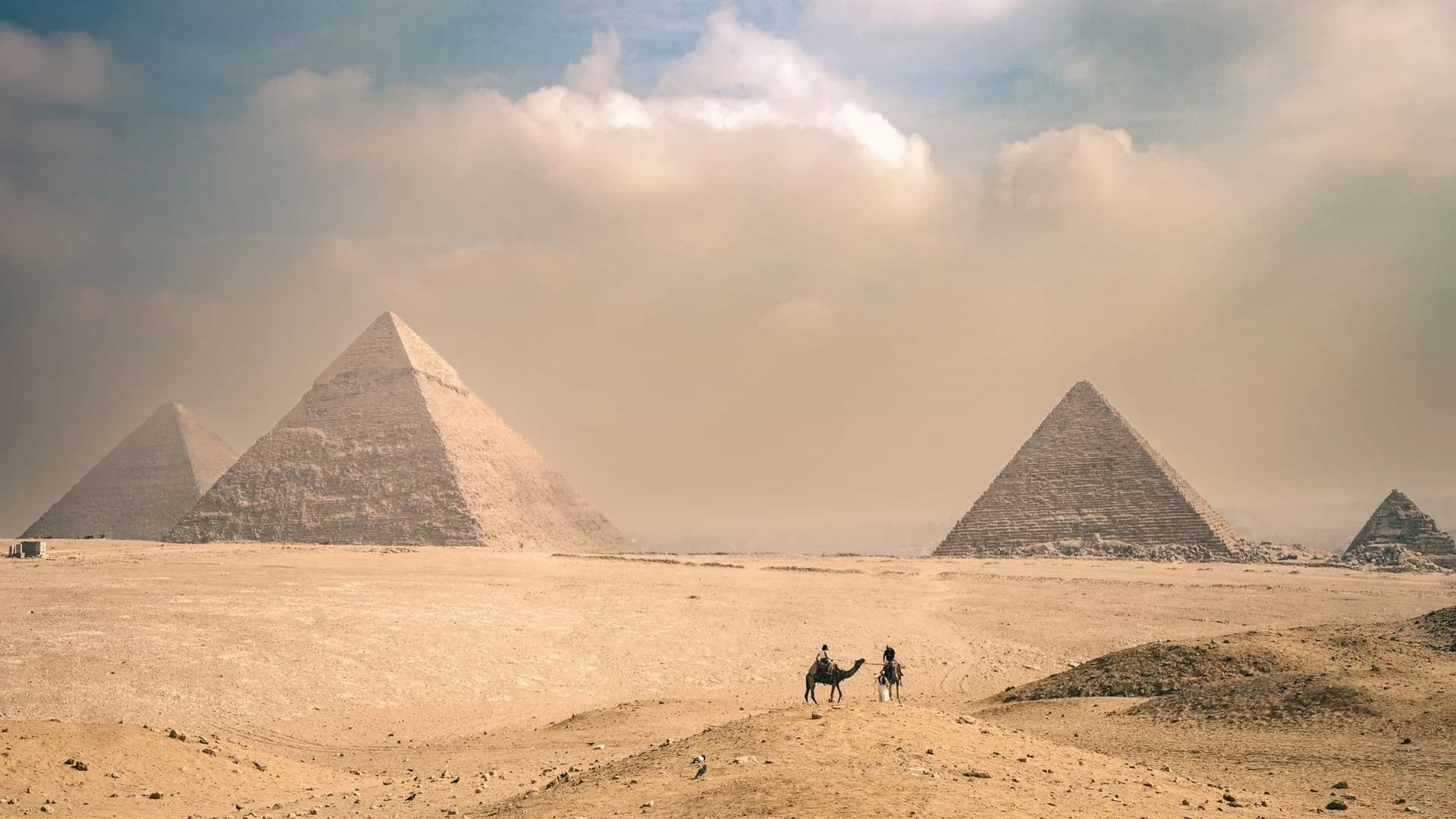
The pyramids' true purpose was multi-layered royal tombs — religious resurrection machines that simultaneously served as political legitimation tools, economic stabilization mechanisms, and social cohesion projects. The evidence is unambiguous: Egyptian texts spanning 1,000+ years explicitly state this, archaeological records confirm it, and engineering analysis validates it. Alternative theories (astronomical observatories, knowledge encoding) fail basic evidentiary standards.
Key Insights
- Primary sources are definitive: Pyramid Texts, coffin inscriptions, and consistent Egyptian testimony across dynasties clearly identify pyramids as afterlife transformation devices
- Engineering validates purpose: Internal chamber complexity (expensive relieving chambers, shaft alignments) proves contents mattered — consistent with tomb function, not symbolic monument
- Multi-functionality was a feature, not a bug: Pyramids created reinforcing feedback loops (political power → resource mobilization → legitimacy → more power) that made them self-sustaining until resource limits hit
- Quality decline explained: Not "lost knowledge" but resource exhaustion + changing security priorities (shift to hidden Valley of Kings tombs to prevent robbery)
Points of Agreement
- 5/6 the analysiss converge: Primary purpose = royal tomb with religious function
- 4/6 agree: Multi-purpose design (tomb + politics + economics + social cohesion) operating simultaneously
- All agree: Construction required sophisticated engineering, not primitive methods
- Consensus: Mathematical precision likely aesthetic/religious choice, not "secret encoding"
Points of Disagreement
analysts' contrarian position (knowledge encoding hypothesis) is isolated and outweighed:
- Contradicts explicit ancient testimony without justification
- Unfalsifiable (no evidence could disprove it)
- Requires conspiracy of forgetting
- Mathematical relationships fall within expected cultural aesthetic preferences
However: Thiel correctly identifies that quality decline needs better explanation — resolved by analysts' resource exhaustion model + security evolution.
Verdict
The true purpose of the pyramids was royal tombs designed to facilitate pharaonic resurrection and afterlife transformation, as explicitly stated by their builders.
This primary function was inseparable from secondary purposes:
- Political: Legitimizing divine kingship through monumental demonstration of organizational power
- Economic: Seasonal labor absorption during Nile floods, resource distribution, skills training
- Social: National identity creation through shared monumental project
The "mystery" is largely modern projection. The Egyptians told us what they built and why. The sophistication lies not in hidden purposes but in creating a single structure that simultaneously solved religious, political, economic, and social challenges — a systems-level masterpiece.
Risk Flags
-
Over-interpretation of mathematical precision: Modern confirmation bias may see patterns where ancient Egyptians saw sacred aesthetics. We risk retrofitting our values (scientific knowledge) onto their values (divine transformation).
-
False dichotomy thinking: Forcing "one true purpose" obscures that different pyramids across 1,000+ years likely had evolving purposes as civilization changed. Djoser's Step Pyramid ≠ Khufu's Great Pyramid in context or intent.
-
Ignoring economic incentives: Religious texts may have been post-hoc justification for massive public works projects that actually functioned as state employment and wealth redistribution. We may be taking propaganda at face value.
Milestones
For organizations wanting to apply pyramid-building principles to modern complex projects:
[
 {
 "sequence_order": 1,
 "title": "Establish Primary Purpose with Stakeholder Alignment",
 "description": "Document explicit, written purpose statement with buy-in from all key stakeholders. Avoid ambiguity. Ancient Egyptians had 1,000 years of consistent testimony — your project needs the same clarity.",
 "acceptance_criteria": "Written purpose statement signed by decision-makers, with measurable success criteria and explicit non-goals defined",
 "estimated_effort": "1-2 weeks",
 "depends_on": []
 },
 {
 "sequence_order": 2,
 "title": "Design Multi-Function Reinforcing Loops",
 "description": "Map how your project can simultaneously serve political/economic/social needs beyond primary purpose. Pyramids succeeded because they solved multiple problems with one intervention.",
 "acceptance_criteria": "Systems map showing at least 3 distinct value streams and reinforcing feedback loops identified",
 "estimated_effort": "2-3 weeks",
 "depends_on": [1]
 },
 {
 "sequence_order": 3,
 "title": "Identify Resource Constraints and Balancing Loops",
 "description": "Run pre-mortem on resource exhaustion scenarios. Pyramids stopped being built when costs exceeded benefits — plan your exit strategy now.",
 "acceptance_criteria": "Resource burn-rate projections with trigger points for scope reduction or project termination defined",
 "estimated_effort": "1 week",
 "depends_on": [2]
 },
 {
 "sequence_order": 4,
 "title": "Optimize for Logistics, Not Just Labor",
 "description": "The pyramid bottleneck wasn't stone-cutting — it was moving 2.5-ton blocks efficiently. Find your real constraint through first-principles analysis.",
 "acceptance_criteria": "Bottleneck analysis complete with top 3 constraints ranked by impact and mitigation strategies defined",
 "estimated_effort": "2 weeks",
 "depends_on": [1]
 },
 {
 "sequence_order": 5,
 "title": "Build for Contents, Not Appearance",
 "description": "Expensive internal chambers meant what's inside mattered more than external symbolism. Ensure your resource allocation reflects actual priorities, not status signaling.",
 "acceptance_criteria": "Budget analysis showing 60%+ resources allocated to core function vs. cosmetic features",
 "estimated_effort": "1 week",
 "depends_on": [3, 4]
 },
 {
 "sequence_order": 6,
 "title": "Document Intentions for Future Interpreters",
 "description": "Egyptians carved explicit purpose statements — and we still debate them 4,500 years later. Over-document your 'why' for future stakeholders.",
 "acceptance_criteria": "Decision log with context, constraints, and intended purpose archived in at least 3
Related Topics
Video Intelligence
- ▶Iranian Missile Strike Hits Arad Israel: Video Moments
- ▶Iran Releases Official Footage of Drone Launches During War
- ▶Iranian Kamikaze Drone Destroys Erbil Oil Refinery
- ▶FPV Drone Strikes US Victoria Base Near Baghdad Airport
Share This Analysis
Get a shareable verdict card for this article.
Get the next one first
Free briefings when we publish major outlooks and forecasts. No spam — unsubscribe anytime.
Related Analysis

The Impact of Messianic Movements on Global Society
The Board · Feb 22, 2026

Illuminati to WEF: The Real Power Networks Exposed
The Board · Mar 23, 2026

Jewish Scholarship: Theological and Historical Arguments
The Board · Mar 13, 2026

The Replication Crisis Deepens: Why Science's Fraud
The Board · Mar 10, 2026

The Sovereign Catalyst: Why Alexander Was a Logistics
The Board · Feb 28, 2026

The Death of the Specialist: Why Systemic Translators Will
The Board · Feb 28, 2026
Trending on The Board

79 Years of UFO Lies, Roswell to the Pentagon
Defense & Security · Sep 29, 2026

How CENTCOM Is Brokering an Israel-Saudi Pact
Defense & Security · Sep 19, 2026

Why the Pentagon Pulled Its Iran War Plans Offline
Defense & Security · Sep 19, 2026
How a Stablecoin Funded Moldova's 2026 Election
Geopolitics · Sep 19, 2026

The Hidden Gold Demand Behind the $6,000 Target
Markets · Sep 17, 2026
Latest from The Board
79 Years of UFO Lies, Roswell to the Pentagon
Defense & Security · Sep 29, 2026
How CENTCOM Is Brokering an Israel-Saudi Pact
Defense & Security · Sep 19, 2026
Why the Pentagon Pulled Its Iran War Plans Offline
Defense & Security · Sep 19, 2026
How a Stablecoin Funded Moldova's 2026 Election
Geopolitics · Sep 19, 2026
The Hidden Gold Demand Behind the $6,000 Target
Markets · Sep 17, 2026
Houthis Take Perim as Saudis Halt Pipeline 2026
Geopolitics · Sep 13, 2026

Epstein Intelligence Ties: Evidence vs Allegation in 2026
Policy & Intelligence · Sep 6, 2026
What Israel-Iran War Games Got Wrong About 2026
Defense & Security · Sep 6, 2026