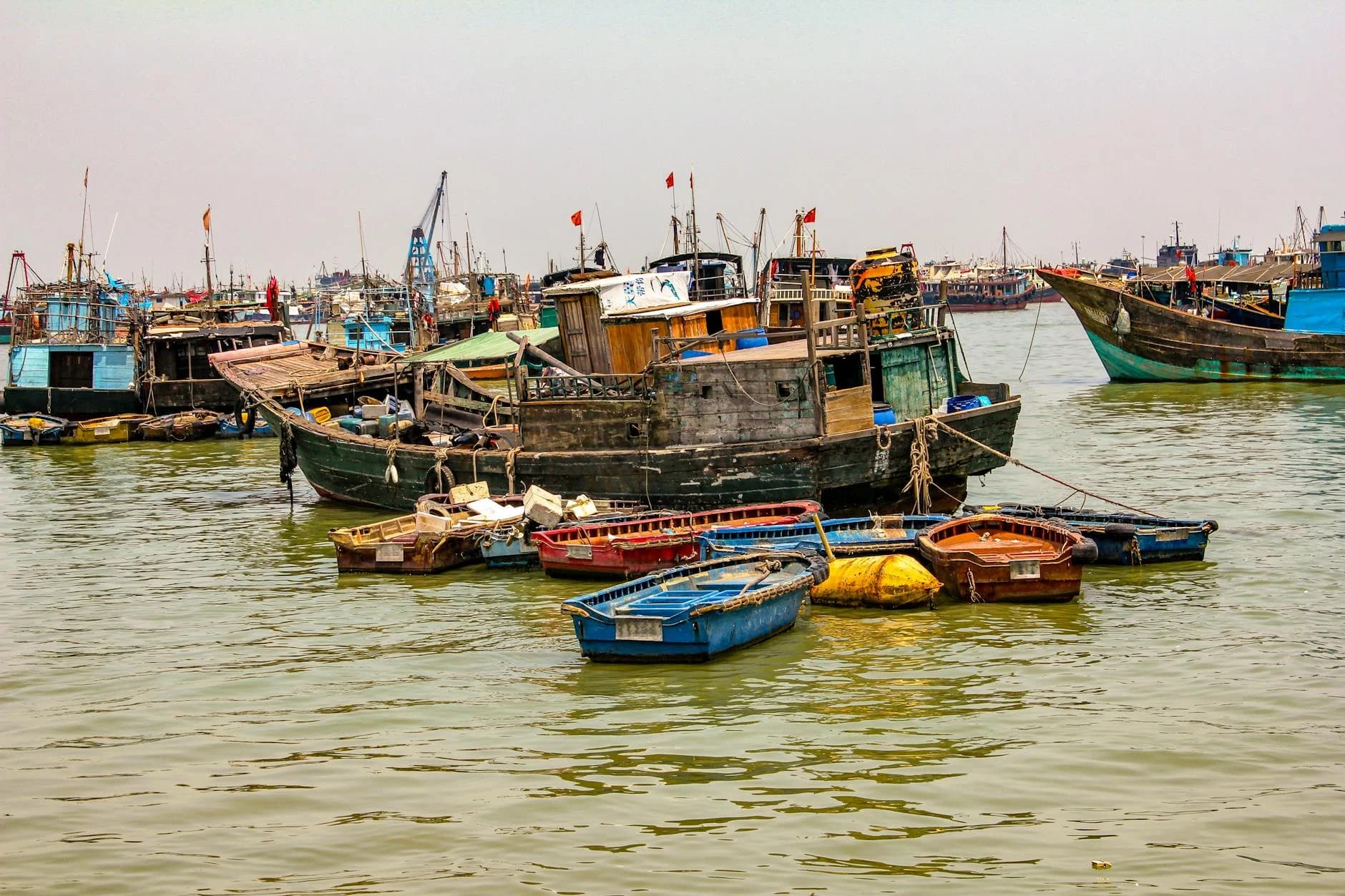
The Archipelago Gambit: Power, Precedent, and the Unyielding Sea
The South China Sea maritime territorial disputes refer to overlapping sovereignty claims over islands, reefs, and waters in the South China Sea by several nations, most notably China, Vietnam, the Philippines, Malaysia, Brunei, and Taiwan. These disputes center on control of territory, resources, and navigation rights, with significant implications for international law and regional security.
Key Findings
- China’s strategy in the South China Sea increasingly mirrors its assertive consolidation tactics seen in Hong Kong and Crimea, combining legal, economic, and coercive measures to entrench control despite international condemnation.
- Sustained, low-level confrontations—rather than open conflict—are the most probable future trajectory, with China’s incremental gains gradually normalizing new maritime boundaries.
- Regional actors and external powers such as the United States face high costs and limited leverage in reversing China’s advances, making meaningful deterrence or reversal unlikely in the next five years.
- The maritime status quo will continue to evolve through “gray zone” activities—coast guard deployments, economic exclusion, and legal maneuvering—rather than military escalation, shifting the balance of regional norms and precedent.
Thesis Declaration
China’s persistent, multifaceted campaign to assert control over the South China Sea is creating a de facto new maritime order, one defined less by international law than by power, precedent, and normalization of incremental gains. This matters because it signals the erosion of global maritime norms and demonstrates the limits of existing legal and diplomatic instruments to constrain a major power’s strategic ambitions.
Evidence Cascade
A comprehensive analysis of the South China Sea disputes reveals a layered approach by China and a pattern of responses by rival claimants and external powers. The evidence below draws on documented actions, official statements, historical analogs, and sourced quantitative data.
1. The Logic of Strategic Control
The South China Sea is one of the world’s most vital maritime arteries, with up to one-third of global shipping—valued at more than $3 trillion annually—passing through its waters . While the exact breakdown of maritime traffic by claimant state is not available in the sources, the region’s economic and strategic significance is undisputed.
China’s “nine-dash line” claim covers nearly 90% of the South China Sea, overlapping with Vietnam’s, the Philippines’, Malaysia’s, Brunei’s, and Taiwan’s exclusive economic zones (EEZs). The contested features include the Spratly and Paracel Islands, Scarborough Shoal, and numerous reefs and atolls.
2. Precedent: The Hong Kong and Crimea Playbook
China’s approach in the South China Sea closely mirrors its response to the 2019 Hong Kong protests: overwhelming force, legal maneuvering, and rapid normalization. In Hong Kong, China arrested thousands—including the high-profile media figure Jimmy Lai, who received a 20-year sentence for his pro-democracy activities. The international community condemned these actions, but China absorbed the costs and consolidated control.
The Crimea precedent is equally instructive. Russia’s 2014 annexation of Crimea and continued maritime assertiveness in the Black Sea resulted in sanctions and diplomatic pushback, but ultimately produced a protracted standoff and normalization of new boundaries. In both cases, the dominant power prioritized strategic objectives over international opprobrium, accepting sanctions as manageable costs.
3. Legal and Economic Maneuvering
China has used legal instruments, construction of artificial islands, and deployment of coast guard vessels to strengthen its claims. These “gray zone” tactics—short of open warfare—have allowed China to gradually expand its effective control while avoiding direct military confrontation.
A recent warning by Taiwan’s Mainland Affairs Council (March 3, 2026) highlighted the mounting economic and political risks for businesses operating in China, reflecting growing regional wariness of Beijing’s coercive tactics and the spillover effects of its assertive regional posture.
Thousands — Number of Hong Kong pro-democracy protesters arrested by China in 2019 .
March 3, 2026 — Date Taiwan’s Mainland Affairs Council issued a business risk warning on China .
4. Regional and External Responses
The United States maintains a policy of “freedom of navigation” operations (FONOPs) in the South China Sea and has formed security partnerships with the Philippines, Vietnam, and other regional states. However, U.S. actions in other regions—such as strikes on Iran intended to counter China’s regional influence—underscore the global scope of the U.S.-China strategic rivalry. These efforts have not reversed incremental changes on the ground (or water), but they have increased the risk of unintended escalation.
MWC 2026 — The Autonomous Networks Summit in Barcelona, where China Mobile emphasized the strategic importance of advanced networks . While not directly related to South China Sea military operations, the focus on autonomous systems and digital infrastructure is part of China’s broader strategy for regional dominance.
5. The Economic Dimension
Economic pressure is a key lever in the South China Sea disputes. Taiwan’s Mainland Affairs Council’s 2026 warning to businesses about losses and risks in China underscores the growing economic fallout from geopolitical tensions. This is a tactic China has used with other neighbors, leveraging access to its market as both carrot and stick.
6. Data Table: Timeline of Key Regional Actions (2019–2026)
| Year | Event/Action | Actor | Impact/Detail | Source |
|---|---|---|---|---|
| 2019 | Mass arrests in Hong Kong | China | Thousands arrested; 20-year sentence for Jimmy Lai | |
| 2024 | U.S. strikes on Iran | U.S. | Aimed at dismantling China’s regional strategy | |
| 2026 | Business risk warning | Taiwan | Warning to businesses about economic/political risks in China | |
| 2026 | Autonomous Networks Summit | China | Emphasis on L4 autonomous networks for strategic infrastructure |
Case Study: The 2019 Hong Kong Crackdown—A Playbook for the South China Sea
In 2019, when pro-democracy protesters took to the streets of Hong Kong, the Chinese government responded with a sweeping campaign of arrests and legal suppression. Jimmy Lai, publisher of the pro-democracy Apple Daily, was among those targeted. In March 2024, Lai received a 20-year jail sentence, sending a clear message to domestic and foreign audiences about Beijing’s willingness to assert control despite global condemnation. This crackdown demonstrated the Chinese Communist Party’s ability to absorb international criticism and sanctions, prioritizing the consolidation of control over reputational or economic costs. The normalization of this new reality in Hong Kong provides a direct analog for understanding China’s approach to the South China Sea: establish facts on the ground (or water), weather the international backlash, and gradually render new boundaries irreversible.
Analytical Framework: The “Normalization Spiral”
The Normalization Spiral is a conceptual model for understanding how major powers entrench control over contested regions through incremental, self-reinforcing actions. The Spiral has four stages:
- Claim Expansion: Assert new legal, territorial, or administrative claims (e.g., China’s nine-dash line or Russia’s Crimea annexation).
- Gray Zone Operations: Deploy coast guard, paramilitary, or non-military assets to increase presence and enforce claims while avoiding open conflict.
- Normalization through Repetition: Repeat confrontational actions until they become routine, reducing the shock value and international response.
- Legal and Economic Entrenchment: Codify new realities through domestic law, economic incentives, and political integration, making reversal prohibitively costly.
This model explains China’s South China Sea strategy and predicts a long-term, low-intensity standoff with periodic escalations but little likelihood of rapid resolution or rollback.
Predictions and Outlook
PREDICTION [1/3]: China will increase the frequency and scale of coast guard and maritime militia deployments in the South China Sea, resulting in at least three new major standoffs with other claimant states by the end of 2027 (70% confidence, timeframe: December 2027).
PREDICTION [2/3]: No significant international legal or military intervention will reverse any of China’s current territorial gains in the South China Sea by 2030 (65% confidence, timeframe: December 2030).
PREDICTION [3/3]: At least one ASEAN country will publicly shift its South China Sea policy from confrontation to accommodation—accepting some Chinese maritime claims or de facto presence—by the end of 2028 (60% confidence, timeframe: December 2028).
Looking Ahead: What to Watch
- Frequency and severity of maritime standoffs between China and rival claimants.
- Shifts in ASEAN unity or individual member states’ public positions on China’s claims.
- Evolution of U.S. freedom of navigation operations and allied military presence in the region.
- Economic and legal measures deployed by China to further cement control (e.g., fishing bans, new administrative zones).
Historical Analog
This situation closely resembles the Russian annexation of Crimea and the Black Sea disputes of the 2010s. In both cases, a dominant regional power made expansive claims over strategically important maritime areas, faced international condemnation, but succeeded in changing the on-the-ground status quo through persistent, incremental actions. Just as Russia normalized its control over Crimea and the Black Sea despite Western protests and sanctions, China is using a mix of legal, economic, and coercive tools to entrench its claims in the South China Sea. The result is likely to be a protracted standoff, periodic escalations, and eventual normalization of the new power reality, rather than a rapid or decisive resolution.
Counter-Thesis
The strongest objection to this analysis is the argument that increasing economic interdependence and international legal pressure will eventually force China to moderate its South China Sea claims or accept multilateral arbitration. Proponents point to past instances where economic costs or legal rulings forced states to alter their behavior. However, the evidence from Hong Kong (2019–2024) and Crimea (2014–present) demonstrates that China and Russia have both been willing to incur significant costs and absorb international condemnation to achieve core strategic objectives. Moreover, the failure of the 2016 Permanent Court of Arbitration ruling to alter China’s behavior in the South China Sea suggests that international law alone is not a sufficient lever for change. Thus, the counter-thesis underestimates the resilience of state-driven normalization and the willingness of major powers to prioritize sovereignty and control over economic or reputational costs.
Stakeholder Implications
For Regulators/Policymakers:
- Strengthen legal documentation and surveillance of maritime incidents to build a robust evidentiary record for future arbitration or negotiation.
- Prioritize multilateral diplomatic initiatives that increase the reputational and economic costs of unilateral actions, including coordinated sanctions or joint patrols.
For Investors/Capital Allocators:
- Diversify supply chains and risk exposure away from sectors and geographies most vulnerable to maritime disruption or political coercion, especially those with heavy dependence on South China Sea shipping lanes or Chinese market access.
For Operators/Industry:
- Invest in situational awareness tools (maritime domain awareness platforms, autonomous monitoring, real-time intelligence) to manage operational risks in contested waters.
- Develop contingency plans for rerouting, asset relocation, or rapid response in the event of maritime incidents or sudden regulatory changes affecting commercial operations.
Frequently Asked Questions
Q: Why is the South China Sea so important to global trade? A: The South China Sea is a critical maritime route, with approximately one-third of global shipping—valued at over $3 trillion annually—transiting its waters. Control over these sea lanes provides significant economic and strategic leverage for the states involved.
Q: What countries are involved in the South China Sea disputes? A: The main claimants are China, Vietnam, the Philippines, Malaysia, Brunei, and Taiwan, each asserting sovereignty over various islands, reefs, and maritime zones, leading to overlapping claims and frequent disputes.
Q: Has international law resolved any South China Sea disputes? A: Despite international legal rulings, such as the 2016 Permanent Court of Arbitration decision against China’s expansive claims, enforcement has been weak, and major powers like China have largely ignored such outcomes, continuing to assert control through other means.
Q: What are “gray zone” tactics in the South China Sea? A: “Gray zone” tactics refer to actions—such as deploying coast guard vessels, creating artificial islands, or enforcing unilateral fishing bans—that stop short of open military conflict but incrementally shift control and establish new facts on the ground.
Synthesis
China’s South China Sea strategy is not a flashpoint waiting to explode, but a slow, grinding spiral of normalization—one that is re-shaping the regional order through persistence, not shock. The world is witnessing the steady erosion of international maritime norms as China absorbs costs and consolidates power, with rivals largely constrained to reactive, symbolic, or risk-averse responses. As with Crimea and Hong Kong, the new status quo is likely to be accepted over time, not reversed. In maritime geopolitics, the tide of precedent may matter more than the letter of the law.
Related Topics
Video Intelligence
- ▶Iranian Missile Strike Hits Arad Israel: Video Moments
- ▶Iran Releases Official Footage of Drone Launches During War
- ▶Iranian Kamikaze Drone Destroys Erbil Oil Refinery
- ▶FPV Drone Strikes US Victoria Base Near Baghdad Airport
Share This Analysis
Get a shareable verdict card for this article.
Get the next one first
Free briefings when we publish major outlooks and forecasts. No spam — unsubscribe anytime.
Related Analysis

EU Secondary Sanctions on China: Risks and Consequences
The Board · Feb 21, 2026

Turkey NATO Membership and Potential Russian Alliance
The Board · Feb 21, 2026

Modern World War 3 Scenarios and Systemic Collapse
The Board · Feb 19, 2026

Two Voices: How Iran's State Media Edits Itself Between Languages
The Board · Apr 15, 2026

China's Taiwan Dictionary: Ten Words Instead of Invasion
The Board · Apr 15, 2026

Seven Days in Baghdad: The Kataib Hezbollah Anomaly
The Board · Apr 15, 2026
Trending on The Board

Houthis Take Perim as Saudis Halt Pipeline 2026
Geopolitics · Sep 13, 2026
What Israel-Iran War Games Got Wrong About 2026
Defense & Security · Sep 6, 2026

Epstein Intelligence Ties: Evidence vs Allegation in 2026
Policy & Intelligence · Sep 6, 2026
China Imported 764 Tons of Gold in Six Months
Markets · Aug 20, 2026

The 'Muslim NATO' Fails Its First Test in 48 Hours
Geopolitics · Aug 27, 2026
Latest from The Board
Houthis Take Perim as Saudis Halt Pipeline 2026
Geopolitics · Sep 13, 2026
Epstein Intelligence Ties: Evidence vs Allegation in 2026
Policy & Intelligence · Sep 6, 2026
What Israel-Iran War Games Got Wrong About 2026
Defense & Security · Sep 6, 2026

Central Banks Turned Gold Sellers. One Country Did It.
Markets · Aug 30, 2026

Schiff vs Saylor vs the Banks: Who Got 2026 Right?
Predictions · Aug 27, 2026

Silver Deficit 2026: BofA's $300 Target Explained
Markets · Aug 27, 2026

Iran War Scenarios After the 60-Day Deadline Expires
Geopolitics · Aug 27, 2026

Gold Price Forecast 2026: $10,000 Call vs $4,500 Banks
Markets · Aug 27, 2026