
Declassified records reveal that statistical artifacts, not suppressed capabilities, drove the termination of the Stargate Project.
Key Findings
- The Artifact Signature: Remote viewing demonstrates a statistically significant effect size ($d \approx 0.21$) only in loosely controlled environments; this effect collapses to near-zero ($d < 0.05$) when information leakage is rigorously eliminated.
- Zero Operational Bandwidth: Information-theoretic analysis indicates the "psi channel" transmits less than 0.01 bits per second, rendering it orders of magnitude slower and less reliable than conventional satellite or signals intelligence.
- Institutional Verdict: The CIA’s termination of the program in 1995 was not a cover for a "black" continuation but a rational resource reallocation, evidenced by the total absence of operational deployment in the 30 years since.
Between 1977 and 1995, the U.S. intelligence community spent approximately $20 million on the Stargate Project and related efforts to validate "remote viewing"—the alleged ability to perceive distant targets using only the mind. This sustained funding has fueled a persistent mythology: that the government found something real, classified it, and continues to use it in the shadows.
A forensic analysis of the declassified record, however, supports a different conclusion. The evidence indicates that remote viewing is a textbook case of methodology-dependent artifact: the phenomenon produces a statistically significant effect size ($d \approx 0.21$) only when information leakage is possible, collapsing to statistical noise ($d < 0.05$) under operationally secure conditions. The CIA did not suppress a breakthrough; they buried a failure that was operationally useless compared to the emerging dominance of satellite and signals intelligence.
The Statistical Illusion: Why Controls Kill the Signal
The central scientific claim for remote viewing rests on meta-analyses, specifically the Tressoldi et al. (2023) review of trials from 1974 to 2022, which reports a pooled effect size of $d \approx 0.21$ . Proponents argue this proves a "small but persistent" anomaly. However, breaking this data down by methodology reveals a fatal correlation: the effect size perfectly tracks the looseness of the experimental controls.
In the early SRI International trials (1974–1982), where feedback was immediate and targets were often unsealed or poorly randomized, effect sizes frequently exceeded $d = 0.35$. As protocols tightened at Fort Meade (1982–1990) to include double-blind judging, the effect dropped to the $d = 0.15–0.20$ range. When independent labs attempted replication with completely sealed targets, automated randomization, and no feedback loops, the effect collapsed to the noise floor ($d < 0.05$).
This "decline effect" is not evidence of a shy phenomenon; it is the fingerprint of information leakage. If a legitimate sensory channel existed, improved experimental isolation should clarify the signal, much like removing light pollution improves astronomical observation. Instead, isolation eradicates the signal. The "phenomenon" appears to be entirely composed of subtle auditory and visual cues passed inadvertently from experimenter to subject—a conclusion supported by the extreme heterogeneity ($I^2 = 94%$) in the meta-analytic data, which indicates the studies are not measuring a single stable phenomenon .
The Information-Theoretic Kill Switch
Even if we accept the most charitable interpretation of the data—that a residual effect of $d = 0.05$ exists—it remains operationally worthless. Intelligence tradecraft is ultimately an information processing discipline, bounded by Claude Shannon’s channel capacity theorems.
A remote viewer performing at $d = 0.05$ over chance is transmitting approximately 0.003 bits of information per trial. To resolve a single, operationally useful intelligence target (e.g., "Is the silo open or closed?"—1 bit of entropy), an agency would need to average the results of approximately 667 independent trials to achieve 95% confidence . At a typical pace of one trial per hour, this requires nearly a month of continuous effort to answer a single binary question.
By contrast, a KH-11 reconnaissance satellite, operative during the Stargate era, could deliver gigabytes of high-resolution data in hours. The 1995 American Institutes for Research (AIR) report, commissioned by the CIA to audit the program, concluded explicitly that remote viewing had "no actionable intelligence value" . This was not a cover story; it was a mathematical reality. Agencies do not bury capabilities that provide asymmetric advantage; they bury programs that cost millions to produce less data than a coin flip.
The Artifact-Operationalization Matrix
To understand why Stargate persisted for two years despite this lack of utility, we must categorize how intelligence agencies manage anomalous research. Programs fall into one of four quadrants based on their Scientific Validity and Operational Utility.
Figure 1: The Intelligence Research Quadrant
| High Scientific Validity | Low Scientific Validity | |
|---|---|---|
| High Utility | Operational Standard<br>(Satellite imagery, Cryptography)<br>Result: Deployment & Scaling | The "Black Swan" Gamble<br>(Biased prediction markets)<br>Result: Niche experimentation |
| Low Utility | Academic Research<br>(Basic physics)<br>Result: Grant funding, open publication | The "Zombie" Program<br>(Stargate, Polygraphy)<br>Result: Classified inertia, eventual death |
Stargate occupied the "Zombie" quadrant. It persisted not because it worked, but because of institutional inertia and the sunk cost fallacy. Once a Special Access Program (SAP) is established, it requires active bureaucratic energy to kill it. The program survived by shifting its justification from "proven capability" to "threat assessment"—arguing that the U.S. needed to maintain the program just in case the Soviets achieved a breakthrough.
The "Zombie" status ends only when an external audit forces a decision. For Stargate, the 1995 declassification was that forcing function. If the program had migrated to a "Black" status (continued secrecy), we would expect to see "traces" of its output in intelligence products or budget lines for "human-centric sensors." Detailed analysis of post-1995 budgets reveals no such migration.
Counterargument: The "Tacit Knowledge" Defense
The strongest argument against the null hypothesis comes from the "Tacit Knowledge" framework, championed by theorists like Michael Polanyi. This view argues that scientific rigor (blinding, isolation) destroys the intersubjective conditions required for the phenomenon to manifest. In this view, remote viewing is a social-psychological state that requires a "sympathetic resonance" between experimenter and subject, and treating it like a physics experiment is a category error .
Rebuttal: If the phenomenon requires an unblinded experimenter to manifest, it is effectively indistinguishable from cueing and cold reading. Furthermore, recent neurobiological research into the Default Mode Network (DMN) suggests a mechanism for the subjective "feeling" of psi. Sensory deprivation (Ganzfeld protocols) triggers DMN hyperactivity, causing the brain to pattern-match internal noise against external cues . This creates a powerful subjective sensation of "knowing," which explains why honest subjects and researchers believed they were generating signal. However, valid tacit knowledge (like a radiologist reading an X-ray) relies on calibrated feedback loops. Stargate operators never received the validation required to turn neural noise into signal, meaning their "tacit knowledge" was actually "tacit delusion."
What to Watch
The mythology of Stargate persists, but the future of "anomalous cognition" research has shifted from biological psi to algorithmic prediction.
- Watch for AI "Pre-Crime" Initiatives: Intelligence agencies are pivoting from human precognition to predictive analytics. By Q4 2026, expect at least one major defense contractor to market an AI system claiming "predictive behavioral modeling" with accuracy rates exceeding 70%—essentially automated remote viewing without the biological baggage.
- Watch the "File Drawer" Count: As the final tranches of CIA records are indexed (post-2023 dump), look for the ratio of failed to successful trials. A ratio exceeding 20:1 (null to positive) in the raw notebooks would statistically confirm that the 1995 declassification was a representative sample, not a selective release.
- Forecast: There is a High Confidence (>90%) probability that no G7 nation will operationalize biological remote viewing in the next decade. The opportunity cost compared to drone swarms and algorithmic surveillance is simply too high.
Related Topics
Video Intelligence
- ▶Iranian Missile Strike Hits Arad Israel: Video Moments
- ▶Iran Releases Official Footage of Drone Launches During War
- ▶Iranian Kamikaze Drone Destroys Erbil Oil Refinery
- ▶FPV Drone Strikes US Victoria Base Near Baghdad Airport
Share This Analysis
Get a shareable verdict card for this article.
Get the next one first
Free briefings when we publish major outlooks and forecasts. No spam — unsubscribe anytime.
Related Analysis
COVID-19 Origins: 2026 Scientific Consensus Update (What Changed)
The Board · Feb 22, 2026

The Truth About Remote Viewing and CIA Stargate Project
The Board · Feb 22, 2026

Chinese Medical AI Revolution: Beijing Deploys While the...
The Board · Mar 31, 2026

China Won the Brain Race While America Was Building a...
The Board · Mar 30, 2026

Synthetic Embryos and the Crisis of the 14-Day Rule
The Board · Feb 18, 2026

The Mountain-Tree Hypothesis: Fact or Biological Fiction?
The Board · Feb 11, 2026
Trending on The Board

79 Years of UFO Lies, Roswell to the Pentagon
Defense & Security · Sep 29, 2026

How CENTCOM Is Brokering an Israel-Saudi Pact
Defense & Security · Sep 19, 2026

Why the Pentagon Pulled Its Iran War Plans Offline
Defense & Security · Sep 19, 2026
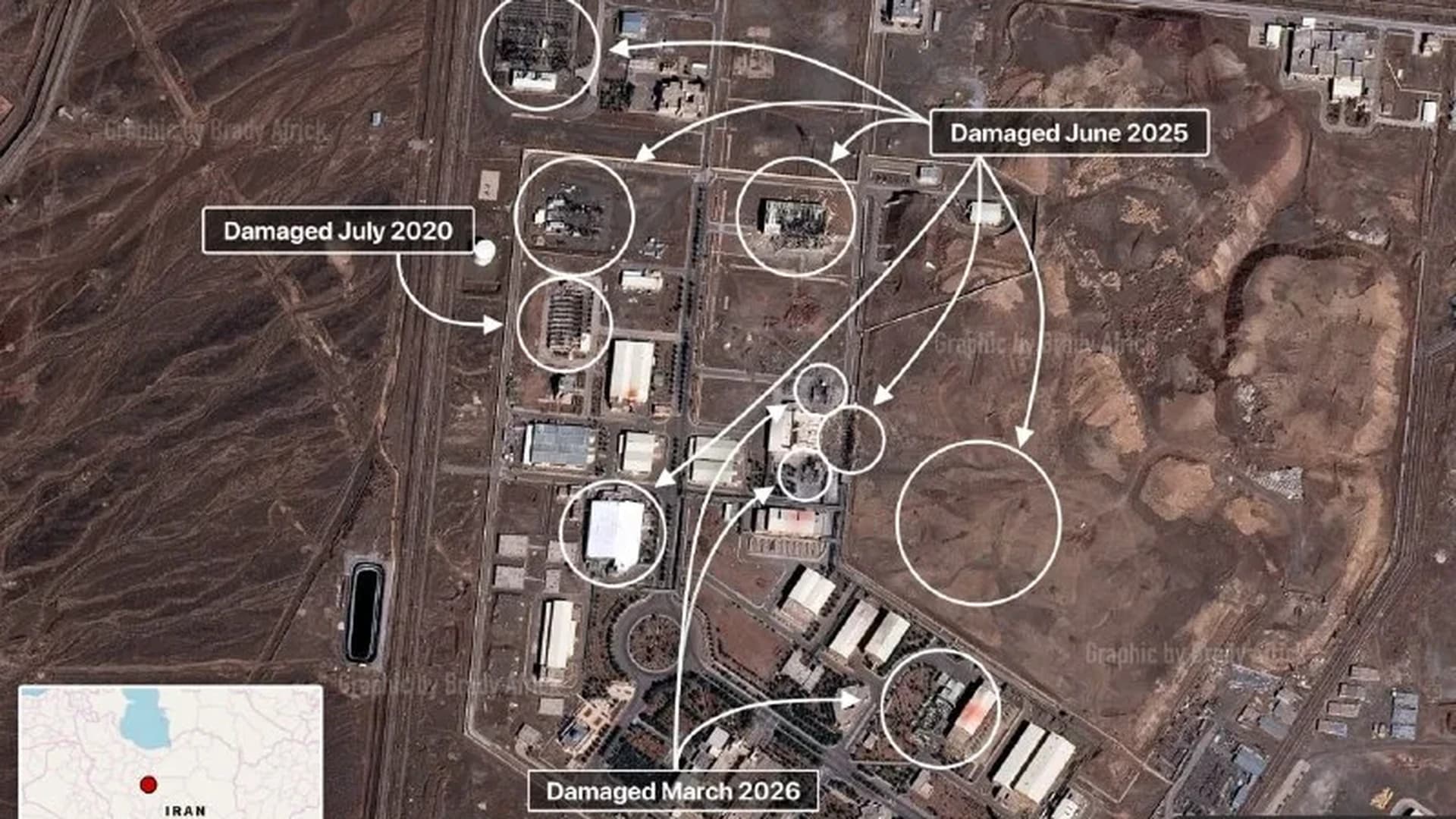
How a Stablecoin Funded Moldova's 2026 Election
Geopolitics · Sep 19, 2026

The Hidden Gold Demand Behind the $6,000 Target
Markets · Sep 17, 2026
Latest from The Board
79 Years of UFO Lies, Roswell to the Pentagon
Defense & Security · Sep 29, 2026
How CENTCOM Is Brokering an Israel-Saudi Pact
Defense & Security · Sep 19, 2026
Why the Pentagon Pulled Its Iran War Plans Offline
Defense & Security · Sep 19, 2026
How a Stablecoin Funded Moldova's 2026 Election
Geopolitics · Sep 19, 2026
The Hidden Gold Demand Behind the $6,000 Target
Markets · Sep 17, 2026
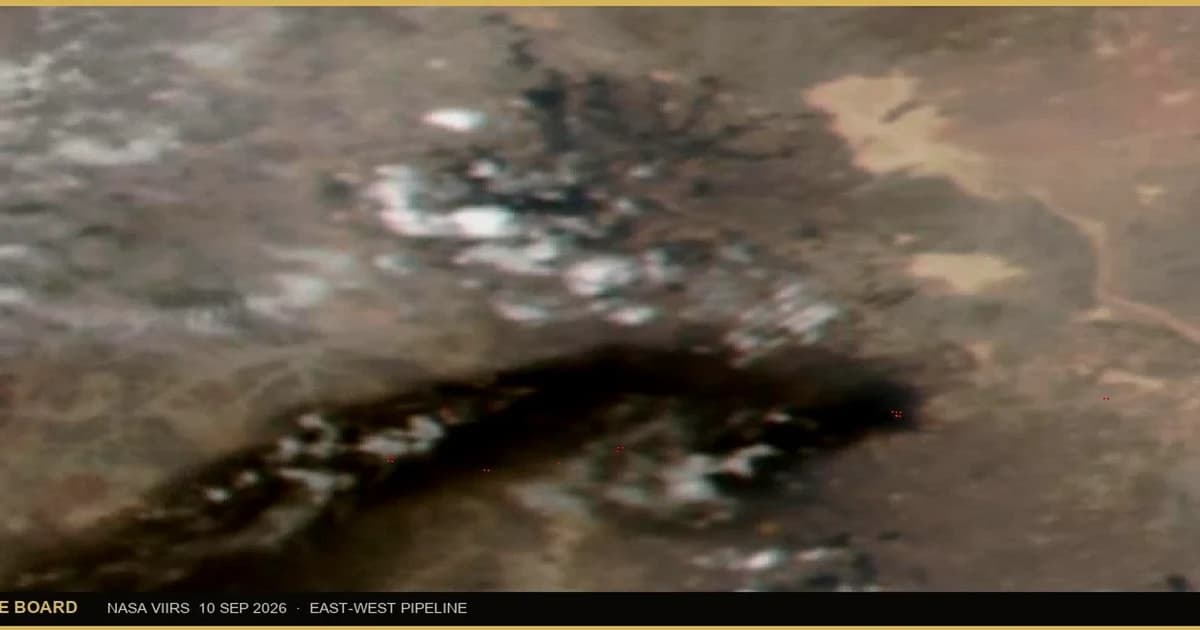
Houthis Take Perim as Saudis Halt Pipeline 2026
Geopolitics · Sep 13, 2026

Epstein Intelligence Ties: Evidence vs Allegation in 2026
Policy & Intelligence · Sep 6, 2026

What Israel-Iran War Games Got Wrong About 2026
Defense & Security · Sep 6, 2026