Executive Summary
The evidence strongly supports that SARS-CoV-2 origins remain unresolved due to a structural failure in which the institutions best positioned to investigate were also the most conflicted. The pandemic response involved defensible initial emergency measures that calcified into disproportionate, prolonged interventions causing enormous collateral harm. The suppression of legitimate scientific inquiry about origins is the most clearly documented institutional failure, regardless of which origin hypothesis ultimately proves correct.
Key Insights
-
The DEFUSE proposal documents intent and capability to insert furin cleavage sites into bat coronaviruses at WIV. Whether that specific work was conducted remains the central unanswered question. This is not a minor caveat — it is the evidentiary fulcrum on which the entire lab-origin case turns.
-
The February 1-4, 2020 narrative pivot — from "this looks engineered" to "natural origin is settled" — occurred among scientists with undisclosed conflicts of interest. Whether this reflects genuine scientific deliberation or coordinated reputation management cannot be determined from public evidence alone, but the structural conflict is undeniable.
-
Every actor with the most direct knowledge of Wuhan research had the strongest incentive to suppress the lab-origin hypothesis. Schneier's threat model is devastating and does not require conspiracy — only rational self-interest operating through existing institutional channels.
-
China's obstruction is the single greatest barrier to resolution, blocking confirmation of either hypothesis. This panel and the broader discourse under-weight this reality.
-
Population-wide lockdowns of healthy individuals were historically unprecedented, departed from pre-existing pandemic planning documents, and produced quantifiable harms — particularly to children, the working class, and the Global South — that have never been formally weighed against benefits.
-
The Epistemic Auditor's warning is the most important contribution to this discussion: this panel's composition risks replicating, in reverse, the exact premature-consensus failure it diagnoses.
Points of Agreement
- The lab-origin hypothesis is scientifically credible and was improperly suppressed as "misinformation" for over a year.
- The natural-origin hypothesis lacks expected confirming evidence (no intermediate host, no progenitor virus) after five years, which is anomalous compared to SARS-1.
- Structural conflicts of interest — Fauci as funder and adjudicator, Daszak on the WHO investigation team — represent institutional design failures that are not in dispute.
- BSL-2 containment for novel chimeric coronavirus research was negligent regardless of pandemic origin.
- Prolonged school closures, economic lockdowns, and suppression of scientific debate caused documented harm disproportionate to their benefits after the initial emergency phase.
- The institutional response prioritized reputation defense over transparent investigation. Every documented instance of opacity served institutional preservation, not public health.
Points of Disagreement
-
Whether "pretended we didn't know what it was" is accurate. The Biosecurity Analyst and Historian correctly downgrade this to "premature certainty to protect institutional equities." The original question's framing overstates what evidence supports. Knowing a lab studied related viruses is not the same as knowing this virus came from that lab.
-
Whether initial lockdowns (2-3 weeks, flatten-the-curve) were justified. The Devil's Advocate makes a legitimate case that under March 2020 uncertainty — IFR estimates up to 3.4%, Lombardy triage, NYC refrigerator trucks — a brief, blunt intervention had defensible logic. The failure was the inability to end emergency measures, not necessarily initiating them.
-
Whether the Andersen "Fauci paper" characterization is damning or ambiguous. This panel leans heavily toward indictment; the Epistemic Auditor correctly flags that four the analysiss treating one interpretation as settled replicates the very consensus-manufacturing they're critiquing.
-
The relative weight of Chinese obstruction versus U.S. institutional suppression. Both matter. But this panel focused overwhelmingly on U.S. actors, underweighting that China's refusal to grant access is the primary reason both hypotheses remain unresolved.
Verdict
On Origins: The lab-origin hypothesis is more likely than not, based on the totality of circumstantial evidence — the anomalous furin cleavage site, the DEFUSE proposal documenting intent and capability, the BSL-2 safety conditions, the WIV database takedown in September 2019, the absence of a natural progenitor after five years, and the historical base rate of lab leaks from comparable facilities. However, this assessment is at approximately 60-70% confidence, not 90%+. The natural-origin hypothesis has not been disproven, and the evidentiary gaps that prevent its confirmation (Chinese obstruction, incomplete bat sampling) also prevent definitive confirmation of lab origin. Anyone claiming certainty in either direction is outrunning the evidence.
On "Pretending We Didn't Know": The evidence does not support that officials knew the specific origin and lied. What the evidence clearly supports is that officials with severe conflicts of interest collapsed genuine scientific uncertainty into premature consensus, then weaponized institutional authority and platform enforcement to suppress legitimate inquiry. This is not "pretending" — it is something potentially worse: manufacturing certainty to protect institutional equities while genuine investigation was needed. The distinction matters because the remedy is structural, not merely punitive.
On "Overreaction": The initial 2-3 week emergency response was defensible under extreme uncertainty. What followed was not proportionate: 18+ months of school closures, blanket mandates maintained past their justifiable window, suppression of cost-benefit analysis, refusal to adopt risk-stratified approaches, and dismissal of the Great Barrington Declaration without substantive engagement. The failure was not panic — it was the institutional inability to de-escalate, driven by political incentivization of visible action, liability aversion, and the absence of any formal mechanism requiring proportionality review of ongoing emergency measures.
On Accountability: The most important reforms are structural, not personnel-based. Firing individuals while leaving the institutional architecture intact guarantees repetition.
Risk Flags
-
Confirmation bias in reverse. This investigation — and the broader political environment — risks establishing lab-origin as settled consensus before definitive evidence exists, leading to policy decisions (funding cuts, treaty positions, criminal referrals) built on an unresolved evidentiary foundation. If a natural progenitor is later identified, the credibility collapse would be catastrophic and permanent.
Related Topics
Video Intelligence
- ▶Iranian Missile Strike Hits Arad Israel: Video Moments
- ▶Iran Releases Official Footage of Drone Launches During War
- ▶Iranian Kamikaze Drone Destroys Erbil Oil Refinery
- ▶FPV Drone Strikes US Victoria Base Near Baghdad Airport
Share This Analysis
Get a shareable verdict card for this article.
Get the next one first
Free briefings when we publish major outlooks and forecasts. No spam — unsubscribe anytime.
Related Analysis
COVID-19 Origins: 2026 Scientific Consensus Update (What Changed)
The Board · Feb 22, 2026

The Truth About Remote Viewing and CIA Stargate Project
The Board · Feb 22, 2026

Chinese Medical AI Revolution: Beijing Deploys While the...
The Board · Mar 31, 2026

China Won the Brain Race While America Was Building a...
The Board · Mar 30, 2026
Synthetic Embryos and the Crisis of the 14-Day Rule
The Board · Feb 18, 2026

The Mountain-Tree Hypothesis: Fact or Biological Fiction?
The Board · Feb 11, 2026
Trending on The Board

79 Years of UFO Lies, Roswell to the Pentagon
Defense & Security · Sep 29, 2026

How CENTCOM Is Brokering an Israel-Saudi Pact
Defense & Security · Sep 19, 2026

Why the Pentagon Pulled Its Iran War Plans Offline
Defense & Security · Sep 19, 2026
How a Stablecoin Funded Moldova's 2026 Election
Geopolitics · Sep 19, 2026

The Hidden Gold Demand Behind the $6,000 Target
Markets · Sep 17, 2026
Latest from The Board
79 Years of UFO Lies, Roswell to the Pentagon
Defense & Security · Sep 29, 2026
How CENTCOM Is Brokering an Israel-Saudi Pact
Defense & Security · Sep 19, 2026
Why the Pentagon Pulled Its Iran War Plans Offline
Defense & Security · Sep 19, 2026
How a Stablecoin Funded Moldova's 2026 Election
Geopolitics · Sep 19, 2026
The Hidden Gold Demand Behind the $6,000 Target
Markets · Sep 17, 2026
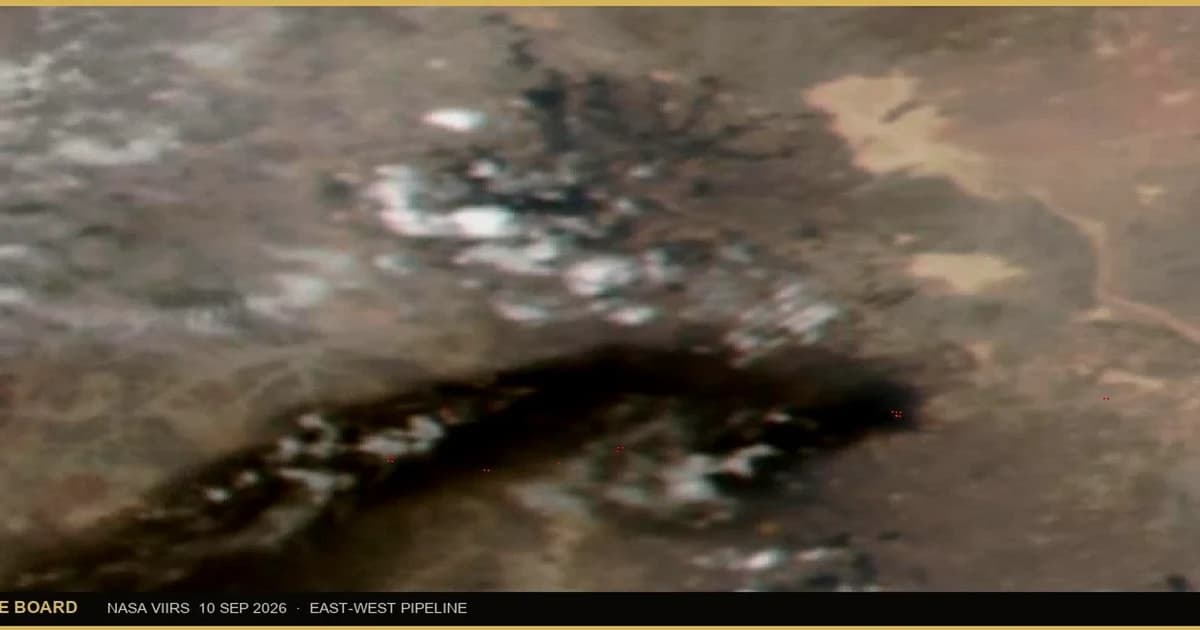
Houthis Take Perim as Saudis Halt Pipeline 2026
Geopolitics · Sep 13, 2026

Epstein Intelligence Ties: Evidence vs Allegation in 2026
Policy & Intelligence · Sep 6, 2026
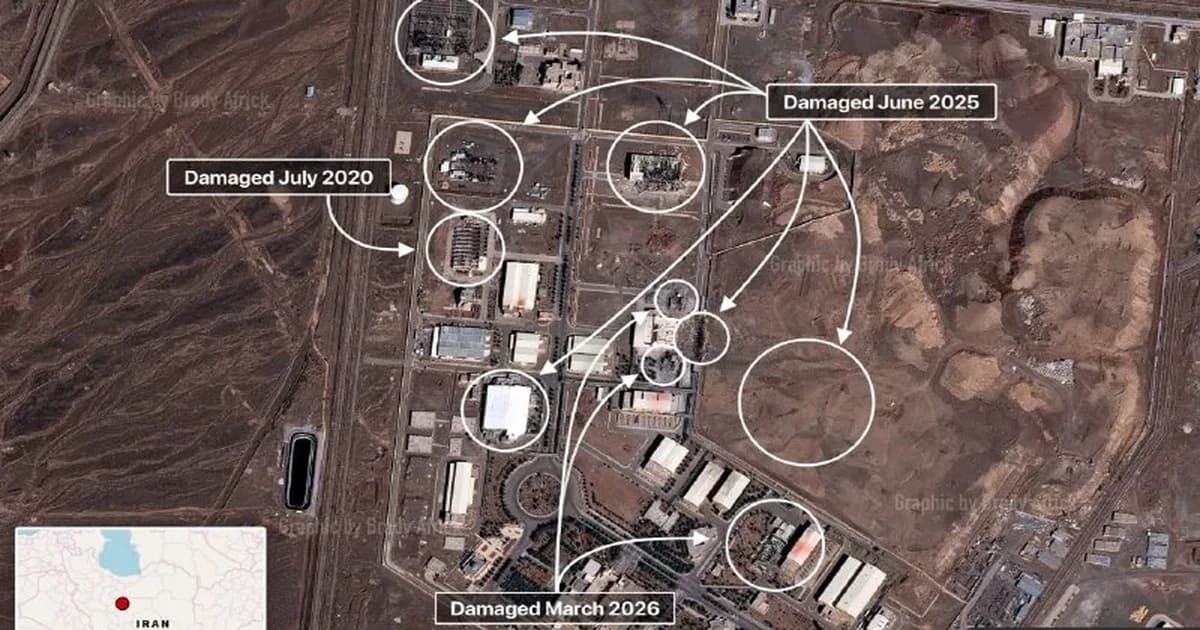
What Israel-Iran War Games Got Wrong About 2026
Defense & Security · Sep 6, 2026