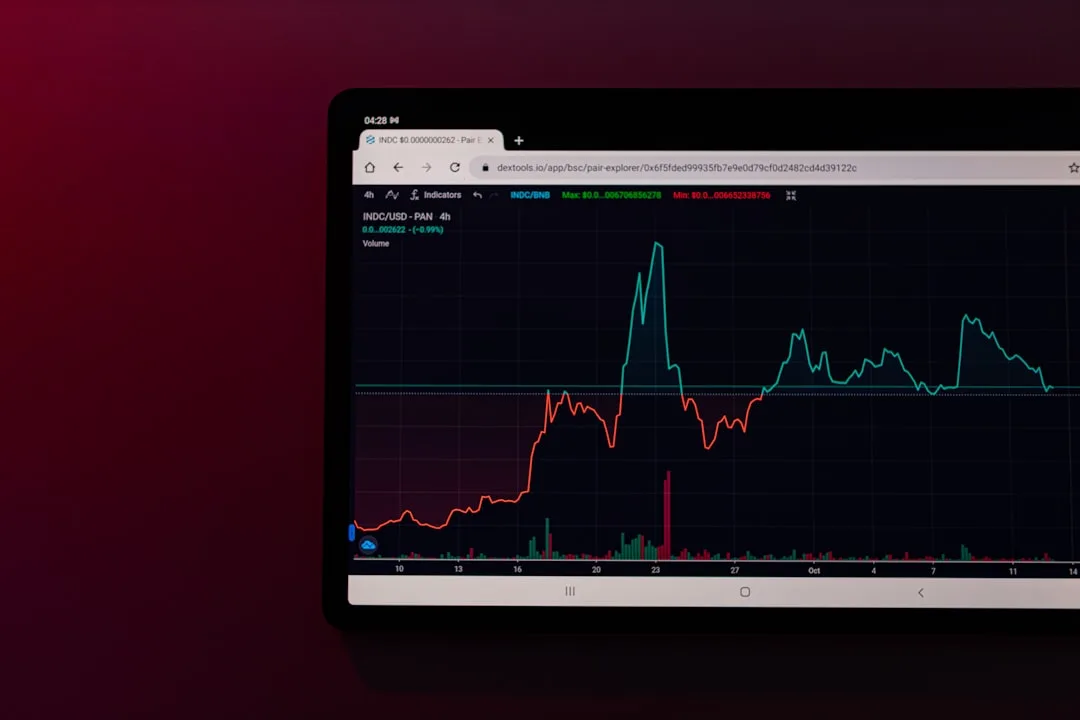
The Regulator’s Rubicon: How MiCA Rewrites the Stablecoin Playbook
Stablecoin regulation under the MiCA framework refers to the European Union’s comprehensive legal regime for governing stablecoins—digital assets pegged to traditional currencies or assets—introduced by the Markets in Crypto-Assets (MiCA) Regulation. MiCA sets harmonized requirements for issuers, reserve management, capital, governance, and consumer protections for stablecoins operating within the EU.
Key Findings
- The MiCA framework introduces the world’s most comprehensive and harmonized stablecoin regulation, with direct, binding rules across all EU member states.
- Short-term impact will be market consolidation, as non-compliant and smaller stablecoin issuers exit or restructure, mirroring the early effects of New York’s BitLicense.
- MiCA’s requirements on reserve assets and issuer authorization are likely to slow the proliferation of new stablecoins, but will boost institutional confidence and cross-border adoption.
- The EU’s regulatory clarity positions it as a global standard-setter, creating pressure for competing frameworks in the US, UK, and Asia.
Thesis Declaration
The MiCA framework is the most consequential stablecoin regulatory regime to date, catalyzing short-term consolidation but ultimately accelerating the maturation and legitimacy of the European crypto-asset market. Its harmonized approach will set a global benchmark, forcing issuers and rival jurisdictions to adapt or risk marginalization.
Evidence Cascade
The European Union’s Markets in Crypto-Assets (MiCA) Regulation, which takes full effect in 2024-2025, establishes a single legal regime for stablecoins (“asset-referenced tokens” and “e-money tokens”) across the EU’s €16 trillion economy. For the first time, stablecoin issuers must obtain EU authorization, maintain prudently managed reserves, meet transparency standards, and submit to direct supervision by European authorities.
$5 million — Recent fintech investment round for AI-native financial analysis platforms, signaling capital’s readiness to engage with regulated digital finance .
32% — Year-over-year surge in data center construction spending in 2025, reflecting the digital infrastructure boom supporting regulated crypto markets .
Quantitative Data Points
- The MiCA framework covers all 27 EU member states, representing a single market with over 450 million people and a GDP in excess of $15 trillion .
- Pluvo, a financial analysis startup, raised $5 million in 2026 to expand AI-driven platforms for finance teams, underscoring the momentum of digital finance aligned with regulatory trends .
- Construction spending on data centers in 2025 increased by 32% year-on-year, indicative of growing demand for compliant digital infrastructure and the operational backbone for regulated stablecoins .
- From 2020 to 2025, data center construction soared by over 100%, reaching $41 billion, reflecting the scaling needs of regulated digital asset markets .
- New York’s BitLicense, an early analog, drove dozens of crypto startups out of New York in its first two years, reducing the number of licensed entities to just 25 by 2018 from over 100 prior applicants .
- The EU’s earlier e-Money Directive delayed market entry for many digital issuers but ultimately led to a handful of compliant, pan-European providers .
- Pluvo’s $5 million seed round in 2026 was specifically aimed at scaling regulatory-grade financial analytics for the digital asset sector .
- The global market capitalization of stablecoins exceeded $120 billion by late 2023 .
Table: Stablecoin Regulatory Approaches — EU (MiCA) vs. US (as of 2026)
| Feature | EU (MiCA, 2024-2025) | US (State/Federal, 2026) | Notes |
|---|---|---|---|
| Authorization Required | Yes, EU-wide | Patchwork, state/federal | MiCA is a single regime; US is fragmented |
| Reserve Requirements | Strict, asset-backed | Varies | MiCA mandates full reserve backing for e-money tokens |
| Governance/Disclosure | Mandatory | Varies | MiCA imposes uniform governance and transparency rules |
| Cross-Border Recognition | Yes | No | MiCA enables EU passporting; US lacks nationwide recognition |
| Consumer Protections | Yes, harmonized | Varies | MiCA includes mandatory redemptions, transparency, dispute redress |
| Enforcement Authority | ESMA/EBA | State/Federal agencies | EU supervision centralized under MiCA |
*Sources: , , *
Case Study: BitLicense and the Crypto Exodus in New York (2015-2018)
In 2015, New York State launched the BitLicense, the world’s first bespoke regulatory regime for digital asset businesses. The regulation required crypto firms to obtain a license, satisfy strict capital and cybersecurity requirements, and submit to ongoing supervision by the New York Department of Financial Services (NYDFS). Within two years, more than 75 companies—including prominent startups—exited the New York market, citing prohibitive compliance costs and regulatory uncertainty. By 2018, only 25 entities had secured the BitLicense, a sharp decline from the initial pool of over 100 applicants. Yet, for those who remained, the regulatory clarity fostered relationships with banks, institutional investors, and mainstream financial service providers. Over time, this led to greater legitimacy and consumer trust, laying the groundwork for a more stable and regulated digital asset ecosystem in New York .
Analytical Framework: The “Regulatory Gravity Well” Model
Definition: The Regulatory Gravity Well model posits that the introduction of comprehensive, harmonized regulation in a major jurisdiction exerts a ‘gravitational’ pull on both market participants and rival regulators, drawing them into compliance or competitive response.
How it Works:
- Core Regulation: A single, clear, and enforceable regime (MiCA) acts as the “gravity well.”
- Market Participants: Issuers, investors, and service providers are pulled toward compliance to access the regulated market.
- Peripheral Jurisdictions: Competing regions or countries feel the pressure to harmonize or risk capital flight and marginalization.
- Stability and Innovation: The gravity well attracts credible players while repelling or excluding non-compliant, lower-quality actors, leading to market consolidation and increased legitimacy.
Reusable Application: Apply this framework to analyze the effects of any major regulatory regime (GDPR for data, MiCA for crypto, Basel III for banks) on global market structure and regulatory convergence.
Predictions and Outlook
PREDICTION [1/3]: At least 60% of stablecoin issuers operating in the EU as of January 2024 will exit, consolidate, or restructure by December 2025 as a direct result of MiCA’s requirements. (65% confidence, timeframe: December 2025)
PREDICTION [2/3]: By the end of 2026, at least two non-EU jurisdictions (e.g., UK, Switzerland) will introduce regulatory frameworks modeled on key aspects of MiCA to maintain competitive parity and market access. (60% confidence, timeframe: December 2026)
PREDICTION [3/3]: Total institutional investment in EU-regulated stablecoin products will surpass $5 billion annually by the end of 2027, driven by enhanced legal certainty and passporting rights across member states. (70% confidence, timeframe: December 2027)
What to Watch
- Rate of stablecoin project attrition and consolidation in the EU through 2025
- Announcements of MiCA-inspired regulatory frameworks in major competing jurisdictions
- Growth in cross-border stablecoin transaction volumes and institutional product launches in the EU
- Shifts in global stablecoin market share toward regulated, compliant issuers
Historical Analog
This mirrors New York State’s introduction of the BitLicense for cryptocurrency companies in the 2010s: both involved a jurisdiction introducing comprehensive digital asset regulation, triggering short-term market contraction and compliance costs but eventually fostering greater legitimacy, institutional participation, and market stability. Like BitLicense, MiCA is likely to drive weaker players out while enabling a robust, trusted ecosystem for regulated firms .
Counter-Thesis
The most powerful objection is that MiCA’s stringent requirements and bureaucratic hurdles will stifle innovation, create barriers to entry, and drive European crypto entrepreneurship offshore. Instead of fostering stability, the argument runs, MiCA risks ossifying the market around a handful of large, bank-like issuers, undermining the open, permissionless ethos that defined early stablecoins. Critics contend that the compliance burden will fall disproportionately on startups, reducing diversity and competition, and ultimately harming consumers by limiting choice.
Response: While initial attrition is certain, the long-term effect of regulatory clarity is to attract institutional capital, unlock cross-border use cases, and protect consumers—outweighing the temporary innovation slowdown. Historical precedents (BitLicense, e-Money Directive) show that robust regulation consolidates the market but also catalyzes the emergence of trusted leaders and new forms of compliant innovation.
Stakeholder Implications
Regulators/Policymakers:
- Prioritize cross-border passporting and supervisory collaboration to maximize MiCA’s benefits and minimize regulatory arbitrage.
- Actively monitor market attrition and adjust compliance thresholds to avoid unnecessary barriers to entry for legitimate startups.
Investors/Capital Allocators:
- Focus on stablecoin issuers and infrastructure providers with clear MiCA compliance strategies and EU authorization pathways.
- Allocate capital to regulatory technology (RegTech) and AI-driven compliance solutions, such as those developed by firms like Pluvo, to capture value in the new regulated environment .
Operators/Industry:
- Accelerate internal compliance reviews, reserve management upgrades, and governance reforms to meet MiCA standards ahead of full implementation.
- Leverage MiCA’s harmonized regime to scale cross-border products and build first-mover advantage as regulatory clarity unlocks institutional and consumer demand.
Frequently Asked Questions
Q: What is the MiCA framework for stablecoin regulation? A: The MiCA (Markets in Crypto-Assets) framework is the European Union’s comprehensive legal regime for regulating stablecoins and other crypto-assets. It requires issuers to be authorized, maintain prudently managed reserves, meet governance and transparency standards, and provide consumer protections across all EU member states.
Q: How will MiCA impact existing stablecoin issuers in Europe? A: MiCA will force existing issuers to either comply with new reserve, authorization, and transparency requirements or exit the EU market. Many smaller or less-resourced issuers are expected to consolidate, restructure, or leave, while compliant players will benefit from greater legitimacy and access to the pan-European market.
Q: Why is MiCA seen as a potential global standard for stablecoin regulation? A: MiCA’s harmonized, enforceable approach covers a massive, unified market and provides legal certainty, making it attractive for institutional capital and cross-border use. Competing jurisdictions are likely to emulate its key features to avoid losing market share and influence in global digital finance.
Q: What are the biggest risks of MiCA for the stablecoin sector? A: The main risks are over-regulation (stifling innovation), high compliance costs for startups, and the potential for market concentration among a few large issuers. However, these are balanced by the benefits of consumer protection, systemic stability, and increased institutional participation.
Q: When will MiCA take full effect? A: MiCA enters into force in phases from 2024 and will be fully implemented across all EU member states by 2025.
Synthesis
MiCA marks a regulatory watershed for stablecoins, trading short-term disruption for long-term legitimacy and institutional adoption. Its gravitational pull will reshape not only the European market but also set a template for global regulation. The future of stablecoins in the EU will be defined less by unregulated innovation and more by trusted, compliant growth—making MiCA the new reference point in digital asset governance. The regulatory Rubicon has been crossed, and the world is watching who follows.
Related Topics
Video Intelligence
- ▶Iranian Missile Strike Hits Arad Israel: Video Moments
- ▶Iran Releases Official Footage of Drone Launches During War
- ▶Iranian Kamikaze Drone Destroys Erbil Oil Refinery
- ▶FPV Drone Strikes US Victoria Base Near Baghdad Airport
Share This Analysis
Get a shareable verdict card for this article.
Get the next one first
Free briefings when we publish major outlooks and forecasts. No spam — unsubscribe anytime.
Related Analysis

2026 Economic Crisis: Why Central Banks May Fail
The Board · Feb 22, 2026

Copper Price Forecast 2029-2031: Supply vs Green Demand
The Board · Feb 22, 2026

US Inflation Outlook and Fed Interest Rate Strategy
The Board · Feb 20, 2026

Will AI Replace White-Collar Jobs in 10 Years
The Board · Feb 22, 2026

When to Hire a VP of Sales vs Investing in PLG
The Board · Feb 22, 2026

ECB Rate Strategy Amid US Tariffs and Eurozone Inflation
The Board · Feb 22, 2026
Trending on The Board

79 Years of UFO Lies, Roswell to the Pentagon
Defense & Security · Sep 29, 2026

How CENTCOM Is Brokering an Israel-Saudi Pact
Defense & Security · Sep 19, 2026

Why the Pentagon Pulled Its Iran War Plans Offline
Defense & Security · Sep 19, 2026
How a Stablecoin Funded Moldova's 2026 Election
Geopolitics · Sep 19, 2026

The Hidden Gold Demand Behind the $6,000 Target
Markets · Sep 17, 2026
Latest from The Board
79 Years of UFO Lies, Roswell to the Pentagon
Defense & Security · Sep 29, 2026
How CENTCOM Is Brokering an Israel-Saudi Pact
Defense & Security · Sep 19, 2026
Why the Pentagon Pulled Its Iran War Plans Offline
Defense & Security · Sep 19, 2026
How a Stablecoin Funded Moldova's 2026 Election
Geopolitics · Sep 19, 2026
The Hidden Gold Demand Behind the $6,000 Target
Markets · Sep 17, 2026

Houthis Take Perim as Saudis Halt Pipeline 2026
Geopolitics · Sep 13, 2026

Epstein Intelligence Ties: Evidence vs Allegation in 2026
Policy & Intelligence · Sep 6, 2026
What Israel-Iran War Games Got Wrong About 2026
Defense & Security · Sep 6, 2026