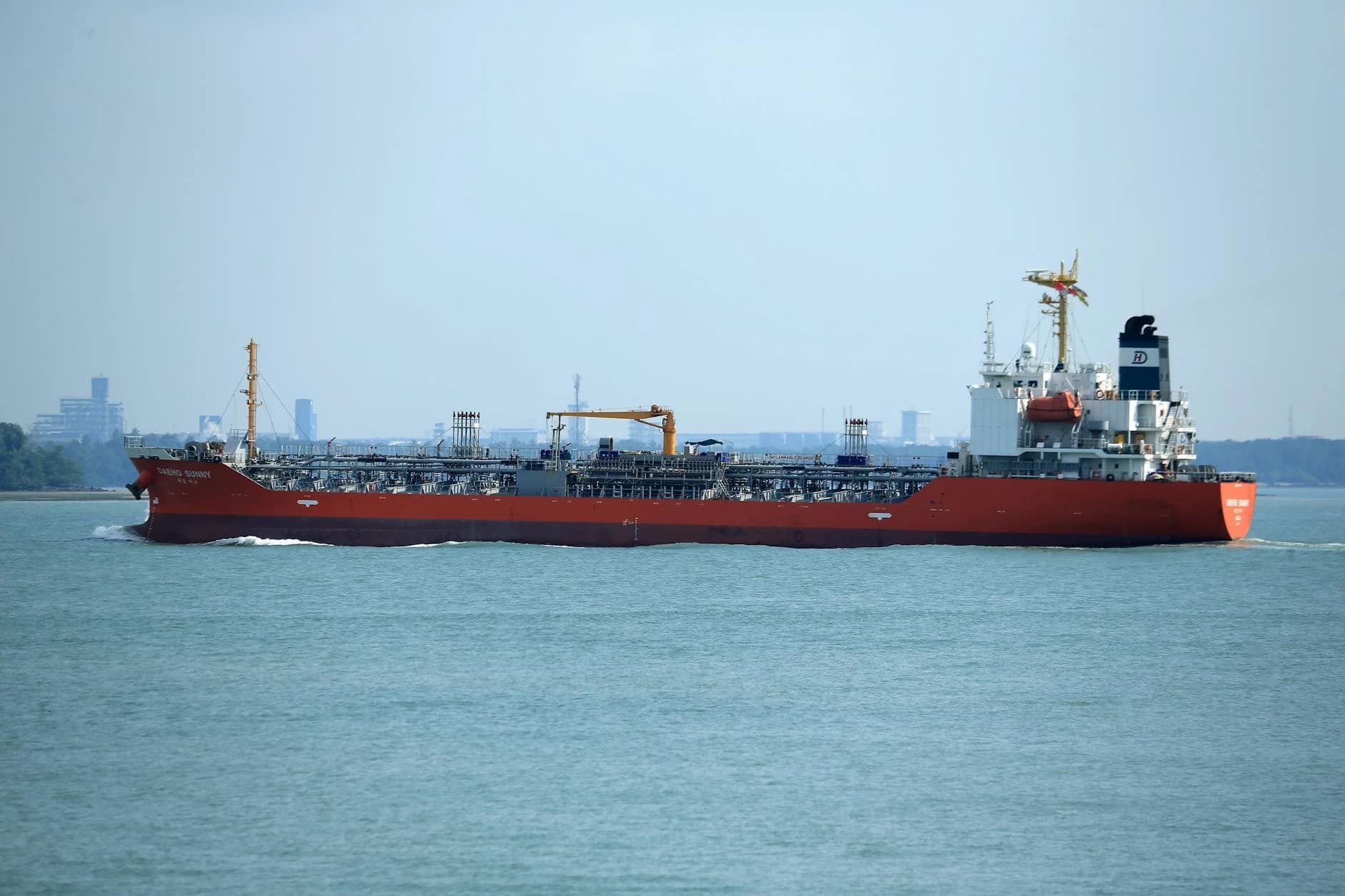
By The Board Markets Desk — Marine Insurance & Sovereign Risk Originally published March 2026. Updated May 2026 with current premium data and JWLA-033 boundary changes.
Key findings
- Lloyd's Joint War Committee circular JWLA-033, issued 3 March 2026, added Bahrain, Djibouti, Kuwait, Oman and Qatar to its Listed Areas — the first time five Gulf states have been added in a single revision.
- Persian Gulf hull war premiums spiked from a pre-conflict baseline of 0.25% of hull value (S&P Global) to a peak of 2.5% per seven-day period before settling near 1.0–1.5% by late March, according to Marsh Specialty's marine hull war lead Dylan Mortimer.
- US, UK, and Israeli-flagged tonnage pays roughly 3x the rate of comparable third-flag vessels for identical transits, per Lloyd's List — a flag-discriminating pricing structure that effectively imposes a private sanction.
- Suez Canal deadweight tonnage transits remain 57–64% below 2023 levels, with container traffic still 86% below pre-Houthi-crisis baselines, per BIMCO analysis. The reroute around the Cape of Good Hope adds 10–14 days and ~30% to per-voyage fuel cost.
- The closest historical analog — the 1980–88 Tanker War — saw 411 vessels attacked and Additional War Risk Premium (AWRP) spike from 0.025% pre-war to a peak of 12.5%. Current AWRP at 1–2.5% is still far below that ceiling, suggesting underwriters are pricing for escalation risk, not collapse.
The single number that explains the market
A 1% additional war risk premium on a $50 million vessel renewing weekly is $500,000 per week in pure underwriting cost. Multiply by ~50 weeks of Gulf trading and a single VLCC operator faces $25 million in annual incremental insurance — before bunkers, crew hazard pay, or hull replacement reserves.
That number is the lens through which every routing, pooling, and government-backstop conversation in the Middle East is now being held. Lloyd's Market Association quietly normalized it on 3 March 2026 with circular JWLA-033, and the rest of the marine insurance world has been catching up since.
This article is about why that number matters more than the ceasefire headlines, who is paying it, who is structurally exposed, and what comes next.
What changed on 3 March 2026
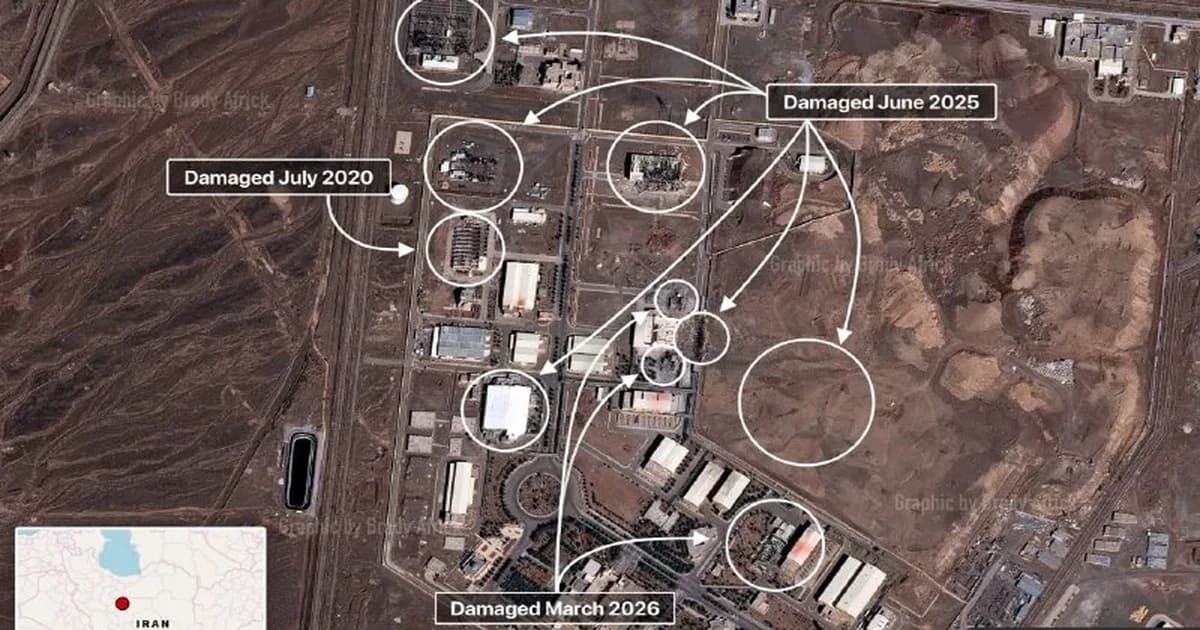
Before JWLA-033, the Persian Gulf, Gulf of Oman, and southern Red Sea were already Listed Areas — but Bahrain, Djibouti, Kuwait, Oman and Qatar were not. After the US-Israeli strikes on Iranian nuclear infrastructure on 28 February 2026, the Joint War Committee — chaired by Lloyd's underwriters plus IUA representatives — voted to add all five.
The practical consequence is automatic: any owner whose hull war policy references the Listed Areas (effectively all London-market and most continental coverage) must now notify underwriters before transit and pay the AWRP for any voyage to or through any of these jurisdictions. Coverage isn't withdrawn. It's repriced.
Per SAFETY4SEA, the boundary amendments redefined the wider region using GPS coordinates rather than national borders, which closed off geographic carve-outs operators had previously used for thin-margin trades.
Where premiums actually settled
There is no single Gulf war-risk premium. There is a matrix, and the matrix is what brokers actually quote.
| Voyage type | Pre-strike (Feb 2026) | Peak (early Mar 2026) | Late Mar 2026 | Source |
|---|---|---|---|---|
| Persian Gulf, no Hormuz transit | 0.05–0.10% | 0.5–1.0% | 0.4–0.7% | Marsh |
| Hormuz transit, third-flag | 0.25% | 2.5% | 1.0–1.5% | S&P Global |
| Hormuz transit, US/UK/Israeli flag | ~0.5% | up to 7.5% | 3.0–4.5% | Lloyd's List |
| Israeli port call (7-day) | 0.2% | 0.7–1.0% | 0.6–0.9% | SAFETY4SEA |
Two things stand out. First, the Hormuz/non-Hormuz split is now the most material pricing axis in marine insurance — historically rare for a strait inside an already-Listed area. Second, the flag-discrimination factor of ~3x on US/UK/Israeli tonnage is unprecedented at this scale and is how underwriters are pricing political-target risk distinct from kinetic-incident risk.
The IUMI signal
The International Union of Marine Insurance issued an unusual public statement in early March confirming that war risk cover for Persian Gulf and Red Sea transits "remains available" and that capacity is intact. That statement matters not for what it says but for why it was issued: the market was close enough to a public confidence break that the trade body felt obligated to put a floor under it.
Per AM Best's reporting on IUMI, single-voyage cover continues to be granted "subject to specific agreement" — broker code for case-by-case underwriting with no automatic facility renewals. That is a meaningfully more conservative posture than the standing facilities that existed pre-strike.
Who is structurally exposed
Three categories of operator absorb the premium asymmetrically.
Crude tanker pools. A VLCC under a Gulf charter pool now sees its weekly AWRP cost roughly equal to two days of TCE. At sustained 1% premiums, the pool either passes through to charterers (increasing landed crude prices) or compresses owner margins. Per Reinsurance News, several pool managers are negotiating multi-voyage facilities at 0.85% — a discount to spot but a step-change versus 2025 baselines.
Asia-bound containerized cargo. Suez routing was already 60% below 2023 throughput per BIMCO. Carriers that quietly began returning in late 2025 — see gCaptain's reporting on big-boxship Suez returns — now face combined Red Sea + Persian Gulf risk premiums that may again exceed Cape-routing fuel costs. Xeneta data suggests a 6% global TEU-mile demand reduction if container traffic does normalize through Suez.
LNG and product tankers serving Qatar and Kuwait. The five-state expansion in JWLA-033 means Qatar's North Field LNG exports — roughly 77 mtpa with much US and European destination — are now Listed-Area cargo by default. The same is true for Kuwaiti crude exports. These are flows where end-users (utilities, refiners) typically don't carry the AWRP themselves, which forces premium pass-through at the loading terminal.
Why a ceasefire won't reset this
A common error in 2026 reporting is to treat war-risk premiums as a kinetic-incident pricing function — i.e., assume premiums collapse when missiles stop flying. They don't, and the Insurance Business analysis of the 2026 ceasefire dynamics is precise on why.
Three structural factors keep premiums elevated post-ceasefire:
- Listed-Area status is sticky. The JWC adds areas frequently and removes them rarely. Ukraine has been Listed since 2014. Yemen since 2015. Strait of Hormuz since 1984.
- Reinsurance capacity contracts ahead of treaty renewals. April 1 and July 1 renewal dates compress underwriter willingness to write speculative new exposure 60–90 days prior. The 2026 strikes hit during the spring renewal season.
- Loss-development tail. Even if no new incidents occur, claims from the February-March incidents will develop over 18–36 months and sit on individual underwriter loss ratios, dampening the appetite for rate cuts.
Modern Diplomacy's analysis traced the same dynamic in the Tanker War: insurance premiums lagged kinetic activity by 6–12 months in both directions.
The Tanker War analog, with the caveat
The 1980–88 Tanker War is the natural comparison — 411 vessels attacked, AWRP peaking near 12.5% of hull value, Lloyd's losses such that several syndicates exited marine war underwriting entirely. Today's 1–2.5% is far below that ceiling.
The honest caveat: the comparison breaks in two places. First, the Tanker War featured deliberate vessel targeting by both sides as a campaign tool; the 2026 conflict has so far seen targeting confined to military and dual-use assets. Second, the 1980s Lloyd's market did not have today's reinsurance depth and was not backstopped by sovereign war-risk schemes — the WEF analysis on governments-as-insurers-of-last-resort shows that ten governments have stood up state-backed war-risk facilities since 2024, fundamentally changing the loss-absorbing structure.
So while AWRP could in principle return to high-single-digit territory, the institutional cushion is meaningfully larger than in 1988.
The operator playbook — what brokers are actually quoting
Three hedging structures dominate broker conversations as of the second week of April 2026, and the choice between them determines whether an owner faces a 50% or a 200% premium drag versus 2025 baselines.
Single-voyage spot cover. The default after JWLA-033. Charter the cover for the specific transit, pay the AWRP per the matrix above. Per Caixin Global's reporting, several Greek and Singapore-based owners reverted entirely to single-voyage cover within a week of the strikes, treating the AWRP as a variable cost to pass through to charterers. This works well for spot-market trades but gets expensive on a programmed run.
Multi-voyage facility with reinstatement. Some London facilities are now writing 6–12 voyage facilities at a roughly 15–20% discount to spot, but with strict reinstatement clauses — meaning if a covered loss occurs, the facility cap can be reset only on the underwriter's terms. The risk to the owner is that one incident anywhere on the facility resets pricing for the entire program.
Sovereign-backed pool. The World Economic Forum's April 2026 analysis traces the rise of state-backed war-risk facilities — roughly ten governments now operate variants. The UK's Pool Re analog, the Norwegian Skipsforsikringskommisjonen, and the Saudi-Kuwait joint facility announced in late March all provide alternatives or backstops to commercial Lloyd's cover. The trade-off: lower headline premium but slower claims handling, narrower covered perils, and political-risk exposure to the issuing state.
The structurally exposed operators we identified above tend to migrate toward sovereign-backed cover when commercial premiums exceed roughly 1.5% sustained. Below that threshold, commercial London-market cover remains the default because of the speed and breadth of claims response.
A note on K&R (kidnap and ransom) cover, which is technically distinct from war-risk hull but moves on adjacent cycles. Per Insurance Journal's Iran-conflict reporting, K&R premiums for crews transiting the Listed Areas have moved up roughly 35–60% since February, with several specialist underwriters declining new business for vessels with US/UK/Israeli crew composition. This is rate-sheet-level discrimination against the operating crew, and it matters for fleet management decisions about who is actually scheduled on Gulf voyages.
The reinsurance treaty cycle that compresses the window
Marine war risk capacity ultimately rests on retrocession capacity — reinsurance for the reinsurers. That capacity is renewed on standard treaty cycles, and 2026 has a particularly tight calendar.
The April 1 renewals (covering most of the European primary war-risk facilities) closed before the JWLA-033 update was fully reflected in market pricing. That means the April-renewed facilities are technically writing 2026-2027 risk on 2025 retro pricing — a compression that primary underwriters will have to absorb until July 1 renewals reset the curve.
Per Maritime Executive's market analysis, this April-July compression is what's keeping AWRP rates around 1% rather than the 1.5–2% they would otherwise reach if retro priced normally for the new risk environment. Watch the July 1 renewal commentary closely. If retro capacity contracts and primary underwriters lose the cushion, the AWRP step-up could be 50–100 basis points overnight.
The other event on the calendar is the Strauss Center for International Security's annual Strait of Hormuz Insurance Market briefing, historically issued in late June. That document tends to set the discourse for the second-half pricing cycle, and the 2026 edition is expected to take an unusually firm view given the JWLA-033 changes.
What to watch over the next 90 days
- JWC circular cadence. A new JWLA in May or June would signal that JWC sees the Listed-Area expansion as needing further refinement. The historical precedent: JWLA-027 (Feb 2024) was followed by three revisions in five months.
- Reinsurance treaty renewals at 1 July 2026. If retro capacity shrinks materially, primary war underwriters lose the leverage to keep AWRP near 1%. Watch the Property Casualty 360 analysis for renewal commentary.
- Iranian flag tonnage. If Iranian-flagged vessels begin appearing under new flag registries (the historical pattern in 1988 was a sudden expansion of Liberian and Panamanian re-flaggings), insurers will treat the underlying risk as having migrated rather than reduced.
- Suez recovery curve. Container traffic returning materially (Maersk and CMA CGM publicly resuming Red Sea) would re-price the regional risk pool as carriers absorb premium increases differently than tanker operators do.
Bottom line
The 1 March 2026 Joint War Committee circular wasn't a market shock. It was a market acknowledgment that the underwriting assumptions of 2024–25 — moderate Houthi risk, manageable Iran tail risk, soft Persian Gulf cover — no longer held. The new equilibrium prices Hormuz transit at roughly 4x its pre-conflict baseline and discriminates explicitly against US/UK/Israeli flag exposure. That structure will likely outlast any near-term ceasefire because Listed-Area status, reinsurance treaty cycles, and loss-development tails all operate on slower clocks than political settlements.
The question for owners is no longer can we still get cover. It's which structural exposure is most expensive to maintain — and that question is now answered weekly, in basis points, by the brokers writing the renewals.
Related Analysis
- The Hidden Gold Demand Behind the $6,000 Target
- Central Banks Turned Gold Sellers. One Country Did It.
- Silver Deficit 2026: BofA's $300 Target Explained
- Gold Price Forecast 2026: $10,000 Call vs $4,500 Banks
- Bitcoin $100K in 2026? The Money Says 1-in-5
Frequently asked questions
Q: How is war risk insurance different from standard hull cover? Standard hull and machinery (H&M) insurance excludes losses from war, terrorism, piracy, and "hostile acts." War risk is a separate policy class — typically written on the Lloyd's Marine Joint War Committee Hull Wording — that adds those perils back. Most ocean-going commercial hulls carry both. The premiums move on different cycles.
Q: What is the AWRP and how is it calculated? Additional War Risk Premium is the surcharge applied when a vessel transits a Listed Area or calls at a Listed Area port. It's quoted as a percentage of declared hull value, charged per voyage or per seven-day window. Underwriters set rates based on JWC area status, recent loss history, vessel flag, owner exposure profile, and broker-negotiated facility terms.
Q: Why are US, UK and Israeli ships charged so much more? Per Lloyd's List, underwriters now price flag-as-target-signal explicitly. The differential reflects the assessed probability that a vessel is targeted because of its flag rather than for its cargo or route — a category of risk that was not formally priced before March 2026.
Methodology and sources
This article reconstructs the March-April 2026 Persian Gulf war-risk repricing from primary insurance-market sources: Lloyd's Market Association circulars (notably JWLA-033), public statements from IUMI, broker commentary from Marsh Specialty, trade-press reporting in Lloyd's List, S&P Global Commodity Insights, Reinsurance News, and SAFETY4SEA, and trade-flow data from BIMCO and Xeneta. Premium quotes reflect spot market conditions and may have moved since publication.
For the historical comparison to the 1980–88 Tanker War, AWRP figures are drawn from Lloyd's archival data summarized in subsequent maritime insurance literature.
The Board Markets Desk welcomes corrections and source additions. Contact: editorial@theboard.world.
Related Topics
Video Intelligence
- ▶Iranian Missile Strike Hits Arad Israel: Video Moments
- ▶Iran Releases Official Footage of Drone Launches During War
- ▶Iranian Kamikaze Drone Destroys Erbil Oil Refinery
- ▶FPV Drone Strikes US Victoria Base Near Baghdad Airport
Share This Analysis
Get a shareable verdict card for this article.
Get the next one first
Free briefings when we publish major outlooks and forecasts. No spam — unsubscribe anytime.
Related Analysis

2026 Economic Crisis: Why Central Banks May Fail
The Board · Feb 22, 2026

Copper Price Forecast 2029-2031: Supply vs Green Demand
The Board · Feb 22, 2026

US Inflation Outlook and Fed Interest Rate Strategy
The Board · Feb 20, 2026

Will AI Replace White-Collar Jobs in 10 Years
The Board · Feb 22, 2026

When to Hire a VP of Sales vs Investing in PLG
The Board · Feb 22, 2026

ECB Rate Strategy Amid US Tariffs and Eurozone Inflation
The Board · Feb 22, 2026
Trending on The Board
How CENTCOM Is Brokering an Israel-Saudi Pact
Defense & Security · Sep 19, 2026

Why the Pentagon Pulled Its Iran War Plans Offline
Defense & Security · Sep 19, 2026
How a Stablecoin Funded Moldova's 2026 Election
Geopolitics · Sep 19, 2026

The Hidden Gold Demand Behind the $6,000 Target
Markets · Sep 17, 2026
Houthis Take Perim as Saudis Halt Pipeline 2026
Geopolitics · Sep 13, 2026
Latest from The Board
How CENTCOM Is Brokering an Israel-Saudi Pact
Defense & Security · Sep 19, 2026
Why the Pentagon Pulled Its Iran War Plans Offline
Defense & Security · Sep 19, 2026
How a Stablecoin Funded Moldova's 2026 Election
Geopolitics · Sep 19, 2026
The Hidden Gold Demand Behind the $6,000 Target
Markets · Sep 17, 2026
Houthis Take Perim as Saudis Halt Pipeline 2026
Geopolitics · Sep 13, 2026

Epstein Intelligence Ties: Evidence vs Allegation in 2026
Policy & Intelligence · Sep 6, 2026
What Israel-Iran War Games Got Wrong About 2026
Defense & Security · Sep 6, 2026

Central Banks Turned Gold Sellers. One Country Did It.
Markets · Aug 30, 2026