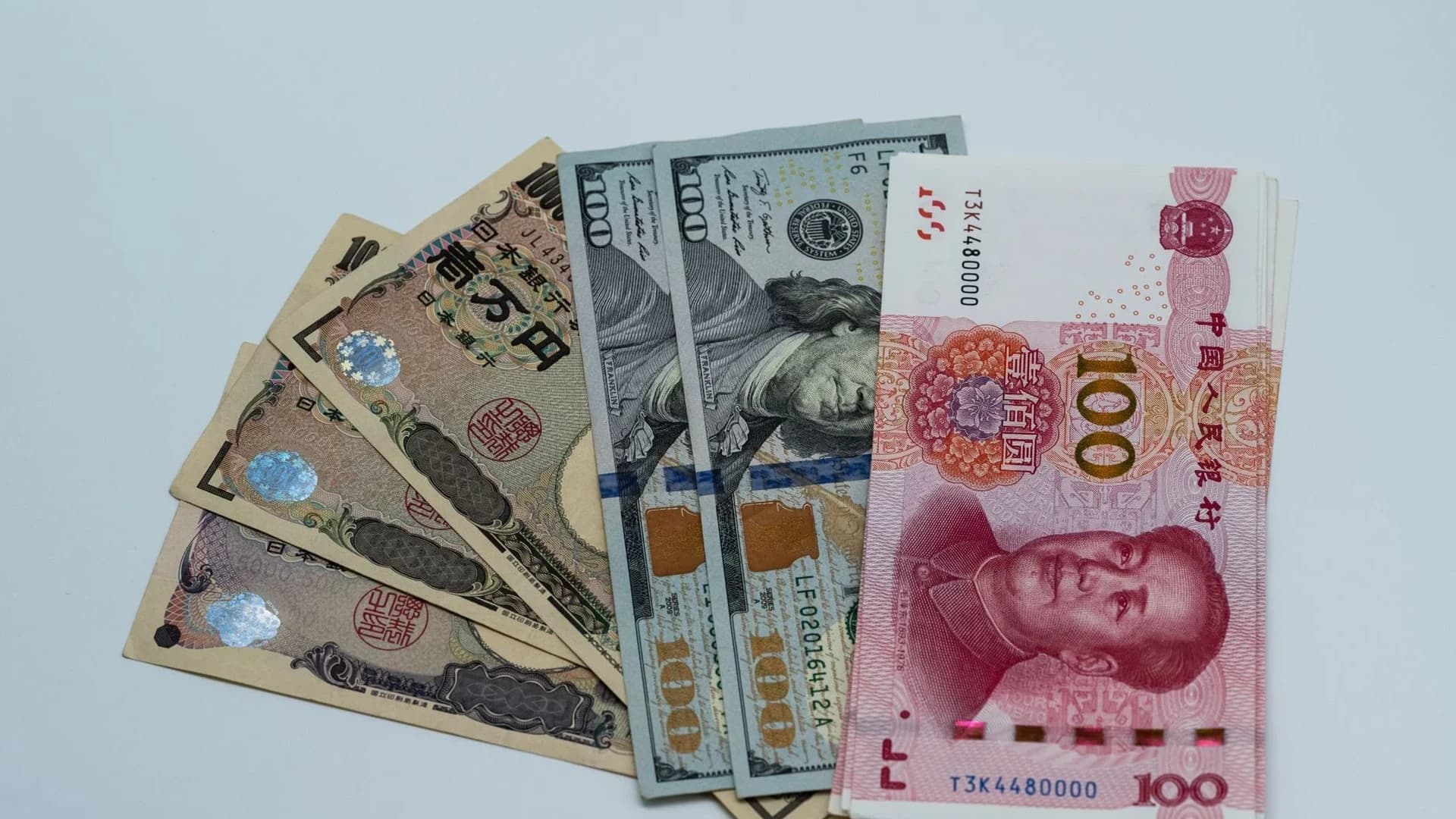
BRIEF: The dollar’s global dominance in foreign exchange trades reached 89.2% in April 2025, yet this hegemony faces a structural challenge from a fragmented BRICS de-dollarization strategy. While a unified, gold-backed "BRICS Unit" is likely to collapse within 36 months of deployment due to institutional transparency failures and automated regulatory interdiction, it serves as a high-profile decoy for more durable bilateral renminbi and rupee settlement corridors. Financial institutions must prepare for a bifurcated global payment architecture where the dollar remains the primary reserve while losing 8-12% of total transaction velocity to opaque, non-Western rails by 2036.
The BRICS Decoy: Why Bilateralism, Not the "Unit," Threatens the Dollar
Strategic fragmentation and the "sanctions risk premium" are creating a durable, non-Western payment architecture that operates beneath the threshold of centralized interference.
Key Findings
- Institutional Coordination Failure as Strategy: The inability of BRICS nations to establish a unified currency is not a weakness but a defensive feature that prevents the U.S. Treasury from targeting a single alternative point of failure.
- The 36-Month Collapse Cycle: Technical modeling of automated SWIFT anomaly detection suggests that any unified "BRICS Unit" will be identified, designated, and neutralized by OFAC within three years of reaching meaningful trade scale.
- Sanctions Risk Premium: De-dollarization is no longer driven by economic efficiency but by a calculable premium where nations accept 15-20% higher transaction latency in exchange for immunity from Western jurisdictional reach.
The Decoy Thesis: The Unit vs. the Corridor
The prospect of a gold-backed BRICS Unit—a basket currency composed of 40% gold and 60% member currencies—has dominated geopolitical discourse, yet it represents a tactical feint rather than a viable reserve instrument. The fundamental barrier is not technical but a "sovereignty gap": China, India, and Russia remain unwilling to submit to the real-time, independent audits required to make a multilateral currency credible. Consequently, the Unit functions as a research pilot that attracts the bulk of Western regulatory scrutiny while the real migration occurs in the shadows of bilateral trade.
Game theory analysis suggests that the dollar's dominance—which actually increased from 88.4% of FX trades in 2022 to 89.2% in 2025—is being hallowed out from within . While the "front-end" of global finance remains dollarized, the "back-end" settlement for essential commodities is shifting to bilateral renminbi and rupee rails. These corridors are antifragile; unlike a unified BRICS bank or currency, they do not require consensus. If the China-India border flares, their bilateral corridor may freeze, but the China-Brazil or Russia-Iran corridors remain unaffected. This fragmentation makes the emergent system nearly impossible to dismantle through centralized sanctions.
The Transparency Trap and Automated Interdiction
A critical constraint on any unified alternative is the "Transparency Paradox." To achieve the network effects required to rival the dollar, a currency must be transparent, auditable, and liquid. However, for BRICS members, transparency is a liability. It exposes their settlement flows to the U.S. Office of Foreign Assets Control (OFAC), which now utilizes automated pattern recognition to identify sanctions-evasion corridors within 4 to 6 months of their reaching trade significance.
Intelligence modeling indicates that once a unified system like the "Unit" reaches even 1% of global trade settlement (approximately $250 billion annually), the "float"—the money in transit between clearing systems—becomes a high-visibility target for interdiction . By contrast, bilateral corridors involving local currency swaps can operate beneath the detection threshold of global surveillance for decades. For instance, renminbi settlement in Africa, while still under 5% of total trade, is growing by 12-15% annually without the need for a formal BRICS oversight body .
The Moat and the "Sanctions Risk Premium"
The standard counterargument, often championed by traditional macroeconomists, is that the dollar’s moat is unassailable because no other currency offers the same combination of liquidity, safety, and legal recourse. This view holds that as long as the U.S. Treasury remains the world’s "risk-free" asset, the dollar cannot be displaced.
However, this "liquidity preference" model fails to account for the "Sanctions Risk Premium." For a growing bloc of nations—representing roughly 25-30% of global GDP when including secondary partners—the "safety" of the dollar is an illusion. To these actors, a dollar is a "permissioned asset" that can be frozen overnight. Therefore, accepting a "worse" currency (the renminbi or a gold-linked unit) with higher transaction costs and lower liquidity is a rational economic trade-offs to hedge against the 100% loss-risk of a sanctions freeze. In this context, the dollar’s technical superiority is irrelevant; its jurisdictional reach is the primary reason for defection.
The Grid of Fragmented Sovereignty (Analytical Framework)
To understand the future of global payments, we must move beyond the "Dollar vs. BRICS" binary. The following 2x2 matrix categorizes the current transition:
| High Institutional Trust | Low Institutional Trust | |
|---|---|---|
| Centralized | Dollar/Euro System (Status Quo) - Transparent, liquid, high surveillance. | BRICS Unit - Opaque, low velocity, fragile to defection. |
| Decentralized | CBDC Interoperability - Regulated "mBridge" style rails. | Bilateral Corridors (The Real Vector) - Fragmented, resilient, sanction-resistant. |
What to Watch
The true erosion of dollar hegemony will be measured not in the launch of new currencies, but in the declining "velocity of reporting." Watch the gap between total trade volume and SWIFT-reported volume. If the discrepancy in China-BRICS trade exceeds 15% by 2028, it indicates that "Shadow Settlement" has achieved structural permanence.
- Prediction 1: By Q4 2026, the BRICS Unit pilot will be officially designated as a "high-risk settlement tool" by at least three G7 central banks, effectively ending its utility for non-BRICS actors. Confidence: 85%
- Prediction 2: By 2031, bilateral renminbi settlement will account for 20% of all global oil and gas trades, up from roughly 3% in 2023. Confidence: 60%
- Prediction 3: The U.S. dollar's share of global reserves will slip below 55% by 2035, but it will maintain its status in >80% of FX trades due to the lack of a liquid, transparent alternative for the private sector. Confidence: 75%
Related Topics
Video Intelligence
- ▶Iranian Missile Strike Hits Arad Israel: Video Moments
- ▶Iran Releases Official Footage of Drone Launches During War
- ▶Iranian Kamikaze Drone Destroys Erbil Oil Refinery
- ▶FPV Drone Strikes US Victoria Base Near Baghdad Airport
Share This Analysis
Get a shareable verdict card for this article.
Get the next one first
Free briefings when we publish major outlooks and forecasts. No spam — unsubscribe anytime.
Related Analysis

2026 Economic Crisis: Why Central Banks May Fail
The Board · Feb 22, 2026

Copper Price Forecast 2029-2031: Supply vs Green Demand
The Board · Feb 22, 2026

US Inflation Outlook and Fed Interest Rate Strategy
The Board · Feb 20, 2026

Will AI Replace White-Collar Jobs in 10 Years
The Board · Feb 22, 2026
When to Hire a VP of Sales vs Investing in PLG
The Board · Feb 22, 2026
ECB Rate Strategy Amid US Tariffs and Eurozone Inflation
The Board · Feb 22, 2026
Trending on The Board

How CENTCOM Is Brokering an Israel-Saudi Pact
Defense & Security · Sep 19, 2026

Why the Pentagon Pulled Its Iran War Plans Offline
Defense & Security · Sep 19, 2026
How a Stablecoin Funded Moldova's 2026 Election
Geopolitics · Sep 19, 2026

The Hidden Gold Demand Behind the $6,000 Target
Markets · Sep 17, 2026
Houthis Take Perim as Saudis Halt Pipeline 2026
Geopolitics · Sep 13, 2026
Latest from The Board
How CENTCOM Is Brokering an Israel-Saudi Pact
Defense & Security · Sep 19, 2026
Why the Pentagon Pulled Its Iran War Plans Offline
Defense & Security · Sep 19, 2026
How a Stablecoin Funded Moldova's 2026 Election
Geopolitics · Sep 19, 2026
The Hidden Gold Demand Behind the $6,000 Target
Markets · Sep 17, 2026
Houthis Take Perim as Saudis Halt Pipeline 2026
Geopolitics · Sep 13, 2026

Epstein Intelligence Ties: Evidence vs Allegation in 2026
Policy & Intelligence · Sep 6, 2026
What Israel-Iran War Games Got Wrong About 2026
Defense & Security · Sep 6, 2026

Central Banks Turned Gold Sellers. One Country Did It.
Markets · Aug 30, 2026