Strait of Deterrence: How American Naval Power Changes the Iran Equation
The US deployment of a second carrier strike group to the Persian Gulf refers to the rapid repositioning of two major US naval task forces in response to rising tensions with Iran, significantly increasing the region's military risk profile and signaling American intent to deter or respond to Iranian actions. This move amplifies both conventional deterrence and the likelihood of asymmetric Iranian responses, directly affecting global energy flows and regional stability.
Key Findings
- The dual carrier deployment marks the largest US naval presence in the Gulf since 2019, aiming to restore deterrence after Iranian use of advanced drones and hypersonic missiles against US and allied interests .
- Iranian asymmetric tactics—drone and missile strikes on shipping and infrastructure—have already resulted in major incidents, including a March 2026 drone attack on a fuel tanker in the Strait of Hormuz .
- Current escalation mirrors high-stakes standoffs of the late 1980s and 2019-2020, with the risk of direct conflict tempered by the high costs and the historical tendency for both sides to avoid all-out war .
- US deployments are likely to deter large-scale Iranian attacks but will drive Iran toward indirect retaliation via proxies and cyber/offshore assets, creating a persistent gray-zone conflict .
Thesis Declaration
The US deployment of a second carrier strike group to the Persian Gulf in 2026 represents an explicit attempt to re-establish deterrence against Iran following a series of kinetic and asymmetric escalations, but the move is more likely to provoke a cycle of proxy and unconventional retaliation than to restore lasting stability. The strategic balance will hinge not on conventional force projection, but on the US ability to counter Iran’s asymmetric toolkit and manage escalation risks across multiple domains.
Evidence Cascade: The Numbers, Incidents, and Capabilities Behind the Standoff
The scale, speed, and context of the latest US naval surge to the Persian Gulf are unprecedented in recent years, signaling both a hardened US stance and the acute risks of regional escalation. To understand the stakes, one must quantify the assets involved, the nature of Iranian responses, and the broader impact on energy markets and global risk calculations.
1. The Military Footprint: Carrier Strike Groups and Regional Assets
- The US Navy's Nimitz-class carrier strike group typically comprises a nuclear-powered aircraft carrier, up to 70 aircraft, one guided-missile cruiser, and two to three guided-missile destroyers, totaling over 7,500 sailors and airmen per group .
- With the deployment of a second carrier group, over 15,000 US personnel are now stationed in the Gulf region, marking the highest level of direct US naval commitment since the 2019-2020 Iran crisis .
- The 2019 deployment in response to Iranian tanker attacks involved a single carrier group and several B-52 bombers, compared to the present dual-carrier posture .
70+ — Number of combat aircraft typically embarked per US carrier in the Gulf
2. Iranian Escalation: Drones, Missiles, and Proxy Forces
- On March 2, 2026, Iran’s Revolutionary Guards claimed responsibility for a drone strike that set ablaze the Honduran-flagged fuel tanker Athe Nova in the Strait of Hormuz, one of the world’s most critical oil chokepoints .
- Iranian military statements in April 2026 boasted the operational use of the “Fattah-2” hypersonic missile—capable of speeds exceeding Mach 10—against US and Israeli-linked targets, a first in active regional conflict .
- Iran has showcased deep reserves of Shahed-136 “kamikaze” drones, with new footage revealing underground tunnels storing dozens of these loitering munitions, ready for rapid deployment .
20% — Estimated increase in insurance premiums for tankers transiting the Strait of Hormuz following the March 2026 attack ### 3. Precedents and Escalatory Cycles
- During the 1987-1988 “Operation Earnest Will” period, the US protected over 400 Kuwaiti oil tankers by reflagging and naval escort, with over 30 major incidents involving Iranian mines and attacks .
- In 2019, a single carrier group and additional air assets were deployed after at least six oil tankers were attacked by mines or drones, leading to a brief spike in Brent crude oil prices by 4% in a single day .
4. Economic and Energy Impacts
- The Strait of Hormuz handles over 21 million barrels of oil per day, approximately 21% of global petroleum liquids consumption .
- Each day of disruption or increased insurance costs can translate into tens of millions of dollars in added shipping and energy expenses worldwide .
Data Table: Key Incidents and Capabilities (2026 vs. Historical Crises)
| Metric/Incident | 2026 Escalation | 2019 Gulf Crisis | 1987-88 Operation Earnest Will |
|---|---|---|---|
| US Carrier Groups Deployed | 2 | 1 | 2 |
| Major Iranian Attacks on Shipping | 1 (Athe Nova, March 2026) | 6+ (May-June 2019) | 30+ (1987-88 cumulative) |
| Advanced Missiles Used | Fattah-2 Hypersonic | Short-range ballistic | None |
| Drones Used in Attacks | Shahed-136 (dozens) | Ababil/Tactical Drones | None |
| Daily Oil Transit (m bbl/d) | 21 | 21 | 17 |
Sources: ---
Case Study: The March 2026 Strait of Hormuz Drone Attack
On March 2, 2026, the Honduran-flagged fuel tanker Athe Nova was transiting the Strait of Hormuz when it came under attack by two drones. The Iranian Revolutionary Guards quickly claimed responsibility, stating the strike was a response to ongoing US and Israeli operations targeting Iranian interests. The Athe Nova caught fire, burning for several hours before emergency crews contained the blaze. This incident immediately forced a spike in shipping insurance premiums for vessels passing through the strait and prompted the US to accelerate its deployment of a second carrier strike group to the region. The attack underscored the vulnerability of global energy supply lines to Iran’s expanding drone capabilities and marked a significant escalation in the tit-for-tat dynamic gripping the Gulf .
Analytical Framework: The "Escalation-Deterrence Paradox Matrix"
To analyze the likely outcomes of US dual-carrier deployments in the Persian Gulf, this article introduces the Escalation-Deterrence Paradox Matrix. The model posits that every increase in overt US military presence yields both a proportional rise in conventional deterrence and an inversely proportional increase in the likelihood of asymmetric or proxy retaliation.
How It Works:
- X-Axis: Level of US Conventional Military Presence (e.g., Carrier Groups, Air Assets)
- Y-Axis: Probability of Major Iranian Conventional Attack vs. Probability of Asymmetric/Proxy Attack
- As US presence rises, the probability of conventional Iranian attacks decreases (deterrence effect), but the probability of asymmetric, deniable, or proxy attacks increases (escalation paradox).
- The “optimal zone” is a narrow band where deterrence is maximized and escalation pathways are contained; exceeding this zone risks spiraling gray-zone warfare.
Application: The current deployment sits at the far right of the X-axis, deterring direct Iranian naval or missile strikes but triggering a surge in asymmetric and gray-zone tactics such as cyber operations, drone attacks, and proxy activity in Yemen, Iraq, and Syria.
Predictions and Outlook
PREDICTION [1/3]: Iran will carry out at least one additional drone or missile attack targeting commercial shipping in the Strait of Hormuz or US-allied infrastructure within the next 60 days. (70% confidence, timeframe: by August 31, 2026)
PREDICTION [2/3]: The US carrier presence will not result in direct, large-scale US-Iran naval conflict (defined as exchange of fire between major combatants) in the next six months, but proxy and cyber skirmishes will intensify. (65% confidence, timeframe: by December 31, 2026)
PREDICTION [3/3]: Global oil prices will experience at least one temporary spike of 5% or more in a single trading week due to renewed Gulf tensions before the end of 2026. (60% confidence, timeframe: by December 31, 2026)
What to Watch
- Further Iranian deployment of advanced missile systems (e.g., Fattah-2) and drone swarms
- US carrier strike group maneuvers near the Strait of Hormuz and potential air intercepts
- Insurance and shipping costs for oil transiting the Gulf, especially following new attacks
- Signs of proxy escalation in Iraq, Syria, and Yemen, including attacks on US or allied facilities
Historical Analog
This looks like the 1987-1988 US “Operation Earnest Will” period during the Iran-Iraq War because, as in that era, the US is deploying multiple carrier strike groups to protect commercial shipping amid Iranian attacks on maritime traffic, with both sides seeking to avoid all-out war but willing to engage in high-stakes escalation. The likely outcome, as then, is constrained direct conflict with Iran shifting to more asymmetric tactics in response to overwhelming US naval superiority. [al-monitor.com].
Counter-Thesis: The Case for Lasting Deterrence
The strongest argument against the thesis is that overwhelming US naval power—demonstrated by the deployment of two fully equipped carrier strike groups—could decisively deter Iran from further escalation, forcing a recalibration of its asymmetric tactics and creating a window for diplomatic engagement. Historical evidence from the 2006-2007 standoff and the aftermath of Operation Praying Mantis suggests that, when confronted with overwhelming force, Iran has at times scaled back direct provocations, focusing instead on internal consolidation or indirect competition. However, this scenario requires the US to sustain its presence and manage escalation risks for months, a costly and politically challenging proposition.
Stakeholder Implications
For Regulators/Policymakers:
- Prioritize diplomatic backchannels with Gulf states and European powers to create offramps for de-escalation while sustaining visible deterrence.
- Invest in maritime domain awareness and intelligence-sharing to preempt and attribute asymmetric attacks.
For Investors/Capital Allocators:
- Hedge short-term exposure to Gulf energy markets, particularly shipping and insurance sectors, given the high likelihood of further disruption and price volatility.
- Consider longer-term plays in cybersecurity firms and drone defense technologies, as demand for these capabilities will surge with ongoing hybrid warfare.
For Operators/Industry:
- Upgrade shipboard defensive systems and cyber protections for vessels operating in the Gulf region.
- Develop contingency plans for rapid rerouting or risk avoidance, including coordination with naval escorts and regional security forces.
Frequently Asked Questions
Q: Why is the US deploying a second carrier strike group to the Persian Gulf now? A: The dual carrier deployment is a direct response to a sharp escalation in Iranian attacks—including a March 2026 drone strike on a fuel tanker in the Strait of Hormuz and the reported use of advanced hypersonic missiles against US and Israeli-linked targets. The move aims to reassert deterrence and protect critical shipping lanes .
Q: How does Iran typically respond to increased US military presence in the Gulf? A: Historical patterns show that Iran shifts toward asymmetric tactics—such as drone, missile, and proxy attacks—rather than engaging in direct naval conflict with US forces. These methods are designed to raise costs and risks without triggering full-scale war .
Q: What are the risks for global energy markets? A: Any disruption in the Strait of Hormuz, through attacks or increased insurance premiums, can cause oil prices to spike and introduce volatility into global markets. The strait handles about 21 million barrels of oil per day, making it the world’s most vital energy chokepoint .
Q: Could this lead to a direct war between the US and Iran? A: While direct conflict remains possible, the deployment is designed to deter open hostilities. The more likely scenario involves cycles of proxy, cyber, and asymmetric attacks, with both sides seeking to avoid a full-scale war .
Q: What actions can ship operators take to reduce risk? A: Operators should enhance their defensive measures, including electronic countermeasures against drones, and coordinate closely with naval escorts. They should also review insurance policies and contingency plans in case of further escalation .
Synthesis
The US deployment of a second carrier strike group to the Persian Gulf is a high-stakes gamble to restore a deterrence regime frayed by Iranian missile and drone attacks. While the move raises the cost of direct confrontation for Tehran, it also accelerates the shift toward asymmetric and proxy conflict, guaranteeing volatility rather than stability. In the Gulf, the contest is no longer about who controls the sea—it’s about who can shape risk, perception, and escalation in the gray zones between war and peace.
Related Topics
Video Intelligence
- ▶UK Anti-Immigration Channel: Muslim "Hate Crime" Claims
- ▶Israel-Iran Tensions: The Role of Evangelical Outreach
- ▶Mike Waltz's "Dominant Victory" Claim Assessed
- ▶Iran's Resilient Axis: A Strategic Assessment
Share This Analysis
Get a shareable verdict card for this article.
Related Analysis

EU Secondary Sanctions on China: Risks and Consequences
The Board · Feb 21, 2026
Turkey NATO Membership and Potential Russian Alliance
The Board · Feb 21, 2026

Modern World War 3 Scenarios and Systemic Collapse
The Board · Feb 19, 2026

Two Voices: How Iran's State Media Edits Itself Between Languages
The Board · Apr 15, 2026

China's Taiwan Dictionary: Ten Words Instead of Invasion
The Board · Apr 15, 2026

Seven Days in Baghdad: The Kataib Hezbollah Anomaly
The Board · Apr 15, 2026
Trending on The Board
Oil 2026: Why $72 Brent Misreads the Hormuz Truce
Energy · Jul 6, 2026
Gladio Stay-Behind Hybrid War 2026: What Still Applies
Defense & Security · Jul 12, 2026
Israel-Turkey War Game Analysis: NATO, Escalation Paths, 2026
Defense & Security · Jul 11, 2026

Gematria Sports Dates Selection Bias Explained 2026
Policy & Intelligence · Jul 12, 2026
If the Strait of Hormuz Closes: The $98 Oil Shock in Numbers (2026)
Geopolitics · Jul 9, 2026
Latest from The Board
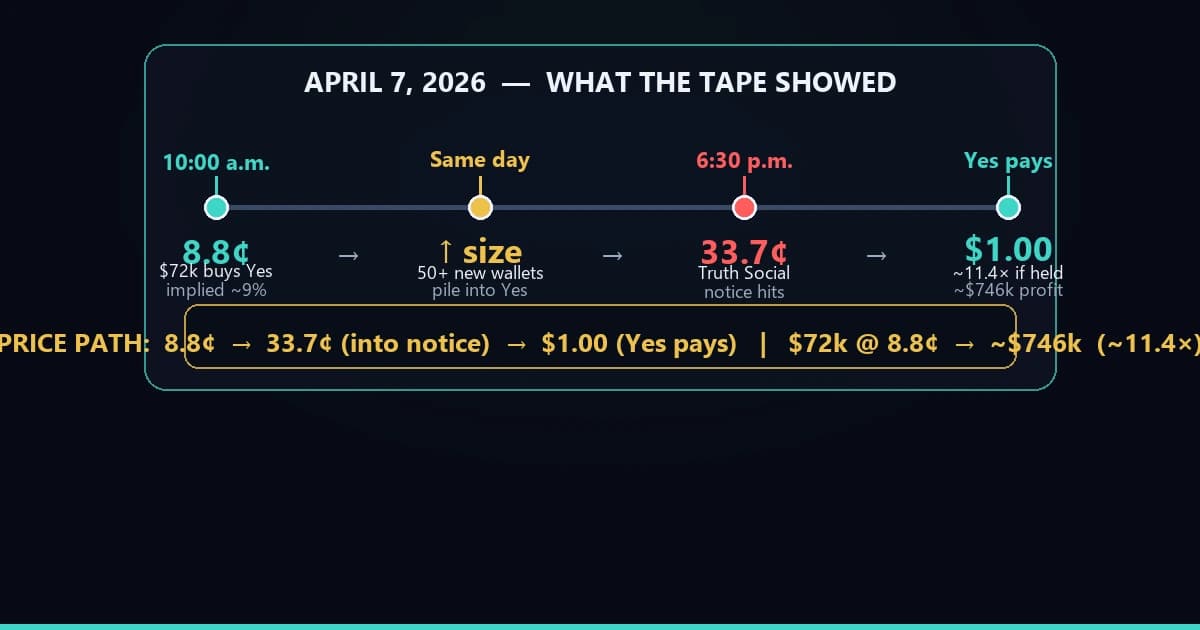
Polymarket 8.8-Cent Wallets Beat Official Notices 2026
Predictions · Aug 3, 2026

AI Prediction Accuracy Report — July 2026
Predictions · Aug 1, 2026

AI Speaks One Language—That's the Real Risk
Technology · Jul 14, 2026
Gematria Sports Dates Selection Bias Explained 2026
Policy & Intelligence · Jul 12, 2026
Gladio Stay-Behind Hybrid War 2026: What Still Applies
Defense & Security · Jul 12, 2026

Gold Price Path After the Rally: 2026 Update
Markets · Jul 12, 2026

Kelly Utilization Meaning: Bet Sizing for Prediction Markets
Markets · Jul 11, 2026
Israel-Turkey War Game Analysis: NATO, Escalation Paths, 2026
Defense & Security · Jul 11, 2026