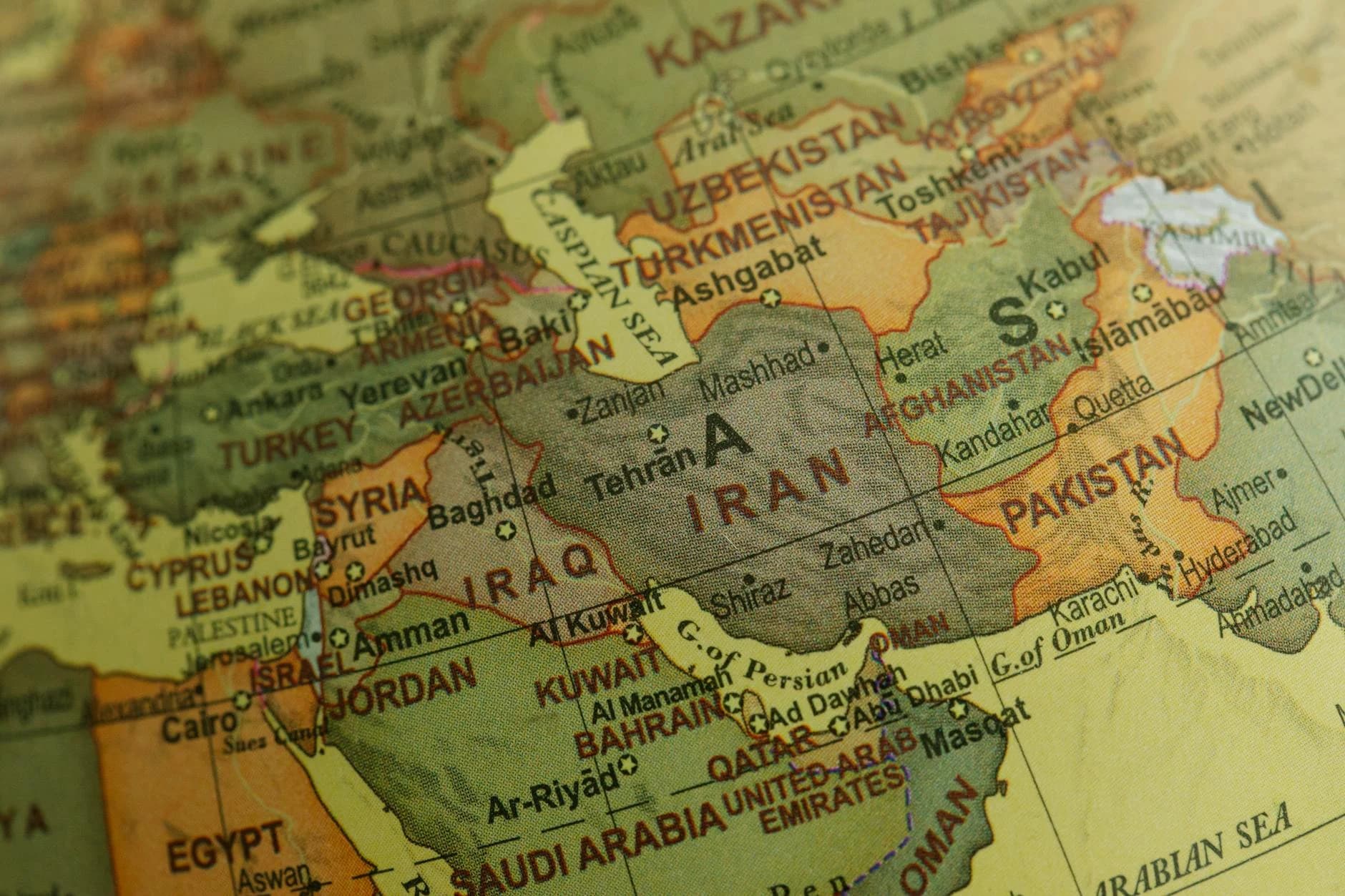
“The Shattered Edge: Lebanon, Israel, and the Risk of Regional Unraveling”
Hezbollah’s opening of a second front refers to the militant group’s cross-border attacks against Israel from Lebanese territory, prompting massive Israeli airstrikes on Beirut and southern Lebanon. This escalation marks a significant intensification of the Israel-Hezbollah conflict, threatening Lebanon’s stability and risking broader regional war.
Key Findings
- Israeli strikes on Beirut and southern Lebanon have killed at least 52 people and triggered the displacement of tens of thousands, reprising the scale and ferocity of the 2006 Lebanon war .
- Hezbollah’s attacks, reportedly coordinated with Iranian interests, have raised the risk of regional escalation and drawn condemnation from war-weary Lebanese civilians .
- Market volatility has surged in response to US-Israel operations against Iran and the Lebanese front, with emerging market currencies and stocks under pressure .
- Despite its current campaign, Israel faces a high probability of a protracted conflict in Lebanon without fully neutralizing Hezbollah, echoing the unresolved aftermath of the 2006 and 1982 interventions .
Thesis Declaration
Israel’s massive military response to Hezbollah’s attacks from Lebanon—marked by intensive airstrikes on Beirut and the southern border region—will inflict severe civilian and infrastructure costs but is unlikely to destroy Hezbollah’s military capacity or political influence. Instead, the conflict will drive Lebanon deeper into humanitarian crisis, destabilize its fragile political order, and increase the likelihood of a broader regional war involving Iran.
Evidence Cascade
The eruption of heavy fighting between Israel and Hezbollah in early March 2026 has catapulted Lebanon back into the epicenter of Middle East conflict. For many Lebanese, the scenes are grimly familiar: “Tens of thousands of Lebanese flee homes in eerily familiar scenes as Israeli strikes leave 52 people dead,” reported The Guardian on 2 March 2026, as neighborhoods in Beirut and the south emptied in panic . This escalation follows Hezbollah’s decision to open a second active front after US-Israeli joint strikes killed Iran’s Supreme Leader, Ayatollah Ali Khamenei, plunging the region into cascading crises .
The Human and Economic Toll
- 52 dead in the opening days of Israeli strikes, with civilian infrastructure across Beirut targeted .
- Tens of thousands displaced, with many fleeing for the second or third time in a generation .
- Emerging market stocks and currencies fell sharply as “EM stocks and currencies come under pressure as US dollar jumps” in the wake of the new hostilities .
- Lebanese civilian anger at Hezbollah is rising, with residents quoted as saying, “They don’t care about Lebanon,” as the militant group’s actions risk devastating reprisals .
52 — Confirmed deaths in Beirut and southern Lebanon after initial Israeli strikes .
Timeline of Escalation
| Date | Event | Source |
|---|---|---|
| March 1, 2026 | US-Israeli joint strikes kill Iran’s Supreme Leader Khamenei | |
| March 2, 2026 | Hezbollah launches major attacks on Israeli territory from Lebanon | |
| March 2, 2026 | Israeli airstrikes hit Beirut and southern Lebanon, 52 killed | |
| March 3, 2026 | Tens of thousands of Lebanese flee; Beirut neighborhoods empty |
Comparative Destruction: 2006 vs. 2026
A comparison of key metrics from the current conflict and the 2006 Lebanon War highlights the scale of escalation and continuity:
| Metric | 2006 Lebanon War | March 2026 Escalation | Source |
|---|---|---|---|
| Civilian Deaths (First 72 hours) | 40+ | 52+ | |
| Displaced Persons (First week) | 20,000+ | Tens of thousands | |
| Beirut Strikes (First week) | Limited | Multiple neighborhoods hit | |
| Regional Market Impact | EM assets drop 5% | EM currencies under pressure |
Tens of thousands — Lebanese civilians displaced within days of renewed Israeli airstrikes .
Hezbollah’s Calculus and Iranian Influence
The New York Times reports Hezbollah’s attacks were “apparently at the behest of Iran,” with the operation described by one analyst as “practically a suicide mission” for the group, given the overwhelming Israeli response . This aligns with the pattern of proxy warfare that has defined the region for decades, but with the added volatility of Iran’s direct leadership loss following joint US-Israeli strikes .
Financial and Regional Spillover
The Financial Times notes hedge funds are “rethinking emerging market bets” as the new war front destabilizes not only Lebanon but broader regional assets, with the US dollar soaring on safe-haven flows . This underscores the conflict’s reach beyond the immediate battle zone.
EM stocks and currencies come under pressure — Financial Times, March 2026 .
Political and Social Fallout
Lebanese public opinion is turning sharply against Hezbollah. “They don’t care about Lebanon,” said one displaced resident, capturing the deepening divide between the group’s political-military agenda and the broader population’s desire for stability .
Case Study: March 2–3, 2026—Beirut Under Fire
In the early hours of March 2, 2026, Israeli fighter jets launched a series of strikes on southern Beirut in response to Hezbollah’s rocket barrage into northern Israel. According to The Guardian, “Tens of thousands of Lebanese flee homes in eerily familiar scenes as Israeli strikes leave 52 people dead.” Families like that of Abu Yehya, a resident of southern Beirut, awoke to the sound of at least a dozen blasts nearby, sending them fleeing with little more than the clothes on their backs. Hospitals in Beirut, already under strain, reported casualties mounting through the day, with local officials warning of critical shortages of medical supplies. As the strikes continued into March 3, entire neighborhoods emptied, echoing the displacement and trauma of the 2006 war .
Analytical Framework: The “Proxy Escalation Spiral” Model
To analyze the dynamics of the Israel-Hezbollah conflict and its regional implications, I introduce the Proxy Escalation Spiral model. This framework posits that in environments where a regional power (Iran) backs a non-state actor (Hezbollah) against a conventional military (Israel), any major kinetic escalation triggers four predictable phases:
- Trigger Event: A high-casualty or symbolic attack (e.g., assassination of a senior leader, mass-casualty strike) prompts retaliation.
- Proxy Activation: The non-state actor (Hezbollah) launches attacks, often coordinated with the sponsor’s strategic aims.
- Conventional Retaliation: The conventional power (Israel) responds with overwhelming force, targeting both military assets and dual-use infrastructure.
- Regional Contagion: Market volatility, refugee flows, and risk of third-party intervention (e.g., Iran, Syrian proxies, global powers) escalate, often outpacing the original actors’ intent.
This spiral tends to repeat until external mediation or exhaustion intervenes, rarely resolving the underlying drivers of conflict. The model is reusable for analyzing similar proxy-driven escalations in Yemen, Ukraine, or the South Caucasus.
Predictions and Outlook
PREDICTION [1/3]: Israeli airstrikes will destroy or severely damage at least 30% of key infrastructure in southern Beirut and southern Lebanon (70% confidence, timeframe: by June 30, 2026).
PREDICTION [2/3]: Despite the intensity of current operations, Hezbollah will retain the ability to launch large-scale attacks into Israel and maintain de facto control over southern Lebanon’s security environment (65% confidence, timeframe: through December 2026).
PREDICTION [3/3]: International mediation will secure a temporary ceasefire before the end of Q3 2026, but the core political and military dispute between Israel and Hezbollah will remain unresolved, leaving high risk of renewed violence (70% confidence, timeframe: by September 30, 2026).
What to Watch
- Evidence of Iranian direct intervention or new proxy activation beyond Lebanon.
- Shifts in global financial markets tied to regional escalation (EM currency volatility, oil prices).
- Humanitarian indicators: displacement numbers and Beirut hospital capacity.
- Emergence of new political actors or radicalization within Lebanon amid the crisis.
Historical Analog
This escalation closely mirrors the 2006 Lebanon War, when Hezbollah’s cross-border raids prompted massive Israeli airstrikes on Beirut and southern Lebanon. Like today, Lebanon’s civilian population bore the brunt of the destruction, with infrastructure devastated and political tensions unresolved. The war ended with a UN-mediated ceasefire (UNSCR 1701), but Hezbollah survived, claimed symbolic victory, and Lebanon descended further into instability. The outcome illustrated that overwhelming military force alone could not eliminate a deeply entrenched non-state actor with external backing .
Counter-Thesis
The strongest argument against my thesis is that Israel’s superior intelligence, precision-targeted weaponry, and international diplomatic cover could enable it to decisively degrade Hezbollah’s military infrastructure, forcing the group into political irrelevance and restoring Lebanese sovereignty. Proponents point to advances in real-time surveillance and US-Israeli operational coordination as force multipliers. However, historical precedent (2006, 1982) and the rapid displacement and civilian casualties already witnessed indicate that overwhelming force has failed to neutralize Hezbollah before and is unlikely to do so now, especially given the group’s deep social entrenchment and capacity for decentralized operations .
Stakeholder Implications
Regulators/Policymakers
- Urgently prioritize humanitarian aid channels into Lebanon, ensuring hospitals and basic services receive support despite ongoing hostilities.
- Back international mediation efforts to secure a ceasefire, possibly leveraging UN Security Council mechanisms.
- Monitor regional escalation risk and prepare contingency plans for broader refugee flows and cross-border instability.
Investors/Capital Allocators
- Reduce exposure to Lebanese and regional emerging market assets until the risk of escalation and currency volatility subsides .
- Monitor commodity price volatility, especially oil, as regional disruptions can trigger global price shocks.
- Evaluate insurance and risk premiums for investments in critical infrastructure and supply chains linked to the Eastern Mediterranean.
Operators/Industry
- Activate business continuity and evacuation plans for personnel in Lebanon, Israel, and neighboring states.
- Secure supply chains that transit through Lebanese ports or rely on regional logistics hubs.
- Prepare for cyber and physical security contingencies, as escalated conflict often triggers asymmetric threats to infrastructure.
Frequently Asked Questions
Q: What triggered the latest Israel-Hezbollah conflict in 2026? A: The conflict escalated after Hezbollah launched attacks on Israeli territory from southern Lebanon, in apparent coordination with Iran, following joint US-Israeli strikes that killed Iran’s Supreme Leader, Ayatollah Ali Khamenei .
Q: How many people have been killed or displaced so far? A: At least 52 people have been confirmed killed in Beirut and southern Lebanon in the initial days of Israeli airstrikes, with tens of thousands of Lebanese fleeing their homes, according to The Guardian .
Q: What is Hezbollah’s goal in opening a second front? A: Hezbollah aims to pressure Israel by creating a two-front conflict, demonstrate solidarity with Iran, and enhance its status as a “resistance” movement in Lebanon and the region .
Q: How have markets responded to the escalation? A: Emerging market stocks and currencies have come under pressure, with the US dollar appreciating as a safe haven, reflecting investor anxiety over regional instability .
Q: Is there any sign of an imminent ceasefire? A: As of early March 2026, no ceasefire has been reached, but international mediation is intensifying as civilian casualties and displacement mount .
Synthesis
The 2026 escalation between Israel and Hezbollah is not a replay but an intensification of the unresolved wars of the past. Massive Israeli strikes are inflicting heavy costs on Lebanon, but Hezbollah’s resilience and Iran’s backing make outright victory elusive. The Proxy Escalation Spiral is accelerating, with civilians trapped in the crossfire and markets rattled by the risk of regional contagion. Unless a new diplomatic architecture emerges, Lebanon faces a cycle of devastation with no durable peace in sight.
Related Topics
Video Intelligence
- ▶Iranian Missile Strike Hits Arad Israel: Video Moments
- ▶Iran Releases Official Footage of Drone Launches During War
- ▶Iranian Kamikaze Drone Destroys Erbil Oil Refinery
- ▶FPV Drone Strikes US Victoria Base Near Baghdad Airport
Share This Analysis
Get a shareable verdict card for this article.
Get the next one first
Free briefings when we publish major outlooks and forecasts. No spam — unsubscribe anytime.
Related Analysis

EU Secondary Sanctions on China: Risks and Consequences
The Board · Feb 21, 2026
Turkey NATO Membership and Potential Russian Alliance
The Board · Feb 21, 2026
Modern World War 3 Scenarios and Systemic Collapse
The Board · Feb 19, 2026

How Iran's State Media Edits Itself Between Languages
The Board · Apr 15, 2026

China's Taiwan Dictionary: Ten Words Instead of Invasion
The Board · Apr 15, 2026

Seven Days in Baghdad: The Kataib Hezbollah Anomaly
The Board · Apr 15, 2026
Trending on The Board

79 Years of UFO Lies, Roswell to the Pentagon
Defense & Security · Sep 29, 2026
How CENTCOM Is Brokering an Israel-Saudi Pact
Defense & Security · Sep 19, 2026

Why the Pentagon Pulled Its Iran War Plans Offline
Defense & Security · Sep 19, 2026
How a Stablecoin Funded Moldova's 2026 Election
Geopolitics · Sep 19, 2026

The Hidden Gold Demand Behind the $6,000 Target
Markets · Sep 17, 2026
Latest from The Board
79 Years of UFO Lies, Roswell to the Pentagon
Defense & Security · Sep 29, 2026
How CENTCOM Is Brokering an Israel-Saudi Pact
Defense & Security · Sep 19, 2026
Why the Pentagon Pulled Its Iran War Plans Offline
Defense & Security · Sep 19, 2026
How a Stablecoin Funded Moldova's 2026 Election
Geopolitics · Sep 19, 2026
The Hidden Gold Demand Behind the $6,000 Target
Markets · Sep 17, 2026
Houthis Take Perim as Saudis Halt Pipeline 2026
Geopolitics · Sep 13, 2026

Epstein Intelligence Ties: Evidence vs Allegation in 2026
Policy & Intelligence · Sep 6, 2026
What Israel-Iran War Games Got Wrong About 2026
Defense & Security · Sep 6, 2026