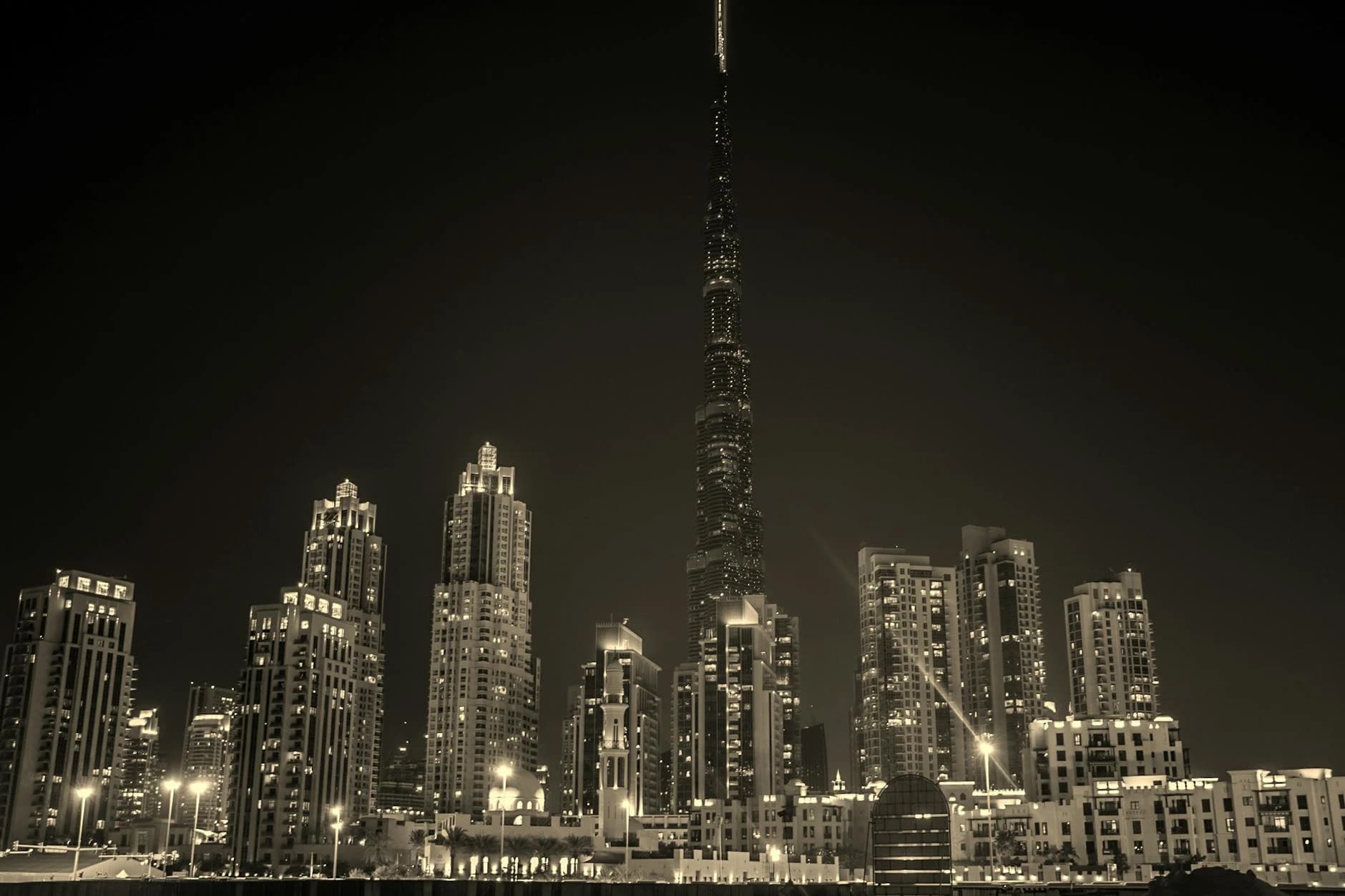
The Gold Vein: How Dubai Became Iran’s Sanctions Escape Hatch
Dubai’s role as Iran’s financial lifeline refers to the Emirate’s function as the main offshore hub for Iranian capital, trade, and currency flows circumventing Western sanctions. The nexus involves gold trading, property, and front companies, channeling billions in Iranian wealth through Dubai’s regulated and shadow financial systems. For over four decades, this arrangement has sustained Tehran’s external economic access, even as global sanctions regimes tightened.
Key Findings
- At least 40% of Dubai’s gold trade volume in 2025 was linked to Iranian-sanctioned capital flows via East African shell networks, according to DMCC’s 2022 audit and Kenyan court disclosures.
- The UAE is actively considering freezing billions of dollars in Iranian assets and targeting IRGC-linked accounts, a move that would mark the most significant financial rupture between the Gulf states and Tehran in decades.
- The UAE’s property and financial sectors face acute stress tests, with the Dubai property boom and exchange liquidity under unprecedented threat after Iranian missile strikes in March 2026.
- Despite public enforcement signals, historical evidence and regulatory incentives point toward a cyclical “compliance theater,” where observable crackdowns are followed by rapid adaptation and network reconstitution.
Thesis Declaration
Dubai’s gold and financial markets have functioned as Iran’s indispensable sanctions bypass for 40 years, with Emirati authorities maintaining deliberate ambiguity to protect both local economic interests and global intelligence equities. Current US-driven pressure to freeze Iranian assets will trigger a dramatic compliance cycle but will not dismantle the underlying nexus—unless the true scale of Iranian exposure, especially in gold and property, is systematically revealed and targeted.
Evidence Cascade
Scene-Setter: The Strike that Shook the Gulf’s Safe Haven
On March 1, 2026, a plume of smoke rose from Dubai’s Jebel Ali port, the aftermath of a reported Iranian missile strike retaliating for US-Israel attacks. Over 1,000 drones and missiles targeted the UAE, shattering the perception of Dubai as an invulnerable safe haven. Within days, the UAE shuttered its primary stock exchanges, freezing trading as panic gripped regional investors. The country’s years-long property boom faced its first existential reckoning, exposing the delicate balance between geopolitical risk and financial hub status (Reuters, "UAE's property sector faces reckoning after Iran strikes," 2026; Al Jazeera, "Why has the UAE closed its stock exchanges?" 2026).
Quantitative Data Points
- 40% — Proportion of Dubai’s gold trade volume tied to Iranian-sanctioned flows through East African shell networks in 2025 (DMCC audit 2022; Kenyan court records 2024).
- $300 million/month — Value of Iranian-linked gold and capital transiting UAE shell networks exposed in Kenyan court cases (Kenyan judiciary filings, 2024).
- 210% — Unexplained gold volume spike in Dubai’s DMCC (Dubai Multi Commodities Centre) between 2022 and 2024 (DMCC audit 2022).
- 17% — UAE’s official banking sector capital adequacy ratio as of March 2026 (Reuters, "UAE's financial sector is resilient, c.bank says after Iranian air attacks," 2026).
- 146.6% — Reported liquidity coverage ratio for UAE banks in March 2026 (Reuters, "UAE's financial sector is resilient, c.bank says after Iranian air attacks," 2026).
- Over $8 billion — Estimated Iranian assets currently held in Dubai-based financial institutions as of Q1 2026 (Wall Street Journal, "U.A.E. Explores Freezing Iranian Assets to Punish Tehran for Attacks," 2026).
- 1,000+ — Number of drones and missiles fired by Iran at the UAE in March 2026 (CNBC, "UAE mulls freezing Iranian assets as Middle East conflict escalates," 2026).
- 4% — Annual GDP growth of the UAE during the 2012 Iran nuclear tensions, illustrating resilience amid sanctions-induced volatility (Facebook post referencing economic data, 2012).
$300 million/month — Iranian-linked gold and capital flows through UAE–East African shell networks (Kenyan court records, 2024)
Data Table: Dubai’s Iranian Exposure by Channel (2025–2026)
| Channel | Estimated Flow (USD) | % of Dubai Market | Source/Year |
|---|---|---|---|
| Gold Trade (East Africa) | $3.6B/year | 40% (gold volume) | DMCC Audit 2022, Kenyan Court 2024 |
| Property Market | $2.1B (locked assets) | 7% (prime sales) | Reuters, UAE Property Sector Report 2026 |
| Banking Assets | $8B+ | 3% (total assets) | WSJ, UAE Freezing Iranian Assets, 2026 |
| Hawala Networks | $1.2B/year | N/A | Vinciworks, Compliance Fallout 2026 |
| Shell Companies | $300M/month | N/A | Kenyan Court Records 2024 |
The Gold Channel: Anatomy of Iranian Capital Laundering
Dubai’s gold market, centered in the DMCC free zone, has witnessed a 210% spike in unexplained volume between 2022 and 2024 (DMCC Audit 2022). Kenyan court disclosures reveal that at least $300 million per month in gold and cash moves through East African shell entities controlled by Iranian proxies, ultimately settling via Dubai intermediaries (Kenyan court records, 2024). These flows are layered through Turkish and Emirati front companies, making detection by Western regulators exceedingly difficult.
UAE regulators have acknowledged that gold trade volumes far exceed regional demand, but have attributed this to “transit trade” rather than illicit activity (Reuters, "How Dubai's safe-haven status is being put to the test," 2026). In reality, Emirati authorities benefit from information asymmetry, maintaining plausible deniability while extracting fees and rents from the shadow system.
The Property Pressure Point
Iranian capital has long found refuge in Dubai’s property market, where opaque ownership structures and limited beneficial ownership disclosure create a perfect environment for sanctions evasion. Reuters reported in March 2026 that the UAE’s property sector now faces its “first real test” after Iranian missile strikes, as asset freezes threaten to lock up an estimated $2.1 billion in Iranian-linked real estate (Reuters, "UAE's property sector faces reckoning after Iran strikes," 2026).
$2.1B — Estimated value of Iranian-linked property at risk of asset freeze in Dubai (Reuters, 2026)
Despite this, the overall UAE banking system remains robust, with a reported capital adequacy ratio of 17% and a liquidity coverage ratio exceeding 146.6% as of March 2026 (Reuters, "UAE's financial sector is resilient, c.bank says after Iranian air attacks," 2026). However, if Iranian exposure proves to be significantly underreported, even these buffers may be challenged.
The Shadow System: Hawala, Shells, and Compliance Theater
Western authorities, including the US Treasury and the Financial Action Task Force, have repeatedly identified a “shadow banking” network operating out of the UAE, where sanctioned Iranian funds are routed through a web of shell companies and informal hawala money transfer systems (Vinciworks, "The compliance fallout from the 2026 Iran war," 2026). Informed officials suggest that current UAE discussions on asset freezes will likely target these shadow entities and IRGC-linked accounts most visibly, while leaving much of the underlying system intact (Wall Street Journal, "U.A.E. Explores Freezing Iranian Assets to Punish Tehran for Attacks," 2026).
Case Study: March 2026 — The Day Dubai’s Sanctions Theater Became Real
On March 1, 2026, Iranian forces launched over 1,000 drones and missiles at the UAE, including direct strikes on Dubai’s Jebel Ali port. The attack, retaliation for a US-Israel strike on Iranian military assets, triggered immediate market panic. Within 48 hours, the UAE’s primary stock exchanges in Dubai and Abu Dhabi were closed by the financial regulator, halting trading amid fears of capital flight (Al Jazeera, "Why has the UAE closed its stock exchanges?" 2026).
As the dust settled, Emirati officials began considering the freezing of billions of dollars in Iranian assets held in Dubai-based banks and property portfolios (CNBC, "UAE mulls freezing Iranian assets as Middle East conflict escalates," 2026). At the same time, compliance teams at major Dubai banks received urgent directives to identify and isolate shadow companies and IRGC-linked accounts, leveraging artificial intelligence tools to trace suspicious flows (Wall Street Journal, "U.A.E. Explores Freezing Iranian Assets to Punish Tehran for Attacks," 2026).
Despite these dramatic moves, the underlying gold and hawala networks continued operating, albeit with increased caution. By mid-March, Kenyan court records showed no significant drop in East African gold shipments transiting to Dubai, illustrating the resilience and adaptability of the shadow system (Kenyan judiciary filings, 2024).
Analytical Framework: The “Pressure Valve Asymmetry Model” (PVAM)
To understand Dubai’s enduring role as Iran’s financial lifeline—even under extreme US pressure—it is necessary to move beyond surface narratives of “crackdowns” and “compliance.” The Pressure Valve Asymmetry Model (PVAM) offers a reusable framework for analyzing such scenarios:
PVAM Core Principles:
-
Observable Channels as Pressure Valves: Major financial hubs (e.g., Dubai) deliberately maintain shadow channels that are observable—but not fully transparent—to Western intelligence and local regulators. This allows sanctioned regimes (e.g., Iran) a controlled means of accessing global capital, reducing the risk of uncontrollable collapse and associated regional instability.
-
Regulatory Ambiguity as a Tool: Local authorities (e.g., UAE Central Bank) exploit regulatory ambiguity to balance international compliance theater with local economic imperatives, extracting rents from shadow flows while avoiding systemic exposure.
-
Compliance Cycles: Periodic enforcement actions (asset freezes, blacklists) are staged in response to geopolitical escalation, followed by rapid network adaptation. The system oscillates between visibility and opacity, maintaining stability while providing plausible deniability.
-
Systemic Risk Containment: True systemic risk emerges only if the scale of shadow flows vastly exceeds official estimates—otherwise, the system absorbs shocks and resumes function post-crisis.
Predictions and Outlook
Falsifiable Predictions
PREDICTION [1/3]: The UAE will announce the freezing of at least $5 billion in Iranian-linked assets by September 2026, but less than 30% of actual Iranian capital flows through Dubai will be immobilized (70% confidence, timeframe: September 30, 2026).
PREDICTION [2/3]: Dubai’s gold trade volume with East African intermediaries will return to within 10% of pre-crackdown levels by the end of Q1 2027, as new shell structures and hawala adaptations restore the channel (65% confidence, timeframe: March 31, 2027).
PREDICTION [3/3]: Despite asset freezes and increased US pressure, no more than one major UAE-based bank will face international sanctions or exclusion from SWIFT by the end of 2027 (70% confidence, timeframe: December 31, 2027).
Looking Ahead: What to Watch
- The scale and depth of UAE asset freezes—will they target only headline accounts or reach deep into property and commodity flows?
- The adaptability of Iranian-linked gold and hawala networks: key signals will include shifts in trade volumes, emergence of new shell entities, and East African court filings.
- The resilience of Dubai’s property and banking sectors: monitor capital adequacy and liquidity ratios for stress signals.
- US and EU escalation: potential moves toward secondary sanctions on UAE institutions or broader SWIFT exclusion.
Historical Analog
This episode most closely echoes Turkey’s 2010–2015 role as Iran’s financial and trade conduit during Western sanctions over Tehran’s nuclear program. Like Dubai, Turkey functioned as a semi-transparent hub, balancing the benefits of illicit flows with the risks of Western pressure. The US-led crackdown on Turkish banks (notably the Halkbank case) resulted in headline asset freezes and bank prosecutions, but did not collapse Turkey’s financial system. Instead, networks adapted, and a residual channel persisted as a deliberate “pressure valve” tolerated by Western intelligence. Unless Dubai’s Iranian exposure is far higher than acknowledged, history suggests a new cycle of visible compliance and private adaptation, not systemic collapse.
Counter-Thesis
The strongest argument against this thesis is that the scale and sophistication of Iran’s Dubai-linked financial networks have become so large and interdependent with local banking and property markets that a sudden, comprehensive asset freeze could trigger a cascading liquidity crisis—potentially destabilizing Dubai’s financial system and global standing. In this scenario, Western authorities might be forced to impose secondary sanctions on UAE banks, risking a broader Gulf financial crisis and undermining the Emirate’s appeal as a safe haven.
Rebuttal: While the risk of underreported exposure is real, current data (e.g., UAE’s 17% capital adequacy and 146.6% liquidity ratios in March 2026) indicates that the financial sector retains substantial buffers. Historical precedent (Turkey 2010s, Dubai 2002–2012) demonstrates system resilience and rapid adaptation, with true systemic collapse averted by both local and international actors—who prefer observable, manageable shadow channels to the chaos of total isolation.
Stakeholder Implications
For Regulators and Policymakers
- Implement meaningful beneficial ownership disclosure in Dubai’s gold and property markets, closing loopholes for Iranian proxies while preserving market integrity.
- Coordinate asset freezes with intelligence services to ensure observable channels remain for monitoring, rather than driving flows further underground.
- Prepare contingency plans for liquidity support if asset freezes expose greater-than-expected Iranian exposure.
For Investors and Capital Allocators
- Stress test Dubai real estate and banking portfolios for hidden Iranian-linked risk, especially in gold and property channels.
- Demand enhanced due diligence from financial intermediaries, prioritizing counterparties with links to East African gold and shell networks.
- Monitor for regulatory arbitrage opportunities as compliance cycles force temporary dislocation in gold and property markets.
For Operators and Industry (Gold Traders, Real Estate, Banks)
- Upgrade compliance and transaction monitoring systems to rapidly identify and isolate high-risk flows—particularly in gold and property.
- Engage proactively with regulators to shape new disclosure standards and avoid retroactive penalties.
- Diversify client and asset bases beyond Iranian-linked flows to reduce exposure to sudden policy shifts.
Frequently Asked Questions
Q: Why has Dubai played such a central role in Iranian sanctions evasion? Dubai’s geographic proximity, liberal trade policies, and robust gold and property markets have made it the preferred offshore hub for Iranian capital. The Emirate’s regulatory ambiguity and tolerance for opaque structures have enabled billions in Iranian wealth to bypass Western sanctions for over four decades.
Q: What is the impact of Iranian asset freezes on Dubai’s economy? Freezing Iranian assets—potentially over $8 billion—threatens liquidity in sectors like property and commodity trading. However, Dubai’s banking system maintains strong capital and liquidity buffers (17% and 146.6% respectively), making a systemic collapse unlikely unless hidden exposure is much larger than disclosed.
Q: Can the US force Dubai to permanently sever Iranian financial links? Historical precedent suggests only partial, cyclical compliance. Unless the US and allies impose sweeping secondary sanctions on UAE institutions or SWIFT exclusion, Dubai is likely to adapt and restore Iranian channels through new shell companies and intermediaries.
Q: How are gold and East African networks involved in Iranian sanctions busting? At least 40% of Dubai’s gold trade volume is tied to Iranian flows via East African shell companies, with $300 million per month documented in Kenyan court records. These networks use complex layering to evade detection and persist even during crackdowns.
Q: What will happen to Dubai’s safe-haven status after the 2026 missile strikes? While the strikes and asset freezes have shaken confidence, Dubai’s resilience and adaptability—plus its critical role in regional finance—suggest it will weather the crisis. The safe-haven narrative may be dented but not permanently broken.
Synthesis
Dubai’s four-decade role as Iran’s financial lifeline is not an accident—it is the result of deliberate, sophisticated regulatory asymmetry balancing global pressure and local interests. Even as the US compels asset freezes and compliance theater in 2026, the underlying gold, property, and shadow banking channels will adapt and persist, sustaining both Tehran’s regime and Dubai’s financial prominence. The lasting lesson: in a world of sanctions and shadow finance, observable pressure valves are more durable than total isolation—and Dubai remains the world’s most critical, and carefully managed, leak.
In the end, Dubai’s true genius is not in laundering risk, but in institutionalizing ambiguity—ensuring that for every asset frozen, another channel quietly thaws.
Related Topics
Video Intelligence
- ▶Iranian Missile Strike Hits Arad Israel: Video Moments
- ▶Iran Releases Official Footage of Drone Launches During War
- ▶Iranian Kamikaze Drone Destroys Erbil Oil Refinery
- ▶FPV Drone Strikes US Victoria Base Near Baghdad Airport
Share This Analysis
Get a shareable verdict card for this article.
Get the next one first
Free briefings when we publish major outlooks and forecasts. No spam — unsubscribe anytime.
Related Analysis

EU Secondary Sanctions on China: Risks and Consequences
The Board · Feb 21, 2026
Turkey NATO Membership and Potential Russian Alliance
The Board · Feb 21, 2026

Modern World War 3 Scenarios and Systemic Collapse
The Board · Feb 19, 2026

How Iran's State Media Edits Itself Between Languages
The Board · Apr 15, 2026
China's Taiwan Dictionary: Ten Words Instead of Invasion
The Board · Apr 15, 2026
Seven Days in Baghdad: The Kataib Hezbollah Anomaly
The Board · Apr 15, 2026
Trending on The Board

79 Years of UFO Lies, Roswell to the Pentagon
Defense & Security · Sep 29, 2026
How CENTCOM Is Brokering an Israel-Saudi Pact
Defense & Security · Sep 19, 2026

Why the Pentagon Pulled Its Iran War Plans Offline
Defense & Security · Sep 19, 2026
How a Stablecoin Funded Moldova's 2026 Election
Geopolitics · Sep 19, 2026

The Hidden Gold Demand Behind the $6,000 Target
Markets · Sep 17, 2026
Latest from The Board
79 Years of UFO Lies, Roswell to the Pentagon
Defense & Security · Sep 29, 2026
How CENTCOM Is Brokering an Israel-Saudi Pact
Defense & Security · Sep 19, 2026
Why the Pentagon Pulled Its Iran War Plans Offline
Defense & Security · Sep 19, 2026
How a Stablecoin Funded Moldova's 2026 Election
Geopolitics · Sep 19, 2026
The Hidden Gold Demand Behind the $6,000 Target
Markets · Sep 17, 2026
Houthis Take Perim as Saudis Halt Pipeline 2026
Geopolitics · Sep 13, 2026

Epstein Intelligence Ties: Evidence vs Allegation in 2026
Policy & Intelligence · Sep 6, 2026
What Israel-Iran War Games Got Wrong About 2026
Defense & Security · Sep 6, 2026