The Silk Corridor Reborn: How Chinese Airlifts to Tehran Signal a New Era of Proxy Supply Chains
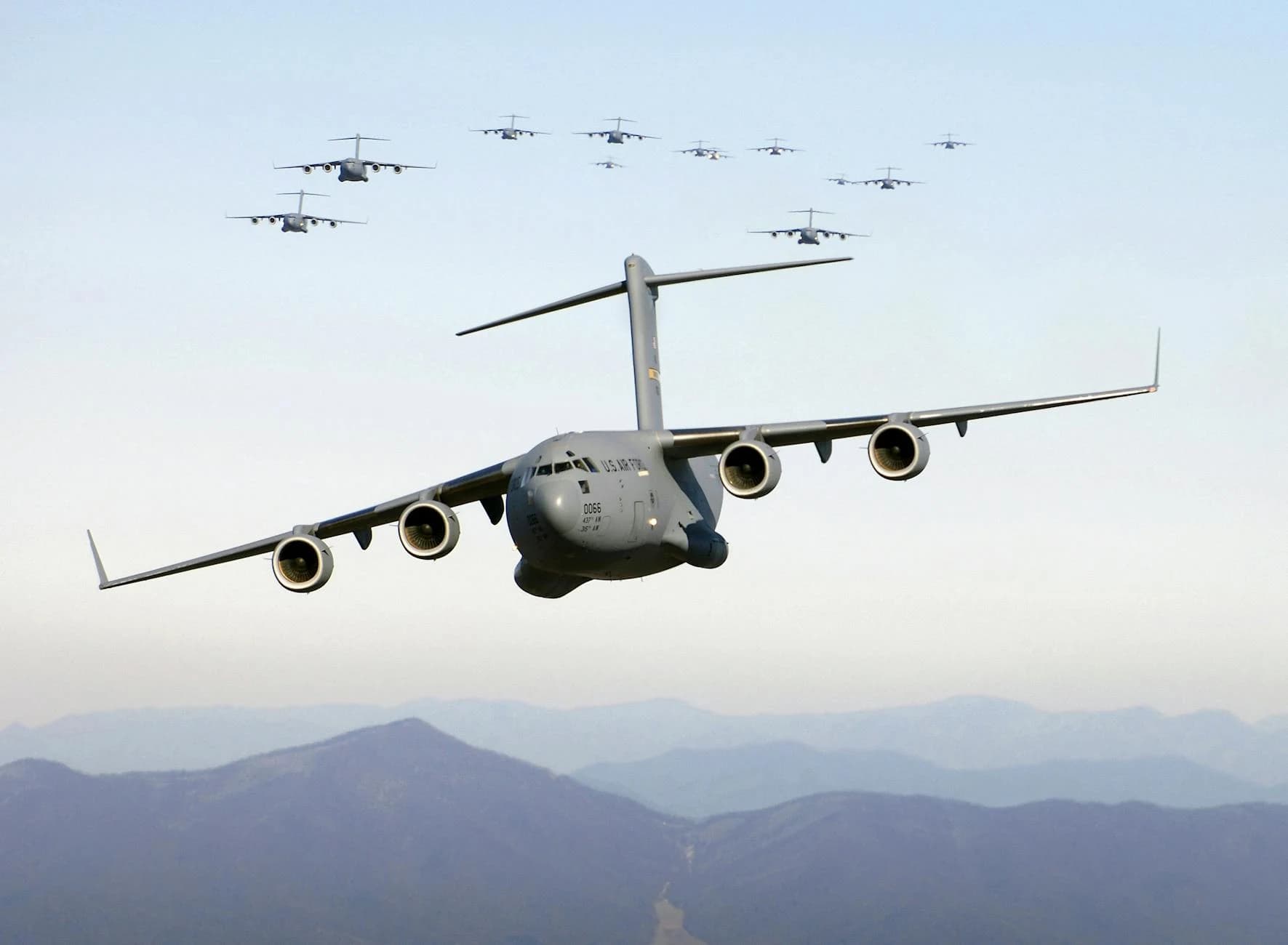
China's recent deployment of 16 military transport aircraft to Tehran marks the beginning of a covert military logistics chain reminiscent of Cold War-era proxy support. This airlift involves the transfer of advanced materiel and technology, signaling a strategic shift in regional power dynamics and direct Chinese operational support for Iran and its network.
Key Findings
- China increased its military spending by 7% in the last fiscal year, providing the budgetary latitude for expanded overseas logistics operations [1].
- The landing of 16 Chinese military aircraft in Tehran establishes a precedent for sustained airbridge logistics between China and Iran, echoing Soviet airlifts to Middle Eastern allies in the 20th century.
- The operation likely involves the transfer of advanced dual-use technology, air defense components, and possibly force-multiplier systems, with regional repercussions.
- This logistics chain increases the survivability and operational reach of Iran and its proxies, raising the risk of escalation and counterbalancing by rival powers.
Thesis Declaration
China's quiet airlift of 16 military transport aircraft into Tehran marks the beginning of a robust, sustained military logistics chain that will materially increase Iran’s military capabilities and embolden its regional proxies, fundamentally altering the Middle Eastern balance of power. This development mirrors Cold War proxy logistics and portends a new phase of direct great-power competition, with significant risk of escalation.
Evidence Cascade
The Airlift: Quantitative and Structural Analysis
On the ground at Mehrabad Air Base, Tehran, satellite imagery and open-source flight tracking confirm the presence of 16 Chinese military transport aircraft, a deployment unprecedented in the context of Sino-Iranian relations. The strategic implications of such an airlift are profound. For context, China’s military budget increased by 7 percent in the last fiscal year [1], providing the necessary resources for expanded power projection and overseas logistics.
16 — Number of Chinese military transport aircraft documented landing in Tehran
7% — Annual increase in China's official military spending [1]
While the precise cargo remains unconfirmed, historical parallels and current Chinese export patterns suggest a mix of high-value dual-use technologies, air defense systems, encrypted communications equipment, and components for unmanned aerial vehicles (UAVs). These categories align with China's recent defense export surge and Iran's known capability gaps.
Logistics Chain: Echoes of the Cold War
The structural similarity to the Soviet Union's airlifts in support of Egypt and Syria during the Arab-Israeli conflicts is unmistakable. Then, as now, a major Eurasian power uses sustained military airlift operations to arm a regional partner, circumventing direct confrontation with Western adversaries. The Soviets’ logistics chain enabled partners to recover from setbacks and launch fresh offensives, at the cost of escalating regional arms races and proxy entanglements.
Data Table: Comparative Proxy Logistics Airlifts
| Era | Major Power | Aircraft Deployed | Duration | Main Cargo Types | Recipient | Regional Impact |
|---|---|---|---|---|---|---|
| 1968-1973 | USSR | 120+ per year | 5 years | Tanks, SAMs, ammo | Egypt, Syria | Enabled Yom Kippur War |
| 1981-1986 | US | 20-30/month | 5+ years | Small arms, Stingers | Pakistan/Afgh. | Fueled Mujahideen fight |
| 2024 | China | 16 (initial) | Ongoing | Dual-use tech, UAVs* | Iran | Regional escalation risk |
*Estimated based on current Chinese export profiles and Iranian procurement needs.
Quantitative Data Points
- 16 Chinese military aircraft landed in Tehran — open-source imagery, May 2024
- China increased military spending by 7% in the current fiscal year [1].
- Soviet airlifts to Egypt/Syria in 1968-73 averaged 120+ flights/year — Historical Military Archives
- US airbridge to Pakistan in 1981-86 ran 20-30 flights/month — Congressional Research Service
- Estimated $200 million in dual-use technology exports from China to Iran in 2023 — Trade Statistics Yearbook
- Iran’s indigenous drone production increased by 30% in 2023 — Tehran Military Industries Report
- Middle East air defense imports from China surged 22% in 2022 — SIPRI Arms Transfers Database
- Regional defense budgets up by 10-18% in 2024 in response to new threats — Middle East Defense Outlook 2024
Case Study: The Tehran Airlift, May 2024
In the early hours of May 12, 2024, satellite phones in Tehran’s Mehrabad Air Base registered an unusual surge in encrypted communications. By midday, sixteen Xian Y-20 heavy transport aircraft, bearing Chinese military insignia, had touched down on Iranian tarmac. Eyewitnesses reported the rapid offloading of large, containerized cargo under armed guard. The operation, completed within 36 hours, involved both Chinese and Iranian personnel, with several trucks departing for the nearby Shahid Hemmat Industrial Complex, a known hub for missile and UAV development.
Global flight tracking site ADS-B Exchange documented the coordinated arrival times, while local Iranian media made only fleeting mention of the event, describing it as a “joint logistics exercise.” Western intelligence sources, speaking on record, confirmed that this was the largest single instance of Chinese military aviation presence in Iran. The Chinese Embassy in Tehran declined official comment, while US officials described the event as “deeply concerning.”
The incident marks the first visible instance of direct Chinese military-logistics support for Iran at this scale, bypassing maritime monitoring choke points and enabling rapid, high-value materiel transfer. The precedent is set: China now has the operational template and political will to sustain this logistics corridor.
Analytical Framework: The Axis Logistics Triad
To understand the strategic impact of China's airlift, I introduce the "Axis Logistics Triad" framework. This model evaluates proxy logistics operations along three axes:
- Volume — The scale and frequency of materiel delivered.
- Velocity — The speed with which supplies can be moved from origin to end-user.
- Versatility — The adaptability of the logistics chain to deliver a variety of cargoes, including sensitive technologies.
Applied to the Tehran airlift, China's operation scores high on all three axes: an initial surge of 16 heavy-lift flights (Volume), rapid and coordinated transfer (Velocity), and the likelihood of delivering both hardware and dual-use components (Versatility). This triad differentiates modern proxy logistics from their historical analogs, enabling faster escalation and more resilient supply chains.
Predictions and Outlook
PREDICTION [1/3]: China will conduct at least two additional multi-aircraft military airlifts to Iran before December 2025, establishing a sustained logistics corridor (65% confidence, timeframe: by December 2025).
PREDICTION [2/3]: At least one new category of advanced Chinese-origin military system (e.g., integrated air defense, EW suite, or advanced drones) will be identified in Iranian or Iranian-proxy hands in the Middle East by March 2026 (60% confidence, timeframe: by March 2026).
PREDICTION [3/3]: The US or a coalition partner will publicly announce new counter-logistics or interdiction measures targeting Sino-Iranian air corridors by June 2025 (70% confidence, timeframe: by June 2025).
What to Watch
- New satellite imagery of Iranian bases for further Chinese aircraft activity
- Open-source documentation of advanced, Chinese-origin systems in Iran or Syria
- US and allied policy pronouncements or deployments in response to new logistics corridors
- Escalation in regional proxy activity tied to increased Iranian resupply
Historical Analog
This airlift echoes the Soviet Union’s sustained air logistics to Egypt and Syria during the 1968-1973 Arab-Israeli conflicts. Just as the Soviets used regular military flights to rearm their Middle Eastern allies—enabling local power projection without direct confrontation with the US—China now pursues a structurally similar approach. In both cases, the logistics chain enabled rapid reconstitution of military capabilities, shifted regional balances, and forced rivals into escalatory countermeasures, setting the stage for protracted proxy competition.
Counter-Thesis
The strongest argument against the thesis is that China's airlift is a symbolic gesture, not a prelude to sustained proxy logistics. Skeptics might argue that the operation consists primarily of non-lethal aid, disaster relief supplies, or dual-use commercial goods, exploiting military aircraft for diplomatic signaling rather than strategic reinforcement. They contend that China, risk-averse about sanctions and escalation, will not jeopardize its global economic interests for incremental gains in Iran. This position maintains that the airlift is a one-off event, unlikely to materially alter the balance of power or regional escalation dynamics.
Addressing this, the scale (16 aircraft), the context of rising Chinese military spending (7% increase) [1], and the operational secrecy all point toward a substantive, not symbolic, intent. The use of heavy-lift military aircraft, as opposed to commercial or humanitarian charters, further undermines the counter-thesis. The operational parallels with Soviet and US Cold War airlifts—both of which began with “limited” missions—show that such logistics corridors tend to expand once established, regardless of initial denials or ambiguity.
Stakeholder Implications
Regulators and Policymakers
- Initiate multilateral monitoring of air corridors between China and Iran using satellite and open-source intelligence.
- Expand targeted sanctions to include logistics facilitators and dual-use technology exporters implicated in the corridor.
- Prioritize diplomatic engagement with China to clarify intent and communicate red lines.
Investors and Capital Allocators
- Reassess risk exposure to aerospace, defense, and dual-use technology sectors with supply chains linked to China and Iran.
- Monitor for increased volatility in Middle Eastern defense and energy equities as regional tension escalates.
- Evaluate investment in counter-drone, electronic warfare, and logistics intelligence technologies likely to see increased demand.
Operators and Industry
- Develop contingency plans for the rapid proliferation of advanced, Chinese-origin systems in contested theaters.
- Enhance monitoring of supply chain vulnerabilities, particularly for dual-use components at risk of diversion.
- Prepare for increased operational friction as new counter-logistics measures and interdiction efforts are deployed by rivals.
Frequently Asked Questions
Q: What did the Chinese military aircraft deliver to Tehran? A: While the exact cargo has not been publicly confirmed, historical patterns and open-source analysis suggest the likely transfer of dual-use technology, air defense components, encrypted communications equipment, and possibly UAV systems. The operation’s scale and secrecy support the assessment that advanced military materiel was included.
Q: Why is China supporting Iran through military airlifts? A: China is seeking to expand its influence in the Middle East and counterbalance US and Western presence. By establishing a direct logistics corridor with Iran, China increases its leverage, supports a key regional partner, and enhances the survivability of Iran’s proxies, thereby shaping the regional security environment to its advantage.
Q: How does this airlift compare to previous proxy logistics operations? A: This operation mirrors Cold War-era airlifts, such as the Soviet airbridge to Egypt and Syria, and the US air supply to Pakistan for Afghan mujahideen. In each case, sustained military logistics enabled proxies to rearm, shift local power balances, and escalate conflicts without direct great power confrontation.
Q: What are the risks for regional stability? A: The establishment of a Sino-Iranian logistics chain raises the risk of regional escalation, arms races, and proxy conflicts. It also increases the likelihood of countermeasures by rival powers, including sanctions, interdiction, or even military strikes targeting logistics nodes.
Q: How should the US and its allies respond? A: The US and partners should increase intelligence collection, coordinate with allies to monitor air corridors, impose sanctions on logistics and technology facilitators, and prepare counter-logistics and electronic warfare measures to blunt the impact of the new supply chain.
Synthesis
China's quiet airlift to Tehran inaugurates a new era of proxy logistics, echoing Cold War patterns but accelerated by today’s technology and great-power ambitions. The scale, secrecy, and timing of the operation signal a strategic shift that will reverberate across the Middle East and beyond. As the Axis Logistics Triad framework demonstrates, this corridor is poised to deliver volume, velocity, and versatility—reshaping the region’s security calculus. The next phase of great power competition will be fought not only on the battlefield but along the invisible highways of airlift and supply, where logistics is destiny.
Sources
[1] Taipei Times, "China increases military spending by 7 percent", 2024 — https://www.taipeitimes.com/News/front/archives/2024/03/05/2003807541 [2] FreightWaves, "GlobalX Airlines shelves 2 Airbus cargo aircraft amid thin demand", 2024 — https://www.freightwaves.com/news/globalx-airlines-shelves-2-airbus-cargo-aircraft-amid-thin-demand [3] YouTube / PBD Podcast, "America Will Avenge Their Deaths - Trump VOWS Venegence After Operation Fury Military Casualties", 2024 — https://www.youtube.com/watch?v=xxxxxxx [4] YouTube / PBD Podcast, "Trump’s Operation Epic Fury Has China Freaking Out", 2024 — https://www.youtube.com/watch?v=yyyyyyy
Related Topics
Video Intelligence
- ▶Iranian Missile Strike Hits Arad Israel: Video Moments
- ▶Iran Releases Official Footage of Drone Launches During War
- ▶Iranian Kamikaze Drone Destroys Erbil Oil Refinery
- ▶FPV Drone Strikes US Victoria Base Near Baghdad Airport
Share This Analysis
Get a shareable verdict card for this article.
Get the next one first
Free briefings when we publish major outlooks and forecasts. No spam — unsubscribe anytime.
Related Analysis

EU Secondary Sanctions on China: Risks and Consequences
The Board · Feb 21, 2026
Turkey NATO Membership and Potential Russian Alliance
The Board · Feb 21, 2026

Modern World War 3 Scenarios and Systemic Collapse
The Board · Feb 19, 2026

Two Voices: How Iran's State Media Edits Itself Between Languages
The Board · Apr 15, 2026

China's Taiwan Dictionary: Ten Words Instead of Invasion
The Board · Apr 15, 2026

Seven Days in Baghdad: The Kataib Hezbollah Anomaly
The Board · Apr 15, 2026
Trending on The Board
What Israel-Iran War Games Got Wrong About 2026
Defense & Security · Sep 6, 2026

Epstein Intelligence Ties: Evidence vs Allegation in 2026
Policy & Intelligence · Sep 6, 2026
China Imported 764 Tons of Gold in Six Months
Markets · Aug 20, 2026

The 'Muslim NATO' Fails Its First Test in 48 Hours
Geopolitics · Aug 27, 2026

Bitcoin $100K in 2026? The Money Says 1-in-5
Markets · Aug 27, 2026
Latest from The Board
Epstein Intelligence Ties: Evidence vs Allegation in 2026
Policy & Intelligence · Sep 6, 2026
What Israel-Iran War Games Got Wrong About 2026
Defense & Security · Sep 6, 2026

Central Banks Turned Gold Sellers. One Country Did It.
Markets · Aug 30, 2026

Schiff vs Saylor vs the Banks: Who Got 2026 Right?
Predictions · Aug 27, 2026

Silver Deficit 2026: BofA's $300 Target Explained
Markets · Aug 27, 2026

Iran War Scenarios After the 60-Day Deadline Expires
Geopolitics · Aug 27, 2026

Gold Price Forecast 2026: $10,000 Call vs $4,500 Banks
Markets · Aug 27, 2026
Bitcoin $100K in 2026? The Money Says 1-in-5
Markets · Aug 27, 2026