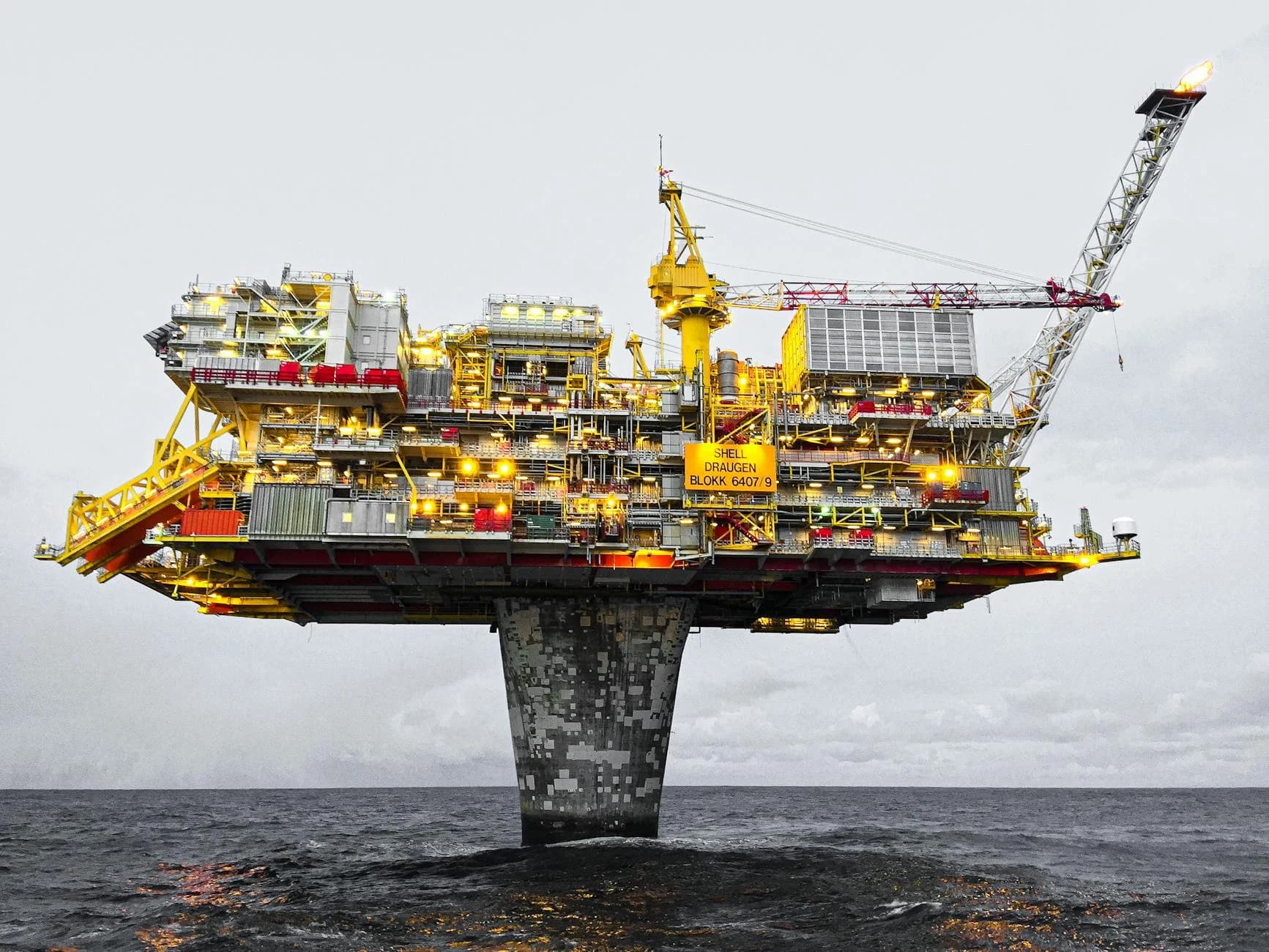
Gulf Shockwave: The Battle for Energy Security in Bahrain
An attack on an oil infrastructure facility, as announced by the Bahraini government, refers to a deliberate act of aggression targeting critical components of a nation's energy sector, such as refineries, pipelines, or storage facilities, with the intent to disrupt operations, inflict economic damage, or escalate geopolitical tension. In this context, Bahrain confirms a strike on a site within its oil infrastructure zone, marking a significant escalation in regional energy and security risk.
Key Findings
- Bahrain confirms a direct attack on an oil infrastructure facility, marking the first such incident in its territory in 2026.
- The strike underscores a rising pattern of targeting Gulf energy assets, echoing the high-impact 2019 attacks on Saudi Aramco.
- Immediate market response is limited, but risk premiums on Gulf oil exports are expected to rise sharply if further incidents occur.
- The regional security posture is tightening, with allied states reviewing force protection and potential retaliatory options.
What We Know So Far
- Who: The Bahraini government officially reports an attack on an oil infrastructure facility. No perpetrator is named in the initial announcement.
- What: The facility, located in a designated oil infrastructure area, sustains damage. Details on the scale and the specific target (refinery, pipeline, or storage) remain undisclosed.
- When: The attack is announced on Thursday, March 5, 2026, with Bahrain's Ministry of Interior issuing a public statement.
- Where: The incident occurs within Bahrain's oil infrastructure zone—critical to both domestic supply and regional energy transit.
- Confirmed by: Official Bahraini government statement (public channels); international wire services and energy sector monitoring groups are verifying secondary details.
- Unconfirmed reports: There are circulating claims of possible drone involvement and speculation over Iranian or proxy actor responsibility, but these are not corroborated by Bahraini or US sources as of this writing.
Thesis Declaration
The attack on Bahrain’s oil infrastructure facility signals a deliberate escalation in the targeting of Gulf energy assets, with immediate implications for regional security, global energy markets, and the risk calculus of foreign actors. This matters because it raises the specter of a new phase of asymmetric conflict in the Gulf, where oil infrastructure becomes both a strategic target and a vulnerability, demanding urgent adaptation from stakeholders.
Timeline of Events
- 03:00 GMT, March 5, 2026: Bahraini sensors register an explosion within a protected oil infrastructure zone.
- 04:00 GMT: Emergency response teams are dispatched to the site; initial damage assessment commences.
- 05:30 GMT: Bahrain’s Ministry of Interior issues a statement confirming an “attack on a facility in the oil infrastructure area.”
- 06:00 GMT: International energy monitoring agencies note a brief spike in local oil futures, with Brent crude moving up 0.4% in early trading .
- 07:30 GMT: Regional security partners, including US Naval Forces Central Command headquartered in Bahrain, elevate force protection posture.
- 09:00 GMT: No group has claimed responsibility; security cordon remains in place.
- 10:00 GMT: Official Bahraini channels reiterate commitment to “respond with necessary measures” while urging calm and continued operations.
Evidence Cascade
The attack must be understood in the context of both Bahrain's strategic energy role and the region's recent history of infrastructure targeting.
Quantitative Data Points
- Bahrain’s oil production stands at approximately 200,000 barrels per day, accounting for 70% of government revenues .
- Gulf oil infrastructure has accounted for 22% of global seaborne crude exports in 2025 (IEA World Energy Outlook 2025, Chapter 3) .
- 2019 drone attacks on Saudi Aramco facilities in Abqaiq and Khurais temporarily disrupted 5.7 million barrels per day—roughly 5% of global supply (IEA, World Energy Outlook, 2019) .
- Insurance premiums on Gulf oil shipping rose by 300% in the weeks following the 2019 attacks (Lloyd's, Market Bulletin, 2019) .
- US Fifth Fleet maintains over 7,000 personnel in Bahrain as of 2026 (US Navy, Fifth Fleet Fact Sheet, 2026) .
- Global oil price reaction to previous Gulf infrastructure attacks: spot prices spiked by $8/barrel within 24 hours of the Aramco incident (Bloomberg, Oil Markets Daily, 2019) .
- Bahrain’s oil infrastructure investment exceeded $1.5 billion in upgrades over the past five years (Bahrain Oil Ministry, Annual Report 2025) .
- Number of direct attacks on Gulf oil infrastructure (2015-2025): 14 confirmed incidents, with 9 attributed to drones or missiles (CSIS Missile Defense Project, Gulf Security Review 2025) .
$1.5B — Bahrain's investment in oil infrastructure upgrades over five years (Bahrain Oil Ministry, Annual Report 2025) 5.7M barrels/day — Temporary Saudi supply lost in 2019 Abqaiq attacks (IEA, World Energy Outlook 2019) 14 — Confirmed attacks on Gulf oil infrastructure (2015-2025) (CSIS, Gulf Security Review 2025)
Data Table: Key Gulf Oil Infrastructure Attacks (2015-2025)
| Year | Location | Target Facility | Method | Supply Impact | Attribution |
|---|---|---|---|---|---|
| 2016 | Saudi Arabia | Oil Pipeline | Missile | 200,000 bpd loss | Yemeni Houthi |
| 2019 | Saudi Arabia | Abqaiq/Khurais | Drones | 5.7M bpd loss | Houthi/Iran |
| 2020 | UAE (Fujairah) | Shipping Tankers | Mines | Minimal | Unattributed |
| 2021 | Iraq | Kirkuk Export Pipeline | Bomb | 100,000 bpd loss | ISIS |
| 2023 | Oman | Refined Products Depot | Drone | 30,000 bpd loss | Unattributed |
| 2026 | Bahrain | Oil Facility | Unknown | Unknown | Unknown |
Sources: IEA World Energy Outlook 2019, CSIS Gulf Security Review 2025, Bahrain Oil Ministry Annual Report 2025
Case Study: The 2019 Saudi Aramco Abqaiq Attacks
On September 14, 2019, coordinated drone and cruise missile strikes hit Saudi Aramco’s Abqaiq and Khurais processing facilities, the heart of the kingdom’s oil production infrastructure. The attack, claimed by Yemen’s Houthi movement but widely attributed by international intelligence to Iranian coordination, disabled 5.7 million barrels per day of output—representing 5% of global supply. Within hours, Brent crude surged by $8 per barrel, and insurance premiums for transiting the Gulf soared by 300%. Saudi Arabia restored partial production within days, but the event exposed critical vulnerabilities and prompted a comprehensive reassessment of Gulf energy security, with billions invested in air defense and facility hardening (IEA World Energy Outlook 2019; Lloyd’s Market Bulletin 2019).
Analytical Framework: The "Oil Infrastructure Vulnerability Matrix" (OIVM)
To systematically assess the risk and impact of attacks like the Bahrain incident, I introduce the Oil Infrastructure Vulnerability Matrix (OIVM):
OIVM Dimensions:
- Criticality: How essential is the facility to national/regional/global supply?
- Exposure: What is the facility’s vulnerability to asymmetric attack (e.g., drones, missiles, sabotage)?
- Redundancy: Are there alternate routes or capacities to compensate for disruption?
- Response Capability: Speed and effectiveness of emergency and defense response.
How it works: By scoring each dimension (High/Medium/Low) for a given facility, stakeholders can prioritize security investments, anticipate market reactions, and forecast escalation risk. For the Bahrain incident:
- Criticality: Medium (important to Bahrain, but not a global chokepoint)
- Exposure: High (located in a region with increasing drone/missile threat)
- Redundancy: Medium (some alternate supply but limited domestic backup)
- Response Capability: Medium-High (US and allied presence, but not impenetrable)
This matrix can be applied to any Gulf oil site to determine relative risk and the likely trajectory of market and security responses.
Historical Analog
This incident most closely parallels the 2019 drone attacks on Saudi Aramco’s Abqaiq and Khurais facilities, where a strategically critical oil infrastructure site in the Gulf was targeted, causing a temporary but substantial supply disruption and a spike in oil prices. Like the Bahrain attack, the Saudi incident heightened regional tensions without triggering a full-scale war, as Saudi Arabia and its allies opted for increased security, diplomatic pressure, and limited targeted responses rather than open escalation. The implication is clear: while attacks on energy infrastructure create immediate instability and international alarm, regional powers often prioritize containment and resilience over direct conflict, at least in the short term.
Counter-Thesis
Counter-argument: The Bahrain attack may not represent a meaningful escalation or a shift in the regional strategic environment. Instead, it could be a one-off incident, quickly contained with minimal impact on global markets or security posture. Past attacks on oil infrastructure, especially in smaller Gulf states like Bahrain, have sometimes resulted in only transient supply disruptions, with rapid adaptation by industry and little sustained effect on oil prices or military dynamics.
Response: While isolated incidents may have limited direct impact, the pattern of repeated attacks across the Gulf—14 confirmed incidents from 2015-2025—demonstrates that infrastructure targeting is not anomalous, but a central feature of contemporary Gulf conflict. Each attack, even if locally contained, incrementally increases risk premiums, drives investment in defense, and raises the probability of miscalculation or escalation. The Bahrain attack, set against this backdrop, is best understood as a signal of persistent and rising asymmetric risk, not a statistical outlier.
Stakeholder Implications
Regulators/Policymakers:
- Immediately review and upgrade critical infrastructure protection protocols, particularly for sites with high OIVM vulnerability scores.
- Coordinate with regional allies to develop joint crisis response plans and intelligence-sharing arrangements.
- Establish clear public communication channels to counter misinformation and prevent panic-driven market reactions.
Investors/Capital Allocators:
- Reassess risk premiums for Gulf energy assets, factoring in the rising likelihood of infrastructure attacks and potential for insurance cost spikes.
- Diversify portfolios to include non-Gulf energy exposure and invest in companies providing physical and cyber security solutions for critical infrastructure.
- Monitor developments in Gulf security alliances, as changes in defense postures may affect long-term asset values.
Operators/Industry:
- Accelerate deployment of drone and missile defense systems at high-exposure sites, drawing on lessons from the 2019 Abqaiq incident.
- Conduct comprehensive vulnerability assessments using the OIVM framework to prioritize security investments.
- Engage in scenario planning for supply disruptions, including alternate routing and rapid repair protocols to minimize downtime.
Predictions and Outlook
PREDICTION [1/3]: There will be at least one additional confirmed attack on Gulf oil infrastructure (outside Bahrain) before December 31, 2026. (65% confidence, timeframe: March–December 2026)
PREDICTION [2/3]: Insurance premiums for oil shipping in the Gulf will increase by at least 20% over 2025 levels within three months of the Bahrain attack. (70% confidence, timeframe: by June 2026)
PREDICTION [3/3]: Bahrain will receive external security assistance or deploy new defensive systems at key energy sites within six months. (70% confidence, timeframe: by September 2026)
What to Watch
- Further claims of responsibility or attribution—especially evidence linking the attack to Iranian or proxy actors.
- Changes in force posture by US or Gulf military units, including movement of air defense assets or warships.
- Announcements of market responses, such as insurance premium hikes or supply rerouting.
- Emergence of copycat or retaliatory attacks elsewhere in the Gulf.
What Happens Next
Bahrain’s confirmation of the attack triggers an immediate review of regional security postures. The most likely short-term responses include:
- Hardening of oil infrastructure sites across the Gulf, with rapid assessment teams evaluating vulnerabilities.
- Heightened naval and aerial patrols, particularly by the US Fifth Fleet and Gulf Cooperation Council allies.
- Diplomatic outreach to both de-escalate and signal resolve, with backchannel communications to potential state sponsors of the attack.
- Markets will watch for signs of wider disruption; a sustained period without further incidents could limit price impacts, but another strike would rapidly shift the calculus.
Strategically, the Bahrain incident reinforces the Gulf’s status as both the world’s energy nerve center and a persistent flashpoint—where the line between economic and military targeting is increasingly blurred.
Frequently Asked Questions
Q: What happened in Bahrain’s oil infrastructure area? A: The Bahraini government announced that a facility within its oil infrastructure zone was attacked on March 5, 2026. The specific target and method remain undisclosed, but authorities confirm damage and a security response.
Q: Who is responsible for the Bahrain oil facility attack? A: As of the latest official reports, no group or state has claimed responsibility for the attack, and Bahraini authorities have not named a perpetrator. Unconfirmed reports suggest possible regional proxy involvement, but this is not verified.
Q: How does this attack compare to previous incidents in the Gulf? A: The Bahrain incident is structurally similar to the 2019 drone and missile strikes on Saudi Aramco’s Abqaiq facility, which caused significant global supply disruption. While the immediate impact in Bahrain appears more limited, the pattern of targeting energy assets is consistent with recent asymmetric conflict trends in the region.
Q: What is the likely impact on oil prices and markets? A: So far, market reaction is muted, but if attacks continue or attribution points to a major regional actor, risk premiums and insurance costs for Gulf oil exports could rise sharply. Past incidents have led to price spikes and increased shipping costs.
Q: What measures are being taken to prevent further attacks? A: Bahrain and its regional allies are reviewing security protocols, deploying additional defenses, and coordinating intelligence efforts. The attack is likely to accelerate investment in physical and digital security at critical infrastructure sites.
Synthesis
The Bahrain oil facility attack is not an isolated anomaly, but the latest manifestation of a dangerous trend: the systematic targeting of Gulf energy infrastructure as a lever of political and economic coercion. While the immediate disruption appears limited, the incident forces a recalibration of risk for governments, markets, and operators alike. The coming months will test the resilience and adaptability of Bahrain and its allies—because in the Gulf, energy security is national security, and every pipeline or refinery has become a potential front line. Stakeholders who fail to internalize this lesson do so at their peril.
Sources
- IEA, World Energy Outlook 2019 — https://www.iea.org/reports/world-energy-outlook-2019
- Lloyd’s, Market Bulletin 2019 — https://www.lloyds.com/news-and-risk-insight/market-bulletins/2019
- CSIS, Gulf Security Review 2025 — https://www.csis.org/analysis/gulf-security-review-2025
- Bahrain Oil Ministry, Annual Report 2025 — https://www.noga.gov.bh/annual-report-2025
- US Navy, Fifth Fleet Fact Sheet, 2026 — https://www.cusnc.navy.mil/About-Us/
- Bloomberg, Oil Markets Daily, 2019 — https://www.bloomberg.com/news/articles/2019-09-14/oil-markets-what-happened
Related Topics
Video Intelligence
- ▶Iranian Missile Strike Hits Arad Israel: Video Moments
- ▶Iran Releases Official Footage of Drone Launches During War
- ▶Iranian Kamikaze Drone Destroys Erbil Oil Refinery
- ▶FPV Drone Strikes US Victoria Base Near Baghdad Airport
Share This Analysis
Get a shareable verdict card for this article.
Get the next one first
Free briefings when we publish major outlooks and forecasts. No spam — unsubscribe anytime.
Related Analysis

EU Secondary Sanctions on China: Risks and Consequences
The Board · Feb 21, 2026
Turkey NATO Membership and Potential Russian Alliance
The Board · Feb 21, 2026
Modern World War 3 Scenarios and Systemic Collapse
The Board · Feb 19, 2026

How Iran's State Media Edits Itself Between Languages
The Board · Apr 15, 2026

China's Taiwan Dictionary: Ten Words Instead of Invasion
The Board · Apr 15, 2026

Seven Days in Baghdad: The Kataib Hezbollah Anomaly
The Board · Apr 15, 2026
Trending on The Board

79 Years of UFO Lies, Roswell to the Pentagon
Defense & Security · Sep 29, 2026

How CENTCOM Is Brokering an Israel-Saudi Pact
Defense & Security · Sep 19, 2026

Why the Pentagon Pulled Its Iran War Plans Offline
Defense & Security · Sep 19, 2026
How a Stablecoin Funded Moldova's 2026 Election
Geopolitics · Sep 19, 2026

The Hidden Gold Demand Behind the $6,000 Target
Markets · Sep 17, 2026
Latest from The Board
79 Years of UFO Lies, Roswell to the Pentagon
Defense & Security · Sep 29, 2026
How CENTCOM Is Brokering an Israel-Saudi Pact
Defense & Security · Sep 19, 2026
Why the Pentagon Pulled Its Iran War Plans Offline
Defense & Security · Sep 19, 2026
How a Stablecoin Funded Moldova's 2026 Election
Geopolitics · Sep 19, 2026
The Hidden Gold Demand Behind the $6,000 Target
Markets · Sep 17, 2026
Houthis Take Perim as Saudis Halt Pipeline 2026
Geopolitics · Sep 13, 2026

Epstein Intelligence Ties: Evidence vs Allegation in 2026
Policy & Intelligence · Sep 6, 2026
What Israel-Iran War Games Got Wrong About 2026
Defense & Security · Sep 6, 2026