![Hezbollah Fires Anti-Ship Cruise Missile at Warship Off Lebanon [2026]](/_next/image/?url=https%3A%2F%2Ftheboard.world%2Fstatic%2Fstock%2Fhezbollah-noor-missile-launch.jpg&w=1920&q=75)
At 00:05 local time on Sunday, April 5, Hezbollah's Islamic Resistance announced it had carried out a naval operation that — if confirmed — would mark the most significant anti-ship missile engagement involving a Western warship since the Falklands War in 1982.
The group claimed it struck a warship 68 nautical miles off the Lebanese coast with a naval cruise missile, monitoring the target "for hours" before firing. Hezbollah described the vessel as Israeli and said a "direct hit was confirmed," with the ship set ablaze.
But within twelve hours, a twist emerged from Israeli Channel 14 that fundamentally changed the story: the ship may not have been Israeli at all.
The Timeline: How the Story Unfolded
The event occurred in the early hours of Sunday morning, but the information war played out over the full day. Understanding the sequence matters — because who reported what, and when, reveals as much as the claims themselves.
Hezbollah's announcement came first through Arabic-language channels — a seven-hour head start on the English-language press. The first English wire pickup came via Asharq Al-Awsat at 07:18 UTC. Al Manar, Hezbollah's own media arm, followed an hour later. By mid-morning, the story had cascaded through Press TV, China Daily, CGTN, and multiple Telegram channels, each amplifying the same core claim.
The Israeli Defense Forces responded through AFP with a terse denial: "We are not aware of it." Under the heavy military censorship in effect since the start of hostilities, this was notable — not for what it said, but for what it didn't say. The IDF did not claim the missile missed. It did not say no missile was fired. It said it was "not aware."
Then, at approximately 19:33 UTC — a full twelve hours after the first English reports — Israeli Channel 14 journalist Hallel Bitton Rosen reported that the vessel struck was not Israeli. It was British. Hezbollah had misidentified the ship.
Multiple Israeli-connected channels immediately amplified the claim, with Behold Israel adding that the ship was "about 70 miles off the coast of Lebanon" and that "it is estimated in Israel that the ship was damaged."
Within an hour, the UK Ministry of Defence responded categorically. A defence source told Yahoo News UK that the claims "were not true." HMS Dragon, the Royal Navy's Type 45 destroyer deployed to the Eastern Mediterranean to protect RAF Akrotiri in Cyprus, "has not been attacked or struck."
Three Competing Narratives
What makes this incident so analytically challenging is that three separate actors are telling three different stories, and none of them have an incentive to tell the full truth.
Hezbollah: Deterrence Messaging
Hezbollah's narrative is the simplest: they fired a cruise missile at an Israeli warship and hit it. This serves their strategic messaging — demonstrating the ability to threaten Israeli naval operations at range, deterring future maritime-launched strikes on Lebanese territory, and boosting domestic morale during a punishing air campaign against Beirut. The 2006 precedent, when Hezbollah's C-802 strike on the INS Hanit killed four sailors and forced the Israeli Navy to fundamentally rethink its air defense posture, gives credibility to the claim.
Israel: Strategic Leverage
Israel's narrative is conspicuous in its precision. The IDF denied any Israeli vessel was hit — which, if the Channel 14 report is accurate, is technically true. The subsequent leak through Channel 14 — an outlet with ties to the Netanyahu coalition — serves a different strategic purpose entirely. By framing the incident as a Hezbollah attack on a NATO member's warship, Israel places pressure on the United Kingdom to escalate its involvement in the broader conflict with Iran. A missile strike on a British vessel by an Iranian proxy would be, in diplomatic terms, an Article 5-adjacent event.
Britain: Controlled Denial
Britain's narrative is a flat denial. This too has strategic logic. Acknowledging a hit on a Royal Navy vessel would create enormous domestic and international pressure for a military response against Hezbollah and, by extension, Iran — a significant escalation that the Starmer government has shown no appetite for. A categorical denial closes the conversation. The Ministry of Defence source told Yahoo News UK the claims "were not true," and specifically stated that HMS Dragon "has not been attacked or struck."
The Weapon: What Hezbollah Can Actually Do
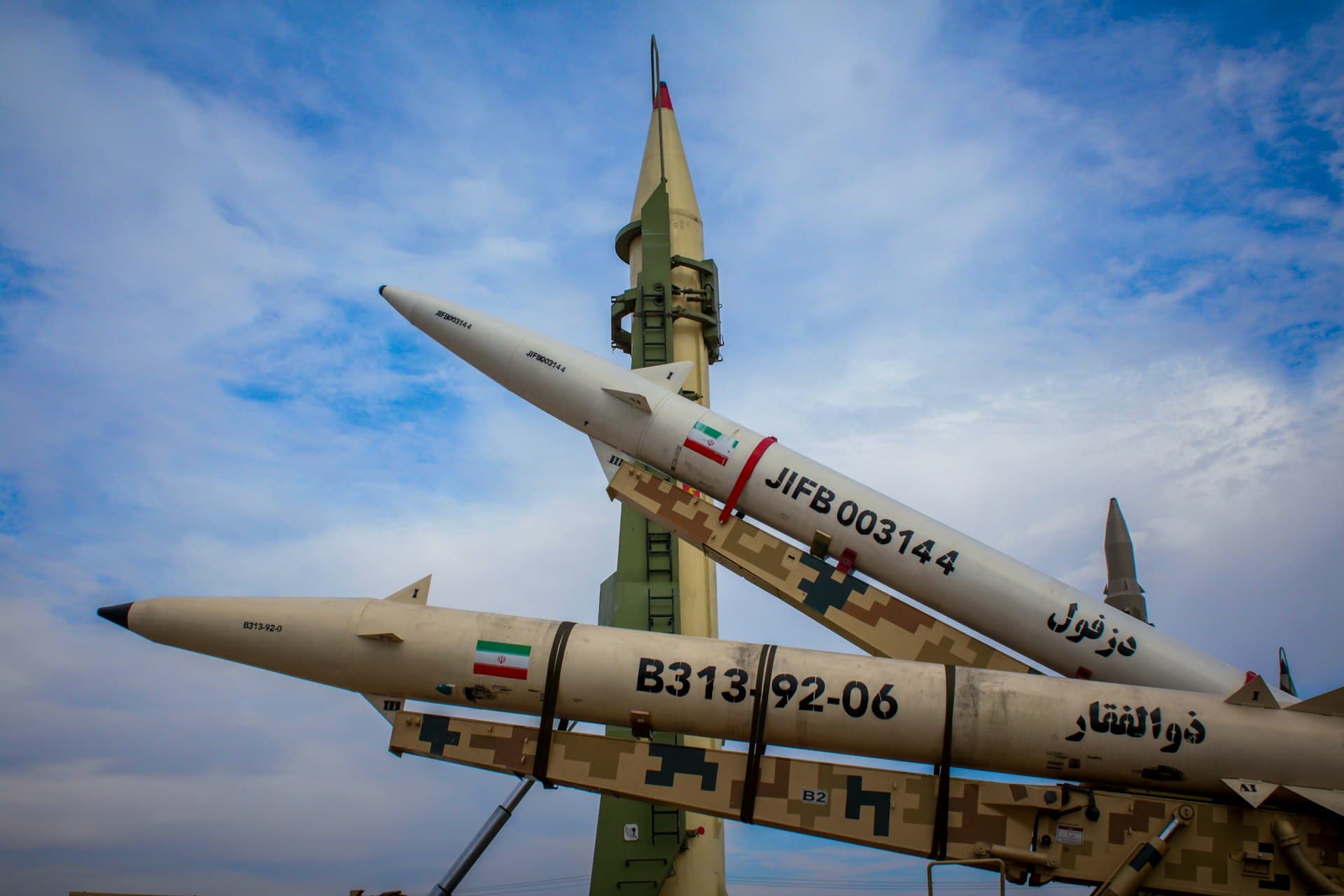
The missile most likely used in the attack — if one was fired — is the Iranian-made Noor, a reverse-engineered Chinese C-802 anti-ship cruise missile. The standard Noor has a range of approximately 120 kilometers at a speed of Mach 0.9, carrying a 155-kilogram semi-armor-piercing warhead.
The claimed engagement distance of 68 nautical miles (126 kilometers) falls at the extreme edge of the standard Noor's envelope. Extended-range variants, which multiple intelligence assessments indicate Hezbollah has received from Iran, can reach 220 kilometers. More concerning for Western naval planners, Hezbollah is also assessed to possess Russian-origin P-800 Yakhont supersonic anti-ship missiles with a 300-kilometer range and a speed of Mach 2.6 — far harder to intercept than the subsonic Noor.
This is not a theoretical capability. In July 2006, Hezbollah fired two C-802 missiles at the Israeli corvette INS Hanit from a range of just 8.5 nautical miles, scoring a direct hit that killed four crew members and set the ship ablaze. The current claimed engagement at 68 nautical miles represents a tenfold escalation in range.
The RFA Lyme Bay Question
One detail buried in the denial deserves scrutiny. Navy Lookout, a respected UK naval analysis account, noted alongside its denial that "RFA Lyme Bay returned to Gibraltar from a brief visit to the Eastern Mediterranean this week."
The Bay-class landing ship dock is not a frontline warship — it is an auxiliary vessel with minimal air defenses, equipped only with two Phalanx close-in weapon systems and two 30mm cannons. It was placed on heightened readiness in March for potential civilian evacuation from Lebanon.
If a missile was indeed fired at a British vessel, the Lyme Bay presents a more plausible target than HMS Dragon for several reasons. A Type 45 destroyer carries the Sea Viper air defense system, one of the most capable ship-borne anti-missile systems in the world — it should have detected and engaged an incoming subsonic missile well before impact. An auxiliary like Lyme Bay, designed for logistics rather than combat, would be significantly more vulnerable.
The timing is also notable. If Lyme Bay was in the Eastern Mediterranean earlier in the week, was struck, and withdrew to Gibraltar — the timeline would fit. However, the MOD specifically denied that any British warship was hit, and RFA vessels, while operated by the Royal Fleet Auxiliary, are British naval assets.
This remains an open question. No evidence beyond the timing has emerged.
The Evidence Scorecard
Stripping away the competing narratives and assessing only the verifiable facts:
Hezbollah fired a cruise missile — HIGH confidence. Consistent with known Noor capability, Hezbollah's official statement, and the 2006 INS Hanit precedent.
Something was hit — MEDIUM confidence. Two independent claims (Hezbollah claiming fire, Channel 14 claiming damage). No satellite or visual confirmation.
The target was Israeli — LOW confidence. Hezbollah claims yes. IDF categorically denies any vessel was hit.
The target was British — CONTESTED. Single Israeli journalist source versus official UK Ministry of Defence denial.
HMS Dragon was the ship — LOW confidence. UK explicitly named and denied. Dragon positioned near Cyprus, not off the Lebanese coast.
Nothing was hit at all — MEDIUM confidence. Both IDF and MOD deny. But both have strategic reasons for denial regardless of what actually happened.
Strategic Ramifications
Whether or not a ship was actually hit, this incident reshapes the conflict calculus across multiple dimensions.
The Eastern Mediterranean is now a contested space. Until this incident, the naval domain was relatively quiet in the Israel-Hezbollah confrontation. Western navies assumed freedom of maneuver within the theater. That assumption is no longer valid. Hezbollah has demonstrated — at minimum — the intent and claimed capability to engage naval vessels at distances beyond 100 kilometers.
Every warship in the Eastern Med now needs continuous missile defense posture. A subsonic Noor is detectable and interceptable by modern air defense systems — but only if those systems are active. Ships in transit or logistics mode are vulnerable. If Hezbollah also deploys the supersonic P-800 Yakhont (Mach 2.6, 300km range), the intercept window shrinks to seconds.
The misidentification risk is now real. The Mediterranean is crowded with naval assets from the US, UK, France, Israel, Turkey, and Italy. A group firing cruise missiles based on hours of "monitoring" that apparently failed to distinguish between an Israeli and British warship suggests a targeting process that is either incompetent or indiscriminate. Both are dangerous.
The UK faces an impossible political position. If a British vessel was struck and the MOD is covering it up, the truth will eventually emerge — through maritime insurance claims, crew accounts, or satellite imagery. The cover-up would be worse than the strike itself. If no British vessel was struck, Israel's Channel 14 leak was a deliberate information operation designed to drag the UK deeper into the conflict.
Iran's proxy warfare doctrine has a new showcase. Hezbollah demonstrating anti-ship capability at 126 km range is as much a message from Tehran as from Beirut. It signals to the US and NATO that the Strait of Hormuz chokepoint is not the only maritime threat axis. Iran's proxies can threaten Western naval operations across the entire Mediterranean-to-Gulf corridor.
Forecasting markets have already priced in escalation. Lebanon ceasefire contracts dropped sharply in the hours following the incident. The question for the coming week is whether this represents informed positioning by actors with knowledge of what actually happened, or reflexive risk-off sentiment that will revert once the fog clears.
The Fog That Won't Clear
Twenty-four hours after the incident, we are left with a situation in which every party has strategic reasons to lie, no independent verification has emerged, and the truth may not surface for weeks — if ever.
The IDF's "not aware" denial may be precisely accurate: they were not the target, so they have nothing to be aware of. Britain's categorical denial may be designed to prevent a political crisis that would force the Starmer government into a military response it does not want. Hezbollah's claim of a direct hit may be genuine, exaggerated, or entirely fabricated for morale purposes. And Israel's Channel 14 leak may be intelligence, disinformation, or a calculated pressure campaign to internationalize the conflict.
What is not ambiguous is the signal. Regardless of whether metal struck metal on Sunday night, Hezbollah has declared that the Eastern Mediterranean is within its engagement range. For every naval commander operating in that theater — American, British, French, or Israeli — the operational calculus changed at 00:05 Beirut time. The next cruise missile will not generate a debate about whether it was fired. It will generate a debate about whether defenses held.
Key Takeaways
-
Hezbollah claimed its first anti-ship cruise missile strike since 2006, targeting a vessel 68 nautical miles off the Lebanese coast with what appears to be an Iranian-made Noor (C-802 variant) missile.
-
Israeli Channel 14 reported the target was actually a British warship struck by mistake, citing journalist Hallel Bitton Rosen. Israeli assessments reportedly confirmed damage to the vessel.
-
The UK Ministry of Defence categorically denied any British warship was attacked, specifically stating HMS Dragon was not struck. The denial was unqualified.
-
RFA Lyme Bay's withdrawal from the Eastern Mediterranean to Gibraltar "this week" raises questions, though no evidence links the auxiliary vessel to the incident.
-
No independent confirmation exists from satellite imagery, maritime tracking, or visual evidence. The incident remains in fog-of-war territory with all three parties having strategic reasons for their respective positions.
-
The tactical signal transcends the ambiguity: Hezbollah has declared the Eastern Mediterranean within its engagement range, changing the naval calculus for every fleet operating in the theater.
Related Analysis
- US Crew Rescued After Jet Downed: Israeli Media Reports
- Iran Ground Assault: Kharg Island Target Analysis
- Russia Photographed the Saudi Base Three Times Before...
- Ghost Fleet Activated: The Pentagon's Drone Boat War
- The Neurological War: How Precision Strikes Rewrote the...
- Israeli Troops in Lebanon: Direct Hezbollah Clashes
- Hezbollah vs. Israel: Escalation in Lebanon?
- Lebanon: Did Hezbollah Target an Israeli Tank?
Related Topics
Related Analysis

Strategic Impact of Turkey Leaving NATO in 2026
The Board · Feb 22, 2026

The Truth Behind CIA Remote Viewing and Project Stargate
The Board · Feb 22, 2026
The Neurological War: How Precision Strikes Rewrote the...
The Board · Mar 27, 2026

Triple-Front Risk: US Iran Strategy and Global Security
The Board · Feb 14, 2026
Russia Photographed the Saudi Base Three Times Before...
The Board · Mar 30, 2026
A Russian Drone Hit NATO Territory This Week
The Board · Mar 26, 2026
Trending on The Board

Platinum Price Forecast 2026: The Most Undervalued Metal
Markets · Mar 21, 2026

Strait of Hormuz Crisis 2026: Full Analysis
Geopolitics · Mar 14, 2026

Fuel Supply Chains: Australia's Stockpile Reality
Energy · Mar 15, 2026

Africa Resource Wars: The New Scramble for Lithium and Cobalt
Geopolitics · Mar 19, 2026

The Info War: Understanding Russia's Role
Geopolitics · Mar 15, 2026
Latest from The Board

Trump's Iran Ultimatum: What Happens if Talks Fail?
Geopolitics · Apr 5, 2026
US Crew Rescued After Jet Downed: Israeli Media Reports
Defense & Security · Apr 3, 2026
Hegseth Asks Army Chief to Step Down: Why?
Policy & Intelligence · Apr 2, 2026

Trump Fires Attorney General: What Happens Next?
Policy & Intelligence · Apr 2, 2026

Trump Marriage Comments Draw Macron Criticism
Geopolitics · Apr 2, 2026

Iran's Stance on US-Israeli War: No Negotiations?
Geopolitics · Apr 1, 2026
Trump's Iran War: What's the Exit Strategy?
Geopolitics · Apr 1, 2026
Trump Ukraine Weapons Halt: Iran Strategy?
Geopolitics · Apr 1, 2026