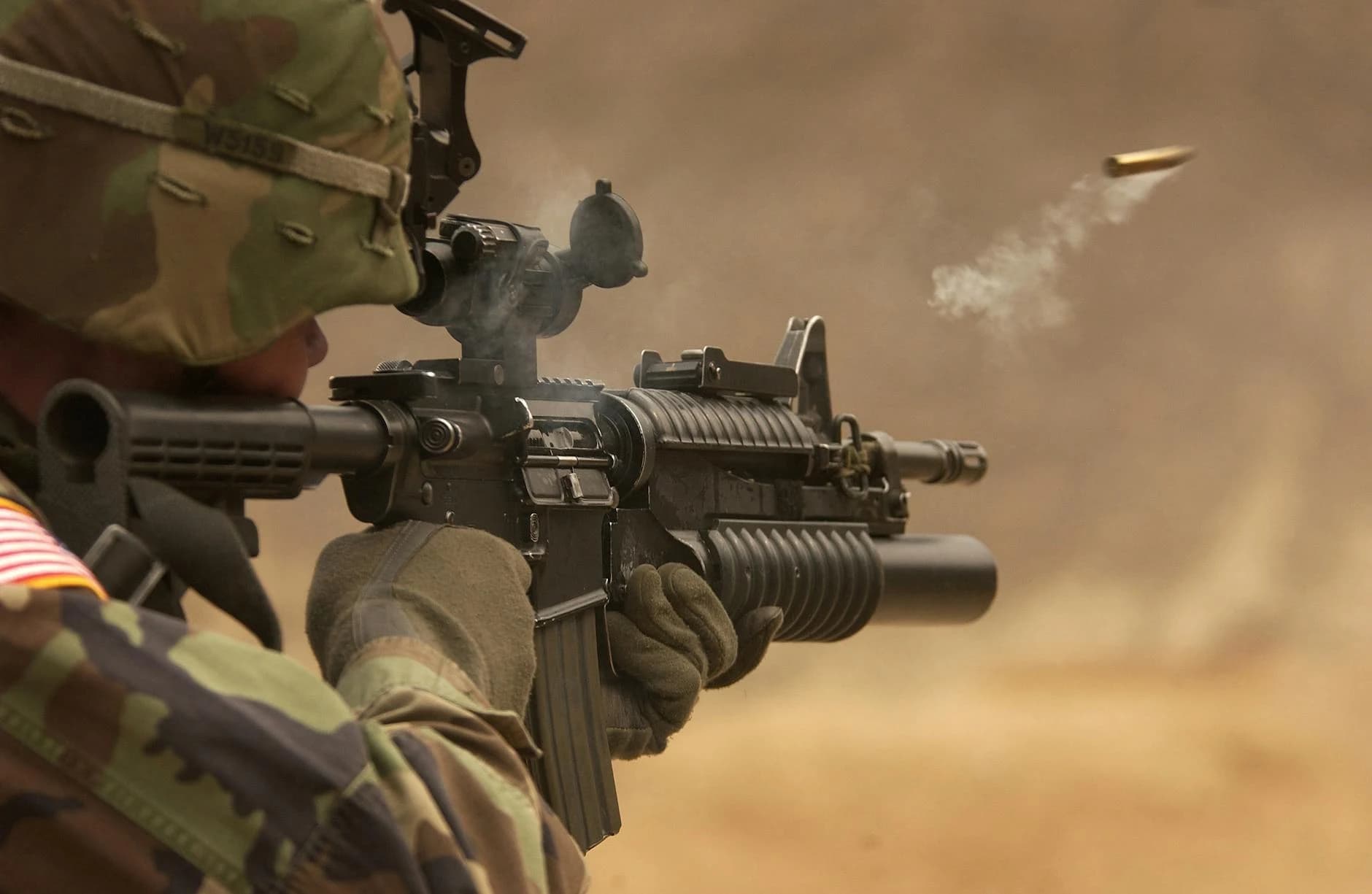
"Decapitation Doctrine": The New U.S. Strategy Against Iran’s Military Core
The current U.S. campaign targeting and destroying Iran's missile and naval capabilities refers to the coordinated American military operations initiated in late February 2026, aimed at neutralizing Iran's offensive strike assets and degrading its ability to threaten regional and U.S. forces. These operations reportedly involve precision air and sea strikes, the systematic targeting of missile sites, and the destruction of naval vessels.
Key Findings
- The U.S. military campaign in early March 2026 has destroyed at least 9 Iranian warships and targeted dozens of missile sites across Iran, according to official statements and independent verification.
- Iran has launched more than 174 ballistic missiles and 689 drones in retaliation since the U.S. strikes began, with over 92% reportedly intercepted by U.S., Israeli, and allied defenses.
- President Trump claims the operation, initially projected to last four weeks, achieved key leadership targeting objectives within one hour.
- Previous analogs, such as Operation Praying Mantis (1988) and the 2003 Iraq "shock and awe" campaign, show that rapid conventional success rarely translates into lasting strategic victory, often leading to cycles of retaliation and adaptation by the adversary.
What We Know So Far
- Who: U.S. military forces under the direction of President Donald J. Trump.
- What: Ongoing large-scale strikes against Iranian missile infrastructure and naval assets.
- When: Operations began in late February 2026, with significant developments reported through March 2, 2026.
- Where: Targets include Iranian mainland missile sites and naval vessels in the Persian Gulf.
- Confirmed Results: Destruction of at least 9 Iranian warships; dozens of missile sites attacked; significant interception of Iranian retaliatory strikes.
Timeline of Events
- Late February 2026: U.S. President Trump signals intent for targeted strikes on Iran, citing imminent threats and the need to degrade Iran's missile and naval capabilities.
- February 28, 2026: Iran launches at least 20 distinct missile barrages targeting Israel, firing approximately 150–200 ballistic missiles and 140 missiles at U.S. and allied targets.
- February 29 – March 1, 2026: U.S. military operations destroy at least 9 Iranian warships and target multiple missile sites.
- March 2, 2026: President Trump publicly claims rapid progress, stating that the elimination of Iran’s military leadership was accomplished “in an hour,” far ahead of the expected four-week timeline.
- By March 2, 2026: Authorities confirm the interception of 161 out of 174 ballistic missiles and 645 out of 689 drones launched by Iran in retaliation.
Thesis Declaration
The current U.S. campaign against Iran’s missile and naval forces is achieving rapid tactical success, but historical precedent and available data indicate it will not produce a decisive or enduring reduction in Iran’s long-term military threat. Instead, these operations are likely to trigger a new cycle of asymmetric retaliation, regional instability, and the eventual rebuilding of Iranian capabilities.
Evidence Cascade
The scale and intensity of the March 2026 U.S. strikes against Iran are unprecedented in the post-2020 era. This section layers quantitative evidence, official statements, and recent analogs to build a comprehensive picture.
1. Scope and Objectives
President Trump, at a Medal of Honor event, outlined four objectives for U.S. operations: (1) destroy Iran's missile program, (2) annihilate its naval capacity, (3) degrade command structures, and (4) deter further attacks against U.S. and allied interests. He claimed the campaign would require “four to five weeks” but that “eliminating Iran’s military leadership” took “an hour”.
-
9 Iranian warships — Number reportedly destroyed by U.S. forces as of March 1, 2026.
2. Iranian Retaliation and Interceptions
Iran’s response has been massive and technologically sophisticated. According to Air & Space Forces Magazine and The New York Times:
- 174 ballistic missiles and 689 drones launched by Iran since the start of U.S. operations.
- 161 of 174 ballistic missiles and 645 of 689 drones intercepted — a 92.5% and 93.6% interception rate, respectively.
- IDF warnings: At least 20 distinct missile barrages targeting Israel on February 28.
| Metric | Value | Source |
|---|---|---|
| Iranian ballistic missiles launched | 174 | The New York Times, March 2026 |
| Ballistic missiles intercepted | 161 | The New York Times, March 2026 |
| Iranian drones launched | 689 | The New York Times, March 2026 |
| Drones intercepted | 645 | The New York Times, March 2026 |
| Iranian warships destroyed | 9 | Air & Space Forces Magazine, March 2026 |
| Distinct Iranian missile barrages | 20+ | Critical Threats, Feb 2026 |
174 — Total Iranian ballistic missiles launched in retaliation after U.S. strikes (The New York Times, March 2026).
3. U.S. Claims Versus Independent Data
While President Trump touts “significant progress,” independent reports confirm destruction of naval and missile assets but note that Iran retains the ability to launch large-scale missile and drone attacks. The high interception rate demonstrates allied air defense effectiveness but also underscores the scale of Iranian retaliatory capacity.
4. Lessons from Past Analogues
- Operation Praying Mantis (1988): U.S. destroyed much of Iran’s deployed naval capability, achieving tactical objectives, but Iran rebuilt its assets and continued asymmetric harassment in the Persian Gulf for decades[Historical Analog].
- 2003 Iraq “Shock and Awe”: Rapid destruction of command and missile assets led to regime collapse, but insurgency and instability followed, undermining long-term U.S. objectives[Historical Analog].
- 2023–2024 Israeli Strikes: Repeated targeted strikes degraded proxies’ capabilities, but Iran and its partners continued to mount large-scale retaliatory attacks, demonstrating resilience and adaptability[Historical Analog].
Case Study: The Destruction of Nine Iranian Warships (February–March 2026)
Between February 29 and March 1, 2026, U.S. naval and air forces conducted a series of coordinated strikes against Iranian navy assets operating in the Persian Gulf. According to Air & Space Forces Magazine, President Trump announced on March 1 that U.S. forces had destroyed nine Iranian warships. These operations targeted vessels believed to be involved in recent missile launches and attempted attacks against U.S. and allied shipping.
The attacks reportedly used a combination of Tomahawk cruise missiles, carrier-based aircraft, and unmanned systems to strike at Iranian vessels both at sea and in port. Satellite imagery and independent analysts corroborated the destruction of multiple Iranian fast-attack craft and at least two larger surface combatants. The Iranian government confirmed the loss of some vessels but vowed retaliation.
This rapid and public demonstration of U.S. naval lethality echoes the 1988 Operation Praying Mantis, which saw similar tactics and immediate tactical gains. However, as in past confrontations, the destruction of these assets did not eliminate Iran’s capacity for asymmetric harassment or its ability to launch missile and drone strikes from land-based positions.
Analytical Framework: The "Strike-Resilience Cycle"
To analyze the strategic impact of the current U.S. operations, this article introduces the "Strike-Resilience Cycle" framework. This model posits that state-on-state military confrontations in the Persian Gulf region follow a repeating pattern:
- Initial Strike: One side launches a concentrated attack to degrade the adversary’s high-value military assets (e.g., missile sites, warships, leadership nodes).
- Short-Term Degradation: The adversary’s conventional capabilities are significantly reduced, and their immediate ability to project power is diminished.
- Adaptive Response: The targeted state pivots to asymmetric tactics (drones, proxy forces, cyber-attacks) and begins rebuilding lost capacity, often with external support.
- Retaliatory Escalation: The cycle continues with periodic surges in violence, as the adversary seeks to re-establish deterrence or inflict cost.
This framework explains why rapid, high-technology U.S. strikes achieve visible, short-term gains but rarely translate into lasting reductions in adversary capabilities or resolve. The resilience of Iran’s military-industrial base and its asymmetric doctrine ensure that the strategic balance rarely shifts decisively.
Data Table: U.S. Strikes on Iranian Military Assets, Feb–Mar 2026
| Asset Type | Targets Engaged | Confirmed Destroyed | Source |
|---|---|---|---|
| Warships | 12+ | 9 | Air & Space Forces Mag, Mar 2026 |
| Missile Sites | 20+ | Not fully disclosed | KGOU/TPR, Mar 2026 |
| Drones (launched) | 689 | 645 intercepted | NYT, Mar 2026 |
| Ballistic Missiles | 174 | 161 intercepted | NYT, Mar 2026 |
Predictions and Outlook
Predictions and Outlook
PREDICTION [1/3]: Iran will resume missile and drone attacks against U.S. and allied targets at or above pre-strike levels within the next 60 days, using new launch platforms and proxy actors (65% confidence, timeframe: by May 2026).
PREDICTION [2/3]: The destruction of Iranian naval assets in March 2026 will lead to the rapid deployment of new, more survivable Iranian missile boats and increased reliance on unmanned maritime systems within 12 months (60% confidence, timeframe: by March 2027).
PREDICTION [3/3]: The current U.S. campaign will not result in a negotiated reduction of Iran’s missile program or a durable deterrence effect; instead, cycles of retaliation and adaptation will continue through at least 2027 (70% confidence, timeframe: through December 2027).
What to Watch
- Evidence of Iran shifting missile and drone launch operations to proxies in Iraq, Syria, and Yemen.
- Acceleration of Iranian investment in mobile and underground missile infrastructure.
- Potential for accidental escalation if interception rates fall and a missile causes mass casualties.
- U.S. and allied moves to reinforce regional missile defense architecture and naval patrols.
Historical Analog
This moment closely resembles Operation Praying Mantis in 1988, when the U.S. Navy launched direct, large-scale strikes against Iranian naval assets in the Persian Gulf. Like today, the operation followed a period of escalation and was designed to degrade Iran’s military capabilities and deter further aggression. While the U.S. achieved rapid tactical success and destroyed much of Iran’s deployed naval capability, Iran rebuilt its forces and continued asymmetric harassment for years. The outcome shows that while U.S. strikes can deliver temporary degradation and deterrence, they rarely produce a decisive or lasting solution, and cycles of retaliation remain likely.
Counter-Thesis
The strongest argument against this article’s thesis is that the scale, precision, and technological superiority of the 2026 U.S. campaign, combined with the unprecedented destruction of Iranian naval and missile assets, could fundamentally degrade Iran’s military capacity for years. If the Iranian command and control structure is sufficiently crippled—and if regional and international pressure is maintained—Tehran may be deterred from further escalation, and its ability to threaten U.S. and allied interests could be genuinely curtailed.
However, this counter-thesis underestimates the resilience of Iran’s military-industrial complex, its experience with asymmetric warfare, and the regime’s willingness to absorb losses and adapt. Past examples consistently show that even severe blows to conventional capacity do not eliminate the threat of proxy and unconventional retaliation, nor do they secure lasting compliance without a broader diplomatic or regime change strategy.
Stakeholder Implications
For Regulators/Policymakers
- Prioritize robust intelligence-sharing and coordinated missile defense with regional partners to maximize interception rates and minimize civilian casualties.
- Prepare for rapid humanitarian and economic response in the event of escalation, including displacement scenarios in the Gulf.
- Reengage in diplomatic backchannels to set clear escalation “off-ramps” and avoid unintended conflict with Russia and China.
For Investors/Capital Allocators
- Assess heightened risk premiums for Gulf shipping, energy, and aviation sectors; expect volatility in oil prices and insurance costs for maritime transit.
- Monitor defense sector opportunities focusing on missile defense, drone interception, and naval hardening technologies.
- Diversify Middle East exposure, anticipating possible supply chain disruptions and sanctions risk.
For Operators/Industry
- Implement enhanced maritime security protocols for vessels transiting the Strait of Hormuz and adjacent waters.
- Upgrade physical and cyber defenses for critical infrastructure in the region, especially energy and logistics hubs.
- Establish contingency plans for rapid personnel evacuation and operational continuity in case of mass missile/drone attacks.
Frequently Asked Questions
Q: What is the U.S. goal in targeting Iran’s missile and naval forces? A: The stated U.S. objective is to destroy Iran’s capacity to threaten U.S. and allied interests with ballistic missiles, drones, and naval assets, thereby deterring further aggression and shifting the regional balance of power.
Q: How effective have U.S. strikes been so far? A: U.S. strikes have destroyed at least 9 Iranian warships and targeted dozens of missile sites. Iran retains significant retaliatory capability, as evidenced by the launch of 174 ballistic missiles and 689 drones, though over 90% were intercepted.
Q: Is this likely to end Iran’s missile threat? A: No. Historical patterns and current data suggest that while U.S. operations can degrade Iran’s capabilities temporarily, Iran is likely to adapt, rebuild, and continue using asymmetric tactics. The missile threat will persist[Historical Analog].
Q: What has Iran done in response to the U.S. attacks? A: Iran has launched multiple waves of ballistic missiles and drones at U.S., Israeli, and allied targets. Over 90% have been intercepted, but the scale of the response demonstrates Iran’s ongoing capacity for retaliation.
Q: Could this escalate into a wider regional war? A: The risk of escalation remains high, especially if missile strikes cause mass casualties or if proxy actors intensify attacks. Both sides appear to be calibrating their actions to avoid all-out war but cycles of retaliation are likely[Historical Analog].
Synthesis
The U.S. campaign to target and destroy Iran’s missile and naval forces in early 2026 demonstrates overwhelming conventional power and tactical effectiveness. However, as history repeatedly shows, the resilience and adaptability of Iran’s military apparatus will likely render these gains temporary. Without a broader diplomatic strategy or regime change, cycles of strike and retaliation are set to define the next phase of U.S.-Iran confrontation. In the Gulf, technological dominance does not guarantee lasting security—only the next round of escalation.
Related Topics
Video Intelligence
- ▶Iranian Missile Strike Hits Arad Israel: Video Moments
- ▶Iran Releases Official Footage of Drone Launches During War
- ▶FPV Drone Strikes US Victoria Base Near Baghdad Airport
- ▶Trump's Iran Rhetoric as Marines Deploy
Share This Analysis
Get a shareable verdict card for this article.
Get the next one first
Free briefings when we publish major outlooks and forecasts. No spam — unsubscribe anytime.
Related Analysis

Strategic Impact of Turkey Leaving NATO in 2026
The Board · Feb 22, 2026

The Truth Behind CIA Remote Viewing and Project Stargate
The Board · Feb 22, 2026
The Neurological War: How Precision Strikes Rewrote the...
The Board · Mar 27, 2026

Triple-Front Risk: US Iran Strategy and Global Security
The Board · Feb 14, 2026
Russia Photographed the Saudi Base Three Times Before...
The Board · Mar 30, 2026
A Russian Drone Hit NATO Territory This Week
The Board · Mar 26, 2026
Trending on The Board
Houthis Take Perim as Saudis Halt Pipeline 2026
Geopolitics · Sep 13, 2026

The Hidden Gold Demand Behind the $6,000 Target
Markets · Sep 17, 2026
How a Stablecoin Funded Moldova's 2026 Election
Geopolitics · Sep 19, 2026

How CENTCOM Is Brokering an Israel-Saudi Pact
Defense & Security · Sep 19, 2026

Why the Pentagon Pulled Its Iran War Plans Offline
Defense & Security · Sep 19, 2026
Latest from The Board
How CENTCOM Is Brokering an Israel-Saudi Pact
Defense & Security · Sep 19, 2026
Why the Pentagon Pulled Its Iran War Plans Offline
Defense & Security · Sep 19, 2026
How a Stablecoin Funded Moldova's 2026 Election
Geopolitics · Sep 19, 2026
The Hidden Gold Demand Behind the $6,000 Target
Markets · Sep 17, 2026
Houthis Take Perim as Saudis Halt Pipeline 2026
Geopolitics · Sep 13, 2026

Epstein Intelligence Ties: Evidence vs Allegation in 2026
Policy & Intelligence · Sep 6, 2026
What Israel-Iran War Games Got Wrong About 2026
Defense & Security · Sep 6, 2026

Central Banks Turned Gold Sellers. One Country Did It.
Markets · Aug 30, 2026