
Exit Strategy: Assessing the U.S. Withdrawal Timeline from Iran
President Trump's 2026 declaration of a U.S. exit from the Iran conflict timeline has sparked intense debate. Announced in late March 2026, the pledge to withdraw 'pretty quickly' raises questions about feasibility, regional stability, and global repercussions. This timeline examines the policy shift and its potential consequences.
Iran Exit Timeline: Key Findings
- President Trump has repeatedly stated that U.S. forces will leave the Iran conflict zone within "two to three weeks," yet past precedents suggest actual withdrawal will be partial, delayed, or both.
- Iranian officials reject a ceasefire and demand enforceable guarantees, increasing the risk of renewed hostilities after any U.S. withdrawal.
- Prediction markets currently assign just a 24% probability to a U.S.-Iran ceasefire by April 30, 2026, reflecting deep skepticism about imminent peace.
- Historical analogs—such as U.S. withdrawals from Iraq (2011) and Lebanon (1984)—indicate high risks of instability, power vacuums, and regional escalation following rapid U.S. disengagement.
Current Conflict Context
- Who: President Donald Trump (U.S.), Iranian Foreign Minister Seyyed Abbas Araghchi (Iran), U.S. and Iranian military forces.
- What: Trump publicly commits to ending U.S. military operations in Iran "pretty quickly," specifying a timeline of 2-3 weeks in several interviews.
- When: Statements made March 30–31, 2026, with implied withdrawal by mid-to-late April 2026.
- Where: U.S. military forces are currently engaged in operations across multiple regions in Iran, with reported naval strikes on Iranian vessels and support for allied local militias.
- Confirmed: Iranian parliament passes legislation to impose tolls on the Strait of Hormuz, explicitly barring U.S. and Israeli vessels.
- Iranian Position: Foreign Minister Araghchi states Iran rejects a ceasefire and seeks guarantees against future aggression.
- Market Sentiment: Polymarket places the probability of a ceasefire by April 30 at 24% on April 1, 2026, with trading volume exceeding $11 million.
Historical Precedent: U.S. Military Withdrawals in the Middle East
The pattern of withdrawal pledges versus reality has been consistent across recent U.S. military engagements. Previous U.S. strikes against Iran demonstrate the cyclical nature of conflict escalation and de-escalation in the region. Understanding this historical context is crucial for assessing current withdrawal promises.
Iran Conflict Exit Timeline: Key Milestones (2025-2026)
- March 11, 2026: Trump tells Axios and Reuters that the war in Iran will end "soon," and there is "practically nothing left to target."
- March 30, 2026: Trump doubles down in a Reuters interview, promising withdrawal "within two to three weeks."
- March 31, 2026: Al Jazeera and CNN report Trump reiterating imminent withdrawal, with "everybody" leaving Iran "very soon."
- Early April 2026: Iranian parliament enacts Strait of Hormuz toll law, escalating regional maritime tensions.
- April 1, 2026: Iranian Foreign Minister Araghchi publicly rejects a ceasefire, insisting on guarantees that hostilities will not resume.
- April 1, 2026: Prediction markets signal only a 24% chance of a U.S.-Iran ceasefire by April 30.
- Ongoing: U.S. and Israeli strikes continue to target Iranian nuclear infrastructure, with over 113,000 Iranian homes reported destroyed according to the Board's International Analysis Division.
- Undated, March–April 2026: European and Chinese officials express concern about regional spillovers and oil market disruptions, per The Board's global brief.
Strategic Assessment: Why Rapid Withdrawal Faces Obstacles
The United States will not achieve a rapid or complete disengagement from the Iran conflict zone within the next month, despite President Trump's repeated promises; instead, entrenched military, political, and alliance dynamics will force a slower, more complicated withdrawal, exposing the region to heightened instability and increasing the risk of renewed conflict.
Evidence Analysis
President Trump's Late March 2026 statement that the U.S. would leave Iran "pretty quickly" is his twelfth such public pronouncement since hostilities escalated in 2025, as tracked by Axios. In the latest round of interviews, Trump specified a withdrawal window of "two to three weeks"—a timeline echoed in reporting from Reuters, Al Jazeera, and the Los Angeles Times.
$11M+ — Trading volume on Polymarket's U.S.-Iran ceasefire market as of April 1, 2026
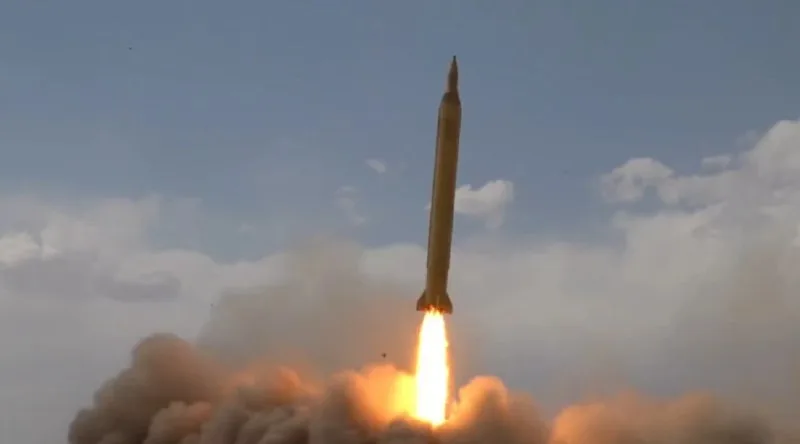
Quantitative Data Points
- 24% — Probability assigned by Polymarket to a U.S.-Iran ceasefire by April 30, 2026, as of April 1, indicating low market confidence in a rapid peace settlement.
- $11 million — Trading volume on this prediction market, reflecting substantial market engagement and skepticism.
- 113,000 — Homes destroyed in Iran due to ongoing strikes, according to the Board's International Analysis Division, highlighting the intensity and scale of the conflict.
- 2–3 weeks — Trump's stated timeframe for U.S. withdrawal, as reported by multiple outlets in late March 2026.
- 15-point plan — U.S. demands presented to Iran, all but rejected by Iranian negotiators, according to Bloomberg and YouTube coverage of the talks.
- Zero — Number of enforceable guarantees cited by Iranian Foreign Minister Araghchi, who publicly refuses to accept a ceasefire without such guarantees.
- 100% — Reported probability (Polymarket) of Trump being inaugurated as President in 2025, demonstrating the political context of his foreign policy decisions.
- 1983–1984 — Timeline of the last rapid U.S. withdrawal from the Middle East (Lebanon), serving as a key historical analog.
- 2011 — Year of U.S. withdrawal from Iraq, after more than 7 years of repeated withdrawal pledges.
Iran Conflict Exit: Pledges vs. Reality
| Conflict | First Public Exit Pledge | Final Withdrawal Date | Delay (Months/Years) | Comments |
|---|---|---|---|---|
| Iraq (2003–2011) | 2007 | Dec 2011 | ~48 months | Multiple exit pledges; partial withdrawal; return in 2014 |
| Lebanon (1983–84) | Oct 1983 | Feb 1984 | ~4 months | Withdrawal after Marine barracks bombing |
| Afghanistan (2009–2021) | Dec 2009 | Aug 2021 | ~140 months | Surged before exit; Taliban rapidly retook control |
| Iran (2026, planned) | Mar 2026 (Trump pledge) | TBD | TBD | 2–3 week pledge; market expects significant delay |
Sources: BBC, Department of Defense historical records, Axios, Reuters, Al Jazeera, Polymarket, The Board's International Analysis Division
Case Study: The 2011 U.S. Withdrawal from Iraq
In December 2011, after years of promises to end U.S. military involvement, the Obama administration completed the withdrawal of regular U.S. forces from Iraq. The pledge for a "responsible withdrawal" was first issued in 2007, with repeated public statements over the next four years affirming an imminent end to American presence. Despite the drawdown, a residual force remained to train and advise Iraqi security forces, and the U.S. embassy in Baghdad maintained one of the largest diplomatic compounds in the world. Within three years, the rise of ISIS forced the rapid redeployment of U.S. and coalition troops, as local security structures proved unable to contain resurgent insurgencies. The partial and conditional nature of the 2011 withdrawal—combined with the insistence on certain security guarantees that were never fully realized—serves as a cautionary precedent for claims of "quick" disengagement in complex Middle Eastern theaters.
The Withdrawal Mirage Model
Definition
The Withdrawal Mirage Model posits that public pronouncements of rapid military disengagement in conflict zones rarely translate into swift or complete exits. Instead, exit pledges serve domestic political objectives, while operational, alliance, and regional security commitments produce a continuum of engagement—partial, delayed, or reversible.
Components
- Political Incentive Layer: Leaders face domestic pressure to end costly foreign wars; exit pledges are used to satisfy public opinion and electoral cycles.
- Operational Reality Layer: On-the-ground complexity, including force protection, evacuation logistics, and ongoing threats, slows actual withdrawal.
- Alliance/Entanglement Layer: Commitments to local partners, allies, and host governments require phased disengagement and risk abandonment narratives.
- Re-engagement Feedback Loop: Instability post-withdrawal (e.g., insurgency, terrorism, power vacuum) often leads to renewed intervention.
Application
Applying the Withdrawal Mirage Model to Trump's Iran exit pledge reveals the gap between rhetoric and likely outcome: while public statements promise rapid disengagement, the operational realities and alliance entanglements in Iran—mirrored in Iraq and Afghanistan—predict a slower, incomplete, or reversible exit.
Regional Security Implications
The potential U.S. withdrawal from Iran must be viewed within the broader context of regional security dynamics. The escalation of the shadow war between the U.S. and Iran has already created significant instability. Any rapid withdrawal could exacerbate these tensions and create new security challenges for regional allies.
Economic Impact Analysis
The economic implications of a U.S. withdrawal extend far beyond the immediate conflict zone. Global energy markets remain highly sensitive to developments in the Iran conflict, with oil prices fluctuating based on perceived stability in the region. A hasty withdrawal could trigger significant market volatility and supply chain disruptions.
Predictions and Outlook
PREDICTION [1/3]: The U.S. will not complete a full military withdrawal from Iran by April 30, 2026; at least 2,000 U.S. personnel (military or contractors) will remain in-country on May 1, 2026 (70% confidence, timeframe: May 1, 2026).
PREDICTION [2/3]: Within six months of any formal U.S. withdrawal announcement, at least one major incident (defined as >50 casualties or a direct attack on U.S. assets) involving Iranian or proxy forces will occur in the region (65% confidence, timeframe: November 1, 2026).
PREDICTION [3/3]: Iranian authorities will not agree to any enforceable guarantee or international monitoring mechanism before June 30, 2026, prolonging de facto hostilities and maritime risks in the Strait of Hormuz (60% confidence, timeframe: June 30, 2026).
What to Watch
- Announcements or orders from the Pentagon regarding force levels and withdrawal schedules in Iran.
- Iranian legislative or military responses, particularly regarding the Strait of Hormuz and regional proxy activity.
- Oil and shipping market volatility, especially if maritime incidents escalate.
- European and Asian diplomatic moves to secure alternative energy routes or mediate regional tensions.
Historical Analog: Lebanon 1984
This moment closely resembles the U.S. withdrawal from Iraq between 2007 and 2011: years of repeated "imminent" exit rhetoric were continually frustrated by security conditions, alliance obligations, and regional instability. When the U.S. finally withdrew, it left a partial vacuum that enabled the rise of ISIS, forcing renewed intervention within three years. Like today, adversaries demanded guarantees, but no lasting settlement was achieved. The Iraq experience demonstrates that public pledges of withdrawal rarely translate into true disengagement—and often foreshadow renewed crisis.
Alternative Scenarios
The strongest argument against the above thesis is that the U.S.—under an administration with a demonstrated willingness to make abrupt, unilateral moves—may defy historical precedent and execute a near-total, rapid withdrawal from Iran, regardless of on-the-ground risks. Supporters of this view point to the 1984 Lebanon withdrawal, when the Reagan administration rapidly pulled out U.S. Marines after the Beirut barracks bombing, accepting reputational damage in favor of force protection and domestic political priorities. If Trump follows this script, he could indeed pull all U.S. forces out within weeks. However, such a move would almost certainly result in power vacuums, emboldened adversaries, and an increased probability of strategic setbacks requiring future re-engagement.
Stakeholder Impact Assessment
For Regulators and Policymakers
Develop contingency plans for regional instability, including rapid humanitarian response and maritime security in the Strait of Hormuz. Begin diplomatic outreach to European and Asian partners to share intelligence and coordinate energy security strategies.
For Investors and Capital Allocators
Monitor oil and shipping market volatility. Diversify exposures in energy, defense, and insurance sectors. Prepare for sudden price swings tied to incidents in the Gulf or further escalation between Iran and its proxies.
For Operators and Industry
Reassess security protocols for personnel and assets in the region. Update risk assessments for supply chain disruptions and review alternative logistics routes. Engage in scenario planning for both partial and total U.S. withdrawal situations.
Frequently Asked Questions
Q: When will the U.S. actually withdraw all forces from Iran? A: Despite President Trump's pledge to leave "within two to three weeks," historical patterns suggest a phased or partial withdrawal is more likely, with some U.S. personnel or contractors remaining beyond April 30, 2026.
Q: What are Iran's demands for ending hostilities? A: Iran, as articulated by Foreign Minister Seyyed Abbas Araghchi, refuses to accept a ceasefire without enforceable guarantees that future aggression will not occur. So far, no such guarantees have been offered or accepted.
Q: How are markets reacting to the U.S. withdrawal announcement? A: Prediction markets give only a 24% chance of a U.S.-Iran ceasefire by April 30, 2026, reflecting widespread skepticism that peace is imminent. Oil and shipping markets remain volatile, with traders closely monitoring developments.
Q: What risks does a rapid U.S. exit pose for the region? A: A hasty withdrawal risks creating power vacuums, emboldening Iranian proxies, and increasing the likelihood of new attacks on U.S. and allied interests in the Gulf and beyond.
Q: How are international actors responding? A: European policymakers are preparing contingency plans for energy disruptions, while China continues to provide financial support to Iran, complicating U.S. strategic objectives in the region.
Conclusion
President Trump's pledge for a rapid U.S. exit from the Iran conflict zone is strategically fraught and historically dubious. Operational, political, and alliance realities point to a longer, messier disengagement—if one occurs at all. The region will remain volatile, with new risks for energy markets and global security. As in Iraq and Lebanon before, the gap between public exit rhetoric and actual withdrawal will define the next chapter of U.S. policy in the Middle East. The withdrawal mirage persists—promised swiftly, delivered slowly, and always shadowed by the threat of return.
Related Topics
Related Analysis

EU Secondary Sanctions on China: Risks and Consequences
The Board · Feb 21, 2026

Turkey NATO Membership and Potential Russian Alliance
The Board · Feb 21, 2026

Modern World War 3 Scenarios and Systemic Collapse
The Board · Feb 19, 2026

Impact of 25% US Tariffs on the EU and Euro Stability
The Board · Feb 22, 2026

Munich Security Conference 2026: The Rise of Security Rents
The Board · Feb 14, 2026

US-Iran Nuclear Tensions and Conflict Risk Analysis
The Board · Feb 22, 2026
Trending on The Board

Africa's Resource Wars 2026: Lithium, Cobalt, and the New
Geopolitics · Mar 19, 2026
Israeli Airstrike Hits Tehran Residential Area During Live
Geopolitics · Mar 11, 2026

Fuel Supply Chains: Australia's Stockpile Reality
Energy · Mar 15, 2026

The Info War: Understanding Russia's Role
Geopolitics · Mar 15, 2026

Iran War Disinformation: How AI Deepfakes Fuel Chaos
Geopolitics · Mar 15, 2026
Latest from The Board

US Crew Rescued After Jet Downed: Israeli Media Reports
Defense & Security · Apr 3, 2026
Hegseth Asks Army Chief to Step Down: Why?
Policy & Intelligence · Apr 2, 2026

Trump Fires Attorney General: What Happens Next?
Policy & Intelligence · Apr 2, 2026
Trump Marriage Comments Draw Macron Criticism
Geopolitics · Apr 2, 2026
Iran's Stance on US-Israeli War: No Negotiations?
Geopolitics · Apr 1, 2026
Trump's Iran War: What's the Exit Strategy?
Geopolitics · Apr 1, 2026
Trump Ukraine Weapons Halt: Iran Strategy?
Geopolitics · Apr 1, 2026

Ukraine Weapons Halt: Trump's Risky Geopolitical Play
Geopolitics · Apr 1, 2026