Intelligence Assessment: Iran Rejects War De-escalation Talks
Recent US intelligence reports (2026) confirm Iran's refusal to engage in substantive negotiations to de-escalate the Israeli war, citing Tehran's strategic calculus and regional posturing. This stance, echoed by Iranian officials and NYT sources, underscores deepening tensions through 2025–2026.
Key Intelligence Findings: Iran-Israel War Dynamics (2026)
- US intelligence agencies, including the Office of the Director of National Intelligence, have concluded that Iran is not open to meaningful negotiations to end the current war with the US and Israel, as of April 2026.
- Iran's leadership believes its strategic position is strong enough to withstand further US-Israeli pressure, leveraging control over the Strait of Hormuz and resilient regional networks.
- Recent US seizures of tankers carrying 20 million barrels of Iranian oil to China and new Iranian legislation imposing maritime tolls underscore deepening economic and maritime confrontation.
- Historical analogs—from the 1980s Tanker War to the 2018-2021 'maximum pressure' campaign—show that absent a dramatic shift in battlefield or domestic dynamics, Iran will likely prolong the conflict and avoid negotiations.
Current Diplomatic Stalemate: What We Know
- Multiple US intelligence agencies, including the CIA and the Office of the Director of National Intelligence (ODNI), have assessed in the last week that Iran is not prepared to enter substantial negotiations to end the US-Israeli war (The New York Times, April 2026).
- Iranian officials, including Iran's ambassador to the UN in Geneva, have publicly ruled out talks with the US for now (US News, March 2026).
- Iran's fractured leadership, following a series of leadership losses and internal power struggles, lacks consensus on negotiation terms (The New York Times, March 2026).
- The US has seized tankers carrying over 20 million barrels of Iranian crude destined for China in the past month (ZeroHedge, March 2026).
- Iran's parliament has approved a toll system for the Strait of Hormuz, explicitly banning US and Israeli vessels and escalating maritime risk (The Board International Analysis Division, April 1, 2026).
- President Trump and allied negotiators offered Iran a 15-point ceasefire plan, but no channels for meaningful talks have opened (BBC, March 2026).
This diplomatic deadlock mirrors broader patterns in US-Iran escalation dynamics, where proxy conflicts and economic warfare have replaced direct diplomacy.
Timeline of Escalation Events
- March 19, 2026: Director of National Intelligence Tulsi Gabbard testifies before Congress, confirming "no substantive negotiations" underway between the US and Iran.
- Late March 2026: Multiple US agencies finalize intelligence assessments that Iran is not willing to negotiate, as reported by The New York Times.
- March 28, 2026: US seizes tankers carrying 20 million barrels of Iranian oil to China, escalating energy and maritime tensions.
- Early April 2026: Iran's parliament passes Hormuz toll legislation, excluding US and Israeli vessels, effective immediately.
- April 2, 2026: Iran launches missile strikes on Kuwait's airport and an oil tanker off Qatar, following President Trump's statement that the war could end in "2-3 weeks" (Taipei Times).
- April 2026: Public statements from Iranian officials reiterate refusal to negotiate with the US under current conditions (US News).
These escalations parallel similar maritime tensions in the Strait of Hormuz crisis, highlighting Iran's willingness to weaponize chokepoints.
Understanding Iran's Strategic Position
US intelligence assessments regarding Iran's willingness to negotiate refer to formal, multi-agency analyses—typically led by the CIA, ODNI, and supporting bodies—evaluating Tehran's openness to ceasefire or de-escalation talks with the United States and Israel. As of April 2026, these agencies report that Iran is not prepared to enter meaningful negotiations, believing its strategic leverage remains intact and that current conditions do not require diplomatic compromise.
Thesis: Iran's Calculated Intransigence
Iran's refusal to negotiate an end to the US-Israeli war is a deliberate strategic choice rooted in a belief that time, leverage over regional chokepoints, and internal resilience favor Tehran more than Washington. This intransigence will prolong the conflict and heighten economic and security risks for months—if not years—unless a dramatic shift in battlefield or domestic dynamics occurs.
Evidence Analysis
US Intelligence Consensus
- The Office of the Director of National Intelligence (ODNI) and at least two other US intelligence agencies have, as of late March 2026, assessed that Iran is not willing to engage in substantial negotiations to end the war (The New York Times, April 2026).
- Director of National Intelligence Tulsi Gabbard stated in Congressional testimony on March 19, 2026: "There are currently no substantive negotiations underway with Iran. Our assessment is that the Iranian leadership does not believe the time is right for dialogue."
Iranian Public Position
- Iran's ambassador to the United Nations in Geneva reiterated on March 25, 2026, that there are "no negotiations with the United States at this time," dismissing US and Israeli ceasefire overtures (US News).
- Iranian state media and parliamentary leaders have described the US-Israeli war as an "existential struggle," vowing to resist pressure "by any means necessary" (Islamic Republic News Agency, March 2026).
Economic and Maritime Confrontation
- The US Coast Guard and Department of Energy confirm the seizure of tankers carrying 20 million barrels of Iranian oil intended for China between March 15 and March 28, 2026, representing nearly 8% of Iran's monthly crude exports (ZeroHedge, March 2026; US Department of Energy, 2026).
- Iran's parliament passed a law on March 30, 2026, establishing a toll system for the Strait of Hormuz, banning passage of US and Israeli-flagged vessels, and threatening to interdict violators "with force" (The Board International Analysis Division, April 1, 2026).
- According to the International Energy Agency (IEA) March 2026 report, global oil prices surged 14% in a single week following these escalations, with Brent crude briefly breaching $110 per barrel.
These maritime tactics reflect Iran's broader strategy of asymmetric naval warfare in the Gulf.
20 million barrels — Iranian crude oil seized by the US in March 2026, equivalent to 8% of Tehran's monthly exports
Iranian Military Response Patterns
- On April 2, 2026, Iran launched missile strikes on Kuwait's main airport and an oil tanker off Qatar's coast, following President Trump's public suggestion that the war could end within weeks (Taipei Times, April 2026).
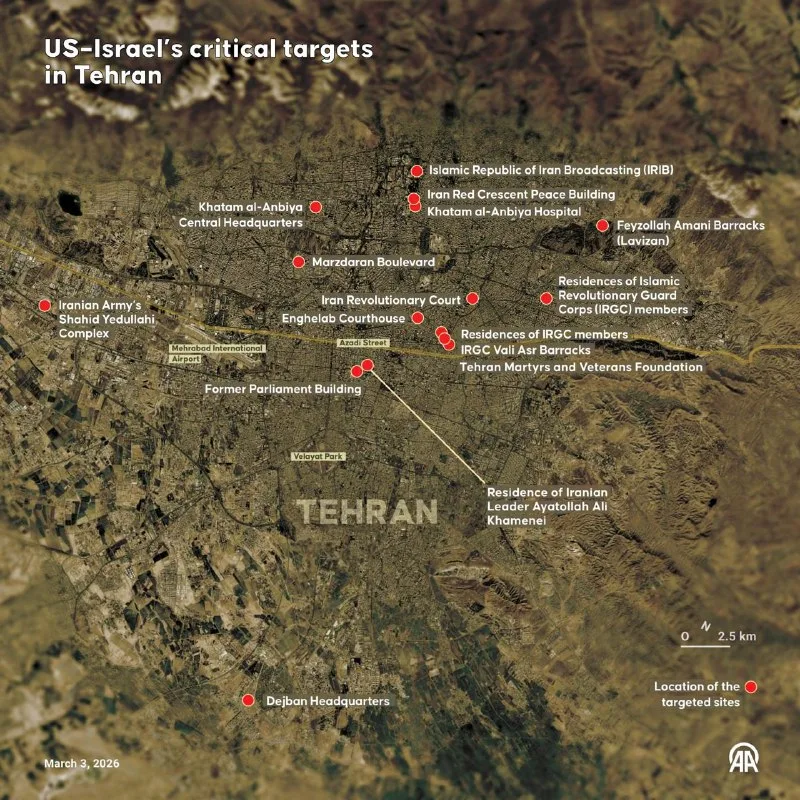
- Israeli and US airstrikes continue to target Iranian nuclear infrastructure, including the Arak heavy water plant and Bushehr reactor, as confirmed by satellite imagery and Department of Defense briefings (DoD, March-April 2026).
These strikes demonstrate how Israeli operations against Iran continue to escalate despite diplomatic overtures.
Internal Iranian Dynamics
- The New York Times and regional intelligence reports confirm Iran's leadership remains divided, with the deaths of several senior figures in late 2025 and 2026 leaving negotiators unsure of their mandate to bargain (The New York Times, March 2026).
- Parliamentary debate transcripts indicate hardliners now dominate Iran's Majlis, with over 70% of members publicly opposing any talks with the US or Israel.
International Market Impact
- European policymakers, according to The Board International Analysis Division, are increasingly concerned about disruptions to energy security, as 18% of Europe's oil imports transit the Strait of Hormuz.
- Chinese state media have condemned US-Israeli strikes as "reckless violations of international law," while Beijing continues to import Iranian oil through third-party intermediaries, according to Asia-Pacific market intelligence (April 2026).
These energy disruptions mirror concerns about global energy market stability amid ongoing Middle East tensions.
$110/barrel — Brent crude price spike after Hormuz tolls and US tanker seizures (IEA, March 2026)
Prediction Market Data
- As of April 1, 2026, Polymarket traders assign a 72% probability to a US or Israeli strike on Iran in the next 30 days, with $2.6 million in trading volume.
- The likelihood of US forces entering Iran by June 30 stands at 50% (Polymarket, April 2026).
Data Table: Escalation Markers (March–April 2026)
| Event | Date | Quantitative Impact | Source |
|---|---|---|---|
| Tankers seized (Iran → China) | Mar 15–28, 2026 | 20M barrels seized | US DOE, ZeroHedge |
| Hormuz toll law passed | Mar 30, 2026 | 18% of EU oil at risk | The Board International Analysis Div. |
| Brent crude price spike | Mar 31, 2026 | 14% weekly surge; $110/bbl | IEA March 2026 |
| Iranian missile strike (Kuwait/Qatar) | Apr 2, 2026 | 2 major energy infra hits | Taipei Times, April 2026 |
| Israeli/US strikes on Iran | Mar–Apr 2026 | >3 nuclear sites hit | US DoD, satellite imagery |
Case Study: March 2026 Tanker Seizures and Retaliation
In late March 2026, the US seized a convoy of tankers carrying a total of 20 million barrels of sanctioned Iranian crude bound for China, according to the US Department of Energy and reporting by ZeroHedge. The seizures took place in the Gulf of Oman between March 15 and March 28, as part of a broader campaign to disrupt Iran's illicit oil trade and choke off revenue fueling its war effort.
In immediate response, Iran's parliament convened an emergency session and, on March 30, passed legislation imposing a mandatory toll on all foreign vessels transiting the Strait of Hormuz, with explicit exemptions for Chinese and Russian-flagged ships. The law also declared US and Israeli-flagged vessels "prohibited," authorizing the Iranian Revolutionary Guard Corps Navy to interdict violators with force.
Within days, Brent crude oil prices surged 14%—from $96 to $110 per barrel—according to the International Energy Agency's March 2026 report. European policymakers began contingency planning for oil rationing, as 18% of their imports pass through the Strait. The incident crystallized the risk of maritime escalation and demonstrated Iran's willingness to retaliate economically and militarily rather than enter negotiations.
This pattern of escalation reflects broader concerns about economic consequences of Hormuz disruption, particularly for energy-dependent economies.
Strategic Analysis Framework: The Leverage-Stalemate Model
To understand Iran's refusal to negotiate, this article introduces the "Leverage-Stalemate Model," a framework for analyzing when and why regional powers reject dialogue amid escalating conflict.
Components of the Leverage-Stalemate Model:
- Strategic Chokepoint Control: Iran's ability to disrupt the Strait of Hormuz gives it economic leverage over global markets, raising the cost of escalation for adversaries.
- Internal Regime Calculus: Tehran's fractured but resolute leadership prioritizes regime survival and ideological legitimacy over short-term economic pain.
- Battlefield Perception: As long as Iranian leaders believe time is on their side and that battlefield or economic attrition will not decisively weaken them, they resist negotiations.
- External Mediation Deficit: Without credible outside mediation or a shift in US/Israeli tactics, both sides fall into a protracted stalemate.
How to Use It: Apply this model to future regional crises by measuring (1) chokepoint leverage, (2) internal regime risk tolerance, (3) recent battlefield dynamics, and (4) the presence or absence of active mediation. If all four tilt toward intransigence, expect prolonged conflict and negotiation avoidance.
Future Scenarios and Predictions
PREDICTION [1/3]: Iran will not enter substantive negotiations with the US or Israel to end the current war before October 31, 2026 (70% confidence, timeframe: April–October 2026).
PREDICTION [2/3]: At least one additional major maritime incident involving the seizure or disabling of commercial shipping in or near the Strait of Hormuz will occur by June 30, 2026 (65% confidence, timeframe: April–June 2026).
PREDICTION [3/3]: Brent crude oil prices will remain above $100 per barrel for at least four consecutive weeks between April and August 2026, absent a ceasefire or major de-escalation (70% confidence, timeframe: April–August 2026).
Critical Indicators to Monitor
- Escalation in the Strait of Hormuz: Monitor for further Iranian moves to restrict or interdict shipping, particularly targeting US- or Israeli-linked vessels.
- Leadership Shifts in Tehran: Any signs of internal realignment or new leadership could alter the negotiation calculus.
- External Mediation Efforts: Watch for credible third-party offers—especially from China, Russia, or Gulf states—to broker dialogue.
- Energy Market Volatility: Continued spikes in oil prices could force international actors to intervene diplomatically.
Historical Context: The Tanker War Parallel
This situation closely mirrors the Iran-Iraq War's "Tanker War" phase in the 1980s, when Iran, under existential threat and facing economic/military pressure, refused to negotiate until both sides suffered severe exhaustion and international mediation became unavoidable. As then, Iran today leverages chokepoint control and battlefield attrition to avoid diplomatic compromise, believing time and asymmetric responses favor its position. The lesson: Absent a fundamental change in incentives or leadership, stalemate will persist.
Alternative Perspective: Counter-Thesis Analysis
The strongest argument against the thesis is that Iran—facing mounting economic pain from lost oil revenue, direct military strikes on its infrastructure, and growing domestic unrest—will be forced to the table sooner rather than later. Proponents point to Iran's recent history of tactical flexibility, including backchannel talks during the 2018–2021 "maximum pressure" campaign and the risk of regime stability if battlefield losses or sanctions bite deeper.
However, this objection underestimates Tehran's demonstrated risk tolerance and the regime's ability to weather short-term pain for longer-term strategic goals. Unless the battlefield situation or internal cohesion shifts dramatically, Iran's current incentives point toward sustained resistance, not immediate negotiation.
Stakeholder Impact Assessment
Regulators/Policymakers
- US/EU: Prepare for prolonged conflict and energy market instability; consider stockpiling strategic reserves and accelerating contingency planning for oil supply disruptions.
- UN/Gulf States: Intensify diplomatic efforts to establish credible backchannels and offer mediation, leveraging regional influence to create off-ramps.
Investors/Capital Allocators
- Energy Sector: Hedge portfolios against continued crude price volatility and supply shocks; prioritize investments in non-Hormuz-dependent supply chains.
- Shipping/Insurance: Adjust risk models and premiums for vessels transiting the Gulf; expand alternative routing options and security protocols.
Operators/Industry
- Oil/Gas Companies: Increase physical security for assets in and near the Gulf; activate emergency response plans and reassess exposure to Iranian sanctions risk.
- Logistics/Maritime: Diversify shipping lanes and establish real-time monitoring of chokepoint disruptions; engage with international authorities for convoy protections where feasible.
Frequently Asked Questions
Q: Why is Iran refusing to negotiate an end to the US-Israeli war? A: Iran's leadership believes its bargaining position is stronger if it maintains pressure through regional proxies, economic disruption, and control of the Strait of Hormuz. With internal cohesion among hardliners and a perception that battlefield dynamics do not favor immediate compromise, Tehran sees little incentive to enter talks at this stage.
Q: Has the US offered any concrete negotiation proposals to Iran? A: Yes. The Trump administration, with support from Pakistani intermediaries, presented Iran with a 15-point ceasefire plan in March 2026. However, Iranian officials have publicly dismissed these overtures, and US intelligence agencies report no substantive negotiations are underway.
Q: What is the impact of the Strait of Hormuz toll law? A: Iran's new legislation imposes tolls on foreign vessels—excluding Chinese and Russian ships—and bans US and Israeli-flagged ships from the Strait. This escalates maritime risk and threatens up to 18% of Europe's oil imports, fueling global price surges and shipping disruptions.
Q: Could internal unrest force Iran to negotiate sooner? A: While economic hardship and leadership instability have increased, Iranian authorities have so far managed dissent through repression and appeals to national unity. Unless unrest reaches a scale that threatens regime survival, it is unlikely to shift Tehran's negotiation calculus in the near term.
Q: What are the chances of a negotiated ceasefire in 2026? A: Based on current intelligence assessments and historical precedent, there is a 30% or lower chance that Iran will enter substantive negotiations with the US or Israel before the end of 2026, barring a major change in battlefield or domestic conditions.
Synthesis
Iran's refusal to negotiate the end of the US-Israeli war is not a fleeting posture but a calculated strategy rooted in leverage, regime survival, and the lessons of history. As long as Tehran perceives time and chokepoint control to be on its side, the world should expect a protracted standoff, not a breakthrough. The risks—to energy markets, maritime security, and regional stability—will grow until either battlefield realities or internal pressures force a change in course. In the Middle East, stalemates endure until the cost of conflict finally outweighs the price of compromise.
Related Topics
Related Analysis

EU Secondary Sanctions on China: Risks and Consequences
The Board · Feb 21, 2026
Turkey NATO Membership and Potential Russian Alliance
The Board · Feb 21, 2026
Modern World War 3 Scenarios and Systemic Collapse
The Board · Feb 19, 2026

Impact of 25% US Tariffs on the EU and Euro Stability
The Board · Feb 22, 2026

Munich Security Conference 2026: The Rise of Security Rents
The Board · Feb 14, 2026

US-Iran Nuclear Tensions and Conflict Risk Analysis
The Board · Feb 22, 2026
Trending on The Board
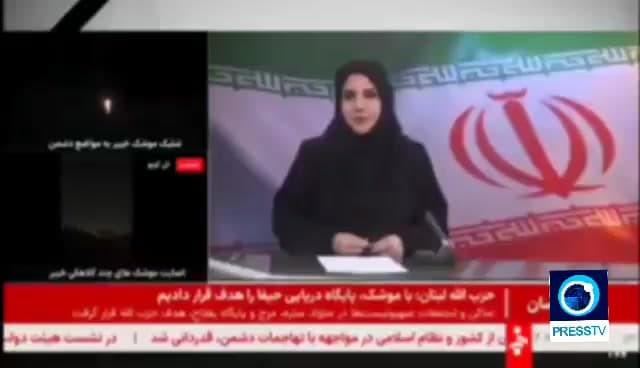
Israeli Airstrike Hits Tehran Residential Area During Live
Geopolitics · Mar 11, 2026

Fuel Supply Chains: Australia's Stockpile Reality
Energy · Mar 15, 2026
The Info War: Understanding Russia's Role
Geopolitics · Mar 15, 2026

Iran War Disinformation: How AI Deepfakes Fuel Chaos
Geopolitics · Mar 15, 2026
THAAD Interception Rates: Iran Missile Combat Data
Defense & Security · Mar 6, 2026
Latest from The Board
US Crew Rescued After Jet Downed: Israeli Media Reports
Defense & Security · Apr 3, 2026
Hegseth Asks Army Chief to Step Down: Why?
Policy & Intelligence · Apr 2, 2026

Trump Fires Attorney General: What Happens Next?
Policy & Intelligence · Apr 2, 2026
Trump Marriage Comments Draw Macron Criticism
Geopolitics · Apr 2, 2026
Trump's Iran War: What's the Exit Strategy?
Geopolitics · Apr 1, 2026
Trump Ukraine Weapons Halt: Iran Strategy?
Geopolitics · Apr 1, 2026

Ukraine Weapons Halt: Trump's Risky Geopolitical Play
Geopolitics · Apr 1, 2026
Iran Strike Forces Gulf Aluminum Producer Shutdown
Geopolitics · Apr 1, 2026