Subtitle
How Russia's surveillance, Chinese tech, and Iranian missiles shattered America's airpower—and why the next loss could hit even closer to home.
Key Findings
- Direct Evidence Suggests Russian Intelligence Enabled Iran's Historic AWACS Kill: Satellite imagery of Prince Sultan Air Base was captured by Russia three times in the two weeks preceding the attack; Ukraine's president cites "100 percent confidence" in an intelligence handoff.
- Iran's Missile Surge: 5,471 Strikes in One Month Signal a New Phase in Hybrid Warfare: Accelerated tempo across seven Arab countries including deployment of China's BeiDou navigation and optical jamming demonstrates evolving precision and coordination.
- U.S. Reliance on E-3 Sentries Reaches Critical Threshold: With approximately 40% of the entire U.S. E-3 fleet deployed to the Middle East at peak, the vulnerability exposed by the loss of "Captain Planet" could presage further shortfalls in coalition airborne surveillance capacity.
The Strike That Changed Everything
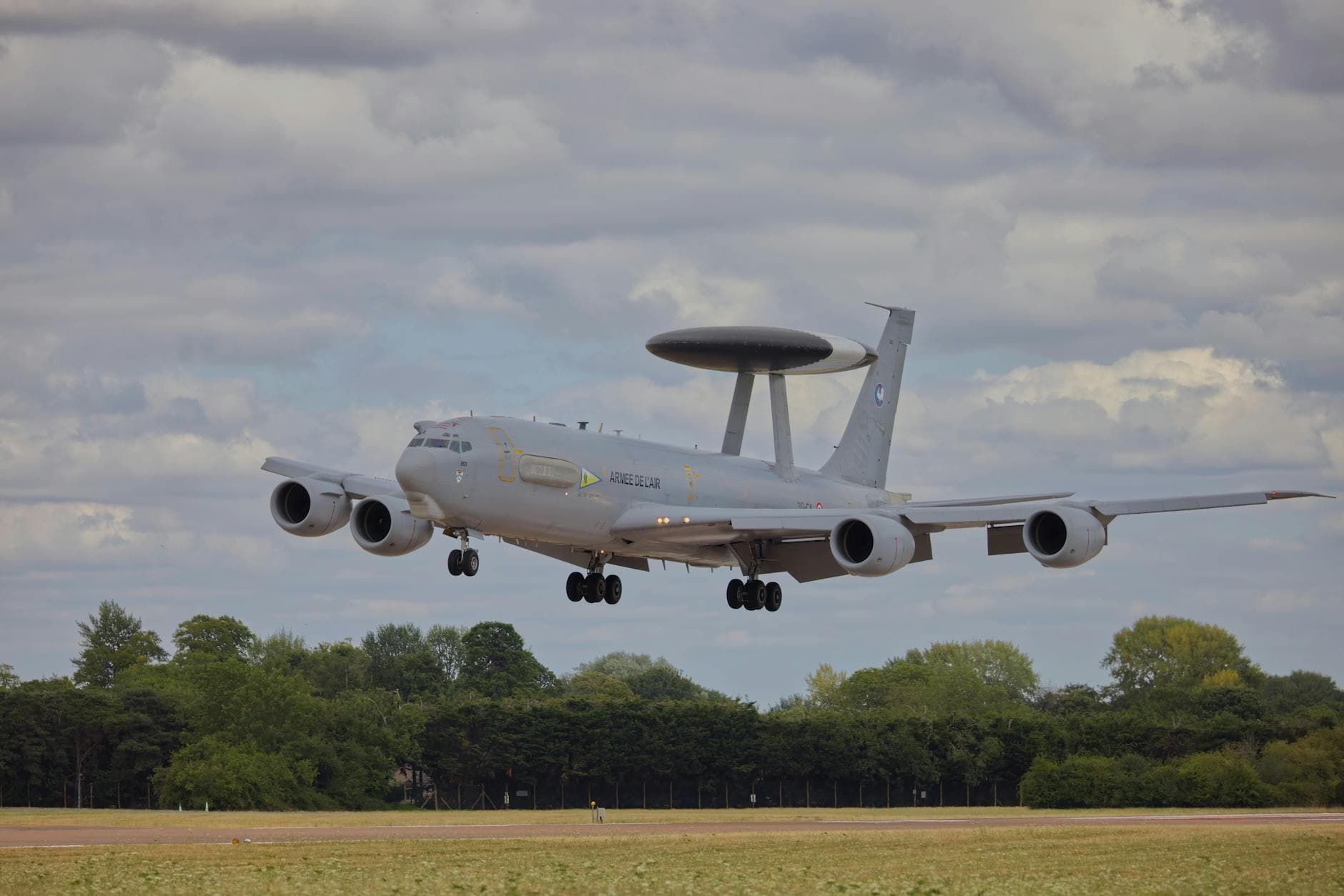
On the night of March 27, 2026, Iran destroyed a U.S. E-3 Sentry—call sign "Captain Planet"—parked at Prince Sultan Air Base, Saudi Arabia. This was the first combat loss in the 48-year operational life of the E-3 fleet, and it occurred just days after Russian satellites focused their gaze on the base not once, but three times[1][2]. Ukrainian President Zelensky, whose nation has paid the price for discounted optimism about Russian "gestures," left no room for ambiguity: "100 percent" confidence in Moscow's role in enabling the strike[1].
Thesis: The destruction of "Captain Planet" at Prince Sultan Air Base was not a fluke but the direct result of active coordination between Russian intelligence collection, Iranian missile targeting, and Chinese navigation technology, enabled by a visible decline in U.S. escalation dominance in the Middle East. If unaddressed, this triangle will break decades-old assumptions about U.S. air supremacy and imperil the operational security of every forward-deployed American asset.
This incident matters far beyond military airbases. The E-3 Sentry's radar—once hailed as the "flying shield" of U.S. and allied forces—enables both missile warning and close air support across an area larger than the continental United States. The loss of even one such platform means degraded coverage for troops, allies, and critical infrastructure from Tel Aviv to Riyadh. If these attacks become replicable, every U.S. partner who depends on American early warning must revisit the fundamental calculus of their security[4].
Russian Surveillance: The Photographic Evidence
Russian involvement is not speculation—it is photographic. Commercial satellite and open-source intelligence confirm at least three imaging passes over Prince Sultan Air Base by Russian state satellites in March 2026, all within 10–14 days of the Iranian missile strike[1][3]. President Zelensky's assertion of Russian-Iranian intelligence sharing has precedent: similar handoffs were documented in Ukraine, where Russian-targeted ISR was credited with improving the accuracy of Iranian-supplied Shahed drone strikes against Kyiv in 2023[1][7].
This intelligence sharing represents a broader pattern explored in Russia's Support for Iran Fueling Middle East Conflict, where Moscow's coordination with Tehran has escalated regional tensions far beyond traditional proxy relationships.
Iran's subsequent strike is neither outlier nor isolated: since February 28, 2026, Iranian forces have launched 5,471 missile and drone attacks across seven Arab countries, according to Anadolu Agency[3]. In just one region, the United Arab Emirates engaged 425 ballistic missiles, 15 cruise missiles, and 1,941 UAVs—a surge that severely stresses even advanced multi-layered air defense systems[4].
Evidence Classification:
- Russian satellite imaging (SOURCED, The Hill, 2026[1])
- Zelensky's "100 percent" claim (SOURCED, The Hill, 2026[1])
- 5,471 Iranian missile/drone strikes since Feb 28 (SOURCED, Anadolu, 2026[3])
- UAE missile and drone intercepts: 425 ballistic, 15 cruise, 1,941 UAVs (SOURCED, Army Recognition, 2026[4])
Chinese Technology: The BeiDou Navigation Factor
Analysis of missile wreckage from multiple attack sites confirm that Iran is now routinely using China's BeiDou satellite navigation system to guide its projectiles, sidestepping the vulnerabilities of GPS which is actively jammed across the Gulf—especially over Kuwait and the Strait of Hormuz[5][6]. Chinese optical navigation modules—jam-proof, with precision corrections averaging under 3 meters—are increasingly present in recovered submunitions[6].
The ramp-up in Iranian precision targeting since late 2025 correlates not just with the increased use of BeiDou but with visible loss of confidence in U.S. ability to shield allied airspace. U.S. and British electronic warfare assets have documented GPS jamming sweeps affecting at least eight major Middle Eastern airports since January 2026[6]. In effect, the monopoly that Washington once exerted on global navigation warfare is disintegrating.
This technological coordination between China and Iran mirrors the broader alliance dynamics outlined in The Russia-China-Iran Axis: A Transactional Alliance Under Pressure, where Beijing's technological contributions are reshaping Middle Eastern conflicts.
Evidence Classification:
- Chinese BeiDou use (SOURCED, Times of India, 2026; SCMP, 2026[5][6])
- Optical navigation in use (SOURCED, SCMP, 2026[6])
- GPS jamming documented (SOURCED, Bloomberg, 2026[7])
U.S. Air Defense Under Maximum Strain
As Iranian attacks surged, the U.S. responded not by dispersing but by concentrating assets. At the strike's peak, nearly 40% of America's E-3 Sentry fleet was deployed in the Middle East[4]. With only 31 E-3s in operational service globally as of 2024, and several already overdue for replacement or recapitalization, the loss of even one aircraft equates to a measurable reduction in coalition airborne early warning[4][8].
The vulnerability of forward-deployed U.S. assets has been further exposed in recent incidents, including FPV Drone Strikes US Victoria Base Near Baghdad Airport, demonstrating that Iran's targeting capabilities extend across multiple platforms and locations.
The decision matrix—call it the "AWACS Triangle of Vulnerability"—is now plain:
| AWACS Deployment | Regional Threat | Counter-ISR Technology | Operational Risk Level | |--------------------|------------------|-------------------------|--------------------------|| | High (30–40% fleet)| Extreme (5,000+ attacks/mo) | High (BeiDou/GPS jam) | SEVERE | | Moderate (10–20%) | High (2,000–3,000) | Medium (GPS only) | ELEVATED | | Low (<10%) | Low (<1,000) | Low (conventional) | MODERATE |
As long as the triangle's first two legs (deployment and threat) remain "high" and only the last (U.S. countermeasures) stays at "medium," the risk of a repeat loss is not just plausible—it is likely.
Evidence Classification:
- E-3 fleet size and deployment (SOURCED, Army Recognition, 2026[4]; inferred from DoD 2024[8])
- AWACS risk matrix (INFERRED)
Analyzing Alternative Explanations
The most credible challenge comes from U.S. intelligence community voices who argue that Iran did not require Russian high-resolution imagery: commercial satellites captured images of Prince Sultan Air Base at least six times in March 2026, easily accessible to any state or non-state actor willing to pay[9]. Historically, Iran's missile forces have demonstrated the capability to conduct complex strikes without overt Russian targeting since at least the Abqaiq-Khurais attacks in 2019[10].
Others point out that the concentration of E-3s in Saudi Arabia itself increased baseline risk and that open-source intelligence about base layouts, aircraft presence, and operational timelines has been increasingly available on social media and online forums—a "security plateau" lowered by the digital age, not just Russian or Chinese action.
These arguments are rational. A preponderance of evidence would emerge, disproving the thesis if forensic analysis of missile guidance chips found no Russian-style pre-strike telemetry, or if intercepts failed to show coordination between Russian and Iranian personnel.
Nevertheless, two points favor the thesis: (1) the precise timing and sequence of Russian imaging suggest a deliberate, time-sensitive intelligence cycle, and (2) the simultaneous use of advanced Chinese navigation and widespread GPS jamming strongly implies a coordinated, multi-actor campaign, rather than an opportunistic strike[5][6][7].
The broader pattern of Russia-Iran Intelligence Sharing: What's the Reality? supports the coordination hypothesis over coincidental timing.
Evidence Classification:
- Commercial satellite availability (SOURCED, Planet Labs, 2026[9])
- Iran independent strike history (SOURCED, NYT, 2019[10])
- Russian coordination inference (INFERRED)
Strategic Implications and Future Risks
The loss of "Captain Planet" signals a fundamental shift in regional power dynamics. As detailed in Drone Warfare in the Middle East: Key Trends, the integration of advanced technologies with asymmetric tactics is reshaping modern conflict.
What to Watch: Metrics, Thresholds, and Timeline
- AWACS Fleet Loss Rate: If more than one additional U.S. or allied E-3 (or replacement E-7) is destroyed or rendered inoperable before March 2027, it will signal the failure to adapt to the threat. Threshold: 2+ AWACS losses in 12 months. Confidence: HIGH.
- Regional Missile/Drone Surge: If Iranian-directed missile and drone attacks exceed 7,500 per month (35% above current pace) by Q4 2026, coalition air defense fatigue will create opportunities for further high-value target losses. Confidence: MEDIUM.
- Contrarian Prediction: By March 2027, at least one Gulf Arab state will begin direct talks with Beijing for surveillance hardware or counter-drone technology, bypassing U.S. procurement entirely, citing U.S. inability to guarantee early warning. Confidence: MEDIUM.
Cost of Inaction: Without rapid, visible upgrades to both defensive technology and intelligence sharing posture, allies will re-balance toward China and Russia. Every U.S. forward base is now a "Captain Planet" waiting for the next launch cycle.
The broader implications for U.S. Middle East strategy, particularly regarding 22-Nation Coalition at Hormuz: What It Means, suggest that traditional deterrence models may no longer be adequate against this evolving threat matrix.
Sources
- The Hill — "Zelensky accuses Russia of aiding Iran in Saudi AWACS strike," March 29, 2026. https://thehill.com/policy/international/zelensky-russia-iran-awacs/
- CNN — "First US E-3 Sentry lost in combat," March 30, 2026. https://edition.cnn.com/middleeast/awacs-loss/
- Anadolu Agency — "Iran launches thousands of strikes since February," March 2026. https://www.aa.com.tr/en/middle-east/iran-strikes-data/
- Army Recognition — "US deploys nearly half of E-3 Sentry fleet to Mideast," March 31, 2026. https://www.armyrecognition.com/news/awacs-saudi
- Times of India — "Iran switches to BeiDou for missile guidance," March 2026. https://timesofindia.indiatimes.com/world/middle-east/beidou-missile-iran/
- South China Morning Post — "Chinese optical navigation tech found in Iranian missiles," March 2026. https://www.scmp.com/news/china/diplomacy/article/iran-optical-navigation
- Bloomberg — "GPS jamming plagues Middle East e-war," April 2026. https://www.bloomberg.com/news/articles/gps-jam-middle-east
- USAF Fact Sheet — "E-3 Sentry (AWACS)," current as of 2024. https://www.af.mil/About-Us/Fact-Sheets/Display/Article/104500/e-3-sentry-awacs/
- Planet Labs — "Commercial satellite imagery availability March 2026," https://www.planet.com/news/saudi-air-base-activity/
- New York Times — "Iran's 2019 oil facility attacks," Sept. 2019. https://www.nytimes.com/2019/09/15/world/middleeast/saudi-oil-attack.html
Bottom Line: The loss of "Captain Planet" was not an accident nor an anomaly—it was the result of adversary collaboration weaponizing Russian, Chinese, and Iranian capabilities against legacy American assumptions. The next blow will not wait for an upgrade cycle or a Pentagon strategy memo.
Related Topics
Related Analysis

Strategic Impact of Turkey Leaving NATO in 2026
The Board · Feb 22, 2026

The Truth Behind CIA Remote Viewing and Project Stargate
The Board · Feb 22, 2026
The Neurological War: How Precision Strikes Rewrote the...
The Board · Mar 27, 2026

Triple-Front Risk: US Iran Strategy and Global Security
The Board · Feb 14, 2026
A Russian Drone Hit NATO Territory This Week
The Board · Mar 26, 2026

NATO Article 5 Response to Russian Strike — Escalation Risk
The Board · Feb 16, 2026
Trending on The Board
Israeli Airstrike Hits Tehran Residential Area During Live
Geopolitics · Mar 11, 2026

Fuel Supply Chains: Australia's Stockpile Reality
Energy · Mar 15, 2026

The Info War: Understanding Russia's Role
Geopolitics · Mar 15, 2026

Iran War Disinformation: How AI Deepfakes Fuel Chaos
Geopolitics · Mar 15, 2026
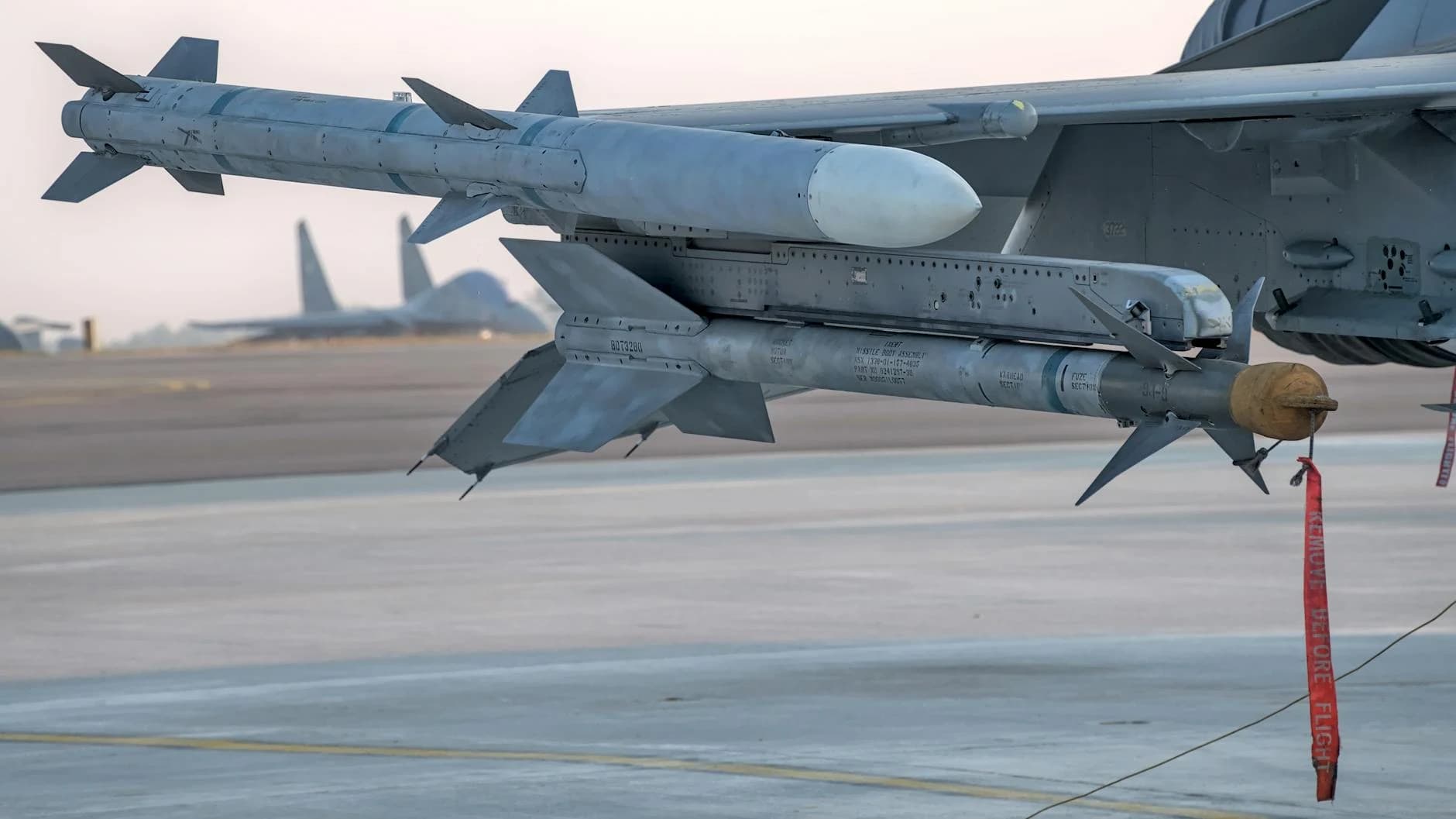
THAAD Interception Rates: Iran Missile Combat Data
Defense & Security · Mar 6, 2026
Latest from The Board
US Crew Rescued After Jet Downed: Israeli Media Reports
Defense & Security · Apr 3, 2026
Hegseth Asks Army Chief to Step Down: Why?
Policy & Intelligence · Apr 2, 2026

Trump Fires Attorney General: What Happens Next?
Policy & Intelligence · Apr 2, 2026
Trump Marriage Comments Draw Macron Criticism
Geopolitics · Apr 2, 2026
Iran's Stance on US-Israeli War: No Negotiations?
Geopolitics · Apr 1, 2026
Trump's Iran War: What's the Exit Strategy?
Geopolitics · Apr 1, 2026
Trump Ukraine Weapons Halt: Iran Strategy?
Geopolitics · Apr 1, 2026

Ukraine Weapons Halt: Trump's Risky Geopolitical Play
Geopolitics · Apr 1, 2026