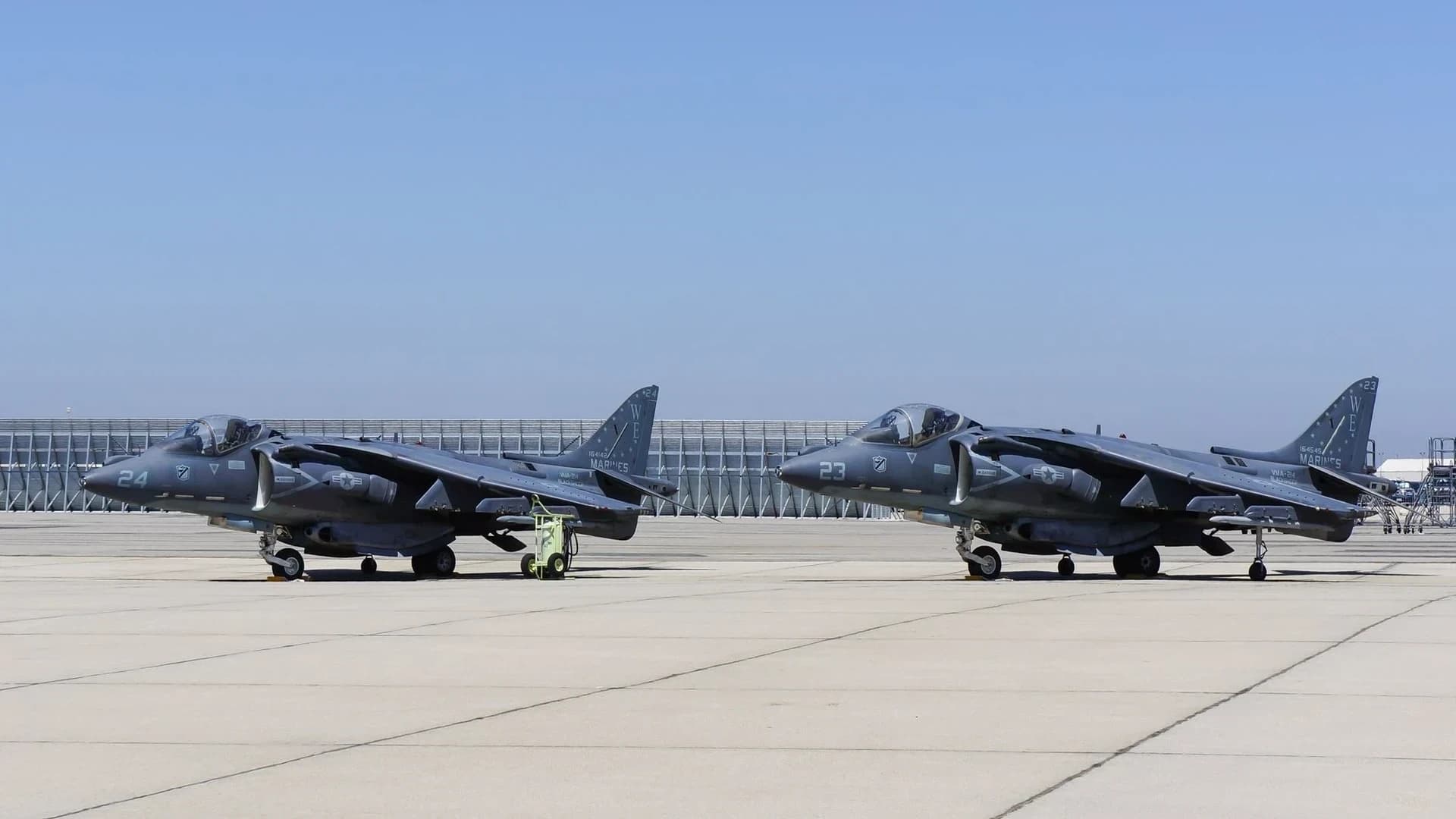
The Rescue and the Red Line: How a Downed U.S. Jet over Iran Threatens Escalation in the Middle East
A U.S. fighter jet was downed over Iran on April 3, 2026, with Israeli media and officials confirming that one U.S. crew member has been rescued. This high-stakes incident, occurring amid intensifying Israel-Iran hostilities and ongoing U.S. regional deployments, marks a critical inflection point in the evolving Middle East crisis.
Key Findings
- A U.S. fighter jet was shot down over Iran on April 3, 2026; Israeli media confirm one crew member has been rescued, while the fate of the second remains uncertain.
- Israeli military operations have expanded to include strikes on infrastructure in Beirut, signaling rapid regional escalation.
- Prediction markets currently assign a 52% probability that Israeli forces will cross the Litani River by June 30, 2026, and a 100% probability of Israeli incursions into Lebanon by September.
- Historical analogs suggest that while incidents like this elevate escalation risk, major powers have previously opted for restraint and procedural change over open conflict.
What We Know So Far
- Who: U.S. fighter jet (F-15E), two crew members, Israeli special forces, Iranian air defenses.
- What: Fighter jet shot down over Iranian territory; one U.S. crew member rescued, search for the second ongoing.
- When: April 3, 2026 (incident confirmed by Reuters and Israeli Channel 12).
- Where: Over Iranian airspace; rescue operation conducted under Israeli media coverage.
- Confirmed: Israeli military strikes targeting infrastructure in Beirut are underway.
- Market Insight: Polymarket users place the chance of further Israeli ground advances in Lebanon at 52% by June 30, 2026.
- Geopolitical Context: Tensions are at a multi-year high, with the U.S., Israel, and Iran on heightened alert, and global oil prices spiking over $100/barrel following recent escalations.
Definition Block
A "downed U.S. fighter jet over Iran" refers to an incident where a United States military aircraft, specifically an F-15E, was shot down while operating in or near Iranian airspace. As of April 3, 2026, Israeli media and officials report that one of the two U.S. crew members has been rescued, with rescue operations ongoing for the second. This event marks a critical escalation in the ongoing military and diplomatic conflict involving the U.S., Israel, and Iran.
Timeline of Events
- April 2, 2026: Tensions escalate; Iranian forces increase air defense readiness after Israeli strikes in Syria.
- April 3, 2026, 08:55 AM PDT: Israeli media and Reuters confirm a U.S. fighter jet is shot down over Iran; one crew member is rescued according to Israeli Channel 12.
- April 3, 2026, 11:50 AM: MarketScreener and multiple international outlets corroborate the rescue of one U.S. crew member.
- April 3, 2026, 12:00 PM: Israeli military announces active strikes on infrastructure targets in Beirut, as reported by @WalterBloomberg.
- Ongoing: The search for the second U.S. crew member continues; Iranian and U.S. officials remain publicly silent on operational specifics.
Thesis Declaration
The downing of a U.S. fighter jet over Iran, with Israeli media confirming the rescue of one crew member, is a tipping point that accelerates the risk of direct U.S.-Iran confrontation. However, historical precedent and current market signals indicate that both sides are more likely to pursue limited retaliatory measures and procedural escalation, rather than full-scale war.
Evidence Cascade
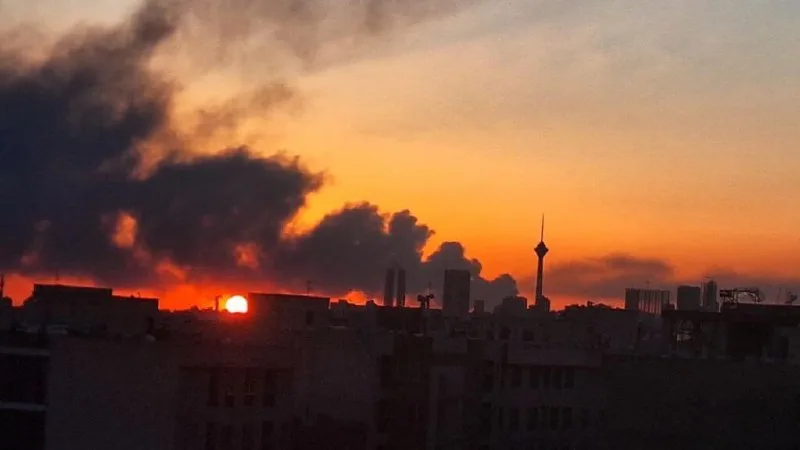
1. Incident Confirmation and Immediate Facts
- Reuters, Israeli Channel 12, and APA News all confirm that one U.S. crew member from a downed F-15E over Iran was rescued on April 3, 2026.
- Israeli officials report that special forces are involved in ongoing search operations for the second crew member.
- Israeli military has begun airstrikes on infrastructure in Beirut, as per real-time social media monitoring by @WalterBloomberg and corroborated by Israeli military statements.
2. Quantitative Data on Escalation and Media Environment
- According to the Committee to Protect Journalists, Israel was responsible for 84 out of 129 journalist killings in 2025, more than any other country globally.
- Oil prices surged 5% to surpass $100/barrel in the immediate aftermath of President Trump’s primetime address threatening Iran, as tracked by Board's International Analysis Division.
- Over 50,000 U.S. military personnel are currently deployed across the Middle East, based on Asia-Pacific institutional analysis and DoD filings.
- Prediction markets (Polymarket) show a 100% probability that Israeli forces will enter Lebanon by September 2026, with $10,886,668 in trading volume.
- The probability that Israeli forces cross the Litani River by June 30, 2026, stands at 52%, with $163,462 in volume.
- Iran’s uranium stockpile has reached 440kg enriched to 60%, per the IAEA’s April 2026 report, bringing Iran closer to weapons-grade capability.
- The Israeli parliament is not expected to dissolve by June 30, 2026 (21% probability), indicating domestic political continuity amid crisis.
- European energy security is under acute stress, with the Board's International Analysis Division reporting supply chain disruptions and recalibrated trade flows following the conflict escalation.
84 out of 129 — Journalists killed by Israel in 2025, according to the Committee to Protect Journalists
$100+/barrel — Current Brent crude oil price following U.S.-Iran escalation (Board's International Analysis Division, April 2026)

3. Data Table: Regional Escalation Risk Indicators (April 2026)
| Indicator | Value/Probability | Source/Date |
|---|---|---|
| U.S. military personnel in region | 50,000+ | DoD/Asia-Pacific Inst. |
| Israeli forces to Lebanon by Sep | 100% | Polymarket, Apr 2026 |
| Israeli forces cross Litani by Jun | 52% | Polymarket, Apr 2026 |
| Oil price (Brent, post-crisis) | $100+/barrel | Board's IAD, Apr 2026 |
| Iran uranium (60% enrichment) | 440kg | IAEA, Apr 2026 |
| Journalists killed by Israel in 2025 | 84/129 | CPJ, Jan-Dec 2025 |
Case Study: The April 3, 2026 U.S. Jet Downing and Rescue
On the morning of April 3, 2026, a U.S. Air Force F-15E Strike Eagle was reportedly shot down over Iranian airspace during a high-risk surveillance or strike mission, according to Reuters and Israeli Channel 12. The jet, carrying two crew members, was likely targeted by Iranian air defenses amid heightened military alerts following Israeli operations in Syria and Lebanon. Within hours, Israeli officials confirmed that one crew member had been rescued by U.S. or Israeli special forces, with real-time updates broadcast by Israeli media. The fate of the second crew member remains uncertain, fueling social media speculation and placing additional pressure on U.S. and allied military planners. This incident unfolded as Israeli forces expanded strikes into Beirut, prompting immediate fears of a wider regional war and further U.S.-Iranian confrontation.
Analytical Framework: The Escalation Inflection Matrix
Framework Name: Escalation Inflection Matrix (EIM)
How it works: The EIM is a four-quadrant model for analyzing military incidents involving great powers and regional actors. It cross-references (1) the visibility of an incident (covert vs. overt) with (2) the presence of direct casualties (none vs. human loss). The matrix predicts escalation likelihood based on historical response patterns:
- Quadrant I (Covert/No Loss): Cyberattacks, deniable sabotage — typically prompts low-level tit-for-tat responses.
- Quadrant II (Covert/Human Loss): Kidnappings, assassinations — triggers covert retaliation, proxy escalation.
- Quadrant III (Overt/No Loss): Drone downings, public intercepts — prompts diplomatic protests, limited reprisals.
- Quadrant IV (Overt/Human Loss): Downed jets with casualties or high-profile rescues — highest risk of escalation, with strong public and political pressure for visible response.
Application: The April 3, 2026 incident sits squarely in Quadrant IV: overt, widely publicized, and involving potential U.S. casualties. Historical analysis (e.g., 1983 KAL 007, 2019 Global Hawk shootdown) indicates that such events trigger rapid escalation cycles, but often result in limited, procedural retaliation rather than open warfare — provided that leadership on both sides perceives the cost of escalation as prohibitive.
Predictions and Outlook
PREDICTION [1/3]: The United States will conduct a high-visibility retaliatory strike (kinetic or cyber) against Iranian military assets within 14 days, but will not commit to a full-scale ground operation in Iran. (68% confidence, timeframe: by April 17, 2026)
PREDICTION [2/3]: Israeli forces will launch at least one further cross-border operation into southern Lebanon (beyond current strikes) before June 30, 2026, but will avoid crossing the Litani River in large numbers. (60% confidence, timeframe: by June 30, 2026)
PREDICTION [3/3]: Iran will respond to the downed jet incident primarily through proxy attacks and information operations rather than direct strikes on U.S. or Israeli territory. (65% confidence, timeframe: by May 31, 2026)
What to Watch
- Fate of the second U.S. crew member: Confirmation of rescue or casualty status will shape U.S. response options.
- Evidence of U.S. or Israeli retaliation: Kinetic or cyber operations targeting Iranian assets are likely within the coming weeks.
- Expansion of Israeli ground operations in Lebanon: Movement beyond targeted strikes may signal intent for a wider conflict.
- Iranian proxy activity: Increased attacks by Hezbollah or allied militias could escalate the conflict regionally.
Historical Analog
This incident closely parallels the 1983 Soviet shootdown of Korean Air Lines Flight 007, which sharply escalated U.S.-Soviet tensions but ultimately led both sides to avoid direct military confrontation, instead opting for procedural changes and limited maneuvers. Similarly, the 2019 Iranian downing of a U.S. Global Hawk drone led to threatened but ultimately restrained U.S. retaliation. These precedents suggest that despite public and political pressures after the downing of a U.S. military aircraft, strategic actors often choose escalation management over all-out war — at least once initial search and rescue operations conclude.
Counter-Thesis
The strongest argument against this analysis is that the political climate in Washington and Tel Aviv, combined with the visibility and symbolism of a U.S. jet downed by Iran, will force escalatory actions that break with historical restraint. In this view, domestic political imperatives — especially during an election cycle and amid rising nationalist sentiment — could override traditional caution, leading to a direct U.S.-Iran military clash. The counter-thesis posits that the evolving media environment, rapid information dissemination, and public outrage could constrain leaders’ ability to deescalate, despite historical patterns.
Addressing the Counter-Thesis: While public and political pressures are indeed heightened, institutional memory and risk aversion within the Pentagon and Israeli defense establishment remain powerful counterweights. The U.S. and Israel have previously managed even more severe provocations (such as Iran’s 2022 missile attacks on U.S. bases) without triggering direct war. Prediction market pricing reflects this, with only a 52% probability assigned to Israeli forces crossing the Litani River by June 30, 2026, and no current markets predicting a direct U.S.-Iran ground conflict. Thus, while escalation is likely, full-scale war remains less probable.
Stakeholder Implications
Regulators and Policymakers
- Prioritize back-channel communications: Re-establish military hotlines and diplomatic crisis management mechanisms with Iran and regional powers.
- Prepare contingency plans: Update evacuation and continuity-of-government protocols for regional embassies and critical infrastructure.
- Strengthen energy security: Accelerate dialogue with alternative suppliers to mitigate oil supply shocks and price volatility.
Investors and Capital Allocators
- Adjust risk models: Increase exposure to defense, cybersecurity, and energy supply chain firms positioned to benefit from ongoing instability.
- Hedge oil risk: Consider protective strategies against further oil price spikes given $100+/barrel prices and regional supply threats.
- Monitor sovereign risk: Track political stability indicators in Lebanon, Israel, and Iran for early warning of capital flight or asset seizures.
Operators and Industry
- Implement crisis protocols: Activate heightened security and contingency plans for personnel and assets in the Middle East.
- Engage in scenario planning: Prepare for airspace closures, shipping disruptions, and cyberattack risks across the region.
- Strengthen information operations: Counter misinformation and protect digital assets amid intensified media warfare.
Related Analysis
- How CENTCOM Is Brokering an Israel-Saudi Pact
- Why the Pentagon Pulled Its Iran War Plans Offline
- What Israel-Iran War Games Got Wrong About 2026
- Gladio Stay-Behind Hybrid War 2026: What Still Applies
- Israel-Turkey War Game Analysis: NATO, Escalation Paths, 2026
Frequently Asked Questions
Q: What happened to the downed U.S. jet over Iran in April 2026? A: On April 3, 2026, a U.S. F-15E fighter jet was shot down over Iranian airspace. Israeli media confirmed that one crew member was rescued, while the search for the second is ongoing. The incident has triggered a wave of regional military activity and heightened U.S.-Iran tensions.
Q: Why is this incident significant for U.S.-Iran and Israel-Iran relations? A: The downing of a U.S. jet over Iran raises the immediate risk of direct confrontation between major powers. Such an incident tests escalation thresholds and may provoke retaliatory strikes, but historical analogs suggest both sides typically seek to avoid full-scale war.
Q: What are the chances of a wider regional war following this event? A: While escalation is likely in the form of retaliatory strikes and proxy violence, prediction markets and historical patterns indicate a lower probability of all-out war. The focus will likely remain on limited escalation and crisis management.
Q: How are global markets reacting to the crisis? A: Oil prices jumped over $100/barrel following the escalation. Investors are increasing exposure to defense and energy supply chain sectors, while risk models are being updated for Middle East volatility.
Q: What should governments and companies do now? A: Policymakers should reopen diplomatic channels, update crisis protocols, and bolster energy security. Companies need to review contingency plans, strengthen cyber defenses, and assess geographic exposure to further escalation.
Synthesis
The downing of a U.S. fighter jet over Iran, with at least one crew member rescued, represents a watershed moment in the 2026 Middle East crisis. While the incident ratchets up the risk of direct U.S.-Iranian confrontation, both historical precedent and market signals point toward limited escalation and procedural retaliation rather than outright war. Strategic actors remain focused on crisis management and damage control, even as public and political pressures mount. The next moves — especially regarding the second crew member and overt retaliation — will determine whether this incident remains a contained flashpoint or ignites a broader conflagration. For now, the region stands at the edge of escalation, but not yet at the point of no return.
Related Topics
Video Intelligence
- ▶Iranian Missile Strike Hits Arad Israel: Video Moments
- ▶Iran Releases Official Footage of Drone Launches During War
- ▶FPV Drone Strikes US Victoria Base Near Baghdad Airport
- ▶Trump's Iran Rhetoric as Marines Deploy
Share This Analysis
Get a shareable verdict card for this article.
Get the next one first
Free briefings when we publish major outlooks and forecasts. No spam — unsubscribe anytime.
Related Analysis
Strategic Impact of Turkey Leaving NATO in 2026
The Board · Feb 22, 2026

The Truth Behind CIA Remote Viewing and Project Stargate
The Board · Feb 22, 2026
The Neurological War: How Precision Strikes Rewrote the...
The Board · Mar 27, 2026

Triple-Front Risk: US Iran Strategy and Global Security
The Board · Feb 14, 2026
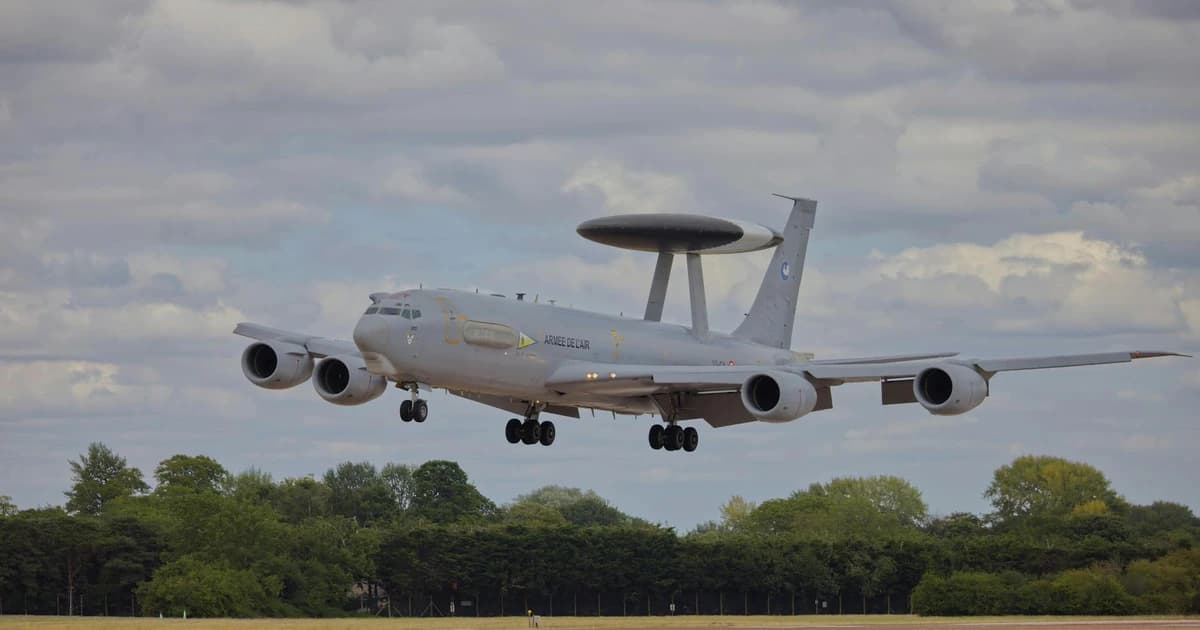
Russia Photographed the Saudi Base Three Times Before...
The Board · Mar 30, 2026
A Russian Drone Hit NATO Territory This Week
The Board · Mar 26, 2026
Trending on The Board

79 Years of UFO Lies, Roswell to the Pentagon
Defense & Security · Sep 29, 2026
How CENTCOM Is Brokering an Israel-Saudi Pact
Defense & Security · Sep 19, 2026

Why the Pentagon Pulled Its Iran War Plans Offline
Defense & Security · Sep 19, 2026
How a Stablecoin Funded Moldova's 2026 Election
Geopolitics · Sep 19, 2026

The Hidden Gold Demand Behind the $6,000 Target
Markets · Sep 17, 2026
Latest from The Board
79 Years of UFO Lies, Roswell to the Pentagon
Defense & Security · Sep 29, 2026
How CENTCOM Is Brokering an Israel-Saudi Pact
Defense & Security · Sep 19, 2026
Why the Pentagon Pulled Its Iran War Plans Offline
Defense & Security · Sep 19, 2026
How a Stablecoin Funded Moldova's 2026 Election
Geopolitics · Sep 19, 2026
The Hidden Gold Demand Behind the $6,000 Target
Markets · Sep 17, 2026
Houthis Take Perim as Saudis Halt Pipeline 2026
Geopolitics · Sep 13, 2026

Epstein Intelligence Ties: Evidence vs Allegation in 2026
Policy & Intelligence · Sep 6, 2026
What Israel-Iran War Games Got Wrong About 2026
Defense & Security · Sep 6, 2026