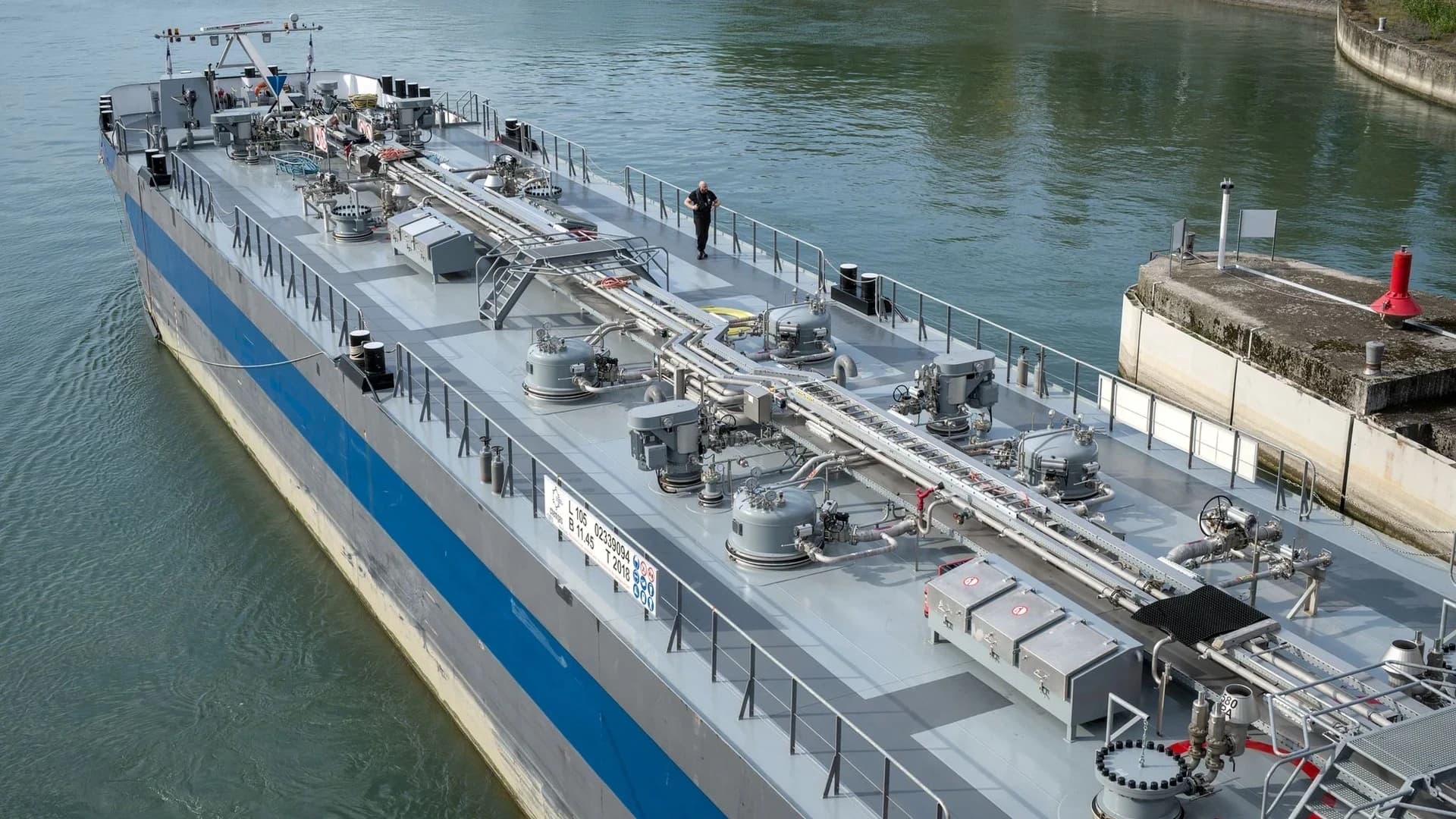
The last American president to order a naval blockade of a sovereign waterway was John F. Kennedy in October 1962. That confrontation lasted thirteen days and brought two nuclear powers to the threshold of annihilation. On April 12, 2026, Donald Trump issued an order that may prove more dangerous — because this time, the target is not an island in the Caribbean but the jugular vein of the global economy.
What Happened
At 09:47 EST on April 12, Trump posted to Truth Social a directive to the United States Navy to blockade the Strait of Hormuz to "any and all ships trying to enter, or leave." The order went further than a standard naval quarantine. Trump instructed the Navy to "seek and interdict every vessel in international waters that has paid a toll to Iran," adding: "No one who pays an illegal toll will have safe passage on the high seas."
Within four hours, the United Kingdom issued its response: it will not participate. London announced it is "urgently working with France and other partners to put together a wide coalition to protect the freedom of navigation" — language that places Britain not alongside the United States but in explicit opposition to Washington's posture.
Twenty-one percent of the world's daily oil supply transits the Strait of Hormuz. Trump has just ordered the US Navy to shut it down.
The Ghost of Suez
The historical parallel is not Cuba. It is Suez.
In 1956, Britain and France launched a secret military operation to seize the Suez Canal after Egyptian President Nasser nationalized it. President Eisenhower, furious at not being consulted, threatened to collapse the British pound through Treasury bond sales. Britain withdrew. The "special relationship" survived, but the lesson was seared into British strategic memory: never again defy Washington on a matter of vital interest.
Seventy years later, the relationship has inverted. This time it is the United States acting unilaterally on a critical waterway, and it is Britain that refuses to follow. The UK's immediate pivot to France — not to Washington for clarification, not to NATO for consensus, but to Paris — represents a strategic realignment that will outlast whatever happens at Hormuz. Defense ministers in Whitehall have evidently concluded that American naval policy under Trump is too erratic to anchor British security planning. That conclusion, once reached, does not reverse easily.
What the Blockade Actually Means
Trump's order contains two distinct directives that must be analyzed separately.
Directive One: Close the Strait. This is a blockade in the classical legal sense — preventing all maritime traffic from transiting a waterway. Under international law, blockades are acts of war. The United Nations Convention on the Law of the Sea guarantees the right of transit passage through international straits, a right the United States itself has historically championed, including at Hormuz. Trump's order places America in the legally unprecedented position of blockading a strait it has spent fifty years insisting must remain open.
The US Fifth Fleet, based in Bahrain, has the naval capacity to enforce a blockade. The carrier strike group centered on the USS Gerald R. Ford, currently in the Arabian Sea, provides air superiority. Mine countermeasure vessels, destroyers, and the Marine expeditionary force in the region provide the surface and subsurface capability. The question is not whether the Navy can close Hormuz. It is whether closing Hormuz is distinguishable from an act of war against every nation that depends on it — which is most of them.
Directive Two: Interdict toll-payers globally. This is the more radical component. Trump has ordered the Navy to hunt down and board vessels anywhere in international waters if intelligence suggests they paid tolls to Iran. This extends the operational theater from the Persian Gulf to the entire global ocean. It claims a right of interdiction based not on cargo (as with sanctions enforcement) but on the financial history of the vessel's operator. No precedent exists for this in modern naval warfare. The closest analogue is the British Royal Navy's enforcement of the Continental Blockade during the Napoleonic Wars — and that practice helped trigger the War of 1812.
The UK Break: What Whitehall Actually Said
The UK statement deserves close reading. Three elements stand out.
First, "will NOT be involved" is absolute language. Not "has concerns," not "is reviewing its position," not "will consult with allies." This is a flat refusal issued within hours — meaning it was likely pre-positioned. Whitehall anticipated this move and had its response drafted.
Second, "urgently working with France and other partners" names France first and explicitly. In the grammar of diplomatic communiques, word order is hierarchy. Britain is signaling that its primary security partner for this crisis is Paris, not Washington. This echoes the Lancaster House Treaties of 2010 and the 2024 Franco-British defense cooperation extension, but it goes further: it positions France as the anchor of a European naval coalition operating independently of — and potentially in opposition to — American naval operations.
Third, "protect the freedom of navigation" directly contradicts Trump's objective. The UK is not neutral. It is organizing a counter-coalition whose stated purpose is to keep Hormuz open while America tries to close it. Allied navies operating at cross-purposes in the same contested waterway is a scenario that no war college has gamed since NATO was founded.
The Economic Shockwave
Brent crude was trading at $103 per barrel before Trump's announcement, already elevated from the $70 range that prevailed before Iran closed the Strait and imposed tolls in February. Overnight futures markets are pricing $115 or higher.
But the oil price is the least interesting economic consequence.
Shipping insurance is where the real damage accrues. War risk premiums for vessels transiting the Persian Gulf had already risen 800% since February. A formal US naval blockade — an act of war under international law — will trigger force majeure clauses across thousands of marine insurance contracts. Lloyd's of London underwriters face exposure that one senior broker described to the Financial Times as "unquantifiable until we know the rules of engagement." Vessels that cannot obtain war risk insurance cannot sail. Vessels that cannot sail cannot deliver oil, LNG, petrochemicals, or containerized goods.
Supply chains beyond energy are at risk. The Strait of Hormuz is not just an oil corridor. Qatar exports 77 million tonnes of LNG annually through the Strait — roughly 25% of global supply. Petrochemical feedstocks, fertilizer components, and containerized trade between Asia and the Gulf states all transit these waters. A blockade does not merely raise oil prices. It disrupts the physical infrastructure of global manufacturing.
The dollar paradox. Historically, geopolitical crises strengthen the dollar as investors flee to safety. But this crisis was initiated by the United States. If Washington is both the source of instability and the issuer of the reserve currency, the traditional flight-to-safety reflex may short-circuit. Early trading in Asian markets shows the Swiss franc and gold rallying alongside the dollar — an unusual pattern that suggests markets are hedging against the possibility that this crisis is different.
The Yuan Toll: De-Dollarization in Practice
Iran's toll system at Hormuz, operational since late February, was dismissed by most Western analysts as a nuisance — a shakedown by a weakened regime. That assessment missed what was actually happening.
Iran demanded tolls in Chinese yuan. Not dollars, not euros, not a basket. Yuan specifically. Shipping firms, unable to use the dollar-denominated banking system due to sanctions, adapted quickly. Cryptocurrency intermediaries — primarily using USDT stablecoin conversions through unlicensed exchanges in Dubai and Istanbul — facilitated yuan-denominated payments that bypassed SWIFT entirely.
At approximately $25 million per day in toll revenue, the financial impact on Iran was modest. But as a proof of concept for non-dollar trade settlement under coercive conditions, the toll system was invaluable. It demonstrated that commercial shipping operators, when given no dollar-denominated option, will find alternative payment rails within weeks. Beijing took note. The People's Bank of China issued no public statement on the toll system. It did not need to. Every transaction was a data point proving that the yuan could function as a settlement currency for the world's most critical commodity flow under the most adverse conditions imaginable.
Trump's blockade, paradoxically, validates Iran's experiment. By declaring that vessels which paid yuan-denominated tolls will be hunted across international waters, Trump is retroactively confirming that the toll system threatened something important enough to justify global naval interdiction. That is not the signal of a dying experiment. It is the signal of one that worked.
China's Calculus
Multi-source corroboration from intelligence reporting in late March indicates that Beijing is preparing to deliver man-portable air defense systems (MANPADS) to Iran. If confirmed, this would represent a dramatic escalation — not because MANPADS would alter the naval balance (they would not), but because it would mark the first direct Chinese arms transfer to a state in active confrontation with the US Navy.
China's strategic interest at Hormuz is straightforward. Approximately 40% of China's crude oil imports transit the Strait. A US blockade directly threatens Chinese energy security. Beijing's options range from diplomatic protest (likely and already underway) to naval escort of Chinese-flagged vessels (possible within weeks, given PLA Navy assets in the region) to the establishment of an alternative supply corridor (years away and dependent on the Pakistan-Iran-China pipeline that remains at feasibility study stage).
The MANPADS delivery, if it proceeds, serves a subtler purpose. It signals to Washington that China will impose costs on American naval operations near Chinese supply lines — not enough to provoke a direct confrontation, but enough to complicate planning. Every Seahawk helicopter approaching a vessel for boarding will now operate under the assumption that shoulder-fired missiles may be in theater. The operational tempo of interdiction drops. The risk calculus for individual ship commanders shifts. Beijing achieves strategic effect without strategic commitment.
The Nuclear Shadow
The collapse of the Islamabad peace talks on April 11-12 — after 21 hours of direct US-Iran negotiation, the first since 1979 — removed the last diplomatic off-ramp before the blockade announcement. The American delegation (Vice President Vance, Special Envoy Witkoff, Senior Advisor Kushner) and the Iranian delegation (Parliament Speaker Ghalibaf, Foreign Minister Araghchi) failed to reach even a framework agreement.
What makes the nuclear dimension acute is not Iran's enrichment capability alone — though 440.9 kilograms of 60% enriched uranium represents roughly ten weapons' worth of material at further enrichment. It is the verification blackout.
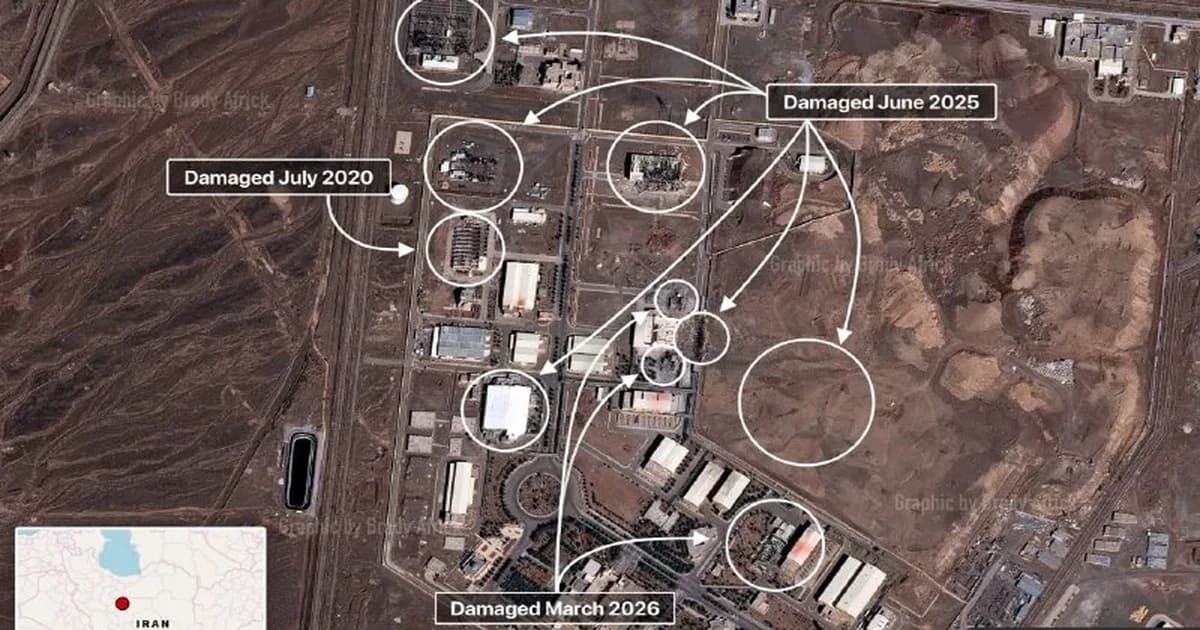
Iran terminated IAEA access on February 28, 2026. Since that date, no international inspector has entered an Iranian nuclear facility. The Fordow underground enrichment plant, reportedly only 30% damaged by earlier strikes, retains the centrifuge infrastructure for a covert breakout estimated at three weeks. Multiple independent assessments — including a Wall Street Journal investigation published April 3 — concluded that Iran's nuclear program is "largely unaffected" by the military campaign.
A naval blockade of a state that may be three weeks from a nuclear weapon is not the same as a naval blockade of a non-nuclear state. The escalation ladder has no rungs between "blockade" and "nuclear threshold." Iran's calculus under a blockade is binary: either the regime accepts economic strangulation and collapses, or it sprints to a weapon that makes collapse impossible. There is no middle option. This is the structural danger that the Islamabad talks were designed to address, and their failure means that danger is now unmitigated.
Who Actually Benefits
Follow the money, and the blockade's primary beneficiary is not the United States.
Russia exports approximately 7.5 million barrels of oil per day, much of it at discounted prices due to Western sanctions. Every dollar that Brent crude rises adds roughly $7.5 million per day to Russian revenue. The move from $70 to $103 already generated an estimated windfall of approximately $150 million daily for Moscow. A further rise to $115 adds another $90 million daily.
Since February 2026, Russia has earned an estimated additional $12 billion in oil revenue directly attributable to the Hormuz crisis. The blockade will accelerate this transfer. Moscow's public position — calling for "restraint" and "respect for international law" — is the diplomatic equivalent of a poker player asking for another card while holding four aces.
Saudi Arabia and the UAE also benefit from elevated prices, but their position is more precarious. Both rely on the Strait for their own exports. A US blockade that prevents Iranian oil from reaching market while also disrupting Saudi and Emirati shipments is a net negative for Riyadh and Abu Dhabi despite higher per-barrel revenue. Crown Prince Mohammed bin Salman faces the impossible task of publicly supporting America's security umbrella while privately lobbying for the blockade's removal. Overhead reconnaissance indicators suggest an unusual tempo of Saudi royal flights to Ankara and Moscow in recent days — a pattern consistent with back-channel crisis diplomacy.
The Regional Cascade
India imports roughly 85% of its crude oil, with a significant portion transiting Hormuz. New Delhi's response will be the bellwether for the non-aligned world. India cannot afford $115 oil. It also cannot afford to antagonize Washington. Expect India to pursue the quietest possible path: purchasing Russian oil at steeper discounts while publicly calling for dialogue.
Japan and South Korea face acute vulnerability. Japan imports 90% of its oil through Hormuz; South Korea, 75%. Both are treaty allies of the United States. Neither was consulted before the blockade order. The political damage in Tokyo and Seoul — where alliance management is a domestic political issue of the first order — may prove more lasting than the economic shock. A Japanese prime minister who cannot tell parliament that Washington briefed Tokyo before closing the world's most important waterway has a political problem that energy subsidies cannot solve.
Turkey controls the Bosphorus and has spent two decades cultivating a role as energy corridor between East and West. Ankara will position itself as a mediator, with President Erdogan almost certainly proposing a "peace conference" within days. The genuine Turkish interest is simpler: ensuring that any alternative energy routing runs through Turkish territory or territorial waters.
Israel, having launched "Operation Eternal Darkness" — reportedly over 100 strikes on Lebanese targets during what was nominally a ceasefire — is fully committed to the confrontation posture. Israeli intelligence assessments almost certainly informed the timing of Trump's announcement. The question is whether Jerusalem has war-gamed the second and third-order effects: a blockade that drives oil to $115+ strains the Israeli economy as severely as it strains Iran's.
The Next 30, 90, and 180 Days
30 days. The immediate period will be defined by enforcement ambiguity. How aggressively does the Navy interdict? Does it stop Chinese-flagged vessels? Russian? The rules of engagement will determine whether this is a symbolic quarantine or a genuine blockade. Oil trades in the $110-125 range. Insurance markets freeze for Gulf-transiting vessels. European navies begin freedom-of-navigation patrols that place them in direct operational proximity to American warships — a situation without precedent in NATO's history.
90 days. Alternative supply routes become the dominant geopolitical theme. The Trans-Arabian Pipeline (dormant since 1990) will be discussed. The Yanbu terminal on the Red Sea gains strategic significance. Russia's Northern Sea Route attracts renewed interest from Asian buyers. Iran, under total blockade, faces a decision point on its nuclear program. Quantitative modeling suggests a 60-70% probability that Iran attempts a rapid enrichment sprint within this window if no diplomatic channel reopens.
180 days. The global economy has either adapted or contracted. If oil sustains above $110, recession in Europe and significant slowdown in Asia become baseline assumptions, not tail risks. The US-UK relationship has either been repaired through a negotiated resolution or has settled into a new, colder equilibrium. China has either established a naval escort pattern for its commercial vessels — fundamentally changing the balance of power in the Indian Ocean — or has found overland alternatives that reduce its Hormuz dependency. Either outcome diminishes American leverage in the Pacific for a generation.
The Uncomfortable Question
Assume for a moment that the blockade is not a blunder. Assume it is the point.
A blockade that drives oil to $115+ devastates Iran's customers while Iran itself is already under maximum sanctions. It forces European allies to reveal their true security preferences — and the UK just did. It compels China to either accept American control of its energy supply or reveal its willingness to use military force to protect it. It generates revenue for American shale producers, who break even at $45 and profit enormously at $115. And it creates a crisis of sufficient magnitude that domestic political considerations — midterm positioning, opposition messaging, news cycle dominance — become secondary to rally-around-the-flag dynamics.
The logic is uncomfortable because it is coherent. A president who views international relationships as bilateral leverage exercises rather than multilateral frameworks would see Hormuz not as a global commons to be protected but as a chokepoint to be exploited. The blockade is the leverage. Everything else — the toll payments, the nuclear program, the failed talks — is the justification.
Synthesis
The Strait of Hormuz blockade is not an isolated military decision. It is a stress test of every major institution and relationship that has governed global security since 1945: NATO, the US-UK alliance, freedom of navigation, the dollar settlement system, the Nuclear Non-Proliferation Treaty's verification regime, and the implicit bargain between energy producers and consumers that has underwritten sixty years of global economic growth.
Stress tests reveal structural weaknesses. Within four hours of Trump's announcement, the most significant structural weakness was already visible. The United Kingdom — America's closest ally, the anchor of the "Five Eyes" intelligence partnership, the nation that followed Washington into Iraq, Afghanistan, Libya, and Syria — said no.
That single word may prove more consequential than the blockade itself. It tells every other American ally that the obligation to follow is not absolute. It tells Beijing and Moscow that the Western alliance has a fracture line that can be exploited. And it tells Washington that the cost of unilateral action is no longer measured only in ships and oil barrels, but in the architecture of alliances that took three generations to build.
The ships are moving. The oil is not. And the world that existed before 09:47 EST on April 12, 2026, is not the world that exists now.
Related Analysis
- Trump Says Iran Talks Results Clear Soon: Reset Underway
- Strait of Hormuz: New Era After Tanker's Passage?
- Iran Blocks Hormuz Strait: Impact on Oil Prices
- Israeli Strikes on Lebanon: Iraq Claims Truce Sabotage
- Ukraine Conflict: Why US VP Sees 'Hardest' Solution
- Trump Meme-Coin Conference: Who's Attending & Why?
- Trump Fires Attorney General: What Happens Next?
- 22-Nation Coalition at Hormuz: What It Means
Related Topics
Video Intelligence
- ▶Iranian Missile Strike Hits Arad Israel: Video Moments
- ▶Iran Releases Official Footage of Drone Launches During War
- ▶Iranian Kamikaze Drone Destroys Erbil Oil Refinery
- ▶FPV Drone Strikes US Victoria Base Near Baghdad Airport
Share This Analysis
Get a shareable verdict card for this article.
Get the next one first
Free briefings when we publish major outlooks and forecasts. No spam — unsubscribe anytime.
Related Analysis

EU Secondary Sanctions on China: Risks and Consequences
The Board · Feb 21, 2026
Turkey NATO Membership and Potential Russian Alliance
The Board · Feb 21, 2026
Modern World War 3 Scenarios and Systemic Collapse
The Board · Feb 19, 2026

How Iran's State Media Edits Itself Between Languages
The Board · Apr 15, 2026
China's Taiwan Dictionary: Ten Words Instead of Invasion
The Board · Apr 15, 2026

Seven Days in Baghdad: The Kataib Hezbollah Anomaly
The Board · Apr 15, 2026
Trending on The Board
79 Years of UFO Lies, Roswell to the Pentagon
Defense & Security · Sep 29, 2026
How CENTCOM Is Brokering an Israel-Saudi Pact
Defense & Security · Sep 19, 2026

Why the Pentagon Pulled Its Iran War Plans Offline
Defense & Security · Sep 19, 2026
How a Stablecoin Funded Moldova's 2026 Election
Geopolitics · Sep 19, 2026

The Hidden Gold Demand Behind the $6,000 Target
Markets · Sep 17, 2026
Latest from The Board
79 Years of UFO Lies, Roswell to the Pentagon
Defense & Security · Sep 29, 2026
How CENTCOM Is Brokering an Israel-Saudi Pact
Defense & Security · Sep 19, 2026
Why the Pentagon Pulled Its Iran War Plans Offline
Defense & Security · Sep 19, 2026
How a Stablecoin Funded Moldova's 2026 Election
Geopolitics · Sep 19, 2026
The Hidden Gold Demand Behind the $6,000 Target
Markets · Sep 17, 2026
Houthis Take Perim as Saudis Halt Pipeline 2026
Geopolitics · Sep 13, 2026

Epstein Intelligence Ties: Evidence vs Allegation in 2026
Policy & Intelligence · Sep 6, 2026
What Israel-Iran War Games Got Wrong About 2026
Defense & Security · Sep 6, 2026