
EXECUTIVE SUMMARY
The board concludes that rate limiting, while a technical necessity for system survival, is currently functioning as technical debt masking architectural fragility. We must shift from static "bucket" throttling to an intent-aware, economic signaling model to prevent high-value customer churn.
KEY INSIGHTS
- Rate limiting is a "hostage situation" where the shield protects a brittle database core
- Static limits (Token/Leaky Bucket) fail to differentiate between "mission-critical" and "malicious" traffic [EMPIRICAL]
- 429 errors are a successful system defense but a catastrophic user experience failure
- Global grid instability in 2026 makes regional power constraints a primary driver of throughput limits [EMPIRICAL]
- Over-engineering the rate limiter introduces more distributed system "noise" than the spikes it prevents [SPECULATION]
WHAT THE PANEL AGREES ON
- Saturation is the Hard Ceiling: If CPU/Memory/DB connections hit 100%, the system dies regardless of the "fairness" of the limit.
- The Thundering Herd is Real: Without jittered backoff and burst protection, synchronized retries will collapse the bunker.
- Observability is Non-Negotiable: You cannot limit what you cannot see; high-cardinality tracking is the only way to identify the "burn."
WHERE THE PANEL DISAGREES
- The Purpose of Friction: Hamming sees limits as a catalyst for "10x innovation," while the Auditor sees them as a "cheap substitute" for horizontal scaling. The Auditor has stronger evidence; 429s rarely lead to code breakthroughs, usually just frustration.
- The "Fairness" Doctrine: SREs want equal limits for all to protect the system; Synthesizers want "Weighted Fair Queuing" to protect the revenue. The Synthesizer's view is more survival-oriented for the business long-term.
THE VERDICT
Stop using global static limits and implement an "Economic Tiering" model immediately. Protecting the server at the cost of the customer is a slow-motion suicide.
- Audit the "Egress" first — Ensure external dependencies aren't the real bottleneck before you throttle your own users.
- Implement Metadata-Based Weighting — Prioritize requests based on Verifiable Credentials or account value rather than "first-come, first-served."
- Invest in Stateful Edge-Caching — Reduce the load on the core "Bunker" by moving the shield to the edge, rather than just counting tokens at the gateway.
RISK FLAGS
-
Risk: The "Fairness Paradox" leads to Tier-1 customer churn.
-
Likelihood: HIGH
-
Impact: Total loss of enterprise revenue.
-
Mitigation: Implement "VIP Lanes" that allow bursts for high-contract-value keys.
-
Risk: The rate-limiter itself becomes the Single Point of Failure (SPOF).
-
Likelihood: MEDIUM
-
Impact: System-wide outage even when load is low.
-
Mitigation: Use a local "fail-open" state if the global counter exceeds latency thresholds.
-
Risk: The "Hostage Situation" (DB collapse) triggers if the limiter is bypassed.
-
Likelihood: LOW
-
Impact: Total data corruption/permanent downtime.
-
Mitigation: Move toward auto-scaling "serverless" cores to handle 2x burst without the limiter.
BOTTOM LINE
A perfectly protected system that serves no one is a high-availability graveyard.
Related Topics
Related Analysis
LLM Security and Control Architecture: Addressing Prompt
The Board · Feb 19, 2026

US Semiconductor Supply Chain Security: Geopolitical Risks 2026
The Board · Feb 17, 2026

Global Tech Intersections and Regulatory Arbitrage
The Board · Feb 17, 2026

OpenAI vs Anthropic: Who Wins the AI Race by 2026?
The Board · Feb 15, 2026

Securing LLM Agents and AI Architectures in 2026
The Board · Feb 20, 2026
Quantum Computing Breakthroughs: Geopolitical Implications
The Board · Mar 4, 2026
Trending on The Board

Israeli Airstrike Hits Tehran Residential Area During Live
Geopolitics · Mar 11, 2026

Fuel Supply Chains: Australia's Stockpile Reality
Energy · Mar 15, 2026

The Info War: Understanding Russia's Role
Geopolitics · Mar 15, 2026

Iran War Disinformation: How AI Deepfakes Fuel Chaos
Geopolitics · Mar 15, 2026
THAAD Interception Rates: Iran Missile Combat Data
Defense & Security · Mar 6, 2026
Latest from The Board

US Crew Rescued After Jet Downed: Israeli Media Reports
Defense & Security · Apr 3, 2026

Hegseth Asks Army Chief to Step Down: Why?
Policy & Intelligence · Apr 2, 2026

Trump Fires Attorney General: What Happens Next?
Policy & Intelligence · Apr 2, 2026
Trump Marriage Comments Draw Macron Criticism
Geopolitics · Apr 2, 2026

Iran's Stance on US-Israeli War: No Negotiations?
Geopolitics · Apr 1, 2026
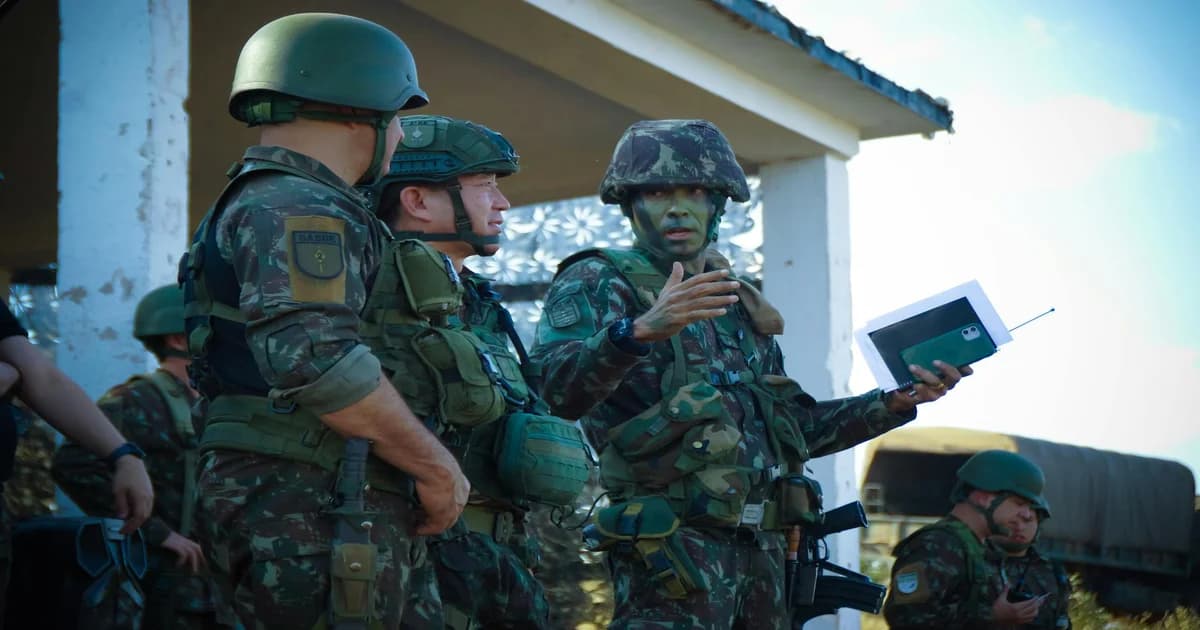
Trump's Iran War: What's the Exit Strategy?
Geopolitics · Apr 1, 2026
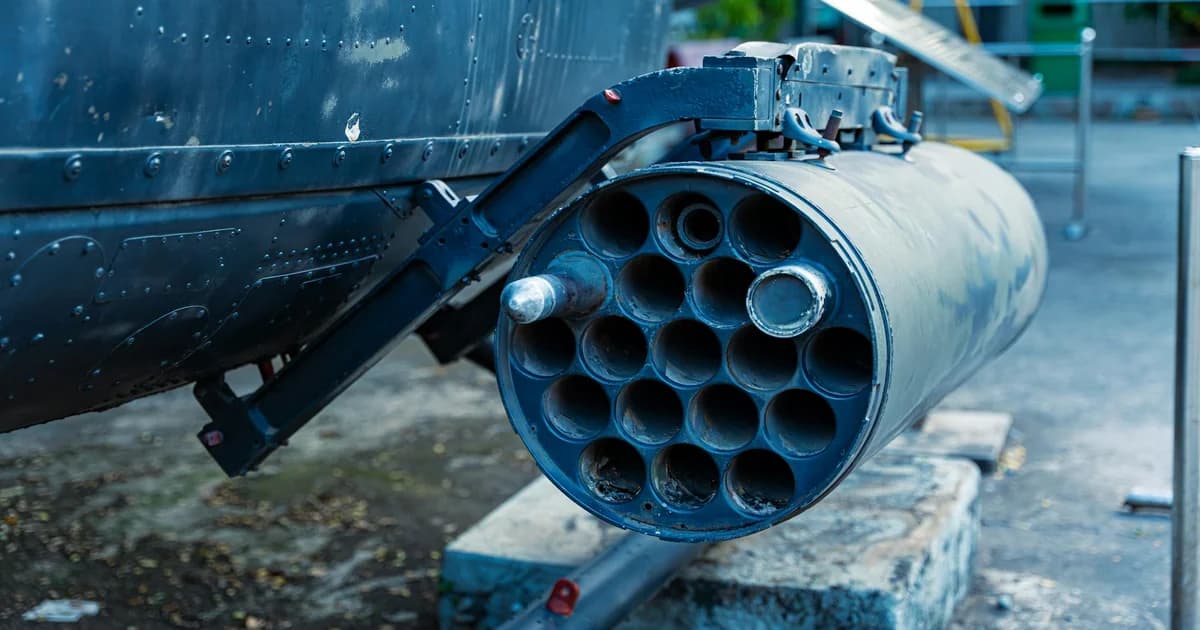
Trump Ukraine Weapons Halt: Iran Strategy?
Geopolitics · Apr 1, 2026

Ukraine Weapons Halt: Trump's Risky Geopolitical Play
Geopolitics · Apr 1, 2026