EXECUTIVE SUMMARY
By the end of 2026, the "AI Race" as a winner-take-all contest is over; the market has bifurcated into a high-margin Proprietary Agency layer and a zero-margin Commodity Logic layer. OpenAI will dominate the economic "Action" phase of AI through deep infrastructure lock-in, while Open Source will dominate the "Think" phase through ubiquity and local execution.
KEY INSIGHTS
- OpenAI’s retirement of GPT-4o signals a pivot from "Chatbot" to "Agentic OS," prioritizing high-margin execution over simple dialogue.
- Open Source (Llama-4/DeepSeek) has achieved "Distillation Parity," effectively capping the value of pure reasoning intelligence at near-zero.
- Anthropic’s "Safety-First" friction with the Pentagon creates a specialized "Boutique" niche, preventing them from achieving mass-market dominance.
- The "Memory Wall" and 1.58-bit quantization are moving 90% of routine inference to the edge/local devices, bypassing cloud APIs.
- OpenAI’s primary moat is no longer smarter weights, but high-friction Switching Costs integrated into corporate workflows.
WHAT THE PANEL AGREES ON
- The Death of the Generalist: The "one-model-fits-all" era ended with GPT-4o; specialized, task-specific models (MoS) are the 2026 standard.
- Open Source Ubiquity: For 95% of developer needs, open-weight models are "good enough," making them the "Linux" of the AI stack.
- Compute as a Moat is Leaking: While H1000s provide a raw power edge, algorithmic distillation allows competitors to clone frontier capabilities at 1/10th the cost.
WHERE THE PANEL DISAGREES
- Safety vs. Utility: Anthropic/Buffett see "Constitutional AI" as a legal necessity vs. a functional bug. (Evidence favors Utility for 2026 growth, but Safety for long-term regulatory survival).
- Network Effects: Altman claims a network moat; Buffett identifies it correctly as high switching costs. (Evidence favors Switching Costs).
THE VERDICT
OpenAI is "winning" the war for dollars, but Open Source has won the war for souls (developers). By Dec 2026, OpenAI will be the dominant "Operating System" for autonomous enterprise action, while Anthropic remains a specialized "Safe Research" shop.
- Bet on OpenAI for Revenue — Their shift to "Agentic OS" and "High-Inference" models creates a proprietary execution layer that open source cannot yet replicate due to the compute-heavy nature of "Action Loops."
- Bet on Open Source for Volume — Local execution on consumer hardware (NPU/BitNet) will handle the vast majority of "Reasoning" tasks, gutting the margins of mid-tier providers.
- Neutral on Anthropic — Unless a "Safety Catastrophe" occurs, their growth is capped by their own self-imposed alignment friction.
RISK FLAGS
-
Risk: The "Safety Flip" (A major OpenAI/Open Source failure leads to a global "Anthropic-only" mandate)
-
Likelihood: MEDIUM
-
Impact: OpenAI loses enterprise dominance overnight
-
Mitigation: Diversify your agent stack; don't rely on a single provider for "Action" permissions.
-
Risk: Agency Brittleness (Agents fail to handle real-world "messy" data)
-
Likelihood: HIGH
-
Impact: Massive churn in OpenAI/Anthropic high-cost subscriptions
-
Mitigation: Focus on "Human-in-the-loop" agent design rather than full autonomy.
-
Risk: Distillation Parity (Open Source clones OpenAI's "Action" capabilities in <4 weeks)
-
Likelihood: MEDIUM
-
Impact: Total commoditization of the entire proprietary stack
-
Mitigation: Move your value proposition to Proprietary Data and Workflow Integration, not "Intelligence."
BOTTOM LINE
OpenAI owns the "Action," Open Source owns the "Logic," and Anthropic owns the "Insurance."
Related Topics
Related Analysis

LLM Security and Control Architecture: Addressing Prompt
The Board · Feb 19, 2026

US Semiconductor Supply Chain Security: Geopolitical Risks 2026
The Board · Feb 17, 2026

Global Tech Intersections and Regulatory Arbitrage
The Board · Feb 17, 2026

Securing LLM Agents and AI Architectures in 2026
The Board · Feb 20, 2026
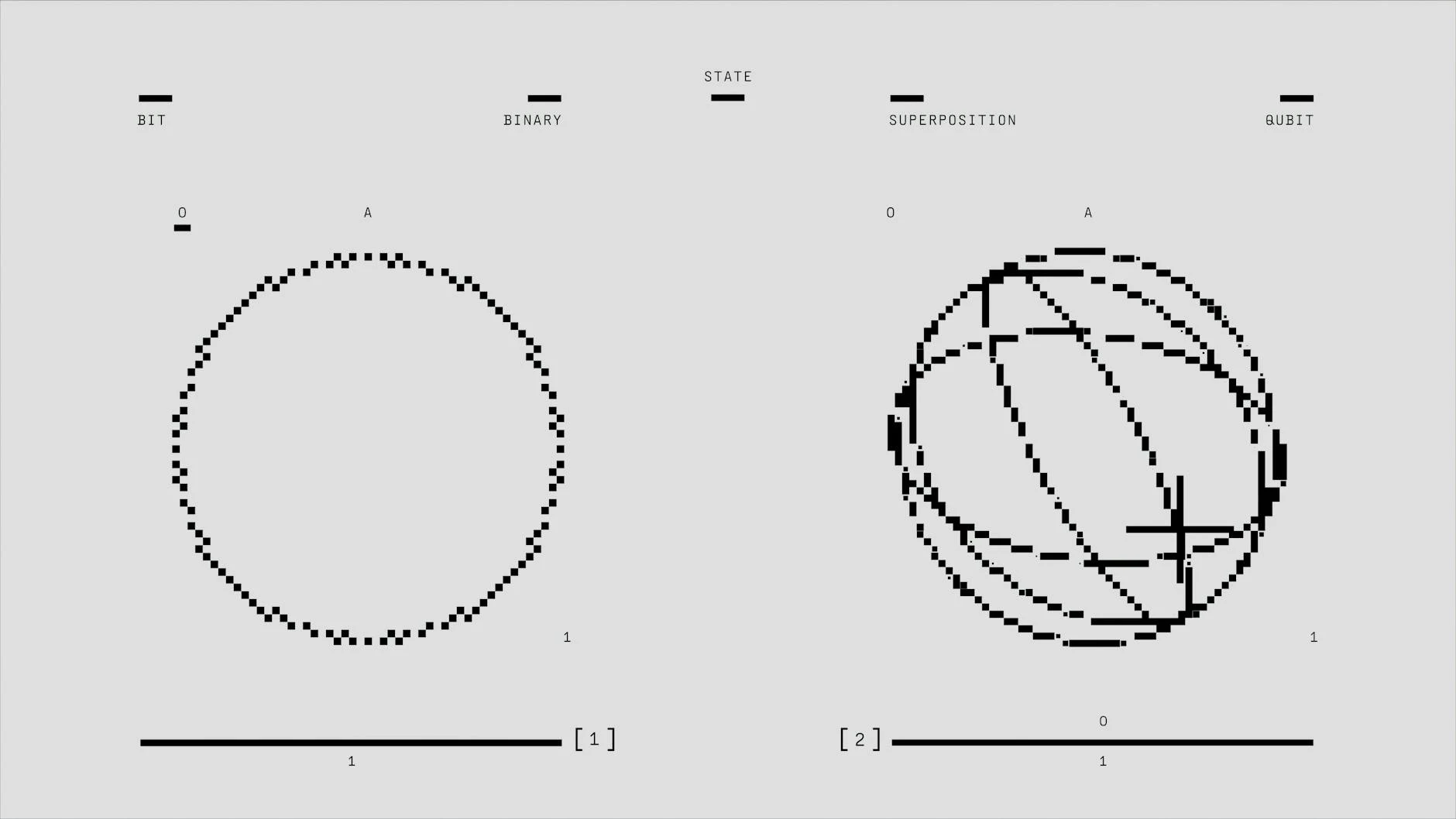
Quantum Computing Breakthroughs: Geopolitical Implications
The Board · Mar 4, 2026
Google's TurboQuant: The Memory Stock Crash
The Board · Mar 26, 2026
Trending on The Board

Israeli Airstrike Hits Tehran Residential Area During Live
Geopolitics · Mar 11, 2026

Fuel Supply Chains: Australia's Stockpile Reality
Energy · Mar 15, 2026

The Info War: Understanding Russia's Role
Geopolitics · Mar 15, 2026

Iran War Disinformation: How AI Deepfakes Fuel Chaos
Geopolitics · Mar 15, 2026
THAAD Interception Rates: Iran Missile Combat Data
Defense & Security · Mar 6, 2026
Latest from The Board
US Crew Rescued After Jet Downed: Israeli Media Reports
Defense & Security · Apr 3, 2026
Hegseth Asks Army Chief to Step Down: Why?
Policy & Intelligence · Apr 2, 2026

Trump Fires Attorney General: What Happens Next?
Policy & Intelligence · Apr 2, 2026
Trump Marriage Comments Draw Macron Criticism
Geopolitics · Apr 2, 2026

Iran's Stance on US-Israeli War: No Negotiations?
Geopolitics · Apr 1, 2026
Trump's Iran War: What's the Exit Strategy?
Geopolitics · Apr 1, 2026
Trump Ukraine Weapons Halt: Iran Strategy?
Geopolitics · Apr 1, 2026

Ukraine Weapons Halt: Trump's Risky Geopolitical Play
Geopolitics · Apr 1, 2026