
EXECUTIVE SUMMARY
The "phone" will not disappear; it will bifurcate into a Headless Compute Hub (the "Brick") and a Minimalist Interface (The "Talisman" or "Neural Peripheral"). While agents will manage intent, the physical rectangular slab remains the only Lindy-stable form factor for high-bandwidth data and human-centric control. The future of mobile is a local-first, air-gapped fortress that serves as the private server for your digital life.
KEY INSIGHTS
- The "No-Screen" era is a UX fallacy; screens are essential boundaries for intentionality and data density.
- Phones will transition from "app-launchers" to "agent-anchors" that process 90% of AI tasks on-device to ensure privacy and low latency.
- Thermal and battery physics mandate a "Compute Hub" model where a pocket-sized device powers lightweight wearables.
- Tactical haptics and physical kill-switches will become premium luxury features to combat "surveillance anxiety."
- Personal AI agents will fail if they lack "On-Device Sovereignty"—users will reject cloud-dependent "ghosts."
- The "Rectangular Slab" is Lindy-stable; its ergonomic utility for the human hand and eye cannot be optimized further.
WHAT THE PANEL AGREES ON
- The Death of the App-GUI: We are moving toward "Intent-based" interactions where the OS anticipates needs.
- Local Processing is Mandatory: Cloud-latency and privacy concerns make on-device silicon the primary theater of innovation.
- The Physicality of Privacy: Software-only privacy "toggles" are untrustworthy; hardware-level disconnects are required.
WHERE THE PANEL DISAGREES
- Invisibility vs. Objecthood: Altman predicts a disappearing device; Jobs/Taleb argue for the "Talismanic" necessity of a physical tool. (Verdict: Objecthood wins for psychological grounding).
- Distributed vs. Consolidated Hardware: Carmack/Altman see multiple sensors; UX-Prox/Taleb see a "Complexity Debt" that breeds fragility. (Verdict: Consolidated Hub wins for reliability).
THE VERDICT
The mobile phone of 2030 will be a "Black Box Fortress." It will remain a rectangular slab, but its screen will become a secondary interface to "Intent Peripherals" (glasses or pins).
- Keep the Slab — It is your thermal heat sink, battery reservoir, and "Key to the World."
- Shift to Agentic OS — Stop building apps; start building "Skills" for a local intent-model.
- Implement Physical "Air-Gaps" — True privacy must be a mechanical click, not a software setting.
RISK FLAGS
-
Risk: "Complexity Debt"—too many tethered peripherals (Glasses + Hub + Watch) lead to sync-failure and charging fatigue. 1
-
Likelihood: HIGH
-
Impact: Users revert to simple, single-device slabs.
-
Mitigation: Standardize ultra-wideband (UWB) power sharing and seamless "invisible" pairing.
-
Risk: Thermal Throttling—AI agents melt high-density silicon in pocket environments.
-
Likelihood: HIGH
-
Impact: Device lifespan drops; "Pocket Fire" incidents.
-
Mitigation: Shift to ceramic housings and "Compute Offloading" during idle states.
-
Risk: Cognitive Atrophy—Users lose the ability to navigate or decide without the Agent.
-
Likelihood: MEDIUM
-
Impact: Public health backlash/regulation against "Proactive Agents."
-
Mitigation: Design "Human-in-the-Loop" friction points that require active user confirmation for major actions.
BOTTOM LINE
The phone is not disappearing; it is becoming a private, physical anchor for an invisible intelligence, evolving from an "access portal" to a "personal sovereign server."
[
 {
 "sequence_order": 1,
 "title": "The Agentic Overlay",
 "description": "Transition current mobile OS from app-grids to a single, multi-modal LLM interface layer.",
 "acceptance_criteria": "User can complete 80% of tasks via voice/intent without opening a specific app.",
 "estimated_effort": "12-18 months",
 "depends_on": []
 },
 {
 "sequence_order": 2,
 "title": "Hardware Sovereignty Shift",
 "description": "Integration of dedicated 'Neural Engines' capable of 100T+ operations per second on-device.",
 "acceptance_criteria": "Zero-latency voice/vision processing without an internet connection.",
 "estimated_effort": "2 years",
 "depends_on": [1]
 },
 {
 "sequence_order": 3,
 "title": "The Physical Air-Gap Standard",
 "description": "Introduction of mechanical sliders for microphone and camera disconnection in flagship hardware.",
 "acceptance_criteria": "Hardware-level circuit break verified by third-party audit.",
 "estimated_effort": "1 year",
 "depends_on": []
 },
 {
 "sequence_order": 4,
 "title": "The Peripheral Decoupling",
 "description": "Shift of the screen to an 'optional' status, tethered to AR glasses or haptic wearables via UWB.",
 "acceptance_criteria": "Seamless hand-off of visual data from pocket-hub to retinal-projection with <10ms latency.",
 "estimated_effort": "3-5 years",
 "depends_on": [2]
 }
]
Related Topics
Related Analysis
LLM Security and Control Architecture: Addressing Prompt
The Board · Feb 19, 2026

US Semiconductor Supply Chain Security: Geopolitical Risks 2026
The Board · Feb 17, 2026

Global Tech Intersections and Regulatory Arbitrage
The Board · Feb 17, 2026
OpenAI vs Anthropic: Who Wins the AI Race by 2026?
The Board · Feb 15, 2026

Securing LLM Agents and AI Architectures in 2026
The Board · Feb 20, 2026
Quantum Computing Breakthroughs: Geopolitical Implications
The Board · Mar 4, 2026
Trending on The Board

Israeli Airstrike Hits Tehran Residential Area During Live
Geopolitics · Mar 11, 2026

Fuel Supply Chains: Australia's Stockpile Reality
Energy · Mar 15, 2026

The Info War: Understanding Russia's Role
Geopolitics · Mar 15, 2026
Iran War Disinformation: How AI Deepfakes Fuel Chaos
Geopolitics · Mar 15, 2026
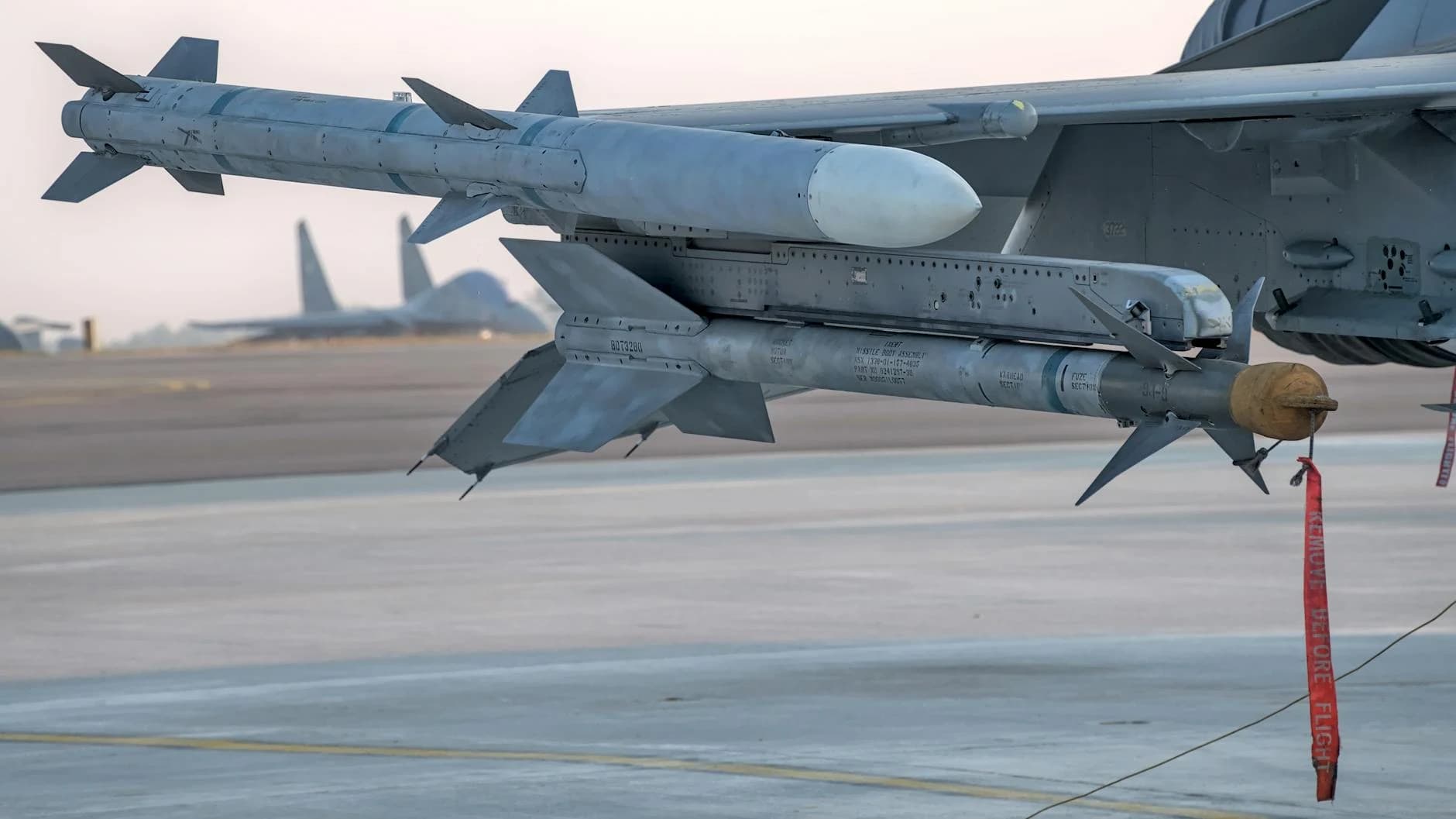
THAAD Interception Rates: Iran Missile Combat Data
Defense & Security · Mar 6, 2026
Latest from The Board

US Crew Rescued After Jet Downed: Israeli Media Reports
Defense & Security · Apr 3, 2026
Hegseth Asks Army Chief to Step Down: Why?
Policy & Intelligence · Apr 2, 2026

Trump Fires Attorney General: What Happens Next?
Policy & Intelligence · Apr 2, 2026
Trump Marriage Comments Draw Macron Criticism
Geopolitics · Apr 2, 2026

Iran's Stance on US-Israeli War: No Negotiations?
Geopolitics · Apr 1, 2026
Trump's Iran War: What's the Exit Strategy?
Geopolitics · Apr 1, 2026
Trump Ukraine Weapons Halt: Iran Strategy?
Geopolitics · Apr 1, 2026

Ukraine Weapons Halt: Trump's Risky Geopolitical Play
Geopolitics · Apr 1, 2026