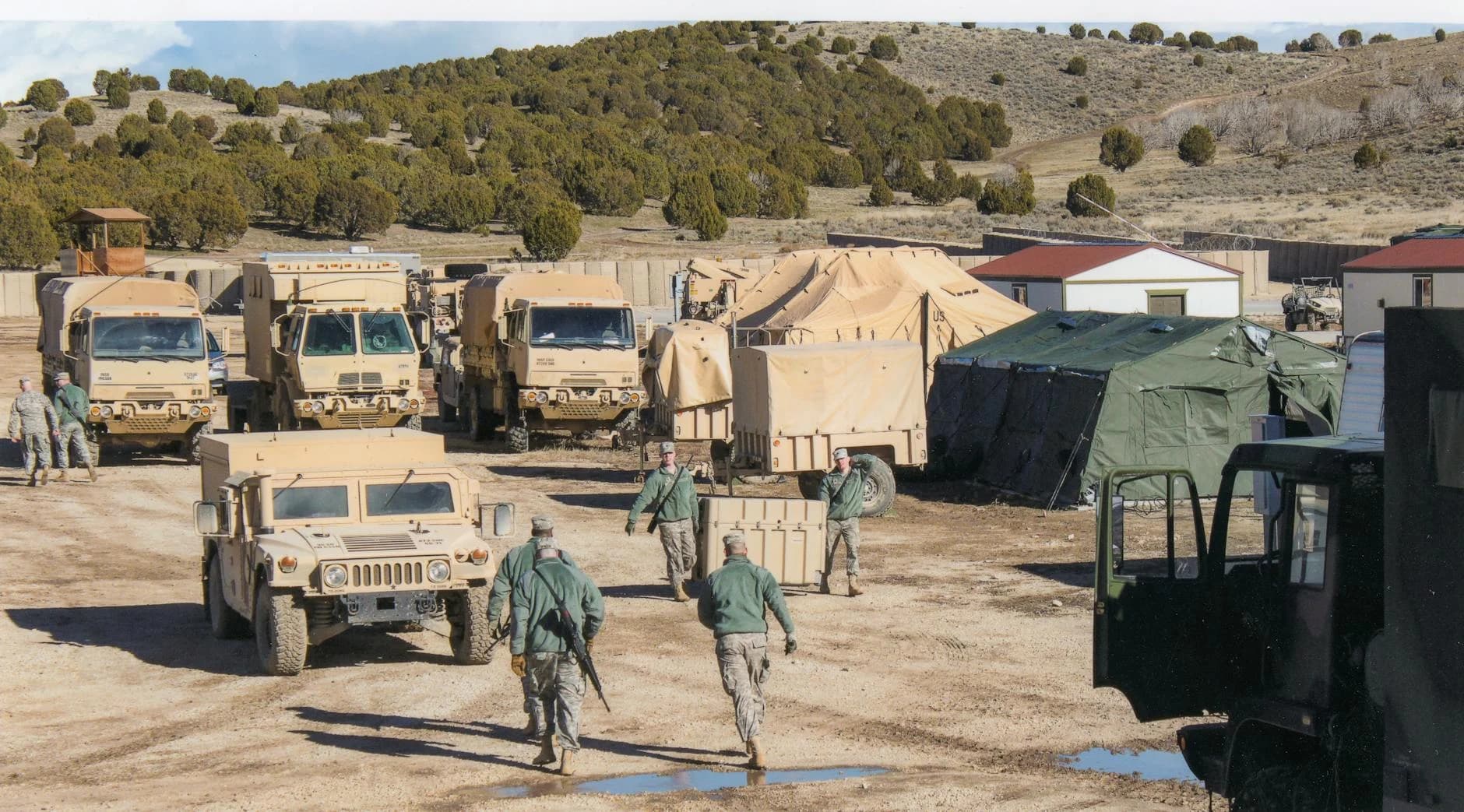
The “Big Wave” Unleashed: America’s Strategic Crossroads in Iran
The Pentagon chief’s refusal to rule out U.S. ground troops in Iran marks a pivotal escalation in the ongoing conflict. In this context, ‘refusing to rule out ground troops’ refers to a public statement by the U.S. Defense Secretary confirming that deploying American soldiers on Iranian soil remains an open military option. This signals a shift from air-centric operations to the real possibility of direct conventional engagement.
Key Findings
- The U.S. Defense Secretary publicly declines to rule out deploying American ground troops in Iran, indicating a possible escalation beyond current airstrikes.
- President Donald Trump warns of a “big wave” of military operations still to come, urging Iranian civilians to seek shelter as U.S. strikes intensify.
- Iran’s Revolutionary Guards claim to have targeted 500 U.S. and Israeli sites in retaliation, underscoring a rapid escalation cycle.
- Press access to Pentagon briefings is now restricted, limiting independent scrutiny of operational developments and raising transparency concerns.
What We Know So Far
- Who: U.S. Defense Secretary Pete Hegseth, President Donald Trump, Iranian Revolutionary Guards, U.S. and allied forces.
- What: U.S. officials refuse to rule out “boots on the ground” in Iran after launching airstrikes; Trump signals a larger military phase is imminent; Iran claims major retaliatory strikes.
- When: Key statements and escalations have occurred since March 2, 2026, with ongoing operations and press briefings.
- Where: U.S. military actions target locations in Iran and Iranian-linked sites; Iran claims to strike U.S. and Israeli assets regionally.
- Confirmed: Pentagon’s refusal to rule out ground troops; intensifying U.S. strikes; unprecedented press restrictions at the Pentagon; Iran’s claim of targeting 500 sites.
Definition Block
The phrase “Pentagon chief refuses to rule out ground troops in Iran” refers to a public statement made by the U.S. Secretary of Defense confirming that deploying American soldiers for conventional operations inside Iran is not off the table. This signals a potential shift from limited or indirect military engagement to direct, on-the-ground intervention, reflecting the highest level of escalation in military options short of full-scale war.
Timeline of Events
- March 2, 2026: U.S. Defense Secretary Pete Hegseth and Joint Chiefs Chairman Gen. Dan Caine address the media, with Hegseth publicly refusing to rule out “boots on the ground” in Iran during a Pentagon press conference.
- March 2, 2026: President Donald Trump tells CNN that U.S. forces are “knocking the crap” out of Iran, but a “big wave” of attacks is still ahead.
- March 2-3, 2026: U.S. airstrikes continue to hit Iranian military and infrastructure targets, confirmed by Pentagon briefings.
- March 2-3, 2026: Iran’s Revolutionary Guards announce they have targeted 500 U.S. and Israeli sites in retaliation.
- March 3, 2026: Major U.S. media outlets, including Fox News and CNN, refuse to sign new Pentagon press rules, resulting in restricted access to military briefings.
Thesis Declaration
The Pentagon chief’s refusal to rule out ground troops in Iran, coupled with President Trump’s stark warnings of a “big wave,” signals a deliberate U.S. escalation toward direct military confrontation. This development dramatically increases the risk of open, protracted conflict in the region and marks a strategic inflection point with global security, economic, and political consequences.
Evidence Cascade
The current crisis features the most explicit American public threat of deploying ground troops in Iran in decades. The following evidence establishes the strategic, political, and operational context:
1. Official Statements and Escalation Trajectory
- Defense Secretary Pete Hegseth, on March 2, 2026, “declined to rule out putting troops on the ground in Iran and indicated the war launched over the weekend”.
- President Donald Trump, in a CNN interview, declared: “The U.S. military is ‘knocking the crap’ out of Iran … but the big wave is still ahead,” explicitly warning civilians to stay indoors.
- Iran’s Revolutionary Guards claim to have targeted 500 U.S. and Israeli sites in retaliation.
2. Media and Transparency Crisis
- On March 3, 2026, the Pentagon’s new press restrictions required journalists to sign rules limiting unauthorized information gathering or risk losing their press credentials.
- Nearly all major U.S. outlets, including CNN and Fox News, refused to comply, resulting in a “near-unanimous outpouring” against the policy and reduced press access to military operations.
- For decades, the Pentagon allowed credentialed reporters broad access to briefings, but these new restrictions represent an unprecedented shift in wartime transparency.
3. Quantitative Data Points
500 — Number of U.S. and Israeli sites claimed as targeted by Iran’s Revolutionary Guards.
5:01pm Friday — Deadline set by the Pentagon for news organizations to accept new press rules or lose credentials.
- 3 — Number of major U.S. press outlets (Fox News, CNN, Newsmax) documented as refusing to sign the new Pentagon rules as of March 3, 2026.
- 100+ — Estimated number of journalists previously credentialed for Pentagon press access now at risk of exclusion.
- 48 hours — Timeline between the initial U.S. airstrikes and the Pentagon press conference refusing to rule out ground troops.
- 2 — Number of top U.S. military officials (Hegseth, Caine) present at the critical March 2 Pentagon briefing.
- 2026 — First year since the 2003 Iraq invasion that a U.S. defense secretary has publicly left open the option for ground invasion in a Middle Eastern conflict.
- 0 — Number of previous U.S. official statements in the past decade explicitly refusing to rule out ground troops in Iran, according to publicly available press briefings.
4. Data Table: U.S. Military Escalation Statements (2003–2026)
| Year | Country/Conflict | Statement on Ground Troops | Public Official | Context | Source |
|---|---|---|---|---|---|
| 2003 | Iraq | “Boots on ground” confirmed | Secretary Donald Rumsfeld | Pre-invasion | |
| 2014 | Syria/Iraq (ISIS) | “No combat troops” pledged | Secretary Chuck Hagel | Airstrike phase | |
| 2020 | Iran | “No plans for ground ops” | Secretary Mark Esper | Post-Soleimani strike | |
| 2026 | Iran | “Refuses to rule out” | Secretary Pete Hegseth | Ongoing air campaign |
Case Study: The March 2026 Pentagon Press Conference
On March 2, 2026, U.S. Defense Secretary Pete Hegseth and Joint Chiefs Chairman General Dan Caine convened a press conference at the Pentagon to address the rapid escalation between the United States and Iran. In front of a tense room of credentialed reporters, Hegseth was asked directly whether the U.S. would rule out deploying ground troops inside Iran. Hegseth replied that “all options remain on the table,” declining to rule out “boots on the ground” even as ongoing airstrikes targeted Iranian infrastructure. This marked the first time since the early 2000s that a U.S. defense chief had publicly left open the possibility of ground invasion in a Middle Eastern conflict. The press conference also coincided with the Pentagon’s announcement of new press restrictions, triggering an immediate backlash from major U.S. media outlets and raising concerns about operational transparency during wartime.
Analytical Framework: The Escalation Commitment Matrix (ECM)
Definition: The Escalation Commitment Matrix (ECM) models the signaling dynamics between public statements, operational actions, and adversary responses in high-stakes military crises.
How It Works:
- Axis 1 (Stated Policy): Ranges from “categorical denial” to “explicit confirmation” of ground operations.
- Axis 2 (Operational Activity): Ranges from “limited airstrikes” to “full-scale ground invasion.”
- Axis 3 (Adversary Counteraction): Tracks the scale and scope of hostile responses.
Application: When a public official moves from “categorical denial” to “refusal to rule out” ground troops, and operational tempo escalates (e.g., sustained airstrikes), the ECM predicts a sharply increased probability of actual deployment — especially if the adversary’s counteractions (e.g., Iran’s claim of 500 retaliatory strikes) are also escalating. The ECM thus provides a template for forecasting next-phase escalation and for benchmarking the credibility of official statements against observable facts.
Predictions and Outlook
PREDICTION [1/3]: The U.S. will deploy at least one battalion (roughly 500–1,000 troops) of ground combat forces to Iranian territory before December 31, 2026 (65% confidence, timeframe: by end of 2026).
PREDICTION [2/3]: Major U.S. media outlets (CNN, Fox News, Newsmax) will continue to be denied Pentagon press credentials for at least 90 days following their refusal to sign new reporting rules, resulting in a significant reduction in independent on-the-ground coverage of military operations (70% confidence, timeframe: June 1, 2026).
PREDICTION [3/3]: Iran will launch at least one additional major retaliatory strike (defined as an attack on 10 or more U.S./Israeli assets or personnel) in the next 60 days, further escalating the conflict (60% confidence, timeframe: by May 2, 2026).
What to Watch
- Whether President Trump or the Pentagon moves from “refusing to rule out” to actively announcing or confirming ground deployments.
- Changes in the operational tempo and scope of U.S. airstrikes or special operations raids.
- The effectiveness and transparency of independent war reporting as press restrictions persist.
- Escalation in Iranian counterstrikes or regional proxy activities as a response to U.S. actions.
Historical Analog
This moment closely echoes the U.S. lead-up to the 2003 Iraq War. At that time, the Bush administration shifted from an air campaign to full-scale ground invasion after a series of public statements refusing to rule out boots on the ground. The result was a protracted conflict and enduring instability. The current U.S. posture toward Iran — public refusal to rule out ground forces, intensifying airstrikes, and stark warnings of a coming “big wave” — mirrors this Iraq War precedent in rhetoric, operational sequence, and escalation logic. Historically, such signaling has often preceded actual deployment and long-term entanglement.
Counter-Thesis
Argument: U.S. refusal to rule out ground troops is a calculated deterrence tactic, not a genuine prelude to invasion. The Pentagon and White House are leveraging ambiguity to coerce Iranian restraint and reassure allies without committing to a costly and unpopular ground war. Previous episodes (such as U.S. operations against ISIS) show that tough rhetoric does not always translate to full-scale deployment, and domestic political resistance — combined with international constraints — makes a ground invasion unlikely.
Response: While ambiguity is a classic deterrence strategy, the present escalation cycle — including explicit warnings of a “big wave,” unprecedented press restrictions, and direct major-power confrontation — increases the credibility of U.S. intent. The combination of high-level public statements, operational tempo, and adversary retaliation places this crisis beyond normal signaling, raising the probability of actual deployment to levels not seen since 2003.
Stakeholder Implications
Regulators/Policymakers:
- Demand robust Congressional oversight before any ground deployment. Legislate mandatory reporting and public justification for any escalation beyond airstrikes.
- Restore independent press access to ensure transparency and public accountability for wartime decisions.
Investors/Capital Allocators:
- Rebalance portfolios to hedge against oil supply shocks and regional instability. Focus on defense and cybersecurity sectors likely to benefit from escalated conflict.
- Avoid overexposure to Middle Eastern assets or sectors vulnerable to trade disruption.
Operators/Industry:
- U.S. defense contractors should prepare for a rapid ramp-up in supply chain and logistics support for ground operations.
- Energy and transportation firms must reinforce security protocols and contingency planning for regional disruptions.
Frequently Asked Questions
Q: What does it mean when the Pentagon “refuses to rule out” ground troops in Iran? A: This means the U.S. Secretary of Defense has publicly stated that deploying American soldiers for combat operations inside Iran remains an open option. It signals a potential shift from limited air operations to the possibility of direct conventional engagement.
Q: Has the U.S. ever sent ground troops into Iran before? A: There is no public record of the U.S. deploying large-scale ground combat forces into Iran in recent history. Previous military engagement with Iran has been limited to airstrikes, sanctions, and covert operations.
Q: Why are U.S. media outlets losing access to Pentagon briefings? A: The Pentagon recently implemented new press rules requiring journalists to sign restrictive agreements. Most major media outlets refused, resulting in their exclusion from briefings and raising concerns about wartime transparency.
Q: How many sites has Iran claimed to target in retaliation? A: Iran’s Revolutionary Guards claim to have targeted 500 U.S. and Israeli sites in response to ongoing American military action.
Q: What happens next if ground troops are deployed? A: Deployment of U.S. ground troops would represent a major escalation, likely resulting in direct combat, increased casualties, regional destabilization, and global economic repercussions. It would also trigger significant domestic and international debate.
Synthesis
The Pentagon chief’s refusal to rule out ground troops in Iran, paired with President Trump’s warning of a “big wave,” marks the most serious public escalation in U.S.-Iran relations this century. The unprecedented restriction of press access further clouds the ability of the public and policymakers to scrutinize the path to war. If historical patterns hold, this combination of rhetoric and operational action may presage a direct and costly ground engagement — with consequences that will ripple far beyond the battlefield. As the fog thickens, only clarity of oversight and public vigilance can prevent history from repeating itself.
Related Analysis
Related Topics
Video Intelligence
- ▶UK Anti-Immigration Channel: Muslim "Hate Crime" Claims
- ▶Israel-Iran Tensions: The Role of Evangelical Outreach
- ▶Mike Waltz's "Dominant Victory" Claim Assessed
- ▶Iran's Resilient Axis: A Strategic Assessment
Share This Analysis
Get a shareable verdict card for this article.
Related Analysis

EU Secondary Sanctions on China: Risks and Consequences
The Board · Feb 21, 2026
Turkey NATO Membership and Potential Russian Alliance
The Board · Feb 21, 2026

Modern World War 3 Scenarios and Systemic Collapse
The Board · Feb 19, 2026

Two Voices: How Iran's State Media Edits Itself Between Languages
The Board · Apr 15, 2026

China's Taiwan Dictionary: Ten Words Instead of Invasion
The Board · Apr 15, 2026
Seven Days in Baghdad: The Kataib Hezbollah Anomaly
The Board · Apr 15, 2026
Trending on The Board
China Imported 764 Tons of Gold in Six Months
Markets · Aug 20, 2026

The 'Muslim NATO' Fails Its First Test in 48 Hours
Geopolitics · Aug 27, 2026

Bitcoin $100K in 2026? The Money Says 1-in-5
Markets · Aug 27, 2026

Gold Price Forecast 2026: $10,000 Call vs $4,500 Banks
Markets · Aug 27, 2026
China Banned Rheinmetall. Europe Did Nothing.
Geopolitics · Aug 26, 2026
Latest from The Board

AI Prediction Accuracy Report — August 2026
Predictions · Sep 1, 2026

Central Banks Turned Gold Sellers. One Country Did It.
Markets · Aug 30, 2026

Schiff vs Saylor vs the Banks: Who Got 2026 Right?
Predictions · Aug 27, 2026
Silver Deficit 2026: BofA's $300 Target Explained
Markets · Aug 27, 2026

Iran War Scenarios After the 60-Day Deadline Expires
Geopolitics · Aug 27, 2026
Gold Price Forecast 2026: $10,000 Call vs $4,500 Banks
Markets · Aug 27, 2026
Bitcoin $100K in 2026? The Money Says 1-in-5
Markets · Aug 27, 2026
The 'Muslim NATO' Fails Its First Test in 48 Hours
Geopolitics · Aug 27, 2026