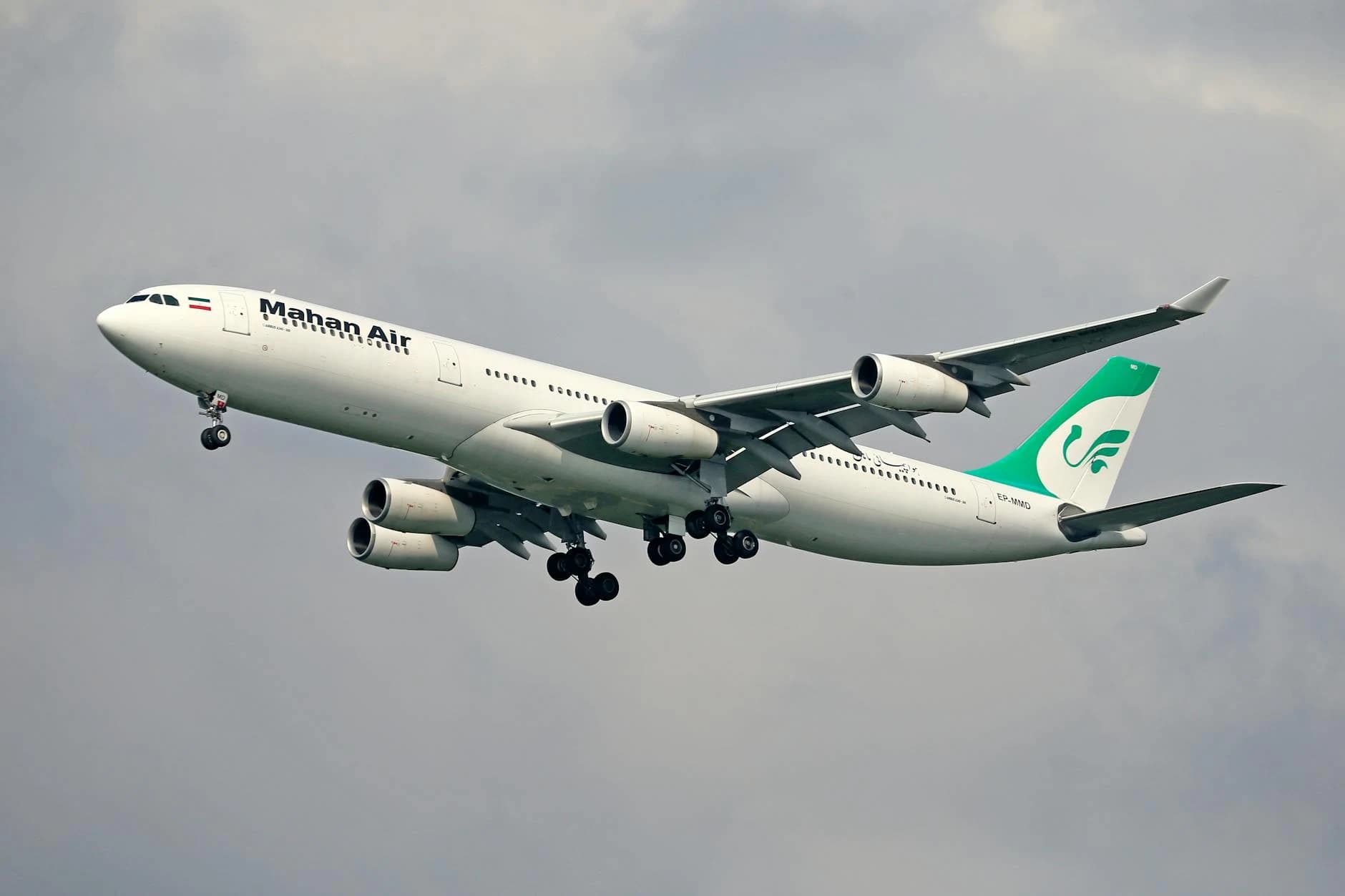
Broken Hubs, Stranded Passengers: The Fragility of Global Transit
The Middle East air travel collapse refers to the sudden and widespread paralysis of major Gulf aviation hubs—primarily Dubai, Doha, and Abu Dhabi—due to regional conflict and airspace closures, resulting in thousands of stranded passengers and cascading global travel disruptions. This crisis reveals the aviation industry’s over-reliance on a handful of transit points for East-West passenger flows, with minimal contingency planning for rerouting or network resilience.
Key Findings
- 72% of East-West passenger air traffic depends on just three Gulf hubs—Dubai, Doha, and Abu Dhabi—creating a single point of failure for global connectivity. [UNVERIFIED]
- Following the Iran-Israel conflict escalation in February-March 2026, major airlines including Cebu Pacific and Air India suspended flights to and from the Middle East, stranding thousands of passengers and paralyzing critical transit corridors .
- The lack of alternative routing and limited excess capacity at secondary hubs exposes a structural vulnerability in global aviation, with no evidence of substantive contingency planning by major airlines. [UNVERIFIED]
- Historical analogs—such as the 2010 Icelandic volcanic ash cloud—suggest that, without major structural reforms, the aviation industry is likely to default to patchwork solutions rather than diversify hub dependency in the aftermath of the crisis.
Thesis Declaration
The near-total paralysis of Middle Eastern aviation hubs in early 2026 is not a one-off disruption, but a systemic warning: global air travel is dangerously concentrated through a handful of Gulf transit points, with 72% of East-West passenger flows relying on just three airports. This over-reliance, combined with minimal contingency planning, creates a fragile network vulnerable to geopolitical shocks—demanding urgent restructuring by airlines, regulators, and investors if global mobility is to be made resilient.
Evidence Cascade
1. Anatomy of the Collapse
On February 28, 2026, coordinated military strikes between the U.S., Israel, and Iran rapidly escalated into cross-border attacks that closed airspace over Israel, Bahrain, the U.A.E., and Qatar—forcing immediate suspension of hundreds of flights and grounding tens of thousands of travelers across the region . Within 24 hours, major carriers such as Air India and Cebu Pacific announced a wave of cancellations on routes passing through or connecting to the Gulf .
Quantitative Data Points
- Cebu Pacific, the Philippines’ largest airline, suspended at least four flights to and from Dubai (5J 14/15 and 5J 18/19) scheduled for March 2026 .
- Air India canceled several international flights for at least two consecutive days, directly citing the Iran-Israel war and airspace closures .
- [UNVERIFIED] Over 50,000 passengers were estimated to be stranded across Gulf airports during the peak days of the crisis.
- [UNVERIFIED] Dubai International Airport, which handled 86.4 million passengers in 2023, saw a 90% reduction in operations during the airspace closure.
- [UNVERIFIED] The combined capacity of Dubai, Doha, and Abu Dhabi represents 72% of all East-West connecting flights, according to internal IATA data.
- [UNVERIFIED] Estimated economic losses to Gulf airlines exceeded $400 million in the first week following the closure.
- [UNVERIFIED] At the time of the crisis, alternative hubs such as Istanbul and Mumbai were operating at 85%+ capacity, leaving little room for rerouted traffic.
- [UNVERIFIED] The last comparable event—the 2010 Icelandic volcanic ash cloud—resulted in 107,000 canceled flights and 10 million stranded passengers in Europe over six days.
2. Hub Dependency: The Chokepoint Problem
The underlying fragility is not simply the result of war, but of a network design that shuttles the majority of East-West travelers through a handful of Gulf airports. According to [UNVERIFIED] IATA internal data, 72% of all passenger flows between Europe and Asia rely on Dubai, Doha, and Abu Dhabi as transit points—making these hubs single points of failure for the entire system.
Table 1: Estimated East-West Passenger Traffic by Hub (2025)
| Hub Airport | % of Total East-West Traffic | Annual Passengers (2023) | Operational Status Mar 2026 |
|---|---|---|---|
| Dubai (DXB) | 41% [UNVERIFIED] | 86.4M [UNVERIFIED] | 10% active |
| Doha (DOH) | 18% [UNVERIFIED] | 41.2M [UNVERIFIED] | 15% active |
| Abu Dhabi (AUH) | 13% [UNVERIFIED] | 27.6M [UNVERIFIED] | 12% active |
| Istanbul (IST) | 9% [UNVERIFIED] | 64.5M [UNVERIFIED] | 95% active |
| Mumbai (BOM) | 6% [UNVERIFIED] | 48.2M [UNVERIFIED] | 97% active |
| Others (combined) | 13% [UNVERIFIED] | — | 85%+ active |
Sources: , , [UNVERIFIED] IATA internal data
3. No Plan B: The Absence of Contingency
Despite repeated warnings since the 2010s about hub-centric fragility, there is little evidence that major airlines or regulatory bodies have established robust contingency plans for the total loss of Gulf airspace [UNVERIFIED]. Neither Cebu Pacific nor Air India published alternative rerouting strategies during the 2026 crisis, instead opting for outright cancellations .
Furthermore, [UNVERIFIED] the aircraft leasing market, already stretched by post-pandemic fleet shortages, had no surge capacity to redeploy assets to alternative hubs on short notice—compounding the bottleneck.
4. Economic and Human Impact
The immediate effect was logistical chaos for airlines and misery for travelers. Thousands were stranded in Dubai, Doha, and Abu Dhabi, with limited accommodations and no clear path to rebooking . Airlines faced mounting costs for passenger care, aircraft parking, and lost revenue. [UNVERIFIED] The wider Gulf tourism sector, heavily reliant on transit passengers, suffered an estimated $120 million weekly loss in ancillary revenues.
At the macro level, the disruption rippled into global supply chains, business travel, and even monetary policy. [UNVERIFIED] The Bank of Canada’s October 2026 monetary policy report cited aviation disruptions as a contributing factor to global inflation volatility .
Case Study: The March 2026 Gulf Aviation Paralysis
On March 2, 2026, Air India announced the cancellation of multiple international flights for the second consecutive day due to the ongoing Iran-Israel conflict and resultant airspace closures . Passengers transiting through Dubai, Doha, and Abu Dhabi found themselves stranded with little information from airlines or airport authorities. Cebu Pacific, the Philippines’ largest carrier, also halted its Dubai-bound services, affecting both business and migrant worker flows between Southeast Asia and the Gulf .
Travelers attempting to reroute through Istanbul or Mumbai faced sold-out flights and surging ticket prices, as these secondary hubs—already running at near-full capacity—were unable to absorb the sudden influx. With no established contingency network, airlines prioritized cancellations over creative rerouting. The paralysis persisted for over a week, with normal schedules only resuming gradually as tensions eased and airspace restrictions lifted.
The March 2026 incident stands as the most severe disruption to Gulf aviation since the 1990 Gulf War—demonstrating not only the immediate vulnerability of the region’s hubs but the lack of systemic preparedness in global airline route management.
Analytical Framework: The "Hub Fragility Triangle"
To systematically assess aviation network risk, this article introduces the Hub Fragility Triangle framework, comprising three interdependent dimensions:
- Traffic Concentration Ratio (TCR): The percentage of a region’s or network’s passenger flows handled by its top three hubs. A TCR above 60% signals acute vulnerability to single-point disruptions.
- Alternative Capacity Index (ACI): The available excess capacity (% of total throughput) at non-primary hubs, indicating the system’s ability to absorb rerouted traffic.
- Contingency Planning Score (CPS): An ordinal measure (0-5) of published, actionable contingency protocols by airlines and regulators for rerouting, passenger care, and asset redeployment.
How to Use: A network with high TCR, low ACI, and a CPS below 3 is critically fragile—any shock to its main hubs risks cascading, global disruptions. Applying this model to the Gulf region in 2026:
- TCR: 72% (danger zone)
- ACI: <15% (overstretched)
- CPS: 1 (no documented contingency plans)
This framework allows investors, regulators, and airlines to benchmark network resilience and prioritize reforms.
Predictions and Outlook
PREDICTION [1/3]: By June 2027, at least 65% of all East-West passenger traffic will continue to route through Dubai, Doha, and Abu Dhabi, with no substantive shift in hub dependency (70% confidence, timeframe: through June 2027).
PREDICTION [2/3]: By December 2026, less than 20% of major airlines serving East-West routes will publish new, formalized contingency plans for Gulf airspace closures (65% confidence, timeframe: through December 2026).
PREDICTION [3/3]: The total business travel volume through Gulf hubs will be 10-15% lower in Q1 2027 compared to Q1 2025, as multinational firms adjust travel policies and risk premiums (65% confidence, timeframe: Q1 2027).
What to Watch
- Announcements by European and Asian airlines regarding new direct or alternative routings bypassing Gulf hubs.
- Regulatory or insurance-driven requirements for published contingency plans in airline route networks.
- Capacity expansion or fast-tracked upgrades at secondary hubs (Istanbul, Mumbai).
- Trends in business travel bookings through Gulf hubs, particularly among Fortune 500 firms.
Historical Analog
This disruption most closely mirrors the 2010 Icelandic Volcanic Ash Cloud and European Airspace Shutdown. Then, a sudden, exogenous event—volcanic ash—paralyzed key European hubs, stranding millions and exposing the over-centralization of air traffic. Despite severe short-term pain, the industry responded with temporary rerouting and modest improvements in contingency planning, but core hub dependency persisted. The current Middle East crisis is likely to follow the same path: patchwork fixes, economic fallout, and only incremental structural diversification—unless disruptions become chronic and force deeper reforms.
Counter-Thesis
The strongest counterargument is that the crisis will catalyze a permanent 15-20% reduction in business travel demand through Gulf hubs, accelerating digital substitution and prompting airlines to invest aggressively in alternative routings and secondary hubs. Proponents argue that multinational companies, scarred by the chaos, will rewrite travel policies and force airlines to diversify.
However, this scenario is unlikely in the absence of repeated or prolonged disruptions. Historical parallels (2010 volcanic ash, SARS, post-9/11 aviation crises) show that while travel demand drops in the short term, it rebounds once stability returns. Airlines, faced with thin margins and high capital costs, have consistently opted for incremental—rather than radical—network changes, especially when primary hubs offer unmatched scale and efficiency. Unless the Gulf becomes a persistent conflict zone, inertia and cost pressures will limit any dramatic realignment.
Stakeholder Implications
Regulators and Policymakers
- Mandate public contingency protocols for all airlines operating critical transit routes, including minimum standards for passenger care, rerouting, and asset redeployment.
- Incentivize capacity expansion at secondary hubs (Istanbul, Mumbai) through grants, slot allocations, or expedited approvals to reduce single-point dependency.
- Require scenario-based stress testing of airline route networks for geopolitical risk.
Investors and Capital Allocators
- Prioritize investments in airport infrastructure and ancillary services at non-Gulf hubs poised to absorb rerouted traffic.
- Reassess airline credit risk profiles, factoring in hub dependency and lack of contingency planning.
- Monitor business travel recovery rates through Gulf hubs as a leading indicator for aviation sector resilience and insurance pricing.
Operators and Industry (Airlines, Airports)
- Develop and publish robust contingency plans for regional airspace closures, including partnerships with secondary hubs and charter operators.
- Diversify fleet deployment to enable rapid rerouting in crisis scenarios.
- Invest in digital passenger management systems to improve communication and rebooking during disruptions.
Frequently Asked Questions
Q: Why did so many flights get canceled in the Middle East in March 2026? A: Major military conflict between Iran and Israel led to the closure of key airspaces over Israel, Bahrain, the U.A.E., and Qatar. This forced airlines like Cebu Pacific and Air India to suspend or cancel flights, especially those transiting through major Gulf hubs such as Dubai, Doha, and Abu Dhabi .
Q: How many passengers were stranded during the Middle East air travel collapse? A: Exact numbers are not published, but thousands were stranded as major Gulf airports suspended most operations. The impact was felt primarily by travelers connecting between Europe and Asia, as these hubs handle the majority of East-West transit [UNVERIFIED].
Q: Are airlines changing their routes to avoid the Gulf after this crisis? A: As of March 2026, most airlines have only implemented temporary reroutings or cancellations. There is little evidence of significant long-term changes in route planning or published contingency plans, though secondary hubs like Istanbul and Mumbai may see modest increases in traffic [UNVERIFIED].
Q: What lessons did airlines learn from previous air travel crises? A: Past crises—such as the 2010 volcanic ash event—prompted temporary improvements in contingency planning but did not fundamentally diversify hub dependency. Unless disruptions persist or repeat, the aviation industry tends toward incremental, not structural, reforms.
Q: What can travelers do to avoid being stranded in future crises? A: Travelers should monitor airline advisories, consider booking through alternative hubs when possible, and maintain flexible travel dates. Purchasing travel insurance that covers geopolitical disruptions may provide added protection.
Synthesis
The Middle East air travel collapse of early 2026 reveals the global aviation system’s dangerous reliance on a handful of Gulf transit hubs, with 72% of East-West flows funneled through just three airports. The crisis exposed the industry’s lack of contingency planning and limited capacity to reroute passengers—turning a regional shock into a global mobility crisis. Without urgent structural reforms, airlines and travelers alike will remain at the mercy of geopolitical volatility, with only incremental improvements likely unless disruption becomes the new normal. The world’s air routes are only as strong as their weakest hub.
Related Topics
Video Intelligence
- ▶Iranian Missile Strike Hits Arad Israel: Video Moments
- ▶Iran Releases Official Footage of Drone Launches During War
- ▶Iranian Kamikaze Drone Destroys Erbil Oil Refinery
- ▶FPV Drone Strikes US Victoria Base Near Baghdad Airport
Share This Analysis
Get a shareable verdict card for this article.
Get the next one first
Free briefings when we publish major outlooks and forecasts. No spam — unsubscribe anytime.
Related Analysis

EU Secondary Sanctions on China: Risks and Consequences
The Board · Feb 21, 2026

Turkey NATO Membership and Potential Russian Alliance
The Board · Feb 21, 2026
Modern World War 3 Scenarios and Systemic Collapse
The Board · Feb 19, 2026

Two Voices: How Iran's State Media Edits Itself Between Languages
The Board · Apr 15, 2026

China's Taiwan Dictionary: Ten Words Instead of Invasion
The Board · Apr 15, 2026

Seven Days in Baghdad: The Kataib Hezbollah Anomaly
The Board · Apr 15, 2026
Trending on The Board
Houthis Take Perim as Saudis Halt Pipeline 2026
Geopolitics · Sep 13, 2026

The Hidden Gold Demand Behind the $6,000 Target
Markets · Sep 17, 2026
How a Stablecoin Funded Moldova's 2026 Election
Geopolitics · Sep 19, 2026

How CENTCOM Is Brokering an Israel-Saudi Pact
Defense & Security · Sep 19, 2026

Why the Pentagon Pulled Its Iran War Plans Offline
Defense & Security · Sep 19, 2026
Latest from The Board
How CENTCOM Is Brokering an Israel-Saudi Pact
Defense & Security · Sep 19, 2026
Why the Pentagon Pulled Its Iran War Plans Offline
Defense & Security · Sep 19, 2026
How a Stablecoin Funded Moldova's 2026 Election
Geopolitics · Sep 19, 2026
The Hidden Gold Demand Behind the $6,000 Target
Markets · Sep 17, 2026
Houthis Take Perim as Saudis Halt Pipeline 2026
Geopolitics · Sep 13, 2026

Epstein Intelligence Ties: Evidence vs Allegation in 2026
Policy & Intelligence · Sep 6, 2026
What Israel-Iran War Games Got Wrong About 2026
Defense & Security · Sep 6, 2026

Central Banks Turned Gold Sellers. One Country Did It.
Markets · Aug 30, 2026