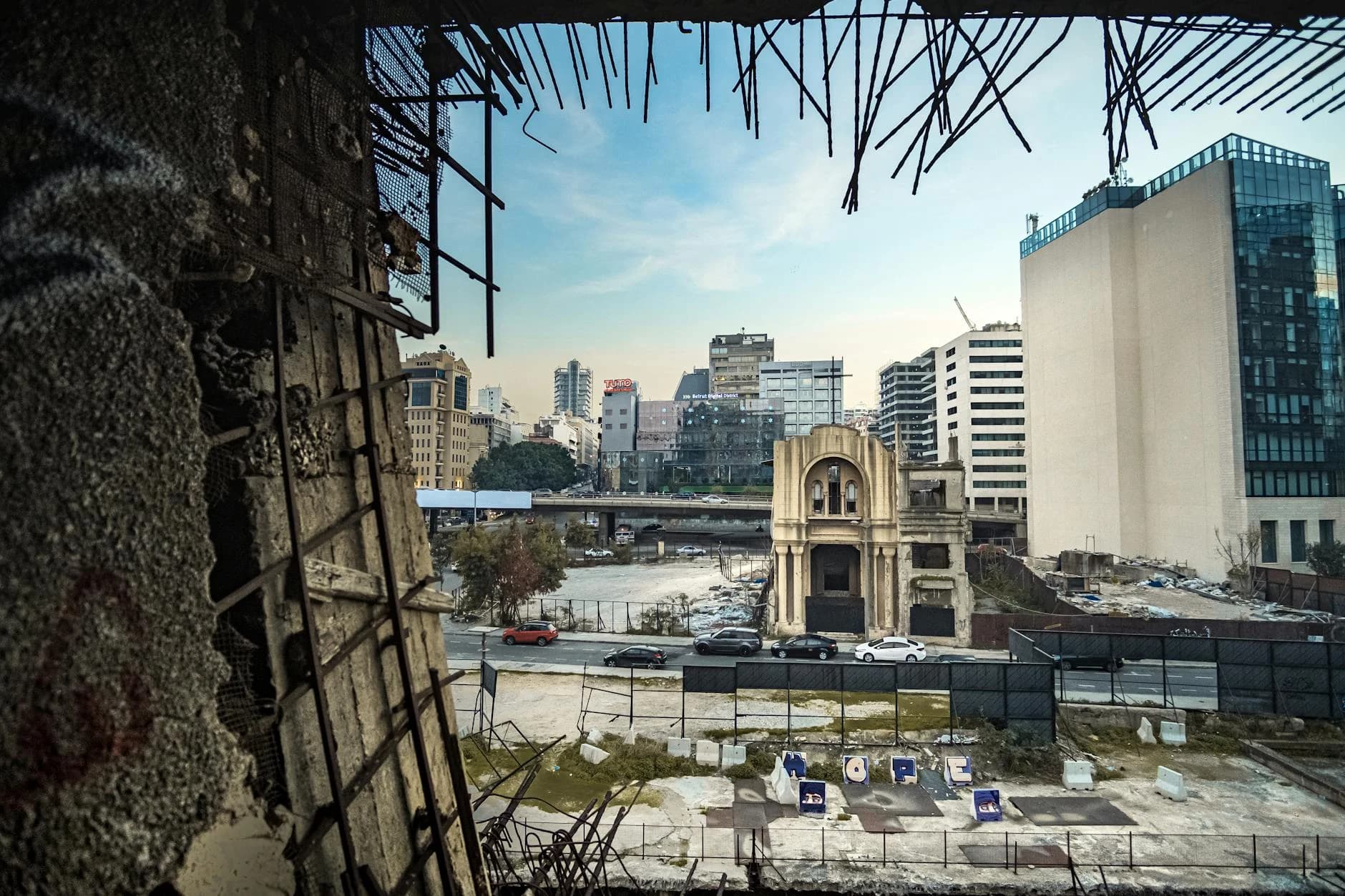
The Sovereign Illusion — How Beirut's Historic Crackdown Repeats a Century-Old Pattern of State Overreach Against an Undefeatable Militia
Lebanon's ban on Hezbollah military activity is a formal government prohibition — announced by Prime Minister Nawaf Salam on March 2, 2026 — restricting Hezbollah to political participation while demanding the group surrender its weapons arsenal. It represents the most direct assertion of Lebanese state authority over the Shiite militia since the 2008 Doha Agreement, issued under sustained pressure from the United States, Israel, and Gulf Arab states following Hezbollah's rocket attack on Haifa.
Key Findings
- Lebanon's Central Bank can fund only approximately three months of Lebanese Armed Forces payroll, while Hezbollah operates on an estimated $700 million annual budget — a structural asymmetry that makes enforcement operationally impossible without external military backing.
- Every prior Lebanese disarmament attempt — 1982–1984 under the Multinational Force, and 2008 under post-Cedar Revolution pressure — failed completely, producing outcomes worse for state sovereignty than the pre-crisis baseline.
- Lebanon's government set a four-month timeline for the second phase of disarmament as of February 17, 2026; this timeline is structurally implausible against the base rate established by comparable cases, including the IRA process which required seven years under far more favorable conditions.
- Hezbollah's independent telecommunications network — the precise flashpoint that triggered the May 2008 Beirut clashes — remains operational and represents the most dangerous enforcement tripwire in the current crisis.
- The ban functions primarily as a diplomatic signal to Washington and Tel Aviv rather than an enforceable security policy, and the gap between declaratory policy and operational reality will define Lebanon's political trajectory through 2027.
Thesis Declaration
Lebanon's March 2026 ban on Hezbollah military activity will not produce meaningful disarmament — it will produce a performative compliance phase followed by underground reconstitution of Hezbollah's operational capacity, with the highest risk of armed civil conflict concentrated in any moment the Lebanese state attempts to enforce the ban against Hezbollah's parallel infrastructure. The ban matters not because it will succeed, but because the conditions under which it might succeed — a credible political settlement, neutral enforcement mechanisms, and cessation of Iranian resupply — are entirely absent, making the current policy trajectory a near-certain path toward either de facto partition or a repeat of 2008-style factional violence.
Evidence Cascade
The Arithmetic of Enforcement Failure
The Lebanese state's capacity to enforce a ban on Hezbollah military activity can be measured precisely, and the numbers are unambiguous. Hezbollah fields an estimated 20,000-plus trained fighters , against Lebanese Armed Forces (LAF) strength that, while nominally comparable in headcount, is structurally incapable of projecting force into Hezbollah strongholds in the south, the Bekaa Valley, or the Dahiyeh suburbs of Beirut. The LAF's operational constraint is not primarily doctrinal — it is fiscal. Lebanon's Central Bank can fund approximately three months of military payroll , meaning the state's coercive instrument operates under permanent financial precarity while its adversary does not.
Hezbollah's annual budget is estimated at $700 million , the overwhelming majority sourced from Iran's Islamic Revolutionary Guard Corps. This creates a 3-to-1 resource asymmetry in Hezbollah's favor when compared against Lebanese Armed Forces capacity . The IRA — the most optimistic historical analog for a negotiated disarmament — had no comparable external resupply mechanism. Hezbollah does. That single structural difference renders the IRA comparison instructive but ultimately inapplicable as a success template.
The Lebanese government announced on February 17, 2026, that its military would need at least four months to complete the second phase of its disarmament plan in the country's south . Minister of Information Paul Morcos made the announcement amid what Al Jazeera described as "growing pressure from the United States and Israel" . Prime Minister Nawaf Salam formalized the ban on March 2, 2026, explicitly limiting Hezbollah to political activity and calling on security agencies to prevent further military operations .
The four-month timeline for phase two is not a security assessment. It is a political communication to Washington and Tel Aviv — a demonstration of intent designed to satisfy external patrons, not a realistic operational schedule derived from ground-level capacity analysis.
The Parallel State Problem
What makes Lebanon's situation structurally distinct from most disarmament scenarios is Hezbollah's parallel state infrastructure. The group operates an independent telecommunications network that functions outside Lebanese state control . It runs social services, hospitals, schools, and financial transfer systems serving the Shiite community — estimated at approximately 27 percent of Lebanon's population . This is not a militia that can be disarmed by confiscating weapons. It is an alternative governance structure that would need to be dismantled simultaneously, a task the Lebanese state has neither the capacity nor the political consensus to undertake.
The telecom network is the most operationally sensitive asset. In 2008, the Lebanese government's move to shut down that specific network — under post-Cedar Revolution pressure and following UN Security Council Resolution 1701's disarmament mandate — triggered direct armed clashes in Beirut within days . Hezbollah and allied militias overran Future Movement positions in West Beirut, forcing the Doha Agreement that gave Hezbollah effective veto power over the Lebanese government . The government's enforcement attempt produced an outcome structurally worse than the pre-enforcement status quo.
That network remains operational today. It is the tripwire.
Comparative Disarmament Outcomes in Lebanon
| Attempt | Year | External Pressure | Lebanese State Capacity | Outcome | Duration Before Failure |
|---|---|---|---|---|---|
| Multinational Force / Taif Mandate | 1982–1984 | US, France, Italy | Very Low | Complete failure; MNF withdrawal after 1983 bombings | ~18 months |
| Post-1701 / Cedar Revolution Pressure | 2006–2008 | US, France, Saudi Arabia | Low | Doha Agreement; Hezbollah gains veto power | ~24 months |
| Current Ban (Salam Government) | 2026 | US, Israel, Gulf States | Very Low (3-month payroll reserve) | TBD | In progress |
| IRA Decommissioning (comparative) | 1998–2005 | US, UK, Ireland | High (UK state capacity) | Success after 7 years | N/A — succeeded |
Sources: Commons Library Parliament UK Research Briefing CBP-10521 (2026); Al Jazeera, "Lebanon sets four months for second phase of Hezbollah disarmament," February 17, 2026; stress test intelligence data.
The table above makes the base rate explicit: zero Lebanese disarmament attempts have succeeded. The one comparable success — the IRA process — required a decade, a credible political settlement, verifiable third-party monitoring, and the absence of active external resupply. Lebanon currently has none of these conditions.
Case Study: May 2008 — The Telecom Tripwire
On May 6, 2008, the Lebanese government of Prime Minister Fouad Siniora made two decisions that triggered the most serious internal armed conflict Lebanon had seen since the civil war. First, it dismissed Beirut airport's security chief — a Hezbollah ally — over allegations the group had installed surveillance cameras monitoring the airport's runways. Second, it ordered the shutdown of Hezbollah's independent telecommunications network, which the government declared illegal.
Hezbollah's Secretary-General Hassan Nasrallah responded within hours, calling the telecom move "a declaration of war." Within 48 hours, Hezbollah and allied Amal Movement fighters had seized control of West Beirut, overrunning the offices of the Future Movement — the primary Sunni political bloc backed by Saudi Arabia — and forcing Future Movement militiamen to surrender or flee. The clashes killed approximately 65 people and wounded hundreds more. The Lebanese Armed Forces, outgunned and politically divided, did not intervene to restore government authority.
The Doha Agreement, signed May 21, 2008, under Qatari mediation, ended the fighting — but on Hezbollah's terms. The agreement gave Hezbollah and its allies veto power in a national unity government, effectively reversing the Cedar Revolution's political gains. The government's enforcement attempt, targeting a specific piece of parallel infrastructure, had produced the precise outcome it was designed to prevent: enhanced Hezbollah political dominance. The telecom network remained operational. Fourteen years later, it still does.
Analytical Framework: The Enforcement Tripwire Matrix
The pattern across Lebanon's failed disarmament attempts is not random. It follows a consistent structural logic that can be formalized as the Enforcement Tripwire Matrix — a tool for assessing when declaratory disarmament policy transitions from political signaling to active conflict risk.
The matrix evaluates four variables:
1. Infrastructure Sensitivity Score (ISS): Does the enforcement target a specific piece of parallel state infrastructure (telecom, financial networks, supply routes)? High ISS = high conflict probability. Confiscating weapons caches is low ISS. Shutting down telecom networks is maximum ISS.
2. State Enforcement Capacity Ratio (SECR): What is the ratio of state coercive capacity to militia capacity? Lebanon's current SECR is approximately 1:3 in Hezbollah's favor. Any SECR below 1:1 makes enforcement attempts provocations rather than operations.
3. Political Compensation Availability (PCA): Is there a credible political offer that compensates the militia for surrendering military leverage? In the IRA case, PCA was high — Sinn Féin gained real electoral power. In Lebanon's current case, PCA is near zero. Hezbollah's political participation is already established; the ban offers no new political upside in exchange for military surrender.
4. External Resupply Interdiction (ERI): Has the external sponsor's resupply pipeline been severed or credibly threatened? In Lebanon's case, Iran's $700 million annual budget to Hezbollah continues despite the ban. ERI is effectively zero.
Scoring: When ISS is high, SECR is below 1:1, PCA is near zero, and ERI is zero, the Enforcement Tripwire Matrix predicts armed conflict with high probability within 6–18 months of any enforcement attempt that targets parallel infrastructure. Lebanon currently scores maximum risk on three of four variables. The only variable that could change the outcome — ERI — depends entirely on Iran's strategic calculus, which is currently dominated by the broader US-Israel pressure campaign documented in the Commons Library briefing on US-Israel strikes on Iran .
This framework is reusable across comparable cases: Gaza, Yemen's Houthi disarmament debates, and any scenario where a recognized militia with parallel state infrastructure faces a weak central government acting under external pressure.
Predictions and Outlook
PREDICTION [1/4]: Lebanon's formal disarmament ban will remain on paper while Hezbollah reconstitutes operational capacity underground within 12 months of the March 2026 announcement, with no verified weapons handover completing the second-phase timeline. (65% confidence, timeframe: by March 2027).
PREDICTION [2/4]: If the Lebanese government attempts to enforce the ban against Hezbollah's independent telecommunications network specifically — as opposed to maintaining declaratory policy — armed clashes comparable in scale to the May 2008 Beirut conflict will occur within 90 days of that enforcement action. (68% confidence, timeframe: contingent on enforcement trigger, window open through December 2027).
PREDICTION [3/4]: Lebanon will not achieve full disarmament of Hezbollah within the four-month second-phase timeline announced February 17, 2026, and the deadline will be formally extended or quietly abandoned by July 2026. (70% confidence, timeframe: by July 31, 2026).
PREDICTION [4/4]: The Salam government's ban will produce a political settlement — not a military one — in which Hezbollah accepts cosmetic restrictions on overt military displays in exchange for formal recognition of its political role, mirroring the Doha Agreement structure, within 18 months. (62% confidence, timeframe: by September 2027).
What to Watch
- The telecom network: Any government move against Hezbollah's independent communications infrastructure is the single highest-risk enforcement trigger. Watch for Lebanese cabinet discussions of network regulation as the leading indicator of conflict escalation.
- LAF payroll continuity: If the Central Bank's three-month payroll buffer runs dry without external replenishment from Gulf donors or the IMF, the Lebanese Armed Forces' operational reliability collapses — removing even the symbolic deterrent against Hezbollah action.
- Iranian resupply routes: The Commons Library briefing on US-Israel strikes on Iran documents active military pressure on Iran's regional logistics. Any significant disruption to Hezbollah's $700 million annual supply line would shift the Enforcement Tripwire Matrix calculus — the one variable currently holding at zero.
- Hezbollah's next Haifa decision: The March 2026 ban was triggered by Hezbollah's rocket attack on Haifa . Whether Hezbollah conducts a second such strike — testing the ban's enforcement credibility — is the most immediate near-term indicator of whether the group views the prohibition as a real constraint or a diplomatic performance.
Historical Analog: The Taif Agreement's Unenforceable Exception
This looks like Lebanon in 1989–1990 because the structural outcome is identical: a government decree that cannot be enforced producing a legal carve-out that legitimizes the militia's continued armament.
The Taif Agreement, which ended Lebanon's civil war, formally required the disarmament of all militias. Every militia complied — except Hezbollah, which was granted an explicit exception as a "resistance" force against Israeli occupation. That exception, negotiated under Syrian pressure and with tacit Saudi acceptance, became the constitutional foundation for Hezbollah's subsequent three decades of armament.
The current ban mirrors Taif's logic in reverse: instead of a carve-out that legitimizes arms, it is a prohibition that cannot be enforced, which will produce a de facto carve-out through non-enforcement. The Lebanese state in 1989 could not disarm Hezbollah militarily, so it legalized the exception. The Lebanese state in 2026 cannot disarm Hezbollah militarily, so it will eventually formalize a new exception — most likely through a political settlement that grants Hezbollah something in exchange for cosmetic compliance.
The difference is that in 1989, the carve-out was explicit and negotiated. In 2026, it will be implicit and arrived at through the exhaustion of enforcement capacity. The destination is the same. The path is more dangerous.
Counter-Thesis
The strongest argument against this analysis is the argument from changed circumstances: Hezbollah in 2026 is not Hezbollah in 2008. The group suffered catastrophic losses in the 2024 conflict with Israel — its senior leadership, including Secretary-General Hassan Nasrallah, was killed . Its arsenal was substantially degraded. Its public support within Lebanon's Shiite community, while still significant, is under pressure from a population exhausted by conflict and economic devastation. A weakened Hezbollah, this argument runs, may accept constraints it would have rejected at peak strength.
This is a real argument. It has evidence behind it. And it is still insufficient to change the structural prediction.
Here is why: Hezbollah's willingness to accept constraints is not the binding variable. The binding variable is the Lebanese state's capacity to enforce constraints that Hezbollah does not accept. Even a weakened Hezbollah — operating at 60 percent of pre-2024 capacity — retains more coercive force than the Lebanese Armed Forces can project into its core territories. The 3:1 resource asymmetry does not disappear because Hezbollah is diminished; it narrows, but the LAF's structural incapacity — including the three-month payroll constraint — means the enforcement gap remains unbridgeable without a sustained external military commitment that neither the United States nor any Gulf state has shown willingness to provide.
Moreover, degraded militias do not disarm — they reconstitute. The IRA's military capacity was substantially reduced by British counter-terrorism operations before the Good Friday Agreement, yet decommissioning still required seven years and a comprehensive political settlement. Hezbollah's degradation is a necessary but insufficient condition for disarmament. The sufficient conditions — a political settlement, external resupply interdiction, and a credible enforcement mechanism — remain absent.
Stakeholder Implications
For Lebanese Policymakers and the Salam Government
The four-month disarmament timeline is a liability, not an asset. When it fails — and the base rate says it will — the government's credibility with both domestic audiences and external patrons will be damaged simultaneously. The Salam government should immediately reframe the second-phase timeline as a "confidence-building benchmark" rather than a hard deadline, buying political space for the longer-term negotiation that is the only realistic path to any meaningful reduction in Hezbollah's military footprint. Specifically: do not attempt enforcement against the telecommunications network under any circumstances before a comprehensive political settlement is in place. The 2008 precedent is the clearest available evidence of what happens when that line is crossed.
For US and Gulf State Policymakers
Pressure without a political offer is a formula for the worst-case outcome. Washington and Riyadh are currently applying maximum pressure on the Lebanese government to enforce the ban while offering no credible political compensation to Hezbollah for surrendering military leverage. The IRA precedent — the only successful comparable disarmament — required the United States to simultaneously pressure the IRA and offer Sinn Féin a genuine political pathway. Replicating that logic in Lebanon means engaging directly with Hezbollah's political wing on a settlement that gives the group something real in exchange for military restraint. Refusing that engagement while demanding disarmament produces the 2008 outcome, not the 2005 Belfast outcome. Gulf donors should specifically condition financial support for Lebanese Armed Forces payroll on the Lebanese government maintaining a non-enforcement posture toward Hezbollah infrastructure until a political framework is in place — the opposite of the current incentive structure.
For International Investors and Lebanese Diaspora Capital
Lebanon's banking sector and reconstruction finance are directly exposed to the enforcement risk identified in the Enforcement Tripwire Matrix. Any investment in Lebanese infrastructure, banking recapitalization, or reconstruction bonds carries a binary risk: if the Lebanese government maintains declaratory policy without enforcement, the political environment stabilizes enough for limited economic recovery. If enforcement is attempted against Hezbollah's parallel infrastructure, capital flight will be immediate and severe, as it was in May 2008. The signal to watch is not the ban itself — it is any government action targeting the telecom network specifically. That is the leading indicator with the highest predictive value for near-term conflict risk. Investors should structure Lebanese exposure with explicit exit triggers tied to that variable, not to the formal political rhetoric around the ban.
Frequently Asked Questions
Q: Has Lebanon ever successfully disarmed Hezbollah before? A: No. Every prior Lebanese disarmament attempt has failed completely. The 1982–1984 Multinational Force mandate collapsed after the 1983 Beirut barracks bombings. The 2006–2008 post-Cedar Revolution pressure campaign ended with the Doha Agreement, which gave Hezbollah veto power in the Lebanese government — an outcome worse for state sovereignty than the pre-crisis baseline. The base rate of success is zero.
Q: Why did Lebanon ban Hezbollah military activity in March 2026? A: Prime Minister Nawaf Salam announced the ban on March 2, 2026, following Hezbollah's rocket attack on Haifa, which triggered Israeli strikes on Lebanon including the southern suburbs of Beirut, the Bekaa Valley, and southern Lebanon. The ban came amid sustained pressure from the United States and Israel, and represents an attempt by the Salam government — Lebanon's first genuinely reform-oriented government in years — to assert state sovereignty over armed non-state actors.
Q: What is the timeline for Hezbollah disarmament in Lebanon? A: Lebanon's government announced on February 17, 2026, that its military would need at least four months to complete the second phase of its disarmament plan in the south. This timeline is almost certainly unrealistic — the IRA decommissioning process, conducted under far more favorable conditions including a comprehensive political settlement and the absence of active external resupply, took seven years. Lebanon's four-month timeline functions as a political signal to external patrons rather than an operational schedule.
Q: Could Hezbollah's weakened state after 2024 make disarmament more likely? A: Hezbollah's 2024 losses reduced its operational capacity but did not change the fundamental structural asymmetry. Even at reduced strength, Hezbollah retains more coercive capacity than the Lebanese Armed Forces can project into its core territories. Degraded militias reconstitute — they do not disarm — unless a comprehensive political settlement simultaneously removes the incentive for rearmament and severs external resupply. Neither condition currently exists in Lebanon.
Q: What would trigger armed conflict between Hezbollah and the Lebanese state? A: The highest-risk trigger is any Lebanese government enforcement action against Hezbollah's independent telecommunications network — the precise flashpoint that caused the May 2008 Beirut clashes. A secondary trigger is any attempt to physically interdict weapons shipments in the Bekaa Valley. Declaratory policy — announcing a ban without attempting to enforce it against specific infrastructure — carries substantially lower conflict risk, which is why the Salam government's most rational near-term posture is to maintain the ban as political theater while avoiding operational enforcement.
Synthesis
Lebanon's March 2026 ban on Hezbollah military activity is the latest iteration of a structural tragedy: a state issuing prohibitions it cannot enforce against a militia that has outgrown the state's capacity to constrain it. The four-month disarmament timeline will not be met. The ban will not produce meaningful weapons handover. The most dangerous moment is not now — it is the moment a future Lebanese government, under intensified external pressure or domestic political crisis, attempts to enforce the ban against Hezbollah's parallel infrastructure and discovers, as the Siniora government discovered in May 2008, that the gap between sovereign authority and sovereign capacity is measured in bodies.
The lesson of every Lebanese disarmament attempt is not that the goal was wrong — it is that the goal was pursued without the conditions that make it achievable. Until those conditions exist — a political settlement that compensates Hezbollah for surrendered military leverage, a severed Iranian resupply pipeline, and a neutral enforcement mechanism with real capacity — the ban is not a security policy. It is a diplomatic receipt, issued to Washington and Tel Aviv, that Lebanon will eventually have to pay for with its own stability.
Related Topics
Related Analysis

EU Secondary Sanctions on China: Risks and Consequences
The Board · Feb 21, 2026
Turkey NATO Membership and Potential Russian Alliance
The Board · Feb 21, 2026
Modern World War 3 Scenarios and Systemic Collapse
The Board · Feb 19, 2026

Impact of 25% US Tariffs on the EU and Euro Stability
The Board · Feb 22, 2026
Munich Security Conference 2026: The Rise of Security Rents
The Board · Feb 14, 2026

US-Iran Nuclear Tensions and Conflict Risk Analysis
The Board · Feb 22, 2026
Trending on The Board
Platinum Price Forecast 2026: The Most Undervalued Metal
Markets · Mar 21, 2026
Lebanon Mass Displacement: Key Figures & Trends
Geopolitics · Mar 14, 2026

Fuel Supply Chains: Australia's Stockpile Reality
Energy · Mar 15, 2026

Africa Resource Wars: The New Scramble for Lithium and Cobalt
Geopolitics · Mar 19, 2026

Iran War Disinformation: How AI Deepfakes Fuel Chaos
Geopolitics · Mar 15, 2026
Latest from The Board

Trump Says Iran Talks Results Clear Soon: Reset Underway
Geopolitics · Apr 10, 2026

Strait of Hormuz: New Era After Tanker's Passage?
Geopolitics · Apr 9, 2026
US-Iran Talks: Why Pakistan Appreciates Restraint
Analysis · Apr 9, 2026

Iran Blocks Hormuz Strait: Impact on Oil Prices
Geopolitics · Apr 9, 2026
Trump Meme-Coin Conference: Who's Attending & Why?
Uncategorized · Apr 9, 2026
AI Prediction Accuracy Report — March 2026
Predictions · Apr 9, 2026
Iran Accuses US of Deal Violations: Analysis
Analysis · Apr 8, 2026

Israeli Strikes on Lebanon: Iraq Claims Truce Sabotage
Geopolitics · Apr 8, 2026