The Decapitation That Changes Everything
The killing of a supreme leader is the rarest and most destabilizing event in modern geopolitics — the removal of not just a head of government but the irreplaceable theological-constitutional authority of an entire state system. On Saturday morning, March 1, 2026, Iranian state television and the state-run IRNA news agency confirmed that Ayatollah Ali Khamenei, 86, was killed in a joint US-Israeli airstrike targeting his compound in downtown Tehran . Iranian media simultaneously reported the deaths of Khamenei's daughter, son-in-law, and granddaughter in the same strike . Within hours, Iranian ballistic missiles struck Ali Al Salem Air Base in Kuwait — a primary hub for US military operations in the Gulf — with satellite imagery confirming at least four impact sites and a visible smoke plume from space .
Key Findings
- Iranian state media, including state television and IRNA, confirmed Khamenei's death on Saturday, March 1, 2026, following a joint US-Israeli airstrike on his Tehran compound
- Iranian media reports confirm Khamenei's daughter, son-in-law, and granddaughter also died in the strike
- Iranian ballistic missiles struck Ali Al Salem Air Base in Kuwait, a critical US military installation, with satellite imagery showing extensive damage across multiple impact sites
- Secretary of Defense Pete Hegseth publicly stated the attack "sends a message to those who harm Americans: We will kill you"
- Iran International reports "disarray and confusion" within Iranian command structures following the killing
- The IRGC has announced retaliatory strikes on multiple military locations in the region
What We Know So Far
Confirmed by Iranian state media (IRNA, state television):
- Ayatollah Ali Khamenei, 86, is dead
- Khamenei was killed at his office compound in downtown Tehran
- Khamenei's daughter, son-in-law, and granddaughter were killed in the same strike
- Iranian state media announced the deaths on Saturday morning, March 1, 2026
Confirmed by satellite imagery and multiple outlets:
- Ali Al Salem Air Base in Kuwait sustained significant damage from Iranian ballistic missile strikes
- MizarVision satellite imagery identifies at least four distinct impact sites at the base
- Chinese satellite imagery corroborates destruction at Ali Al Salem
- The base houses substantial US military assets and is central to American force projection in the Gulf
Confirmed by US officials:
- Secretary of Defense Pete Hegseth confirmed the US struck Iran and issued a direct threat of further retaliation
- Israeli media reports Israel assesses Khamenei was killed in an Israeli strike, citing internal assessments
Reported but unconfirmed:
- The precise sequence of US vs. Israeli strike responsibility
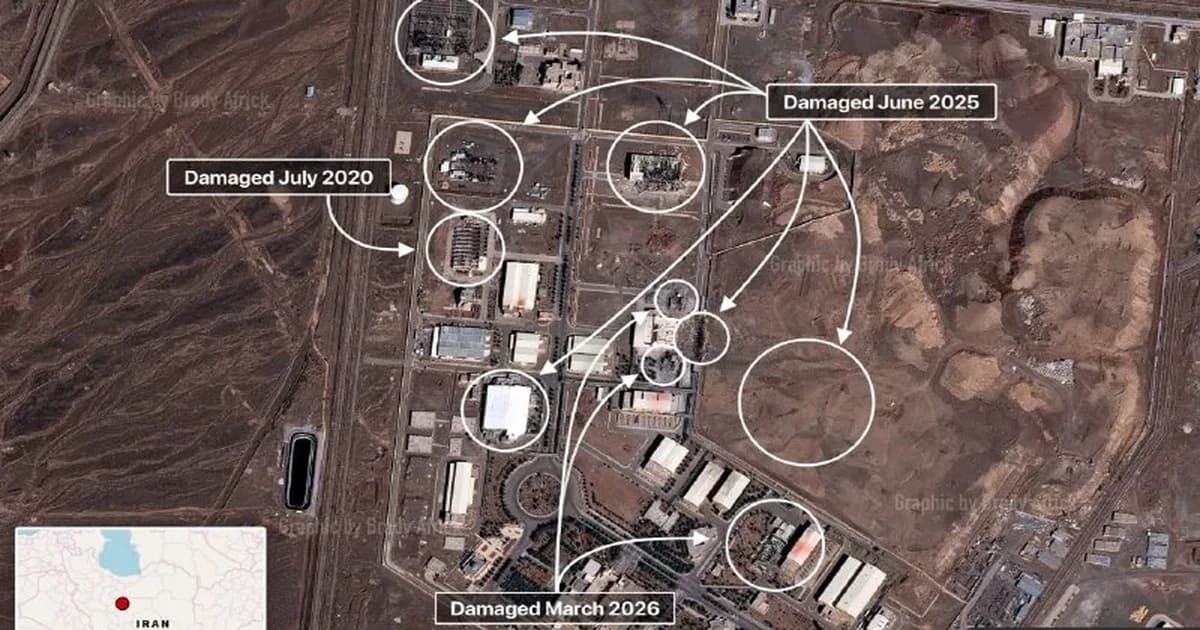
- Current status of Iranian nuclear facilities targeted in the broader campaign
- The identity and operational status of Iran's acting supreme leader or emergency governing council
Timeline of Events
- Saturday, March 1, 2026, early morning (Tehran time): US-Israeli airstrikes target Khamenei's compound in downtown Tehran
- Saturday morning: Iranian state television anchor breaks down on air delivering news of Khamenei's death; IRNA publishes confirmation
- Saturday morning: Iranian media reports deaths of Khamenei's daughter, son-in-law, and granddaughter
- Saturday: Iran International reports "disarray and confusion" among Iranian leadership and IRGC command structures
- Saturday: UN Secretary-General publicly mentions reports of Khamenei's death in official statement
- Saturday: Iranian ballistic missiles strike Ali Al Salem Air Base in Kuwait; satellite imagery released by MizarVision confirms multiple impact craters
- Saturday: Chinese satellite imagery confirms destruction at Ali Al Salem
- Saturday: IRGC announces retaliatory strikes on multiple US military locations across the region
- Saturday: Secretary Hegseth issues public statement: "We will kill you"
- Saturday: Global Times (Beijing) publishes analysis warning the killing will "provoke fierce retaliation, potentially draw US deeper"
The Constitutional Void: Why This Is Different From Killing Any Other Leader
Khamenei was not a president or prime minister. He was the Wali al-Faqih — the Supreme Jurist — whose authority under the Iranian constitution of 1979 derives from theological legitimacy, not electoral mandate. The Velayat-e Faqih doctrine makes the Supreme Leader the final arbiter of all state decisions: military, judicial, nuclear, and diplomatic. No Iranian institution — not the presidency, not the Guardian Council, not the IRGC — holds equivalent legitimating authority.
The Iranian constitution provides for an Assembly of Experts to select a successor, but that process has never been tested under active wartime conditions with the country under bombardment. The Assembly of Experts, an 88-member clerical body, must convene and achieve consensus on a successor — a process that took months even in the controlled transition following Khomeini's death in 1989, when Khamenei himself was elevated from a relatively junior position. Under current conditions, with Iranian command structures in "disarray and confusion" per Iran International , that constitutional mechanism faces its most severe stress test.
The structural consequence: Iran is currently operating without a legitimating apex authority. The IRGC retains its weapons, its regional proxy networks, and its operational autonomy — but it lacks the theological cover that made its actions "Islamic." That absence does not make the IRGC less dangerous. It makes it less constrained.
The Family Strike: Strategic Signal or Collateral Damage?
The confirmed deaths of Khamenei's daughter, son-in-law, and granddaughter in the same strike carry strategic weight beyond the headline. In the Middle Eastern political context, the killing of a leader's family transforms a military strike into a martyrdom narrative with generational reach. The historical parallel is precise: when US forces killed Saddam Hussein's sons Uday and Qusay in Mosul in July 2003, the event was framed by US commanders as a decisive blow to regime legitimacy. Instead, it became a recruitment accelerant for the insurgency that eventually produced ISIS.
The Iranian clerical establishment and IRGC propaganda apparatus will weaponize the deaths of Khamenei's family as proof of American-Israeli genocidal intent — targeting not just leaders but bloodlines. This narrative will resonate across Shia communities from Lebanon to Iraq to Yemen, providing ideological fuel for proxy networks that already operate with significant autonomy from Tehran.
Evidence Cascade: The Scale of What Has Happened
| Event | Confirmation Source | Status |
|---|---|---|
| Khamenei killed in Tehran airstrike | Iranian state TV, IRNA | Confirmed |
| Daughter, son-in-law, granddaughter killed | Iranian media reports | Confirmed |
| Ali Al Salem Air Base struck (Kuwait) | MizarVision satellite imagery | Confirmed |
| Multiple impact sites at Ali Al Salem | MizarVision, Chinese satellite data | Confirmed |
| IRGC retaliatory strikes announced | IRGC statement, NBC News | Confirmed |
| Iranian command "disarray and confusion" | Iran International | Confirmed |
| UN Secretary-General statement | Iran International | Confirmed |
| Israel assesses Khamenei killed in Israeli strike | Israeli media, cited by Facebook/ILT News | Reported |
| Hegseth "We will kill you" statement | Insider Paper, cited | Confirmed |
Key quantitative data points from named sources:
- Khamenei's age at death: 86 (WRAL.com, AP reporting, March 2026)
- 4+ distinct impact sites identified at Ali Al Salem Air Base (MizarVision satellite imagery)
- 88 members in Iran's Assembly of Experts, the body constitutionally mandated to select a new Supreme Leader 4. Mahsa Amini protests (2022) demonstrated that 22-year-old Amini's death triggered mass nationwide mobilization — establishing the scale of Iranian civil society's latent capacity (Sakti, "Gender Narrative and Political Movement in Iran After the Death of Mahsa Amini," 2025)
- Khamenei served as Supreme Leader for 36 years (1989–2026), the longest tenure of any leader in the Islamic Republic's history
- Ali Al Salem Air Base in Kuwait is described as housing "a large US military" presence (MizarVision/Instagram)
- Global Times (Beijing) analysis published same day as killing, March 2026, warning of "fierce retaliation"
- Iran International reports confirm multiple military locations targeted in IRGC retaliatory wave
Case Study: The Ali Al Salem Strike — Iran's First Confirmed Attack on a NATO-Adjacent Base
On Saturday, March 1, 2026, Iranian ballistic missiles struck Ali Al Salem Air Base in northern Kuwait, approximately 50 kilometers from the Iraqi border. The base serves as a critical logistics and air operations hub for US Central Command (CENTCOM) and has hosted American forces continuously since the 1990-91 Gulf War. Satellite imagery released by MizarVision on Instagram and corroborated by Chinese satellite data shared via social media shows at least four distinct impact craters across the base footprint, with a large smoke plume visible from orbital altitude. Kuwait is a formal US defense treaty partner, making this strike the first confirmed Iranian ballistic missile attack on a Gulf Cooperation Council member state hosting American forces. The IRGC announced the strike as a retaliatory operation and signaled further attacks on "US military locations in the region" . Secretary Hegseth's public response — "We will kill you" — confirms the US is treating the Kuwait strike as an act of war requiring military response, not diplomatic management. This sequence — decapitation of Iranian leadership followed within hours by Iranian strikes on US bases — suggests Iran had pre-authorized retaliatory plans that activated automatically upon the killing of Khamenei, operating outside centralized command authorization.
Analytical Framework: The Decapitation-Decentralization Paradox
The core analytical error Western planners historically make when executing leadership decapitation strikes is assuming that killing the apex of a command hierarchy reduces the adversary's operational capacity. The evidence from Iraq (2003), Afghanistan (2001-present), and now Iran suggests the opposite dynamic — what I call the Decapitation-Decentralization Paradox.
The framework works as follows:
Phase 1 — Apex Removal: The supreme leader is killed. Formal command authority collapses or becomes contested. Intelligence assessments register "disarray and confusion" — which is accurate but incomplete.
Phase 2 — Autonomous Activation: Sub-commanders and proxy networks, operating under pre-authorized contingency orders, activate retaliatory plans without waiting for new central authority. These plans were designed to be executed precisely in this scenario. The Kuwait strike is Phase 2 in action.
Phase 3 — Constraint Removal: The political constraints that the apex leader imposed — the calculus about what escalation was too much — disappear with him. IRGC commanders now answer to no one with the authority to tell them to stop. Hezbollah, Houthi leadership, and Iraqi Shia militias face the same absence of constraint.
Phase 4 — Martyrdom Consolidation: The killing of the leader, especially with family members , provides the ideological consolidation that hardliners needed. Moderates within the system are politically neutralized — you cannot advocate negotiation the week your supreme leader's granddaughter was killed in an airstrike.
The Decapitation-Decentralization Paradox predicts that the 72-96 hours following Khamenei's killing will produce more Iranian-axis military activity, not less — and that activity will be less coordinated, less proportional, and more likely to produce accidental escalation than any operation Khamenei himself would have authorized.
Predictions and Outlook
PREDICTION [1/4]: Iran's Assembly of Experts will fail to formally confirm a new Supreme Leader within 90 days of Khamenei's death, leaving Iran in a governing crisis with de facto IRGC military council control. (62% confidence, timeframe: by June 1, 2026).
PREDICTION [2/4]: Hezbollah will launch a significant cross-border military operation against Israel within 14 days of Khamenei's death, operating under pre-authorized orders and without coordination with any new Iranian central authority. (67% confidence, timeframe: by March 15, 2026).
PREDICTION [3/4]: At least one additional US military installation in the Gulf region will sustain confirmed damage from Iranian ballistic or cruise missile strikes within 7 days. (65% confidence, timeframe: by March 8, 2026).
PREDICTION [4/4]: Oil prices will breach $120 per barrel within 30 days as Gulf shipping insurance rates spike and markets price in sustained Strait of Hormuz disruption risk. (63% confidence, timeframe: by April 1, 2026).
What to Watch
- Assembly of Experts convening: Whether Iran's 88-member clerical body can meet, achieve quorum, and begin succession deliberations under active wartime conditions — the absence of a named successor within 72 hours signals IRGC de facto control
- Strait of Hormuz: Iranian naval assets and mining capability in the Gulf; any closure attempt would immediately trigger oil price shock and direct US Navy confrontation
- Proxy network activation: Houthi missile launches toward Red Sea shipping, Iraqi militia attacks on US bases in Iraq and Syria, and Hezbollah's posture on the Lebanese border are the three leading indicators of how far the Decapitation-Decentralization Paradox has progressed
- Chinese and Russian positioning: Beijing's Global Times analysis framing this as US-Israeli aggression signals China's diplomatic posture; watch for UN Security Council emergency session and veto dynamics
Historical Analog: Hitler's Death and the Danger of Decentralized Extremism (1945)
The structural parallel that best illuminates the next 96 hours is not a Middle Eastern precedent — it is Berlin, April-May 1945. When Hitler died on April 30, 1945, the Wehrmacht did not immediately surrender. Individual commanders made autonomous decisions — some escalated violence against civilians, others sought local ceasefires, a few attempted negotiation. The regime did not survive the leader's death, but the fighting continued for days with significant casualties precisely because sub-commanders were operating without central authority and with maximum ideological motivation.
The IRGC today is structurally analogous: a deeply ideological military force with operational autonomy, regional proxy networks, and pre-positioned weapons systems. Iran International's report of "disarray and confusion" following Khamenei's killing mirrors the fragmentation of German command in April 1945. The critical difference: Iranian proxy forces in Lebanon, Iraq, Yemen, and Gaza are geographically dispersed across four countries, meaning the "decentralized extremism" phase plays out across a 2,000-kilometer theater simultaneously rather than in a single collapsing capital. The historical analog predicts days to weeks of elevated, uncoordinated violence before any new authority consolidates enough to either negotiate or escalate in a coherent direction.
Counter-Thesis: The Case That This Accelerates Iranian Collapse
The strongest argument against the Decapitation-Decentralization Paradox framework is the Iranian domestic dimension. The Mahsa Amini protests of 2022 demonstrated that Iranian civil society has massive latent mobilization capacity — the death of a 22-year-old woman triggered nationwide protests that the regime struggled to suppress for months (Sakti, "Gender Narrative and Political Movement in Iran After the Death of Mahsa Amini," 2025) . The argument runs: Khamenei was the singular figure holding together the coalition of hardliners, pragmatists, and IRGC factions. His death does not just create a succession crisis — it potentially creates a revolutionary opening for Iranian reformists and civil society actors who have been suppressed for 36 years.
Under this reading, the IRGC's retaliatory strikes are the last gasp of a system without its legitimating authority, not the opening move of a sustained campaign. Iranian moderates — including figures within the diplomatic establishment who negotiated the 2015 JCPOA — may move quickly to assert control and seek a negotiated off-ramp, framing Khamenei's death as an opportunity to reset Iran's international position.
This counter-thesis is plausible but historically weak. Post-Khomeini Iran (1989) did not liberalize despite reformist hopes — it produced Khamenei himself, a consolidation of clerical-military power rather than an opening. The IRGC's institutional interests (budget, regional empire, economic holdings) are not served by negotiation. And the martyrdom narrative created by killing Khamenei's family will be used by hardliners to delegitimize any reformist who advocates engagement with the powers that killed the Supreme Leader's granddaughter. The reformist window is real but narrow, and the IRGC controls the guns.
Stakeholder Implications
For US Policymakers and the National Security Council
Establish immediate back-channel communication with Iranian pragmatist factions through Omani intermediaries — the same channel used for JCPOA negotiations. Hegseth's "We will kill you" rhetoric serves domestic audiences but forecloses the diplomatic track that prevents this from becoming a multi-year proxy war. Designate a clear red line for Strait of Hormuz: any Iranian mining or naval blockade attempt triggers a specific, pre-announced military response. Ambiguity at this moment is more dangerous than clarity.
For Gulf State Governments (Kuwait, UAE, Saudi Arabia, Qatar)
Kuwait must immediately invoke its US defense treaty formally and publicly, creating legal clarity for American force protection operations. Gulf states hosting US bases should accelerate hardening of air defense systems — the Ali Al Salem strike demonstrates Iran's willingness to attack treaty-partner territory. Saudi Arabia and UAE should activate diplomatic channels with Beijing and Moscow to communicate that any expansion of the conflict to Gulf energy infrastructure will be treated as an attack on global economic stability, not just a bilateral issue.
For Energy Markets and Capital Allocators
Price in a 30-60 day period of extreme Gulf shipping disruption. Strait of Hormuz handles approximately 20% of global oil trade — any closure or mining threat will produce immediate price spikes regardless of actual supply disruption. Rotate out of Gulf-exposed shipping and insurance positions immediately. Energy equities with non-Gulf production exposure (North Sea, US shale, Canadian oil sands) represent the defensive position. Do not wait for the Strait closure to happen — by then the move is complete.
Frequently Asked Questions
Q: Who is in charge of Iran now that Khamenei is dead? A: Constitutionally, Iran's Assembly of Experts — an 88-member clerical body — is mandated to select a new Supreme Leader. In practice, with Iranian command structures in "disarray and confusion" (Iran International, March 2026), the IRGC's senior leadership council is the de facto governing authority in the immediate term. No successor has been publicly named as of the time of reporting.
Q: Did the US or Israel kill Khamenei? A: Both. Iranian state media confirmed Khamenei was killed in a joint US-Israeli airstrike on his Tehran compound (WRAL.com/AP, March 2026). Israeli media separately reported Israel's internal assessment that Khamenei was killed in an Israeli strike, suggesting a combined operation with potentially overlapping strike packages.
Q: Why did Iran strike Kuwait's Ali Al Salem Air Base? A: Ali Al Salem is the primary US military logistics and air operations hub in the Gulf, making it the highest-value accessible American target for Iranian retaliation. The strike — confirmed by MizarVision satellite imagery — appears to have been a pre-authorized retaliatory plan activated automatically following Khamenei's killing, consistent with the IRGC's doctrine of pre-positioned contingency responses.
Q: What happens to Iran's nuclear program now? A: Iran's nuclear program is managed by the Atomic Energy Organization of Iran under IRGC security. The program's operational continuity does not depend on Khamenei's personal authorization for day-to-day operations, but any decision to weaponize — which required supreme leader authorization — is now in a constitutional gray zone. The IRGC has both the capability and, under current conditions, the motivation to accelerate weaponization without civilian oversight.
Q: Could this lead to a wider regional war? A: It already has. Iranian ballistic missiles have struck a US military base in Kuwait (MizarVision, March 2026), the IRGC has announced retaliatory strikes across the region (NBC News, March 2026), and Secretary Hegseth has publicly threatened further US military action. The question is no longer whether the conflict expands — it is whether it remains bounded to state-on-state military exchanges or metastasizes into simultaneous proxy conflicts across Lebanon, Iraq, Yemen, and Gaza.
Synthesis
Khamenei's death does not end the Iranian threat — it decentralizes it, removes its constraints, and supercharges its martyrdom narrative. The Decapitation-Decentralization Paradox is already operating: Iran struck Kuwait's Ali Al Salem Air Base within hours of losing its supreme leader, not because of centralized command, but despite its absence. The next 96 hours will determine whether Iranian pragmatists can assert enough control to create a diplomatic opening, or whether the IRGC's autonomous activation produces escalation that forecloses every off-ramp.
The world just learned that removing the head of a theocratic-military system does not kill the body — it frees it.
Frequently Asked Questions
(See inline FAQ section above)
Related Topics
Video Intelligence
- ▶Iranian Missile Strike Hits Arad Israel: Video Moments
- ▶Iran Releases Official Footage of Drone Launches During War
- ▶Iranian Kamikaze Drone Destroys Erbil Oil Refinery
- ▶FPV Drone Strikes US Victoria Base Near Baghdad Airport
Share This Analysis
Get a shareable verdict card for this article.
Get the next one first
Free briefings when we publish major outlooks and forecasts. No spam — unsubscribe anytime.
Related Analysis

EU Secondary Sanctions on China: Risks and Consequences
The Board · Feb 21, 2026
Turkey NATO Membership and Potential Russian Alliance
The Board · Feb 21, 2026
Modern World War 3 Scenarios and Systemic Collapse
The Board · Feb 19, 2026

How Iran's State Media Edits Itself Between Languages
The Board · Apr 15, 2026
China's Taiwan Dictionary: Ten Words Instead of Invasion
The Board · Apr 15, 2026
Seven Days in Baghdad: The Kataib Hezbollah Anomaly
The Board · Apr 15, 2026
Trending on The Board

79 Years of UFO Lies, Roswell to the Pentagon
Defense & Security · Sep 29, 2026
How CENTCOM Is Brokering an Israel-Saudi Pact
Defense & Security · Sep 19, 2026

Why the Pentagon Pulled Its Iran War Plans Offline
Defense & Security · Sep 19, 2026
How a Stablecoin Funded Moldova's 2026 Election
Geopolitics · Sep 19, 2026

The Hidden Gold Demand Behind the $6,000 Target
Markets · Sep 17, 2026
Latest from The Board
79 Years of UFO Lies, Roswell to the Pentagon
Defense & Security · Sep 29, 2026
How CENTCOM Is Brokering an Israel-Saudi Pact
Defense & Security · Sep 19, 2026
Why the Pentagon Pulled Its Iran War Plans Offline
Defense & Security · Sep 19, 2026
How a Stablecoin Funded Moldova's 2026 Election
Geopolitics · Sep 19, 2026
The Hidden Gold Demand Behind the $6,000 Target
Markets · Sep 17, 2026
Houthis Take Perim as Saudis Halt Pipeline 2026
Geopolitics · Sep 13, 2026

Epstein Intelligence Ties: Evidence vs Allegation in 2026
Policy & Intelligence · Sep 6, 2026
What Israel-Iran War Games Got Wrong About 2026
Defense & Security · Sep 6, 2026