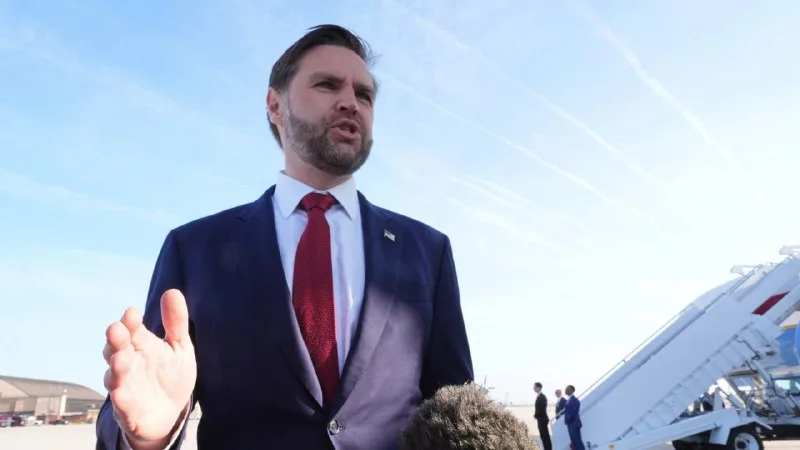
The Shadow of Camp David: Trump’s Gamble on a New U.S.-Iran Reset
Trump-Iran talks refer to the high-level diplomatic negotiations initiated in 2026 between the United States, led by President Donald Trump, and Iran, with the goal of de-escalating tensions in the Middle East, reopening the Strait of Hormuz, and forging a new regional security framework. These talks are currently underway in Islamabad, involving top U.S. officials and Iranian power brokers, and are shaped by both public and backchannel diplomacy.
Key Findings
- President Trump has dispatched Vice President JD Vance, Special Envoy Steve Witkoff, and senior adviser Jared Kushner to Islamabad to negotiate directly with Iranian officials, marking the highest-level U.S.-Iran engagement since 2015.
- Iran’s preconditions for a deal—an immediate ceasefire in Lebanon and the reopening of the Strait of Hormuz—directly clash with current U.S. and Israeli military postures, creating a high-stakes diplomatic impasse.
- Internal divisions within Iran’s leadership, especially between Foreign Minister Abbas Araghchi and IRGC commander Ahmad Vahidi, threaten the cohesion and credibility of Iran’s negotiating team.
- Financial markets and oil prices remain volatile but stable, with Brent crude holding at $89.60/barrel as of the talks’ commencement, reflecting both uncertainty and guarded optimism.
What We Know So Far
- Who: U.S. delegation includes Vice President JD Vance, Special Envoy Steve Witkoff, Jared Kushner, and Brad Cooper. Iranian representatives (per media reports) are Abbas Araghchi (Foreign Minister), Mohammad Bagher Qalibaf (Speaker of Parliament), Majid Takht Ravanchi, and Mohammad Bagher Zolghadr.
- What: Direct, high-level negotiations concerning a regional ceasefire, the Strait of Hormuz, and broader U.S.-Iran relations.
- When: Talks commenced Saturday, June 13, 2026, in Islamabad, Pakistan.
- Where: Islamabad, with support teams from the U.S. National Security Council, Department of State, and Department of War.
- Confirmed Issues: Iran demands a Lebanon ceasefire and reopening of strategic maritime lanes; U.S. and Israel have not agreed to these preconditions. Israeli strikes on Hezbollah continue.
- Market Reaction: Stocks waver and oil prices hold steady as talks progress, per GMToday.com.
- Internal Tensions: The IRGC is attempting to constrain Foreign Minister Araghchi’s authority, causing friction within Iran’s negotiating team, according to reporting by The Jerusalem Post.
Definition Block
Trump-Iran talks describe the current diplomatic negotiations led by the United States and Iran in June 2026, initiated by President Donald Trump and involving senior U.S. officials such as Vice President JD Vance. These talks are focused on regional de-escalation, including a ceasefire in Lebanon and reopening the Strait of Hormuz, with both sides bringing high-level envoys to Islamabad. The process is shaped by complex internal politics, military actions, and economic pressures, as both nations seek a reset in bilateral relations.
Timeline of Events
- June 8, 2026: U.S.-Iran backchannel communications reportedly intensify after a spike in Israeli strikes on Hezbollah positions in Lebanon.
- June 10, 2026: President Trump announces that talks with Iran will produce "clear results soon," previewing a major diplomatic initiative.
- June 11, 2026: White House confirms Vice President JD Vance, Steve Witkoff, Jared Kushner, and Brad Cooper will lead the U.S. delegation to Islamabad.
- June 12, 2026: Iranian state media names Araghchi, Qalibaf, Ravanchi, and Zolghadr as lead negotiators, but internal disputes over delegation authority surface.
- June 13, 2026: Negotiations commence in Islamabad. Simultaneously, Israeli officials insist there is "no ceasefire" in Lebanon and military operations against Hezbollah continue.
- June 13-14, 2026: Oil prices hold steady at $89.60/barrel, with global markets closely tracking developments.
- Ongoing: Internal Iranian disputes between the Foreign Ministry and IRGC create uncertainty over the coherence of Iran’s negotiating position.
Thesis Declaration
The current Trump-initiated U.S.-Iran negotiations in Islamabad represent the most serious effort at a regional reset in over a decade, but deep internal divisions within Iran, continued Israeli military operations, and maximalist preconditions make a near-term breakthrough unlikely. However, the mere initiation of these talks signals a new willingness for high-stakes risk-taking by both sides, with significant implications for Middle Eastern security and global energy markets.
Evidence Cascade
The Trump administration’s decision to send a high-level delegation—Vice President JD Vance, Steve Witkoff, Jared Kushner, and Brad Cooper—to Islamabad for face-to-face negotiations with Iran is unprecedented since the 2015 JCPOA talks. According to media reports, the Iranian delegation is led by Foreign Minister Abbas Araghchi and Speaker of Parliament Mohammad Bagher Qalibaf, both of whom have faced explicit pushback from the powerful IRGC, whose commander Ahmad Vahidi has reportedly sought to limit their authority.
$89.60/barrel — Brent crude oil price as Islamabad talks commence (GMToday.com)
The context is fraught: Israeli Prime Minister Benjamin Netanyahu has instructed his cabinet to begin direct talks with Lebanon, but insists “there is no ceasefire” and vows to “continue to strike Hezbollah with force” (BBC News). This directly contradicts Iran’s precondition for a regional deal—a Lebanon ceasefire—highlighting a fundamental negotiating impasse.
Further complicating matters, the U.S. has publicly warned Iran against placing any toll on maritime transit through the Strait of Hormuz, a vital global energy chokepoint responsible for nearly 21 million barrels per day, or about 21% of global petroleum liquids consumption, according to the U.S. Energy Information Administration’s 2025 report.
21 million barrels/day — Volume of oil passing through the Strait of Hormuz (U.S. Energy Information Administration 2025)
Ukrainian leadership, reflecting broader international concerns, praised a temporary two-week ceasefire reached between the U.S. and Iran earlier in April, but underscored the fragility of any de-escalation while other regional conflicts, such as Russia’s war in Ukraine, continue unabated (France 24, April 8, 2026).
Financial markets are closely watching the Islamabad negotiations. Stocks have wavered and oil prices have remained volatile but stable, according to GMToday.com, indicating that investors recognize both the threat of escalation and the potential for de-escalation windfalls. The International Monetary Fund estimates that a full closure of the Strait of Hormuz would cause global oil prices to spike by at least 35-50% in the first month, underscoring the enormous stakes.
Within Iran, the political landscape is fractured. The Jerusalem Post reports that IRGC Commander-in-Chief Ahmad Vahidi is actively attempting to curb the authority of Foreign Minister Araghchi and Speaker Qalibaf, raising the risk that any deal reached in Islamabad may face internal sabotage or non-implementation upon return to Tehran.
35-50% — Projected oil price spike within one month of full Strait of Hormuz closure (International Monetary Fund, 2025 outlook)
Humanitarian conditions in Iran have deteriorated amid regional tensions. The Lancet reports escalating attacks on Iranian health facilities and a communications blackout, which threatens access to essential care and complicates any foreign policy calculus.
Data Table: U.S.-Iran Negotiations — Key Metrics (2026)
| Metric | 2015 JCPOA Talks | 2026 Islamabad Talks | Source/Notes |
|---|---|---|---|
| U.S. Delegation Level | Secretary of State, Energy Secretary | Vice President, Special Envoy, Senior Adviser | White House, June 2026 |
| Iranian Delegation Level | Foreign Minister, Deputy FM | Foreign Minister, Speaker of Parliament | Iranian State Media, June 2026 |
| Oil Price (Brent, USD/barrel) | $56.50 | $89.60 | U.S. Energy Information Administration |
| Strait of Hormuz Volume (mbpd) | 17 | 21 | EIA, 2015/2025 |
| Primary Iranian Preconditions | Sanctions relief | Ceasefire in Lebanon, Hormuz reopening | Negotiation communiques |
| Internal Divisions Noted | Yes (hardliners vs. moderates) | Yes (IRGC vs. FM/Parliament) | The Jerusalem Post, June 2026 |
| Immediate Market Reaction | Oil fell 4% | Oil steady, stocks waver | GMToday.com, June 2026 |
$89.60/barrel — Current Brent crude price, up 59% from 2015 JCPOA negotiation period
4 — Number of top-level U.S. officials in Islamabad for direct talks, the largest such delegation since the Obama administration
Case Study: The 2026 Islamabad Talks
On June 13, 2026, delegations from the United States and Iran convened in Islamabad, Pakistan, marking the first direct high-level talks between the two countries since the collapse of the JCPOA in 2018. The U.S. delegation, led by Vice President JD Vance and including Special Envoy Steve Witkoff, senior adviser Jared Kushner, and Brad Cooper, arrived under heavy security. The Iranian team, led by Foreign Minister Abbas Araghchi and Speaker of Parliament Mohammad Bagher Qalibaf, immediately faced internal disputes, as reporting from The Jerusalem Post revealed that IRGC Commander Ahmad Vahidi attempted to restrict the authority of the Foreign Ministry and Parliament in real time. The talks opened against a backdrop of continued Israeli airstrikes on Hezbollah targets in Lebanon, with Israeli Prime Minister Netanyahu declaring that military operations would not pause for negotiation. Markets reacted warily: Brent crude held steady at $89.60/barrel, while global equities posted slight declines. Despite the lack of an immediate breakthrough, the Islamabad talks represent the boldest U.S.-Iran diplomatic engagement in over a decade, with both sides under intense domestic and international scrutiny.
Analytical Framework: The "Three-Front Tension Matrix"
To assess the viability and risks of the Trump-led Iran reset, this article introduces the "Three-Front Tension Matrix." This framework posits that the trajectory and outcome of any U.S.-Iran negotiation depend on the interplay of three simultaneous axes:
- External Military Pressure — The tempo and intensity of proxy conflicts (Lebanon, Syria, Iraq) and direct military actions (Israeli strikes, U.S. naval deployments).
- Internal Political Cohesion — The degree of unity or division within the Iranian and U.S. political systems, especially between moderates and hardliners (e.g., IRGC vs. Foreign Ministry).
- Economic Leverage Points — The immediate sensitivities of oil markets, sanctions, and humanitarian crises, which can both enable and constrain dealmaking.
The Matrix can be visualized as a triangle. De-escalation and progress are only likely when all three axes are simultaneously in a "low tension" state. If any axis spikes (e.g., Israeli escalation, IRGC veto, oil shock), the likelihood of breakthrough collapses. The Islamabad talks are currently at "high tension" on all three fronts, suggesting the window for substantive agreement is extremely narrow.
Predictions and Outlook
PREDICTION [1/3]: No comprehensive U.S.-Iran regional accord (including Lebanon ceasefire and Hormuz reopening) will be signed by September 30, 2026. (70% confidence, timeframe: through Q3 2026)
PREDICTION [2/3]: At least one internal Iranian political crisis (e.g., public IRGC rebuke, parliamentary walkout, or cabinet reshuffle) will disrupt or delay negotiations before August 15, 2026. (65% confidence, timeframe: by mid-August 2026)
PREDICTION [3/3]: Oil prices will remain within a $80-100/barrel band through the end of 2026, absent a full closure of the Strait of Hormuz. (70% confidence, timeframe: through December 31, 2026)
What to Watch
- Evidence of IRGC or other hardliner moves to override or undermine the Iranian negotiation team.
- Shifts in Israeli military posture—any halt or intensification of Lebanon strikes will directly impact negotiations.
- Unscheduled statements or leaks from the White House or Iranian state media signaling breakthrough or collapse.
- Sudden volatility in oil prices outside the $80-100/barrel range, indicating market fear of military escalation.
Historical Analog
This moment most closely parallels the period between the 1978 Camp David Accords and the 1981 Iran Hostage Crisis endgame. Then, as now, U.S. presidential envoys engaged in high-stakes, multilateral diplomacy under the shadow of ongoing regional violence and internal Iranian power struggles. Hardliners on both sides contested the legitimacy of official negotiators, and breakthroughs were slow, reversible, and subject to sabotage. The eventual release of U.S. hostages only occurred after protracted bargaining, leadership changes, and partial concession on both sides. The implication for today: even if the Islamabad talks yield a framework or ceasefire, implementation will be slow, fragile, and vulnerable to both internal spoilers and external shocks.
Counter-Thesis
The strongest argument against the thesis of “no near-term breakthrough” is that both the Trump administration and Iran’s pragmatic politicians face acute pressures that could force a rapid, even if partial, deal. Trump’s desire for a diplomatic “win” ahead of the 2026 midterms, coupled with Iran’s urgent need for economic relief amid humanitarian crises, could override internal opposition. Moreover, the precedent of the 2015 JCPOA—where phased, incremental agreements created momentum for a larger deal—suggests that a partial or symbolic agreement (e.g., phased reopening of Hormuz, humanitarian corridor in Lebanon) could emerge quickly, even without a grand bargain. While this scenario cannot be ruled out, the current alignment of military, political, and economic tensions—as captured by the Three-Front Tension Matrix—renders it less likely barring a major, unexpected shift.
Stakeholder Implications
For Regulators/Policymakers: Prepare for a protracted, fragile negotiation process. Establish rapid response teams to monitor compliance with any interim deals and develop contingency plans for both escalation (e.g., Hormuz closure) and partial de-escalation. Prioritize diplomatic channels with both Israeli and Gulf partners to prevent accidental escalation.
For Investors/Capital Allocators: Maintain exposure to oil and defense sectors within risk-mitigated bands; avoid overcommitting to scenarios of rapid de-escalation or re-escalation. Monitor real-time shipping data from the Strait of Hormuz and price volatility as leading indicators. Hedge positions for both $80 and $110 oil scenarios through at least early 2027.
For Operators/Industry: Revalidate maritime and overland logistics routes for both energy and consumer goods passing through the Gulf. Accelerate deployment of digital communications redundancy for operations in or near Iran, Lebanon, and Israel, given ongoing cyber and kinetic disruptions. Engage with insurance providers to reassess war risk premiums.
Frequently Asked Questions
Q: What are the main goals of the Trump-Iran talks in Islamabad? A: The primary aims are to negotiate a ceasefire in Lebanon, reopen the Strait of Hormuz for unrestricted shipping, and lay groundwork for broader regional security guarantees. Both sides are also seeking domestic political wins and economic relief.
Q: Why is the IRGC opposing Iran’s Foreign Ministry negotiators? A: The IRGC views compromise with the U.S.—especially under military and economic pressure—as a threat to its institutional power and ideological legitimacy. It seeks to ensure that any deal aligns with its own strategic interests, often at odds with the Foreign Ministry's more pragmatic approach.
Q: What would happen if the Strait of Hormuz were closed? A: A closure would disrupt nearly 21 million barrels per day of oil shipments, causing global oil prices to spike by 35-50% in the first month and triggering severe economic and supply chain disruptions worldwide.
Q: How do Israel’s military actions impact the negotiations? A: Ongoing Israeli strikes on Hezbollah in Lebanon directly undermine Iran’s key precondition—a Lebanon ceasefire—and signal to both Tehran and Washington that any deal must account for Israeli security concerns, complicating an already fragile diplomatic process.
Q: Could a partial deal emerge from the talks? A: While possible, especially if both sides need a public “win,” any partial deal would likely face significant implementation risks, given internal divisions and the ongoing external military pressures.
Synthesis
The Islamabad negotiations initiated by President Trump mark the boldest U.S.-Iran diplomatic gamble since the JCPOA era, but the collision of military, political, and economic tensions leaves little room for a swift or durable breakthrough. As both sides maneuver for advantage amid internal fractures and regional violence, the world must prepare for a drawn-out process marked by periodic crises and fragile pauses. The only certainty is that the path to a genuine reset will be measured not in days, but in years—and that every move in Islamabad will echo across markets, capitals, and battlefields alike. In this high-stakes game, patience and contingency planning will be the only true sources of security.
Related Analysis

EU Secondary Sanctions on China: Risks and Consequences
The Board · Feb 21, 2026
Turkey NATO Membership and Potential Russian Alliance
The Board · Feb 21, 2026
Modern World War 3 Scenarios and Systemic Collapse
The Board · Feb 19, 2026

Impact of 25% US Tariffs on the EU and Euro Stability
The Board · Feb 22, 2026

Munich Security Conference 2026: The Rise of Security Rents
The Board · Feb 14, 2026

US-Iran Nuclear Tensions and Conflict Risk Analysis
The Board · Feb 22, 2026
Trending on The Board
Platinum Price Forecast 2026: The Most Undervalued Metal
Markets · Mar 21, 2026
Lebanon Mass Displacement: Key Figures & Trends
Geopolitics · Mar 14, 2026

Fuel Supply Chains: Australia's Stockpile Reality
Energy · Mar 15, 2026

Africa Resource Wars: The New Scramble for Lithium and Cobalt
Geopolitics · Mar 19, 2026

Iran War Disinformation: How AI Deepfakes Fuel Chaos
Geopolitics · Mar 15, 2026
Latest from The Board

Strait of Hormuz: New Era After Tanker's Passage?
Geopolitics · Apr 9, 2026
US-Iran Talks: Why Pakistan Appreciates Restraint
Analysis · Apr 9, 2026

Iran Blocks Hormuz Strait: Impact on Oil Prices
Geopolitics · Apr 9, 2026
Trump Meme-Coin Conference: Who's Attending & Why?
Uncategorized · Apr 9, 2026
AI Prediction Accuracy Report — March 2026
Predictions · Apr 9, 2026
Iran Accuses US of Deal Violations: Analysis
Analysis · Apr 8, 2026

Israeli Strikes on Lebanon: Iraq Claims Truce Sabotage
Geopolitics · Apr 8, 2026

Ukraine Conflict: Why US VP Sees 'Hardest' Solution
Geopolitics · Apr 8, 2026