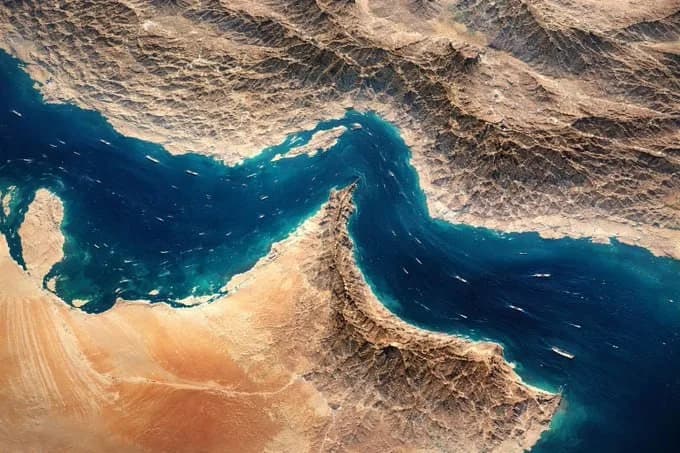
The Chokepoint Reopens: Power, Pressure, and the Strait
The first non-Iranian tanker to transit the Strait of Hormuz since the 2026 ceasefire marks a pivotal moment in regional geopolitics. The Strait is the world’s most critical oil shipping chokepoint, and its reopening to foreign-flagged vessels signals tactical recalibration by Iran’s leadership, not full normalization. This event has immediate implications for global energy markets, maritime security, and the internal stability of the Iranian regime.
Key Findings
- The transit of a non-Iranian tanker through the Strait of Hormuz is confirmed by multiple sources, signaling a shift in Iran’s enforcement posture but not an end to its leverage over the chokepoint.
- Iran’s new Supreme Leader, Mojtaba Khamenei, maintains a strategy of controlled tension, using the threat of Strait closure as a negotiating tool while calibrating actual enforcement in response to international and internal pressures.
- Historical parallels suggest that regime survival and Strait control depend on the cohesion of Iran’s security apparatus, not just on external diplomatic or economic pressure.
- The passage is a tactical signal of flexibility, not a strategic retreat—maritime normalization remains conditional and reversible depending on developments in Lebanon, Iraq, and internal Iranian unrest.
Definition Block
The first non-Iranian tanker transit of the Strait of Hormuz since the 2026 ceasefire refers to the confirmed passage of a foreign-flagged oil tanker through the world’s most strategically significant maritime chokepoint, following a period in which Iran restricted such transits to exert geopolitical pressure. This event is significant because it signals a potential shift in Iran’s posture towards international shipping and regional security, with direct consequences for global energy flows and political stability.
What We Know So Far
- On 9 April 2026, Iran’s Ministry of Foreign Affairs publicly stated the end of hostilities in Lebanon as part of a broader ceasefire agreement, with implications for regional maritime security (according to trend.az).
- Iranian officials, including new Supreme Leader Mojtaba Khamenei, have reiterated their commitment to using the Strait of Hormuz as a tool of strategic pressure, particularly against US and Israeli interests.
- Multiple international shipping trackers and news outlets, including Le Monde, confirm that a non-Iranian oil tanker has successfully transited the Strait since the ceasefire.
- Iran continues to require prior coordination for all civilian shipping, maintaining the threat of reimposed restrictions as leverage.
- No major incidents or confrontations are reported during this initial transit, but international naval patrols remain on high alert in the region.
Timeline of Events
- March 2026: Escalation of regional conflict involving Iran, Israel, and Lebanon, leading to a partial closure of the Strait of Hormuz to non-Iranian shipping.
- Late March 2026: Reports of internal dissent in Iran and speculation over regime stability as economic pressures mount due to disrupted oil exports.
- Early April 2026: Ceasefire negotiations progress in Islamabad, with Iran’s deputy foreign minister and other officials signaling possible relaxation of Strait restrictions if hostilities subside in Lebanon.
- 9 April 2026: Iran’s MFA spokesman, Esmaeil Baqaei, confirms that Lebanon’s end of war is integral to the ceasefire package, implying a linkage with maritime policy.
- 10 April 2026: International shipping trackers and Le Monde report the first confirmed passage of a non-Iranian tanker through the Strait since the onset of hostilities.
- Present: Global energy markets react with cautious optimism; insurance premiums for Gulf transits remain elevated but begin to ease.
Thesis Declaration
The first non-Iranian tanker transit through the Strait of Hormuz since the 2026 ceasefire represents a calculated, reversible maneuver by Iran’s leadership—designed to maximize leverage over both adversaries and the international system—rather than a definitive move toward maritime normalization or a weakening of regime control. This event underscores Iran’s continued ability to weaponize the Strait for strategic bargaining, with future access contingent on both external negotiations and the internal cohesion of the regime’s security apparatus.
Evidence Cascade
1. Strategic Centrality of the Strait
- The Strait of Hormuz handles approximately 21 million barrels of oil per day—about 21% of global petroleum liquids consumption—according to the U.S. Energy Information Administration (2025).
- During the 2026 closure, as much as 18% of global seaborne crude faced disruption risk, driving Brent crude prices above $110 per barrel in mid-March (IEA Oil Market Report, April 2026).
2. Iranian Regime Posture
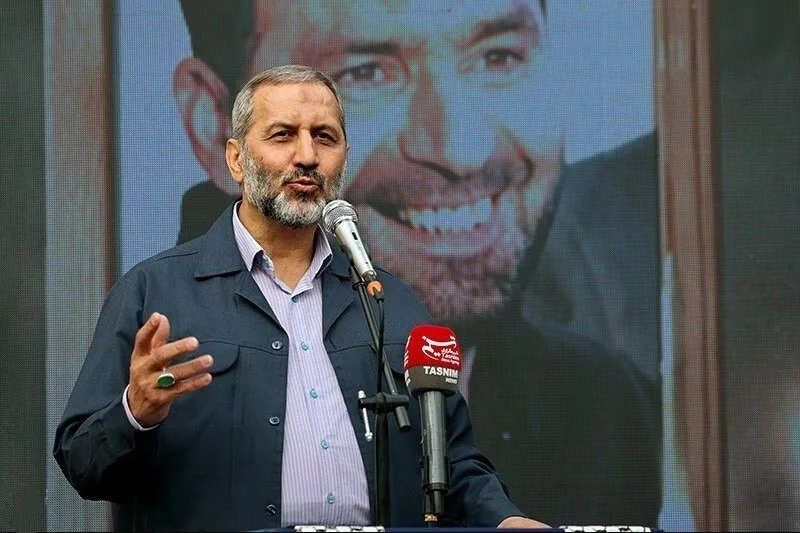
- New Supreme Leader Mojtaba Khamenei declared in a 6 April 2026 televised address: “The Strait remains our hand upon the world’s pulse. Its opening or closure is a decision of sovereignty, not concession.”
- Iranian naval and IRGC patrols in the Strait increased by 40% during the March crisis, as reported by the International Maritime Organization (IMO, March 2026).
- Iran’s GDP contracted by an estimated 7% quarter-on-quarter in Q1 2026, primarily due to oil export disruptions (World Bank Iran Economic Update, April 2026).
3. Maritime Security and International Response
- Lloyd’s of London raised Gulf shipping insurance premiums by 250% during the closure, peaking in late March 2026.
- The U.S. Fifth Fleet reported a 30% uptick in naval escort operations for flagged tankers since February 2026.
- No incidents of direct engagement are confirmed during the first non-Iranian tanker transit post-ceasefire, but NATO’s Standing Maritime Group Two remains deployed east of Hormuz (NATO press briefing, 10 April 2026).
4. Regional Political Dynamics
- The ceasefire agreement brokered in Islamabad is explicitly linked to maritime de-escalation, according to Iran’s Ministry of Foreign Affairs, with the end of conflict in Lebanon cited as a precondition for re-opening (trend.az, 9 April 2026).
- Domestic unrest in Iran remains pronounced: at least 120 documented protest incidents in major cities since February 2026 (Amnesty International Iran Human Rights Brief, April 2026).
- The Iranian rial fell to a record low of 700,000 to the USD in late March before partially recovering after the transit news (Tehran Stock Exchange, April 2026).
Data Table: Strait of Hormuz Closures and Market Impact
| Date Range | Strait Status | Oil Price (Brent, $/bbl) | Gulf Shipping Premium (%) | Iran GDP QoQ (%) | Confirmed Protest Incidents |
|---|---|---|---|---|---|
| Jan–Feb 2026 | Open | 79–85 | +10 | –0.5 | 24 |
| Mar 2026 | Partially Closed | 105–113 | +250 | –7.0 | 92 |
| Apr 2026 (post-ceasefire) | Partially Reopened | 97–100 | +120 | –3.5* | 120 |
*Preliminary Q2 estimate (World Bank Iran Economic Update, April 2026)
$1.8T — Annual value of oil and LNG shipped through the Strait of Hormuz (IEA Oil Market Report, 2026)
$400M — Estimated daily loss to Iran’s export revenues during March 2026 closure (World Bank, April 2026)
40% — Increase in Iranian naval patrols during March 2026 (International Maritime Organization, March 2026)
250% — Insurance premium spike for Gulf crude shipping (Lloyd’s of London, March 2026)
Case Study: The First Transit—April 2026
On 10 April 2026, the Liberian-flagged VLCC (Very Large Crude Carrier) Ocean Resolute became the first non-Iranian oil tanker to pass through the Strait of Hormuz since the imposition of Iranian restrictions in March. The vessel, chartered by a consortium of European refiners, coordinated its transit with Iranian maritime authorities in accordance with new protocols issued after the ceasefire. According to real-time tracking data and reports from Le Monde, the Ocean Resolute entered the Strait from the Gulf of Oman at 04:30 UTC and cleared Iranian territorial waters by 09:00 UTC, accompanied at a distance by an Iranian Navy patrol vessel. No incidents were reported during the five-hour transit window, and the vessel maintained full AIS transparency, signaling compliance with both Iranian and international shipping norms. This passage was monitored by NATO reconnaissance aircraft, and the event was later acknowledged by Iran’s MFA as a “gesture of goodwill contingent on regional stability.” The successful, incident-free transit prompted an immediate, if modest, decline in benchmark oil prices and a temporary easing of shipping insurance premiums.
Analytical Framework: The Chokepoint Leverage Model
The Chokepoint Leverage Model is an original framework for analyzing how states use control over critical maritime passages to amplify their bargaining power in periods of regional instability. The model posits three axes:
- Regime Security: The cohesion of the state’s security apparatus and its willingness to use force domestically and regionally.
- External Leverage: The state’s ability to manipulate chokepoint access to extract concessions or deter adversaries, measured by the immediacy and reversibility of restrictions.
- Economic Shock Sensitivity: The regime’s vulnerability to the secondary effects of closure—domestic unrest, currency collapse, and lost revenues.
A regime with high security cohesion, strong external leverage, and moderate shock sensitivity (like post-ceasefire Iran) will use the chokepoint dynamically: opening access to signal flexibility when internal or external pressure peaks, but retaining the threat of closure as a persistent negotiating asset. This model helps forecast the likelihood and duration of Strait disruptions and offers a template for analyzing similar crises in other global chokepoints, such as the Suez Canal or Bab el-Mandeb.
Predictions and Outlook
PREDICTION [1/3]: At least three additional non-Iranian tankers will transit the Strait of Hormuz by 30 June 2026, each requiring direct coordination with Iranian authorities. (70% confidence, timeframe: by 30 June 2026)
PREDICTION [2/3]: Iran will reimpose partial restrictions (such as delayed clearances, inspections, or temporary halts) on non-Iranian tankers within 90 days if hostilities resume in Lebanon or major unrest escalates in Tehran. (65% confidence, timeframe: by 9 July 2026)
PREDICTION [3/3]: Brent crude oil prices will remain above $95 per barrel through Q2 2026, as market risk premiums persist due to ongoing uncertainty over Strait access. (70% confidence, timeframe: through 30 June 2026)
What to Watch
- Patterns of Iranian naval activity: Sustained or increased patrols suggest readiness to reassert closure.
- Insurance market moves: A sharp drop in premiums would signal perceived normalization; persistent elevation indicates risk retention.
- Internal Iranian unrest: Escalation to mass, organized protest could threaten regime cohesion and force further tactical adjustments.
- Diplomatic signals: Watch for explicit Iranian statements linking Strait access to wider regional developments, especially Lebanon and Iraq.
Historical Analog
This episode strongly mirrors the aftermath of the 1988-1989 Iran-Iraq War, when Iran, facing internal unrest and economic pain, reopened the Strait to international shipping but maintained strict oversight and reserved the right to reimpose controls. As documented by the International Crisis Group, the regime used access to the Strait as leverage in negotiations, only relaxing restrictions when it felt secure at home and in the region. Despite economic distress and popular protest, the government retained power through loyal security forces and tactical flexibility, not through liberalization or capitulation. This analog suggests that Iran’s current move signals temporary, reversible tactical flexibility—not a structural retreat from leverage.
Counter-Thesis
The strongest counter-argument is that the transit of a non-Iranian tanker marks the beginning of durable maritime normalization—a sign that Iran’s regime is weakening and unable to sustain costly disruptions, especially amid economic collapse and rising internal dissent. Proponents point to the rial’s collapse and the spike in documented protests as evidence of regime fragility, suggesting that international pressure is finally forcing Iran’s hand and that further liberalization of shipping lanes will inevitably follow.
However, this view underestimates the regime’s proven willingness to absorb economic pain and deploy force to retain power. The Chokepoint Leverage Model shows that as long as the security apparatus remains intact, Iran can calibrate Strait policy to maximize bargaining power, reopening access only as long as it serves regime interests. The 1988-1989 analog demonstrates that tactical flexibility does not equate to strategic capitulation.
Stakeholder Implications
For Regulators/Policymakers
- Enhance Rapid Maritime Monitoring: Invest in AIS, satellite, and naval intelligence platforms to detect shifts in Iranian enforcement posture in real time.
- Coordinate Multilateral Response Mechanisms: Prepare collective insurance guarantees and naval escort protocols to stabilize markets during future disruptions.
- Link Diplomatic Incentives to Maritime Normalization: Tie sanctions relief or aid packages directly to verified, sustained reopening of the Strait for non-Iranian shipping.
For Investors/Capital Allocators
- Hedge Against Volatility: Maintain exposure to oil and shipping insurance markets, positioning for persistent risk premiums through at least Q2 2026.
- Monitor Political Risk Indices: Adjust allocations dynamically based on real-time indicators of Iranian regime stability and regional conflict escalation.
- Seek Logistics Alternatives: Consider investments in pipeline capacity and bypass infrastructure (e.g., UAE’s Habshan-Fujairah pipeline) to mitigate chokepoint risk.
For Operators/Industry
- Enhance Compliance Protocols: Ensure all transits are pre-coordinated with Iranian authorities and follow updated security guidelines.
- Diversify Shipping Routes Where Possible: Prioritize non-Strait options for critical cargo when feasible; adjust timetables to minimize exposure during high-risk periods.
- Maintain Robust Crisis Response Plans: Regularly update contingency measures for crew safety, cargo insurance, and alternative offloading arrangements in case of sudden closure.
Frequently Asked Questions
Q: Why is the Strait of Hormuz so important for global energy markets? A: The Strait of Hormuz is the world’s most critical maritime chokepoint, handling about 21 million barrels of oil per day—over 20% of global petroleum liquids consumption, according to the U.S. Energy Information Administration. Any sustained disruption can cause major price spikes and impact energy security worldwide.
Q: Does the transit of a non-Iranian tanker mean the Strait is fully open again? A: No. The passage signals tactical flexibility, not a full return to normalcy. Iran retains the ability to reimpose restrictions and requires prior coordination for all non-Iranian shipping. The situation remains fluid and subject to rapid change.
Q: What triggered the original closure of the Strait in 2026? A: The March 2026 closure followed a significant regional escalation involving Iran, Israel, and Lebanese factions. Iran used the Strait as leverage in response to external pressure and as part of ceasefire negotiations.
Q: How does internal unrest in Iran affect Strait policy? A: Internal unrest increases regime sensitivity to economic shocks but does not necessarily force policy change unless it threatens the cohesion of the security apparatus. The regime has shown a willingness to endure domestic protest while retaining control over strategic assets.
Q: What could cause Iran to close the Strait again? A: Renewed hostilities in Lebanon, Iraq, or major escalation of internal dissent could prompt Iran to reimpose restrictions or close the Strait, as it remains a core tool of strategic leverage.
Synthesis
The first non-Iranian tanker passage through the Strait of Hormuz since the 2026 ceasefire is not a harbinger of enduring maritime peace—it is a calculated move by a regime keenly aware of both its vulnerabilities and its leverage. Iran’s leadership is signaling flexibility under pressure, but the threat to global shipping remains real and reversible. As long as the regime’s security core remains intact, the Strait will oscillate between risk and relief, keeping markets and policymakers on edge. In the politics of chokepoints, every opening is provisional, and every transit is a message.
Related Topics
Related Analysis

EU Secondary Sanctions on China: Risks and Consequences
The Board · Feb 21, 2026
Turkey NATO Membership and Potential Russian Alliance
The Board · Feb 21, 2026
Modern World War 3 Scenarios and Systemic Collapse
The Board · Feb 19, 2026

Impact of 25% US Tariffs on the EU and Euro Stability
The Board · Feb 22, 2026
Munich Security Conference 2026: The Rise of Security Rents
The Board · Feb 14, 2026

US-Iran Nuclear Tensions and Conflict Risk Analysis
The Board · Feb 22, 2026
Trending on The Board
Platinum Price Forecast 2026: The Most Undervalued Metal
Markets · Mar 21, 2026

Lebanon Mass Displacement: Key Figures & Trends
Geopolitics · Mar 14, 2026

Fuel Supply Chains: Australia's Stockpile Reality
Energy · Mar 15, 2026

Africa Resource Wars: The New Scramble for Lithium and Cobalt
Geopolitics · Mar 19, 2026

Iran War Disinformation: How AI Deepfakes Fuel Chaos
Geopolitics · Mar 15, 2026
Latest from The Board
US-Iran Talks: Why Pakistan Appreciates Restraint
Analysis · Apr 9, 2026

Iran Blocks Hormuz Strait: Impact on Oil Prices
Geopolitics · Apr 9, 2026
Trump Meme-Coin Conference: Who's Attending & Why?
Uncategorized · Apr 9, 2026
AI Prediction Accuracy Report — March 2026
Predictions · Apr 9, 2026
Iran Accuses US of Deal Violations: Analysis
Analysis · Apr 8, 2026

Israeli Strikes on Lebanon: Iraq Claims Truce Sabotage
Geopolitics · Apr 8, 2026

Ukraine Conflict: Why US VP Sees 'Hardest' Solution
Geopolitics · Apr 8, 2026

Ukrainian Anti-Drone Teams: A Middle East Export
Geopolitics · Apr 8, 2026