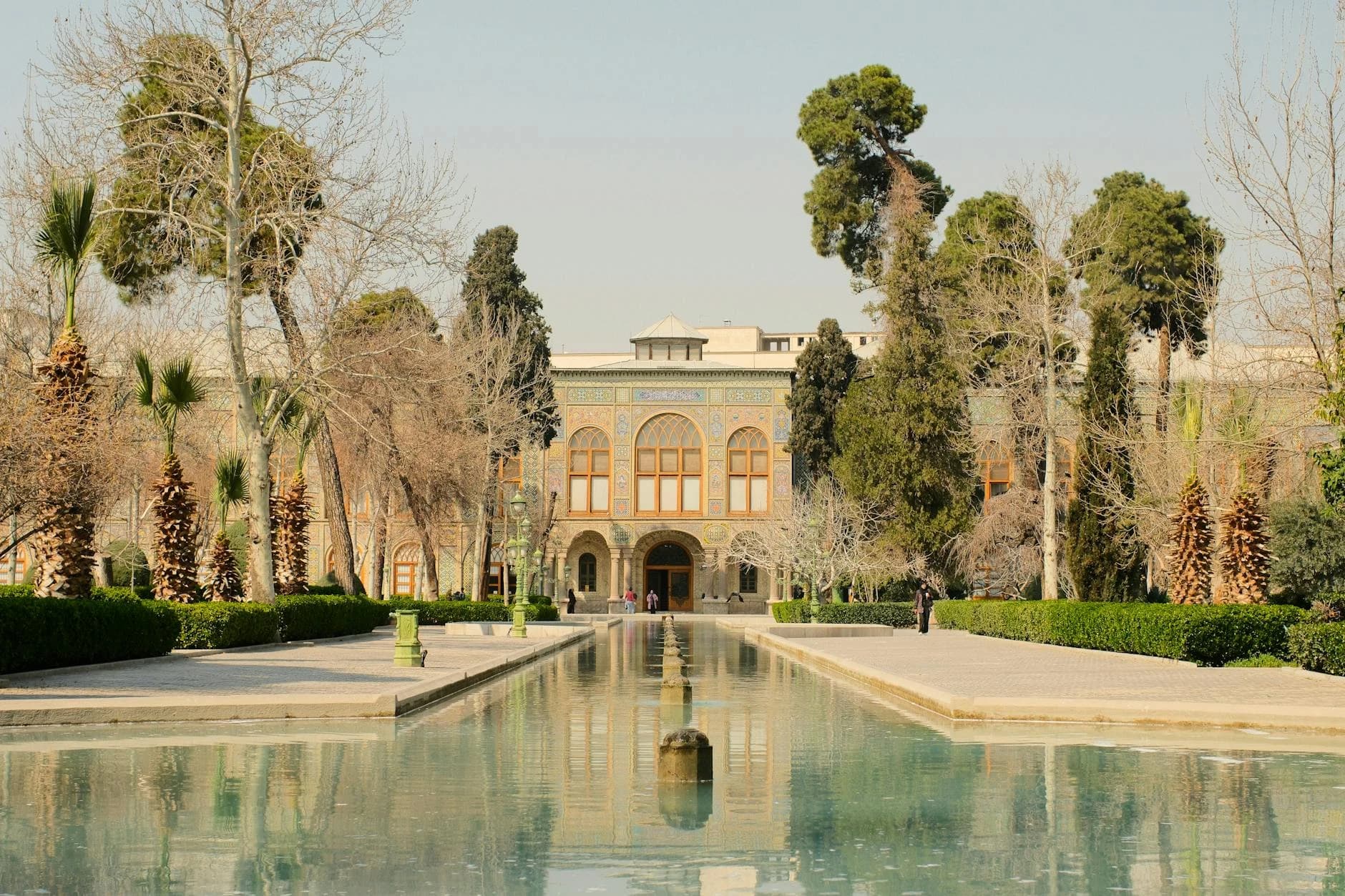
Tehran's strikes on Gulf neighbors have done more to normalize Israeli-Arab relations than decades of diplomacy — and there's no putting the genie back in the bottle.
Key Findings
- Iran's decision to strike civilian targets in Qatar, UAE, Saudi Arabia, and Bahrain has alienated every remaining regional ally — accelerating Gulf-Israeli normalization that was previously politically impossible
- The elimination of Supreme Leader Khamenei and the Israeli strike on the succession committee has created an irreversible leadership vacuum that will permanently weaken the Islamic Republic
- The US-Israel military partnership has reached unprecedented levels of joint warfare, repositioning Israel as America's top global ally
- A new economic corridor linking India, the Gulf states, and Israel is emerging as the successor to the Iran-dependent energy order
- Iran's proxies — Hezbollah, Houthis — are losing funding, legitimacy, and operational capability simultaneously
The Islamic Republic of Iran, as a regional power, is finished. Not because of a formal regime change — that may or may not come — but because the strategic architecture that sustained Iranian influence for four decades has collapsed in a matter of weeks. The implications stretch far beyond the Persian Gulf.
The Assumption That Died
For decades, the operating assumption among Western and Israeli strategists was simple: confrontation with Iran would be catastrophically expensive. Tehran's network of proxies — Hezbollah in Lebanon, the Houthis in Yemen, Shia militias across Iraq — combined with its ballistic missile program and threats to close the Strait of Hormuz created a deterrence framework built on fear.
The assumption was that Iran could "burn down the neighborhood" if provoked. The current conflict has proven that assumption was 100% wrong.
Iran simply does not possess the military capability to deliver on decades of threats. The Israeli Air Force established complete air superiority over Iranian skies within 24 hours. The vaunted missile arsenal proved insufficient. The proxy network, already degraded after years of Israeli operations in Syria and Lebanon, could not mount a coordinated defense.
The balance of risk has fundamentally shifted. The cost of inaction — allowing Iran to race toward nuclear capability while its conventional deterrent was exposed as hollow — exceeded the cost of confrontation.
Iran's Fatal Error: Striking the Neighbors
Of all Iran's strategic miscalculations, one stands above the rest: the decision to widen the war beyond US and Israeli targets to strike civilian infrastructure across the Gulf.
When Iranian missiles hit hotels in Dubai, airports in Doha, and logistics centers in Bahrain, Tehran crossed a line that cannot be uncrossed. Consider the strategic logic — or rather, the complete absence of it:
Before the strikes, Gulf states maintained a carefully calibrated ambiguity. Saudi Arabia, Qatar, and Oman engaged with Iran diplomatically. Qatar and Oman actively negotiated on Tehran's behalf. Even Saudi Crown Prince Mohammed bin Salman (MBS), who personally viewed Iran as a threat, couldn't align openly with Israel due to the post-October 7th political environment.
After the strikes, that ambiguity evaporated overnight. Iran gave every Gulf government the political cover they needed to do what they'd wanted for years: openly align with Israel. The Qataris — Iran's closest Gulf interlocutor — responded by striking Iran directly. The Saudis began publicly discussing normalization with Israel. Kuwait, Bahrain, the UAE — all shifted in days.
Iran did more to accelerate Gulf-Israeli normalization than Washington and Jerusalem combined could have achieved in a decade of diplomacy.
The Abraham Accords on Steroids
The pre-October 7th trajectory was clear: Saudi Arabia was on the verge of normalizing relations with Israel. The Abraham Accords were expanding. Then Hamas's attack on October 7th and the ensuing Israeli military response in Gaza made it politically impossible for MBS to be seen embracing Israel.
Iran's Gulf strikes have reversed that dynamic entirely.
The calculus for MBS is now straightforward. Previously, he needed a Palestinian state deal to justify normalization — a deliverable that would satisfy domestic and pan-Islamic opinion. Now, with Iranian missiles hitting Saudi-adjacent targets, alignment with Israel isn't a choice. It's the least of all evils.
| Player | Pre-Strikes Position | Post-Strikes Position |
|---|---|---|
| Saudi Arabia | Swing state, leaning toward normalization but politically blocked | Actively pursuing Israeli partnership |
| Qatar | Iran's closest Gulf ally, mediator | Struck Iran directly, alignment flipped |
| Oman | Neutral mediator for Iran | Attacked by Iran, trust destroyed |
| UAE/Bahrain | Already aligned with Israel via Abraham Accords | Deepened cooperation |
| Lebanon | Hezbollah as dominant military force | PM declared Hezbollah military activity illegal |
The Leadership Vacuum
The elimination of Supreme Leader Khamenei represents a structural break in the Islamic Republic's governance model. This is not merely a succession problem — it is the collapse of the institution itself.
The Israeli strike on the Assembly of Experts commission responsible for selecting the next Supreme Leader compounded the crisis. Even if a successor is eventually appointed, the new figure will lack the authority, religious legitimacy, and institutional consolidation that Khamenei spent decades building.
What emerges will likely be a committee-style governance — a supreme leader in name sharing power with IRGC military commanders and political figures. For an authoritarian state, this is a death sentence in slow motion. Committee rule in authoritarian systems produces factional infighting, paralysis, and eventual fragmentation.
Iran's demographic reality makes this worse:
- Roughly 30% of the population is pro-regime/pro-IRGC
- Approximately 40% is actively opposed to the regime
- The remaining 30% — Baluchis, Azeris, Arabs, and other minorities — are largely disengaged
Without a strong central authority to hold these fractures together, the succession fights are inevitable. And an unpopular dictatorship — which is what Iran is becoming — has a far shorter shelf life than a popular one.
The US-Israel Alliance: A New Chapter
The current conflict has produced something unprecedented in the 75-year US-Israel relationship: joint warfare. Not funding. Not intelligence sharing. Not diplomatic cover. Actual joint operational planning and execution — including US tankers refueling Israeli jets mid-mission over Iranian airspace.
This is a qualitative leap. Israel has moved from being a recipient of American backing to a full operational partner. The implications are significant:
- Israel is now arguably America's top global ally, overtaking the UK in strategic utility
- Every major Israeli military platform involves US technology or joint development
- The Biden-era attempt to create distance between Washington and Jerusalem is definitively over
- Israel's value as a military, intelligence, and geopolitical partner has skyrocketed
The so-called allies who hesitated — Spain, the UK under certain conditions — have been exposed as unreliable. Israel acted with urgency, clarity, and initiative when it mattered.
The New Economic Corridor
The geopolitical realignment is inseparable from the economic one. The India-Middle East-Europe Economic Corridor (IMEC) — which Trump has been building toward for years — is now accelerating.
Indian Prime Minister Modi's visit to Israel days before the strikes was not coincidental. The corridor envisions:
- India as the manufacturing and technology anchor
- Gulf states (Saudi Arabia, UAE) as the energy and logistics hub
- Israel as the technology, security, and connectivity bridge
- Europe as the destination market
This corridor is designed to bypass Russia, Iran, and China — creating a trade route that is more stable, more secure, and more politically sustainable than the alternatives.
Winners and Losers
Winners:
- United States — reasserts Middle East presence, builds durable security architecture
- Israel — transforms from isolated regional player to core pillar of new alliance
- Gulf states — replace Iranian intimidation with stable security partnerships
- India — positioned as the anchor of a new economic corridor
- Lebanon — if Hezbollah is finally dismantled, sovereignty is restored
Losers:
- Iran — isolated regionally and globally, leadership vacuum, economic crisis, exposed military
- China — loses primary cheap energy supplier, weakened Middle East influence
- Russia — loses major military technology client, further strategic isolation
- Hezbollah — exposed as Iranian proxy, not Lebanese protector; losing ground militarily and politically
- Houthis — funding pipeline drying up as Iran loses capacity to sustain proxies
The Strait of Hormuz Gambit
Iran's attempt to close the Strait of Hormuz — through which roughly 20% of global oil transits — is its last card. Tehran believes this is leverage. It isn't.
The strait closure spikes oil prices, yes. But it hurts Iran's remaining relationships more than its enemies. The Gulf states' entire economic model depends on reliable energy exports. China needs cheap, stable energy supply. By threatening global energy flows, Iran is alienating the only parties that might have reasons to support it.
Energy warfare is not leverage when you're the one with no friends left.
What Comes Next
The formal collapse of the Islamic Republic is not guaranteed. But it doesn't need to happen for the strategic picture to be permanently altered. Iran — whether governed by a new supreme leader, a military junta, or a reform government — will be a fundamentally different actor:
- No regional allies
- No credible proxy network
- No military deterrent
- No nuclear ambiguity (the program that motivated urgency)
- No religious authority figure to unify the state
- A population that is fractured, impoverished, and drought-stricken
This isn't another Middle Eastern conflict. This is the battle that defines the next 50 years of the region. The chess pieces have moved. The board has been reset. And Iran — the regional bully that relied on fear rather than capability — has been called on its bluff.
Analysis based on geopolitical assessment by Tom Nash. Source: The Tom Nash Report, March 3, 2026.
Related Topics
Related Analysis

EU Secondary Sanctions on China: Risks and Consequences
The Board · Feb 21, 2026
Turkey NATO Membership and Potential Russian Alliance
The Board · Feb 21, 2026
Modern World War 3 Scenarios and Systemic Collapse
The Board · Feb 19, 2026

Impact of 25% US Tariffs on the EU and Euro Stability
The Board · Feb 22, 2026

Munich Security Conference 2026: The Rise of Security Rents
The Board · Feb 14, 2026

US-Iran Nuclear Tensions and Conflict Risk Analysis
The Board · Feb 22, 2026
Trending on The Board

Strait of Hormuz Crisis 2026: Full Analysis
Geopolitics · Mar 14, 2026

China Bankrolling Iran: Analyzing US Counter-Plan
Geopolitics · Mar 6, 2026

Fuel Supply Chains: Australia's Stockpile Reality
Energy · Mar 15, 2026

Africa Resource Wars: The New Scramble for Lithium and Cobalt
Geopolitics · Mar 19, 2026
The Info War: Understanding Russia's Role
Geopolitics · Mar 15, 2026
Latest from The Board
US Crew Rescued After Jet Downed: Israeli Media Reports
Defense & Security · Apr 3, 2026
Hegseth Asks Army Chief to Step Down: Why?
Policy & Intelligence · Apr 2, 2026

Trump Fires Attorney General: What Happens Next?
Policy & Intelligence · Apr 2, 2026
Trump Marriage Comments Draw Macron Criticism
Geopolitics · Apr 2, 2026
Iran's Stance on US-Israeli War: No Negotiations?
Geopolitics · Apr 1, 2026
Trump's Iran War: What's the Exit Strategy?
Geopolitics · Apr 1, 2026
Trump Ukraine Weapons Halt: Iran Strategy?
Geopolitics · Apr 1, 2026

Ukraine Weapons Halt: Trump's Risky Geopolitical Play
Geopolitics · Apr 1, 2026