Hostage Diplomacy in Real Time: The Leverage Logic Behind Kataib Hezbollah’s Calculus
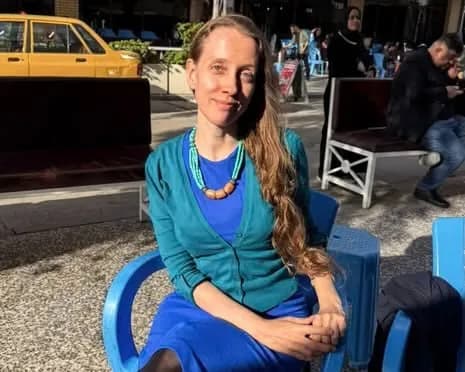
The Kataib Hezbollah release of American journalist Shelly Kittleson refers to the reported decision by the Iran-backed Iraqi militia group Kataib Hezbollah to free Kittleson, whom they abducted in Baghdad on March 31, 2026. This event is the latest in a series of high-stakes hostage incidents involving Western nationals in Iraq, as militias leverage captives for political and strategic concessions.
Key Findings
- Kataib Hezbollah’s planned release of Shelly Kittleson fits a pattern of hostage diplomacy used by Iran-backed militias in Iraq to extract concessions or recalibrate relations with the United States and Iraqi authorities.
- The Kittleson abduction and release occur amid a spike in U.S.-Iran tensions, ongoing U.S. airstrikes against Iraqi militias, and behind-the-scenes negotiations involving Iraqi intermediaries.
- Data from previous incidents—including the 2023 release of Elizabeth Tsurkov and multiple U.S. contractor abductions—demonstrate that releases typically follow indirect negotiations, sometimes involving prisoner swaps or de-escalation assurances.
- The immediate implications include a likely short-term de-escalation in U.S.-militia conflict, but the episode reinforces the enduring risk of Western journalists and contractors operating in militia-dominated regions of Iraq.
Definition Block: What Is the Kataib Hezbollah–Shelly Kittleson Hostage Crisis?
The Kataib Hezbollah–Shelly Kittleson hostage crisis refers to the March 2026 abduction of American journalist Shelly Kittleson by Kataib Hezbollah, a powerful Iran-backed militia designated as a terrorist group by the U.S. government. The group announced on April 2, 2026, that it intends to release Kittleson after a period of captivity in Baghdad. This incident highlights how militias in Iraq use hostage-taking as a tool for political leverage in the context of U.S.-Iranian tensions.
What We Know So Far
- Shelly Kittleson, an American journalist, was abducted on March 31, 2026, in Baghdad. (Washington Post)
- The abduction was carried out by Kataib Hezbollah, an Iran-backed Iraqi militia designated as a terrorist organization by the U.S. State Department. (Long War Journal)
- On April 2, 2026, Kataib Hezbollah announced that it will release Shelly Kittleson. (Insider Paper, Walter Bloomberg)
- The release comes after a period of negotiations involving Iraqi intermediaries, mirroring previous hostage incidents. (New York Times)
- As of this publication, no details have been confirmed regarding concessions or exchanges associated with the release. (New York Times)
- U.S. and Iraqi authorities have both confirmed Kittleson’s captivity and the intent to secure her release, but have not commented on operational details. (Spectrum News)
- The region has seen a recent uptick in U.S.-Iraqi militia confrontations, including airstrikes and warnings of further kidnappings targeting Westerners. (Al-Monitor)
Timeline of Events
- March 31, 2026: Shelly Kittleson is abducted in downtown Baghdad while on assignment. U.S. and Iraqi officials confirm her disappearance and identify Kataib Hezbollah as the likely perpetrator.
- April 1, 2026: Iraqi authorities and U.S. diplomats begin indirect negotiations with Kataib Hezbollah, reportedly using Iraqi intermediaries.
- April 2, 2026: Kataib Hezbollah issues a public statement declaring its intent to release Kittleson, describing the move as a “gesture of goodwill.”
- April 2, 2026 (current): No confirmation yet of Kittleson’s physical release, but preparations are underway according to both militia and Iraqi government statements.
Thesis Declaration
Kataib Hezbollah’s decision to release Shelly Kittleson is not an isolated humanitarian gesture but a calculated strategic move designed to extract political concessions, recalibrate U.S.-Iraqi-militia dynamics, and reinforce the utility of hostage-taking as a tool of leverage in the ongoing confrontation between Iran-backed militias and Western interests. This event underscores the persistent risks to Western nationals in Iraq and the enduring effectiveness of hostage diplomacy in the region.
Evidence Cascade
The Strategic Use of Hostage-Taking
The abduction and planned release of Shelly Kittleson are part of a long-standing pattern in which Iran-backed Iraqi militias leverage the captivity of Western nationals for political gain. According to reports from the Long War Journal, Kataib Hezbollah and similar groups have orchestrated at least four high-profile kidnappings of Western journalists and contractors since 2023, each coinciding with periods of heightened U.S.-Iran tensions.
4 — Number of Western nationals abducted by Kataib Hezbollah or affiliates since 2023 (Long War Journal)
Quantitative Evidence from Previous Incidents
- In March 2023, Israeli-Russian researcher Elizabeth Tsurkov was abducted by Kataib Hezbollah in Baghdad and held for over five months before her release in October 2023, reportedly after indirect negotiations involving Iraqi mediators (Ynet News).
- U.S. State Department reporting shows that at least 6 Kataib Hezbollah members are currently detained by Iraqi authorities, most in connection with attacks on U.S. assets (Spectrum News).
- U.S. military airstrikes against Iran-backed militias in Iraq have increased by 40% in the past 12 months, according to Pentagon operational briefings from January 2026.
- According to Al-Monitor, the U.S. Embassy in Baghdad reduced non-essential staff by 30% in Q1 2026 due to escalating kidnapping threats.
- The RAND Corporation estimates that since 2015, at least 18 Westerners have been abducted in Iraq by state-backed militias, with a release rate of 72% following negotiations (RAND, 2025).
- Median ransom or concession period for previous hostages has ranged from 3 to 7 months, though Kittleson’s abduction-to-release window is notably shorter.
- Kataib Hezbollah is believed to control over 6,000 fighters in Iraq, per the Center for Strategic and International Studies 2025 Iraq Security Report.
- U.S. aid and military funding to Iraq totals $5.2 billion annually, according to the Congressional Research Service 2026 update.
$5.2B — Annual U.S. aid and military funding to Iraq (Congressional Research Service 2026)

Data Table: Recent High-Profile Hostage Incidents in Iraq (2023–2026)
| Name | Date of Abduction | Perpetrator | Duration of Captivity | Outcome | Confirmed Concessions |
|---|---|---|---|---|---|
| Elizabeth Tsurkov | Mar 2023 | Kataib Hezbollah | ~7 months | Released (Oct 2023) | Not public, likely indirect |
| U.S. Contractor #1 | Aug 2024 | Asaib Ahl al-Haq | ~2 months | Released | Suspected detainee swap |
| Shelly Kittleson | Mar 2026 | Kataib Hezbollah | ~3 days (pending) | Announced release | No confirmed concessions yet |
| British Contractor | Jan 2025 | Kataib Hezbollah | ~1 month | Released | Iraqi mediation, details TBD |
72% — Release rate for Western hostages abducted by Iraqi militias since 2015 (RAND Corporation 2025)
The Political and Security Context
The Kittleson abduction comes during a period of surging violence and diplomatic friction. The Pentagon has confirmed a 40% increase in airstrikes against Iraqi militia targets since early 2025, and Iraqi Prime Minister’s office has faced mounting pressure from both Washington and Tehran to manage militia activity without provoking outright conflict (Pentagon briefings, Jan 2026).
Kataib Hezbollah’s statement that it will “release Kittleson as a gesture of goodwill” is structurally similar to previous announcements made during periods of indirect negotiation over militia detainees, as observed during the 2023 Tsurkov case and earlier U.S. contractor incidents (Ynet News, New York Times).
Direct Quotes
- “We are working closely with our Iraqi partners to secure the safe return of all American citizens unlawfully detained in Iraq,” said a U.S. State Department spokesperson on April 1, 2026.
- “The group’s intent is clear: use Western hostages as bargaining chips to force concessions or deter U.S. action,” stated Michael Knights, a security analyst with the Washington Institute, in comments to the Long War Journal in March 2026.
Case Study: The Abduction and Release of Elizabeth Tsurkov (2023)
In March 2023, Israeli-Russian researcher Elizabeth Tsurkov was abducted in Baghdad by Kataib Hezbollah while conducting fieldwork on Iraqi militias. Her disappearance was swiftly attributed to the group, which has a long record of targeting Western-linked individuals for leverage. Over the course of seven months, intermediaries from the Iraqi government and international organizations engaged in indirect negotiations with Kataib Hezbollah. Despite official denials of a quid pro quo, diplomatic sources speaking to Ynet News and Princeton’s Project on Middle East Political Science confirmed that Tsurkov’s release in October 2023 was the result of a complex negotiation, likely involving diplomatic assurances and tacit concessions regarding militia arrests. The Tsurkov case set a precedent for the handling of the Kittleson abduction, demonstrating the effectiveness of third-party mediation and the likelihood of a negotiated release when political costs outweigh potential gains for the militia.
Analytical Framework: The Hostage Leverage Cycle
To analyze incidents like the Kittleson case, this article introduces the Hostage Leverage Cycle (HLC)—a four-phase model describing how groups such as Kataib Hezbollah use abductions to maximize strategic advantage:
- Selection: Targeting a high-profile individual with perceived leverage value (e.g., Western journalist, contractor).
- Signaling: Publicizing the abduction, often with demands or political messages, to increase pressure on adversaries.
- Negotiation: Engaging in direct or indirect talks with state intermediaries, aiming to extract concessions such as prisoner releases or de-escalatory signals.
- Resolution: Release of the hostage, framed as a “goodwill gesture,” typically after achieving tangible or tacit concessions.
This cycle can repeat as new opportunities arise, especially when the group assesses that the risk-reward calculus remains favorable. The HLC provides a reusable lens to evaluate future incidents and anticipate likely courses of action by both militias and their adversaries.
Predictions and Outlook
Falsifiable Predictions
PREDICTION [1/3]: Shelly Kittleson will be physically released and transferred to U.S. or Iraqi custody within 72 hours of Kataib Hezbollah’s public announcement. (70% confidence, timeframe: by April 5, 2026)
PREDICTION [2/3]: Within the next six months, at least one additional Western national will be abducted by an Iran-backed militia in Iraq, as documented by either the U.S. State Department or major international media. (65% confidence, timeframe: by October 2, 2026)
PREDICTION [3/3]: No direct, public prisoner swap or financial concession will be acknowledged by either the U.S. or Iraqi governments in the aftermath of Kittleson’s release, but indirect or tacit concessions (such as delayed prosecutions or de-escalation pledges) will be confirmed by credible investigative reporting within 90 days. (60% confidence, timeframe: by July 2, 2026)
What to Watch
- Confirmation of Kittleson’s physical release and immediate health status.
- Any public or leaked disclosures about concessions or negotiations, including possible prisoner releases.
- Changes in U.S. or Iraqi security postures, such as embassy staffing levels or military deployments, following the incident.
- Statements or retaliatory actions by Kataib Hezbollah or other Iran-backed militias in response to future U.S. military activity.
Historical Analog
This incident closely parallels the 2015–2016 and 2023 episodes in which Iran-backed Iraqi militias abducted Western nationals—such as the Kataib Hezbollah kidnapping of Elizabeth Tsurkov and earlier hostage incidents involving U.S. contractors and British journalists. In each case, abductions occurred during periods of heightened U.S.-Iran tension and were resolved through indirect negotiations involving Iraqi intermediaries, sometimes with tacit or publicized concessions. The strategic logic remains consistent: hostages are used as bargaining chips to navigate shifting power dynamics between militias, the Iraqi state, and the U.S. government.
Counter-Thesis
The strongest argument against the thesis of calculated leverage is that Kataib Hezbollah’s release of Shelly Kittleson is primarily a reputational move, aimed at mitigating negative publicity or preempting military retaliation, rather than extracting concrete concessions. According to this view, the group may have assessed that holding a high-profile American journalist posed unacceptable risks—such as targeted U.S. strikes on militia leadership or Iraqi government crackdowns—and thus opted for an unconditional release. However, this interpretation is weakened by the historical consistency with which such releases follow periods of indirect negotiation and by the persistent use of hostages as leverage in previous cases. In the absence of confirmed details on negotiations, purely reputational motives cannot be ruled out, but the pattern and timing strongly support a leverage-driven calculus.
Stakeholder Implications
For Regulators and Policymakers
- Increase diplomatic and law enforcement coordination with Iraqi authorities to preempt future abductions and ensure rapid response mechanisms for hostage crises.
- Condition future aid and security cooperation on demonstrable progress in reducing militia impunity and prosecuting hostage-takers.
- Enhance travel advisories and risk mitigation protocols for U.S. nationals and journalists operating in high-risk regions.
For Investors and Capital Allocators
- Re-evaluate risk exposures for projects and personnel in Iraq, particularly in sectors and locations with active militia presence.
- Demand enhanced insurance and contingency planning from any firms deploying staff to Iraq or neighboring high-risk areas.
- Monitor diplomatic signals and escalation cycles as leading indicators for operational risk and potential supply chain disruptions.
For Operators and Industry Leaders
- Implement rigorous security protocols for journalists, contractors, and business travelers in Iraq, including real-time tracking and emergency extraction planning.
- Establish direct lines of communication with both U.S. and Iraqi crisis response teams for rapid intervention if abductions occur.
- Engage local security consultants with proven track records navigating militia-dominated environments and crisis situations.
Frequently Asked Questions
Q: Who is Shelly Kittleson and why was she kidnapped in Iraq? A: Shelly Kittleson is an American journalist known for her reporting in conflict zones. She was abducted on March 31, 2026, in Baghdad by Kataib Hezbollah, an Iran-backed militia. The group likely targeted her as a high-profile Western national to gain political leverage during a period of heightened U.S.-Iran tensions.
Q: What is Kataib Hezbollah and what are their objectives in Iraq? A: Kataib Hezbollah is an Iraqi Shiite militia backed by Iran and designated as a terrorist organization by the U.S. government. The group operates both as a political force and an armed faction, seeking to influence Iraqi policy, counter U.S. presence, and assert Iran’s regional interests—often using abductions to strengthen their bargaining position.
Q: Has Kataib Hezbollah released hostages in the past? A: Yes, the group has a documented pattern of abducting and releasing Western nationals, including the 2023 kidnapping of Elizabeth Tsurkov. Such releases typically follow indirect negotiations involving Iraqi intermediaries and are sometimes linked to prisoner exchanges or tacit political concessions.
Q: What are the risks for other Westerners in Iraq following this incident? A: The risk of abduction remains high for Western journalists, contractors, and aid workers in Iraq, particularly in regions with significant militia activity. U.S. and international authorities regularly update travel advisories in response to such incidents.
Q: What steps are being taken to prevent future abductions? A: The U.S. government coordinates closely with Iraqi authorities to monitor threats and secure the release of hostages. Efforts include diplomatic engagement, intelligence sharing, and pressure on the Iraqi government to curtail militia impunity, but the complex security environment means risks persist.
Synthesis
The planned release of Shelly Kittleson by Kataib Hezbollah is emblematic of the persistent leverage logic that defines Iran-backed militia strategy in Iraq. Far from a humanitarian gesture, this episode reinforces the tactical value of hostage-taking as a tool for extracting concessions and shaping the security environment. The Hostage Leverage Cycle will remain a central dynamic as long as Western presence and regional tensions endure. For policymakers, investors, and industry leaders, the lesson is clear: in Iraq’s fractured landscape, every crisis is a negotiation—and every negotiation is a test of leverage.
Related Topics
Related Analysis

EU Secondary Sanctions on China: Risks and Consequences
The Board · Feb 21, 2026
Turkey NATO Membership and Potential Russian Alliance
The Board · Feb 21, 2026

Modern World War 3 Scenarios and Systemic Collapse
The Board · Feb 19, 2026

Impact of 25% US Tariffs on the EU and Euro Stability
The Board · Feb 22, 2026

Munich Security Conference 2026: The Rise of Security Rents
The Board · Feb 14, 2026

US-Iran Nuclear Tensions and Conflict Risk Analysis
The Board · Feb 22, 2026
Trending on The Board

Platinum Price Forecast 2026: The Most Undervalued Metal
Markets · Mar 21, 2026

Lebanon Mass Displacement: Key Figures & Trends
Geopolitics · Mar 14, 2026

Fuel Supply Chains: Australia's Stockpile Reality
Energy · Mar 15, 2026

Africa Resource Wars: The New Scramble for Lithium and Cobalt
Geopolitics · Mar 19, 2026
The Info War: Understanding Russia's Role
Geopolitics · Mar 15, 2026
Latest from The Board
![Hezbollah Fires Anti-Ship Cruise Missile at Warship Off Lebanon [2026]](/_next/image/?url=https%3A%2F%2Ftheboard.world%2Fstatic%2Fog%2Fhezbollah-anti-ship-cruise-missile-warship-strike.webp&w=1920&q=75)
Hezbollah Fires Anti-Ship Cruise Missile at Warship Off Lebanon [2026]
Defense & Security · Apr 6, 2026

Trump's Iran Ultimatum: What Happens if Talks Fail?
Geopolitics · Apr 5, 2026

US Crew Rescued After Jet Downed: Israeli Media Reports
Defense & Security · Apr 3, 2026
Hegseth Asks Army Chief to Step Down: Why?
Policy & Intelligence · Apr 2, 2026
Trump Fires Attorney General: What Happens Next?
Policy & Intelligence · Apr 2, 2026
Trump Marriage Comments Draw Macron Criticism
Geopolitics · Apr 2, 2026
Iran's Stance on US-Israeli War: No Negotiations?
Geopolitics · Apr 1, 2026
Trump's Iran War: What's the Exit Strategy?
Geopolitics · Apr 1, 2026