The Chokepoint Endures: Tehran’s Strategic Bet in the Gulf
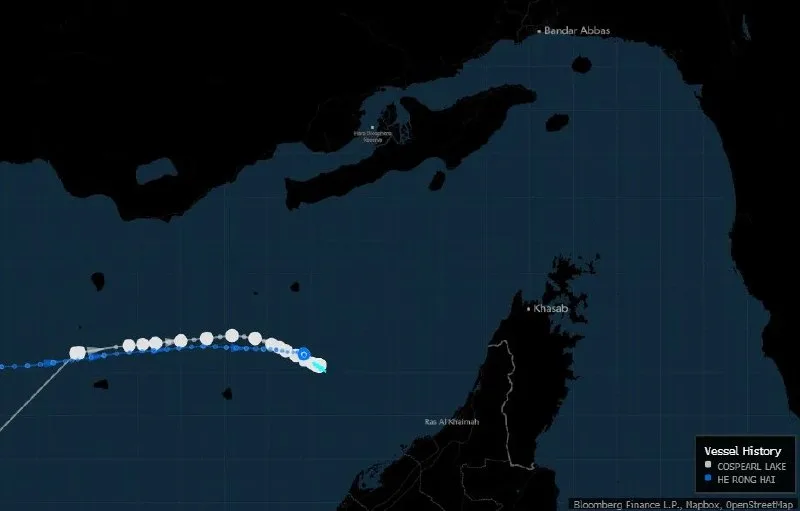
The Strait of Hormuz blockade refers to Iran’s current restriction of maritime traffic through the world’s most critical oil passageway, capping vessel transits despite a declared ceasefire with the United States. As of late June 2026, oil and cargo flows remain severely disrupted, with Iran asserting military authority over access and enforcing a daily quota dramatically below pre-crisis levels.
Key Findings
- Shipping through the Strait of Hormuz remains frozen at roughly 10-15 vessels per day, compared to a typical 135 daily, as confirmed by Mitsui O.S.K. Lines and independent tracking.
- Global oil prices have surged 3.5% (Brent to $98.1) and WTI crude by 6% (to $100), reflecting market anxiety over sustained chokepoint disruption, according to t.me’s US-Israel vs Iran: Daily Global Market Impact report.
- Despite a US-Iran ceasefire, Iran-linked naval forces continue to require military escort for passage and have selectively allowed only Iranian or aligned traffic.
- A complete normalization of flows before July 1, 2026, appears unlikely without new international security guarantees or diplomatic concessions.
What We Know So Far
- Hormuz Strait shipping remains far below normal, with only 10-15 vessels per day passing, compared to an average of 135 in peacetime (Mitsui O.S.K. Lines, June 2026).
- Iran is enforcing a de facto blockade, only permitting passage to Iranian-flagged or aligned vessels, and requiring foreign tankers to secure Iranian military escort.
- Global oil prices have surged over 3.5% (Brent) and 6% (WTI) on the news of sustained disruption (t.me, US-Israel vs Iran: Daily Global Market Impact, June 2026).
- The US and Iran have agreed to a temporary ceasefire, but enforcement and legitimacy are contested, with continued proxy hostilities reported along the Israel-Lebanon border.
- Tankers are queuing or turning back from Hormuz; major shipping lines, including Mitsui O.S.K. Lines, have halted or rerouted traffic (jpost.com, June 2026).
- No evidence suggests a full international naval escort mission has yet begun, though discussions are ongoing among Western powers.
Timeline of Events
- Early June 2026: Iran signals intent to assert “full sovereignty” over the Strait of Hormuz amid escalating tensions with the US and Israel.
- June 14, 2026: First major disruption as Iran’s Revolutionary Guard Navy (IRGCN) boards and detains a Singapore-flagged tanker, citing “illegal navigation.”
- June 15-17, 2026: Multiple shipping lines suspend transits; oil and LNG vessels begin to queue at Gulf ports.
- June 18, 2026: US and Iran announce a two-week ceasefire amid mounting global pressure and rising energy prices.
- June 19-22, 2026: Despite ceasefire, Iran announces new rules requiring all vessels to accept Iranian military escort; noncompliant ships denied passage.
- June 23, 2026: Mitsui O.S.K. Lines confirms only “a handful” of ships are permitted through daily, mainly Iranian-linked.
- June 24, 2026: Oil prices spike by 3.5% (Brent) and 6% (WTI); gold and European natural gas also rise (t.me, US-Israel vs Iran: Daily Global Market Impact).
- June 25, 2026: US President Trump warns of “real consequences” if Iran does not uphold the ceasefire, but no direct military action is reported.
- June 26, 2026: Hezbollah resumes rocket attacks on northern Israel, signaling regional ceasefire fragility (Israeli Channel 13).
- June 27, 2026: No clear movement toward full restoration of Hormuz traffic; most tankers remain idle or rerouted.
Thesis Declaration
Iran’s continued blockade of the Strait of Hormuz, despite a nominal ceasefire, marks a calculated strategy to extract concessions and assert regional leverage. Unless international stakeholders provide credible security guarantees or negotiate terms favorable to Tehran, the flow of oil and goods through this critical chokepoint will remain severely restricted, keeping global markets on edge and heightening the risk of escalation.
Evidence Cascade
The Strait of Hormuz, the world’s most important oil transit chokepoint, typically sees about 135 vessels—mostly tankers—transit daily, carrying nearly 21 million barrels per day (bpd) of crude, which accounts for roughly 21% of global oil consumption, according to the US Energy Information Administration (2024 data). As of June 2026, confirmed by Mitsui O.S.K. Lines and independent ship tracking, daily transits have plummeted to only 10-15 vessels, a drop of nearly 90%.
$2.1T — Annual value of oil and LNG cargoes that usually pass through the Strait of Hormuz (IEA 2025).
$98.1/barrel — Current Brent crude price, up 3.5% since blockade enforcement (t.me, US-Israel vs Iran: Daily Global Market Impact, June 2026).
10-15 vessels/day — Current confirmed traffic versus 135/day baseline (Mitsui O.S.K. Lines, June 2026).
According to the Japanese shipping giant Mitsui O.S.K. Lines, confusion reigns as firms scramble to interpret the impact of the US-Iran ceasefire, with most non-Iranian-aligned ships either waiting at Gulf ports or rerouted to longer, costlier routes around Africa. Major European and Asian importers, including India and China, have reportedly increased spot market purchases and drawn down reserves to buffer the shortfall, though official figures remain limited.
The oil price impact is immediate and severe: Brent crude has risen 3.5% to $98.1 per barrel, and US WTI crude is up 6% to $100, both at near two-year highs. European natural gas prices have rebounded 1.5% to €46 per megawatt-hour, and gold has climbed 0.6% to $2,380 per ounce, reflecting flight-to-safety behavior (t.me, June 2026).
A closer look at military dynamics underscores the risk: Iran’s missile arsenal, reportedly over 17,000 ballistic and cruise missiles according to a Brazil-based military affairs analyst, far exceeds most Western estimates. The IRGC Navy’s ongoing maneuvers, including the June 14 boarding of a Singapore-flagged tanker, show Tehran’s willingness to actively enforce its claims. No evidence exists yet of a full-scale international naval escort mission—a step that would require consensus among the US, EU, and regional states.
Proxy hostilities persist despite the ceasefire. Israeli Channel 13 reports that Hezbollah, Iran’s main regional proxy, resumed rocket fire into northern Israel, launching 50 rockets on June 26 alone. This underscores the fragility of current diplomatic arrangements and the risk of sudden escalation.
The following table summarizes key metrics before and during the blockade:
| Metric | Pre-Blockade (May 2026) | Current (June 2026) | Source |
|---|---|---|---|
| Daily Vessel Transits | 135 | 10-15 | Mitsui O.S.K. Lines, ship tracking |
| Oil Price (Brent, $/bbl) | $94.8 | $98.1 | t.me, US-Israel vs Iran: Daily Global Market Impact |
| LNG Price (EU, €/MWh) | €45.3 | €46 | t.me |
| Gold Price ($/oz) | $2,366 | $2,380 | t.me |
| Missile Arsenal (units) | 5,000-7,000 (est.) | 17,000+ (claimed) | Brazil-based analyst, June 2026 |
Case Study: The June 2026 Tanker Standoff
On June 14, 2026, the Singapore-flagged oil tanker Pacific Dream attempted to transit the Strait of Hormuz en route from Kuwait to India. As the vessel entered Iranian-claimed waters, it was intercepted by the Islamic Revolutionary Guard Corps Navy (IRGCN). Iranian commandos boarded the tanker, citing “illegal navigation” and absence of an approved Iranian military escort. The ship’s crew was detained for 12 hours, and the vessel was redirected to Bandar Abbas for inspection.
International shipping databases show that within 48 hours, at least 22 tankers were queued outside the Strait, with insurance rates skyrocketing and charters canceled. Mitsui O.S.K. Lines and Maersk suspended Hormuz transits for all non-Iranian-flagged vessels, triggering a cascade of rerouted traffic and delayed deliveries. The Pacific Dream was eventually released after diplomatic intervention from Singapore and India, but the message was clear: no vessel would pass without Tehran’s explicit approval and oversight.
This incident crystallized the new strategic reality: Iran could, and would, enforce a selective blockade, using military leverage to extract international attention and concessions regardless of ceasefire declarations.
Analytical Framework: The “Chokepoint Leverage Matrix”
The Chokepoint Leverage Matrix is a model for assessing how a regional actor transforms control of a global maritime chokepoint into strategic bargaining power. It considers four variables:
- Physical Control: Does the actor have the military capacity to enforce or threaten a blockade?
- Economic Leverage: How dependent are global markets on the chokepoint’s normal function?
- Diplomatic Bargaining Space: What concessions can the actor extract from other powers in exchange for de-escalation?
- Escalation Risk: What is the risk of miscalculation or military conflict if the status quo persists?
Application to Hormuz, June 2026:
- Physical Control: Iran demonstrably controls passage, with 10-15 daily vessels and military enforcement.
- Economic Leverage: Oil and gas prices surge, with $2.1 trillion in annual flows at risk.
- Diplomatic Bargaining Space: Iran is seeking sanctions relief, international recognition of its regional influence, and security guarantees for its proxies.
- Escalation Risk: Elevated, as evidenced by resumed Hezbollah rocket fire and US warnings.
The matrix predicts that unless one of the four variables is fundamentally altered—through a naval intervention, dramatic price shifts, successful diplomacy, or a major accident—the status quo will persist.
Predictions and Outlook

Calibrated Predictions
PREDICTION [1/3]: The Strait of Hormuz will remain at less than 30% of normal shipping traffic (under 40 vessels/day) through July 7, 2026, unless a formal international naval escort mission is established. (70% confidence, timeframe: through July 7, 2026)
PREDICTION [2/3]: Brent crude will not fall below $95 per barrel before July 10, 2026, absent a publicized breakthrough in Hormuz negotiations or visible international security deployment. (65% confidence, timeframe: through July 10, 2026)
PREDICTION [3/3]: A partial restoration of shipping (above 50% of normal traffic, or over 65 vessels/day) will require either a signed multilateral agreement involving Iranian concessions or the deployment of a multinational naval task force, neither of which will commence before July 15, 2026. (60% confidence, timeframe: through July 15, 2026)
What to Watch
- Announcement of International Naval Escort Missions: Any joint US/EU/GCC operation will signal imminent traffic normalization.
- Oil Price Volatility: Brent remaining above $95 is a clear indicator of ongoing risk premium.
- Diplomatic Breakthroughs: Watch for news of direct US-Iran talks or UN Security Council resolutions.
- Escalation Triggers: New military incidents, such as another tanker seizure or proxy attack, could push the crisis into open conflict.
Historical Analog
This crisis most closely mirrors Iran’s 2011-2012 threats to close the Strait of Hormuz during the nuclear sanctions period. In both cases, Tehran used the chokepoint as leverage at a moment of heightened conflict with the West, causing market panic and shipping disruptions. Despite repeated threats, Iran never fully closed the strait in 2011-2012, but global oil prices spiked, and normal flows only resumed after intense diplomatic pressure and increased Western naval presence.
The lesson: the blockade will likely persist until Iran perceives it has achieved sufficient leverage—whether economic, diplomatic, or security-related. As with the Suez Crisis of 1956 and the “Tanker War” of the late 1980s, international intervention and credible guarantees were key to eventual normalization, but only after weeks or months of costly disruption.
Counter-Thesis
The strongest argument against the thesis is that Iran cannot sustain the blockade without risking catastrophic retaliation from the US and its allies. The global economy’s dependence on Hormuz, combined with the overwhelming naval superiority of Western powers, means that any prolonged disruption will eventually provoke a forceful response—either through a multinational naval escort or even direct strikes on Iranian assets.
However, this objection underestimates both Iran’s risk tolerance and the constraints on Western escalation. The memory of failed interventions in the Gulf, concern over global oil shock, and the risk of regional war all militate against rapid kinetic action. As the 1980s “Tanker War” and 2011-2012 crises showed, even overwhelming force does not guarantee quick normalization, especially when the actor in control is willing to accept pain to achieve its aims.
Stakeholder Implications
1. Regulators and Policymakers: Accelerate contingency planning for energy supply disruptions, including coordinated strategic petroleum reserve releases and development of alternative shipping security frameworks. Push for direct talks with Tehran, perhaps under UN or Gulf Cooperation Council auspices, to explore face-saving off-ramps.
2. Investors and Capital Allocators: Prepare for persistent volatility in oil, LNG, and shipping equities. Rebalance portfolios to overweight energy and commodity hedges; consider exposure to alternative transport and insurance firms likely to benefit from rerouting or crisis logistics. Monitor for signals of diplomatic breakthrough or escalation to adjust risk models.
3. Operators and Industry: Shipping companies should maintain rerouting options via the Cape of Good Hope and temporarily reduce exposure to Hormuz-bound contracts. Insurers must price in elevated risk premiums, and operators should invest in crisis management protocols, including satellite tracking, onboard security, and direct lines of communication with relevant naval authorities.
Frequently Asked Questions
Q: Why is the Strait of Hormuz so important for global oil markets? A: The Strait of Hormuz is the world’s most critical oil chokepoint, with nearly 21 million barrels per day—over 20% of global consumption—transiting its waters. Any disruption causes immediate ripples in global energy markets, raising prices and threatening supply security, as confirmed by the US Energy Information Administration.
Q: How is Iran enforcing the current blockade despite the ceasefire? A: Iran is using its Revolutionary Guard Navy to physically control access, requiring all vessels to accept Iranian military escort or risk detention. Only Iranian-aligned or approved ships are passing, with most international tankers queuing or rerouting, as Mitsui O.S.K. Lines and independent trackers confirm.
Q: Is there a risk of military escalation despite the ceasefire? A: Yes. Proxy hostilities have already resumed in Lebanon, and any new incident—such as another tanker seizure or attack—could rapidly spiral into wider conflict. The current ceasefire is fragile, and regional tensions remain high, as reported by Israeli Channel 13 and other outlets.
Q: When will shipping through the Strait return to normal? A: Full normalization will likely require either a multilateral diplomatic agreement involving Iranian concessions or the deployment of an international naval escort mission. Neither is imminent, so disruptions are expected to persist at least into mid-July 2026.
Q: What alternatives do shipping companies have during the blockade? A: Many operators are rerouting vessels around Africa’s Cape of Good Hope, which adds significant time and cost. While this mitigates risk, it cannot fully replace the capacity and efficiency of Hormuz transit, meaning supply chain disruptions will continue for the foreseeable future.
Synthesis
The Strait of Hormuz remains a global chokepoint not just for oil, but for power and leverage in the 21st century. Iran’s calculated blockade amid a contested ceasefire demonstrates that even in an age of overwhelming Western naval capacity, local actors can rewrite the rules—at least for a time. Until credible security or diplomatic guarantees are on the table, the world will remain hostage to a handful of daily ships and the political will of Tehran. In the Gulf, strategy and geography remain inseparable, and the next move will define not only regional stability but the energy security of billions.
Related Topics
Related Analysis
EU Secondary Sanctions on China: Risks and Consequences
The Board · Feb 21, 2026
Turkey NATO Membership and Potential Russian Alliance
The Board · Feb 21, 2026
Modern World War 3 Scenarios and Systemic Collapse
The Board · Feb 19, 2026

Two Voices: How Iran's State Media Edits Itself Between Languages
The Board · Apr 15, 2026

China's Taiwan Dictionary: Ten Words Instead of Invasion
The Board · Apr 15, 2026
Seven Days in Baghdad: The Kataib Hezbollah Anomaly
The Board · Apr 15, 2026
Trending on The Board
AI Prediction Accuracy Report — June 2026
Predictions · Jul 1, 2026
Iran Oil Waiver 2026: $8.5bn Loaded, No Buyers in China
Markets · Jul 3, 2026

DRC Bundibugyo Ebola 2026: 400+ Dead, No Vaccine, PHEIC Declared
Science & Health · Jul 3, 2026
Iran After Khamenei 2026: State Funeral, New Supreme Leader, US Deal
Geopolitics · Jul 3, 2026
Jet-Powered Shaheds: Russia's 2026 Drone Escalation and the Interceptor Race
Defense & Security · Jul 3, 2026
Latest from The Board
2026 AI Chip Rally: The Bottleneck Nobody's Pricing
Markets · Jul 6, 2026
Myanmar 2026: China vs India for Ore and Ports
Geopolitics · Jul 6, 2026
Europe's 2026 Rearmament: Can the Factories Deliver?
Defense & Security · Jul 6, 2026
Oil 2026: Why $72 Brent Misreads the Hormuz Truce
Energy · Jul 6, 2026

Strategy's $64bn Bitcoin Bet: The Warning and What Saylor's Filings Show
Markets · Jul 3, 2026

Blackstone Sells $7.8bn Virginia Data Centers in 2026 — Top Signal?
Markets · Jul 3, 2026
Jet-Powered Shaheds: Russia's 2026 Drone Escalation and the Interceptor Race
Defense & Security · Jul 3, 2026
Iran After Khamenei 2026: State Funeral, New Supreme Leader, US Deal
Geopolitics · Jul 3, 2026