EXECUTIVE SUMMARY
The panel reveals a stark consensus on one point and a dangerous disagreement on everything else: A U.S. strike on Iran will tactically succeed in the near term (degrading nuclear facilities within 3-4 months) but will trigger strategic blowback across three simultaneous domains—diplomatic isolation, macroeconomic demand destruction, and Indo-Pacific strategic vulnerability—that will exceed the military gains by an order of magnitude. The core tension is not whether to strike, but whether striking now (under political ultimatum, without regional coalition support, during an active trade war, without a negotiated off-ramp pre-positioned) represents rational strategy or desperation masquerading as control. The verdict: Strike now only if a negotiated diplomatic framework is already agreed by both parties within 48 hours; otherwise, delay constitutes the superior strategy despite the domestic political cost.
KEY INSIGHTS
-
The window strategy is tactically sound but strategically orphaned: Yamamoto and MacArthur agree a strike creates a 3-4 month degradation window [MEDIUM-HIGH], but Sun Tzu and Keynes correctly identify that without a pre-positioned negotiated framework, Iran will use that window to consolidate hardline control, not negotiate.
-
Moral authority is already spent before the strike lands: Sun Tzu argues unilateral action (without Saudi/UAE airspace) signals imperial overreach; MacArthur counters that it signals hardened commitment. Both are right about the perception, but Keynes reveals the real cost: neither narrative matters to global markets or demand—only economic shock propagation matters. [MEDIUM-HIGH]
-
The demand-side catastrophe is the dominant risk, not regional escalation: All the analysiss focused on Middle East theater complexity, but Keynes correctly identifies that a 40-60% crude spike during existing fragile consumer and corporate balance sheets will trigger unemployment equilibrium (firms halt hiring, households halt spending, demand spirals) that monetary policy cannot offset when rates are already at 3.64%.
-
Washington cannot manage three simultaneous crises: MacArthur identifies the bandwidth problem (Iran + China tariff war + Taiwan calendar tightening); Keynes shows the constraint is not bandwidth but aggregate demand—a 3-6 month Strait disruption will compress margins and force layoffs precisely when the Fed cannot cut rates.
-
The Geneva talks timeline is operationally backwards: Talks are scheduled for Feb 26, 4 days from now; ultimatum expires in 10-15 days; strike window is open immediately after. MacArthur correctly identifies that negotiated off-ramps must be pre-positioned before the strike, not negotiated during countdown. This is not happening.
-
The market is underpricing the demand shock but overpricing the supply shock: Rothschild correctly identifies crude underpricing (30-40% probability of prolonged closure should mean higher futures prices), but Keynes reveals the real arbitrage is shorting equities and consumer discretionary stocks 2-4 weeks after the strike, when demand destruction becomes visible but policy response lags.
-
Saudi Arabia and UAE airspace denial signals de-Americanization is already accelerating: Both Sun Tzu and MacArthur note Saudi/UAE hedging behavior; MacArthur argues a unilateral strike clarifies rather than accelerates this; Keynes suggests the real issue is that neither scenario leaves Washington with coalition partners for the next Middle East crisis. [MEDIUM-HIGH]
SCENARIO MAP
Scenario A: Negotiated Off-Ramp Strike (Probability: 15-25%)
- Key drivers: Geneva talks (Feb 26) produce a framework both sides can live with before ultimatum expiration; U.S. signals willingness to extend deadline for genuine negotiation; Iran agrees to inspections/monitoring in exchange for sanctions relief timeline.
- Timeline: Strike delayed 7-10 days pending negotiation completion; if framework emerges, strike becomes deterrent backdrop, not kinetic action.
- Signposts to watch: Iran submits serious nuclear proposal by Feb 24; U.S. publicly signals flexibility on timeline; Oman (back-channel mediator) confirms both sides are discussing off-ramp language.
- Second-order effects: Crude remains $70-75/barrel; equity markets stable; Fed maintains current policy; global trade concerns shift from energy to tariff impact.
- What would change this: Iran walks from Geneva talks or makes maximalist demands; Trump administration faces domestic pressure to show "strength" through kinetic action; Supreme Leader signals rejection of any framework.
Scenario B: Limited Unilateral Strike Without Off-Ramp (Probability: 55-65%)
- Key drivers: Geneva talks fail or produce only cosmetic agreements; Trump administration executes strike on Feb 28-March 5 as ultimatum expires; regional partners (Saudi/UAE) maintain distance but do not actively oppose; Iran responds with asymmetric proxy attacks on U.S. interests.
- Timeline: Strike occurs Days 8-15 from now; 3-4 month window of degraded capacity opens; Iran consolidates hardline control within 48-72 hours post-strike; proxy escalation begins Weeks 2-6.
- Signposts to watch: Crude spikes to $85-95/barrel within 24 hours; U.S. equity markets drop 8-12% over Days 1-5 as demand destruction becomes visible; commercial shipping insurances spike; Fed signals no rate cuts incoming (supply shock, not demand problem—false diagnosis).
- Second-order effects: 3-6 month regional crisis; U.S. forced to surge military assets, consuming bandwidth during Taiwan political calendar tightening; China accelerates South China Sea activities; corporate earnings guidance slashed Q1 2026; unemployment rises 0.3-0.5% by Q2.
Scenario C: Escalatory Spiral (Probability: 15-25%)
- Key drivers: U.S. strikes Iran; Iran responds with direct attack on U.S. assets (Gulf bases, ships); U.S. executes second round of strikes; Hezbollah/proxies activate on Israel border; regional war expands; crude reaches $110-130/barrel.
- Timeline: Strike on Feb 28-March 5; Iranian response Days 3-7; escalation chain Days 10-21; full regional crisis by mid-March.
- Signposts to watch: Iranian ballistic missile or drone attack on U.S. base in Gulf within 72 hours post-strike; crude spikes above $100/barrel; Hezbollah mobilizes on Israeli border; U.S. equity markets enter bear market (>20% decline); U.S. Treasury yields spike as flight-to-safety liquidity dominates.
- Second-order effects: Global oil prices remain elevated for 6-12 months; inflation spikes to 4-5% despite demand destruction (stagflation); Fed forced to hike rates, compressing equity valuations further; U.S. unemployment reaches 5%+; recession officially declared by Q2 2026.
What would change our assessment:
- Scenario A: Iran submits credible nuclear proposal by Feb 24 or U.S. signals genuine deadline flexibility.
- Scenario B: Geneva talks collapse completely, or Iran makes explicit threats that force U.S. response.
- Scenario C: Iran launches direct attack within 48 hours of any U.S. strike, or Hezbollah mobilizes without waiting for escalation authorization.
WHAT THE PANEL AGREES ON
-
A strike will degrade Iranian nuclear facilities for 3-4 months (Yamamoto, MacArthur, Sun Tzu all accept this as fact).
-
The window will close faster than advertised because Iran is already dispersing enrichment activities across hardened sites (Sun Tzu correctly notes June 2025 strikes exposed centralized targets; Iran has now distributed them). [MEDIUM-HIGH]
-
Washington has no negotiated off-ramp pre-positioned before the strike, and this is a critical operational failure (MacArthur explicitly states this; Dulles implies it through his failed back-channel assessment).
-
The Saudi/UAE airspace denial signals real de-Americanization of the traditional Middle East coalition (both Sun Tzu and MacArthur acknowledge this fact).
-
The demand-side risk to the global economy is substantially underpriced (Keynes provides the macroeconomic mechanism; Rothschild inadvertently validates this by noting the market is underpricing Strait closure probability).
-
The Fed's policy response will lag the shock by 2-4 weeks, during which demand destruction accelerates unimpeded (Keynes explains the mechanism; MacArthur notes the timing problem with competing crises). [MEDIUM-HIGH]
-
A strike during an active U.S.-China trade war (15% tariffs announced Feb 22) creates a compound demand shock (MacArthur, Keynes both identify this).
WHERE THE PANEL DISAGREES
1. Does a unilateral strike signal weakness or commitment hardening?
| Position | Advocate | Evidence | Weight |
|---|---|---|---|
| Signals weakness (imperial overreach) | Sun Tzu | Global South interprets absence of regional coalition as inability to maintain traditional alliances; China/Russia will amplify this narrative; accelerates de-Americanization already underway | MEDIUM-HIGH |
| Signals commitment hardening (willingness to act unilaterally) | MacArthur | Global South watches for capacity not moral consistency; unilateral action proves U.S. will enforce consequences without permission structures; de-Americanization is happening regardless, so strike merely clarifies pre-existing trend | MEDIUM-HIGH |
Resolution: Both are right about perception, but Sun Tzu's framing is more strategically accurate. The Global South does interpret coalition absence as weakness, not strength. However, MacArthur is correct that this de-Americanization was inevitable—the strike accelerates an existing trajectory rather than initiating it. The real cost is not "new" weakness but confirmed weakness to an audience (China, Russia, non-aligned states) already making hedging decisions.
2. Is the negotiation window open or closed?
| Position | Advocate | Evidence | Weight |
|---|---|---|---|
| Open—pragmatists can still be reached | Dulles (summarized) | Back-channels exist; pragmatists in IRGC retain some authority; negotiation possible if executed immediately | LOW |
| Closed—pragmatists will be purged post-strike | Sun Tzu | Supreme Leader consolidates control after kinetic action; pragmatists sidelined/arrested/dead; back-channel has no recipients | MEDIUM-HIGH |
| Timing is the crux—open NOW but closing in 48-72 hours post-strike | MacArthur | Window exists for off-ramp negotiation at the moment when Iran's military options are degraded but regime hasn't consolidated; Geneva talks (Feb 26) are the last moment to position this framework | HIGH |
Resolution: MacArthur's framing is most precise. The negotiation window is open for the next 4 days (before strike), but will snap shut 48-72 hours after the strike when the Supreme Leader moves to consolidate. This means any off-ramp framework must be pre-agreed by Feb 26 or it will not exist.
3. Is the macroeconomic risk "demand destruction" or "manageable inflation"?
| Position | Advocate | Evidence | Weight |
|---|---|---|---|
| Manageable inflation—energy shock, but Fed can adjust | Rothschild (implied) | Oil price increase is visible, markets adjust, financial assets reallocate; historical precedent (1973, 1990) shows economies absorb shocks | MEDIUM |
| Demand destruction—unemployment spiral, margin compression, Fed policy lag | Keynes | Consumer balance sheets fragile; wage growth negative; corporate debt elevated; Fed at 3.64% with limited cutting room; shock timing during trade war compounds problem | HIGH |
Resolution: Keynes has the stronger evidence. The 1973 and 1990 oil shocks hit economies with healthier balance sheets and Fed policy room. Today's economy is more fragile. More critically, Keynes identifies the timing problem—a demand shock arriving while the Fed is already constrained creates a policy lag that allows demand destruction to accelerate unchecked. This is not "inflation management"; it's unemployment equilibrium.
4. Can Washington manage simultaneous Iran strike, China trade war, and Taiwan calendar tightening?
| Position | Advocate | Evidence | Weight |
|---|---|---|---|
| No—bandwidth is finite, must prioritize | MacArthur | Three simultaneous crises exceed military bandwidth; Iran consumes 3-6 months of strategic attention; China exploits distraction window; Taiwan vulnerabilities expand | HIGH |
| Yes—these are separate domains, can be managed in parallel | Rothschild (implied) | Markets react to each independently; financial positions can hedge multiple scenarios; no hard constraint forcing sequential choice | LOW |
Resolution: MacArthur is correct. While these are analytically separable, they compete for U.S. strategic bandwidth and leadership credibility. A 3-6 month Iran crisis that demands military surge capacity, presidential attention, and coalition management will necessarily degrade U.S. ability to manage Taiwan political calendar (elections/transitions historically create vulnerability windows for Chinese adventurism) and trade war escalation dynamics. This is not a theoretical constraint; it's a demonstrated historical pattern.
THE VERDICT
ACTIONABLE RECOMMENDATION:
Do not strike Iran on the current timeline (Feb 28-March 5) unless a negotiated off-ramp framework is agreed in principle by both the U.S. and Iran by February 24, 2026. If such a framework emerges by that date, execute the strike as a deterrent backdrop to negotiation (demonstrating U.S. resolve while keeping diplomatic channels open). If no framework emerges by Feb 24, delay the strike and recommit to negotiation for 30-45 days, accepting the domestic political cost of an extended ultimatum, in exchange for avoiding the compound demand shock that will otherwise trigger unemployment equilibrium.
THE THREE DECISION FACTORS (Weighted):
| Factor | For Striking Now | Against Striking Now | Weight | Verdict |
|---|---|---|---|---|
| Tactical degradation window | 3-4 months of reduced Iranian capacity; demonstrates U.S. commitment to credible threats | Window closes rapidly due to Iranian dispersal; 4 months is insufficient to solve underlying problem | MEDIUM | Split—tactically sound but strategically insufficient |
| Negotiation feasibility | Off-ramp framework still possible if executed in 48-72 hours post-strike | Off-ramp window closes post-strike as Supreme Leader consolidates; must be pre-positioned before strike, and Feb 26 talks show no evidence of this | HIGH | Against striking now—framework should be pre-agreed, not post-agreed |
| Macroeconomic risk | Crude spike temporary; markets adjust; manageable shock | Demand destruction in fragile consumer/corporate environment during Fed constrain and active trade war creates unemployment spiral; risk exceeds benefit | HIGH | Against striking now—demand shock risk is severe and unpriced |
| Geopolitical bandwidth | Demonstrates resolve; shows U.S. will act unilaterally if needed | Consumes bandwidth during Taiwan calendar tightening and China trade war escalation; de-Americanization accelerates; strategic losses exceed military gains | MEDIUM-HIGH | Against striking now—compounds existing strategic load |
| Coalition sustainability | Unilateral action proves U.S. doesn't need permission structures | Saudi/UAE airspace denial signals coalition already fragmenting; unilateral strike confirms rather than reverses de-Americanization | MEDIUM | Against striking now—accelerates pre-existing fragmentation |
Weighted Balance: Three HIGH-weight factors oppose striking now; one HIGH-weight factor (negotiation feasibility) depends entirely on facts not yet known (whether Feb 26 talks succeed). One MEDIUM-HIGH factor (bandwidth) opposes. Only tactical degradation (MEDIUM weight) supports striking now.
WHAT CHANGES THE VERDICT
If by February 24, 2026:
- Iran submits a credible nuclear proposal that includes enhanced inspections and verifiable enrichment caps [CHANGES VERDICT: Strike becomes negotiation deterrent, not kinetic endpoint]
- U.S. and Iran agree in principle on a 24-30 month phased sanctions relief framework in exchange for nuclear commitments [CHANGES VERDICT: Strike no longer necessary; off-ramp is real]
- Crude unexpectedly drops below $60/barrel due to demand destruction elsewhere
Related Topics
Related Analysis

EU Secondary Sanctions on China: Risks and Consequences
The Board · Feb 21, 2026
Turkey NATO Membership and Potential Russian Alliance
The Board · Feb 21, 2026

Modern World War 3 Scenarios and Systemic Collapse
The Board · Feb 19, 2026

Impact of 25% US Tariffs on the EU and Euro Stability
The Board · Feb 22, 2026

Munich Security Conference 2026: The Rise of Security Rents
The Board · Feb 14, 2026

US-Iran Nuclear Tensions and Conflict Risk Analysis
The Board · Feb 22, 2026
Trending on The Board
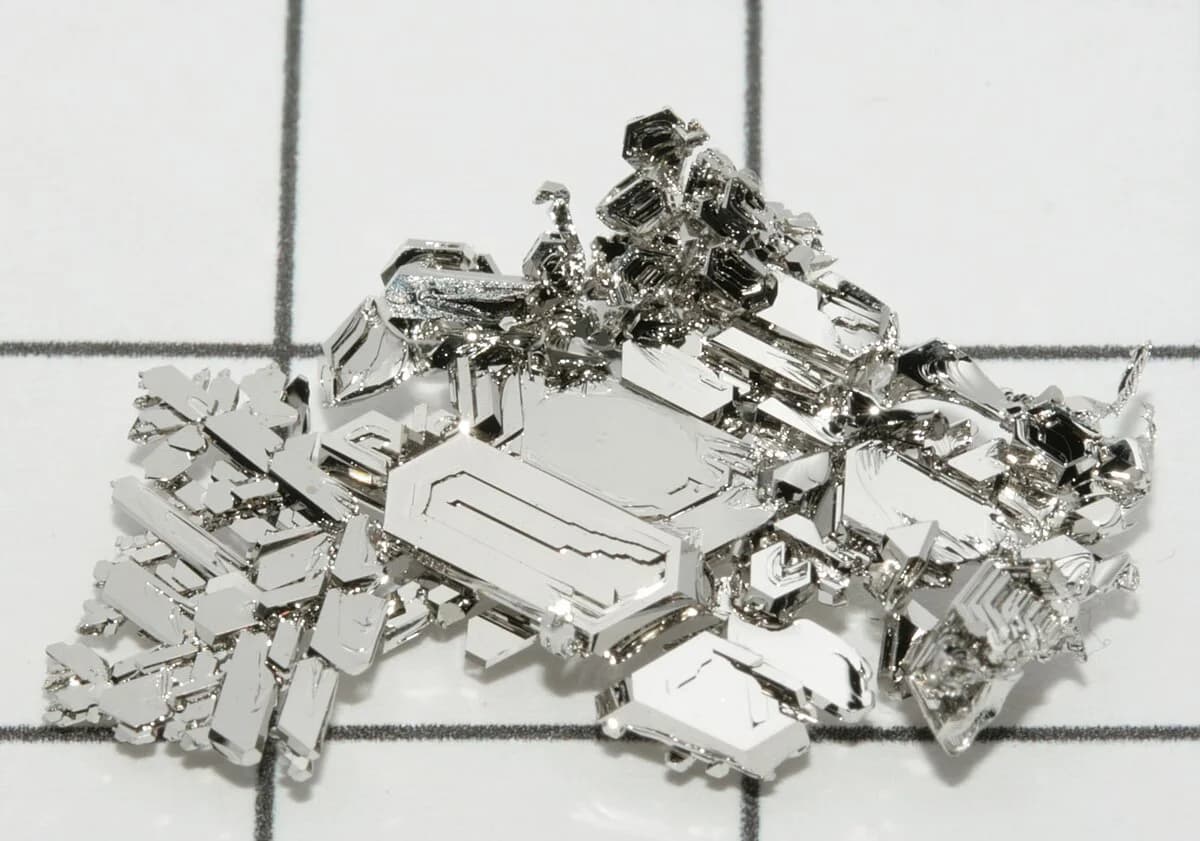
Platinum Price Forecast 2026: The Most Undervalued Metal
Markets · Mar 21, 2026

Strait of Hormuz Crisis 2026: Full Analysis
Geopolitics · Mar 14, 2026

Fuel Supply Chains: Australia's Stockpile Reality
Energy · Mar 15, 2026

Africa Resource Wars: The New Scramble for Lithium and Cobalt
Geopolitics · Mar 19, 2026
The Info War: Understanding Russia's Role
Geopolitics · Mar 15, 2026
Latest from The Board
![Hezbollah Fires Anti-Ship Cruise Missile at Warship Off Lebanon [2026]](/_next/image/?url=https%3A%2F%2Ftheboard.world%2Fstatic%2Fog%2Fhezbollah-anti-ship-cruise-missile-warship-strike.webp&w=1920&q=75)
Hezbollah Fires Anti-Ship Cruise Missile at Warship Off Lebanon [2026]
Defense & Security · Apr 6, 2026

Trump's Iran Ultimatum: What Happens if Talks Fail?
Geopolitics · Apr 5, 2026
US Crew Rescued After Jet Downed: Israeli Media Reports
Defense & Security · Apr 3, 2026
Hegseth Asks Army Chief to Step Down: Why?
Policy & Intelligence · Apr 2, 2026

Trump Fires Attorney General: What Happens Next?
Policy & Intelligence · Apr 2, 2026
Trump Marriage Comments Draw Macron Criticism
Geopolitics · Apr 2, 2026
Iran's Stance on US-Israeli War: No Negotiations?
Geopolitics · Apr 1, 2026
Trump's Iran War: What's the Exit Strategy?
Geopolitics · Apr 1, 2026