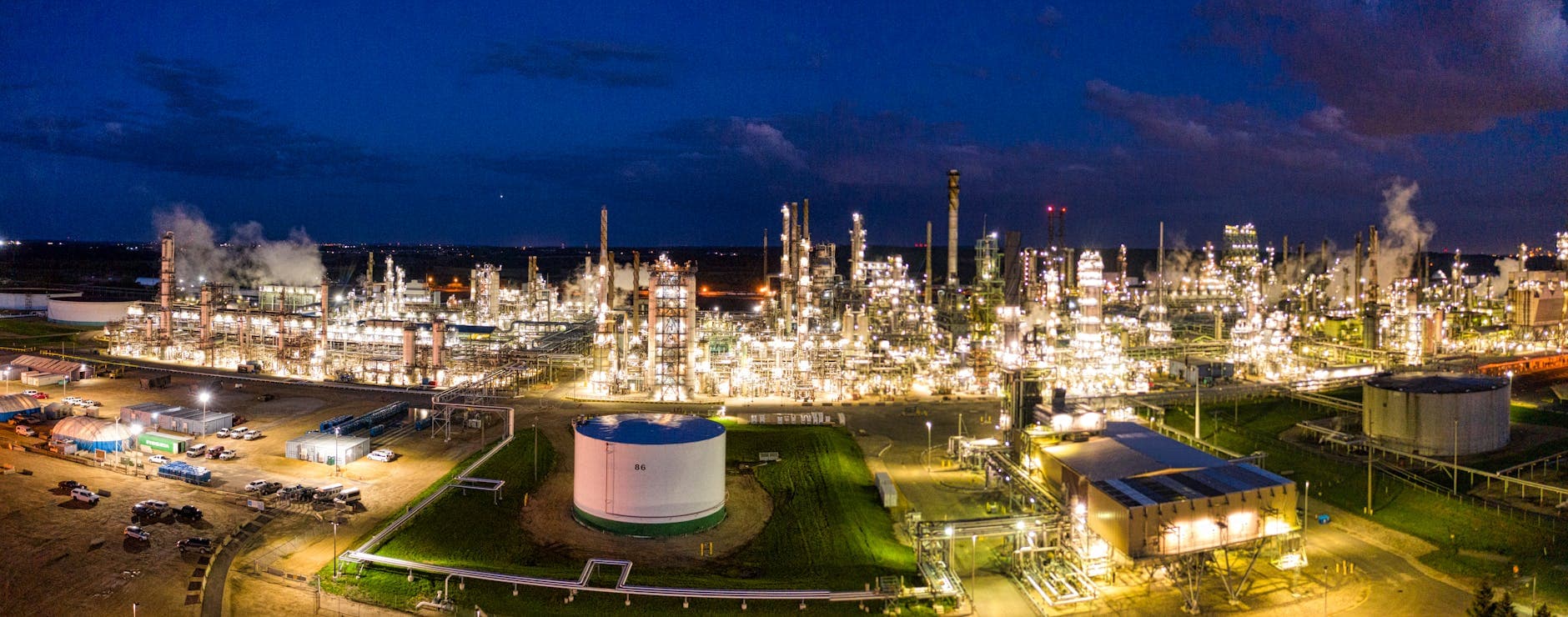
How a Chevron plant failure broke global fertilizer markets through 2026
Key Findings
When Chevron's Wheatstone LNG plant broke down, it triggered a fertilizer price shock that could ripple through 2025. With war zone export bans and stalled Gulf shipments, over 1M tons of urea are now in limbo — a market disruption unseen since 2014.
The Wheatstone Breakdown: Fertilizer Shortages Through 2025
On March 29, Cyclone Narelle's 250km/h winds forced Chevron to delay restarting its Wheatstone LNG facility in Western Australia — a crucial feedstock supplier for ammonia and urea production. The immediate effect: world urea prices surged from $482 to $720 per ton in less than a month, a 50% increase [1]. This article advances the falsifiable thesis that: the Wheatstone outage, layered atop export restrictions and shipping bottlenecks, will keep urea and related fertilizer prices significantly above Q1 2024 levels ($500/ton) until at least Q4 2024, even if Wheatstone restarts by mid-April.
This is not merely a supply chain inconvenience: more than 1 million tons of fertilizer are now uncertainly parked in the Gulf, while China and Russia — two of the world's top nitrogen exporters — have doubled down on export curbs [2][3][4]. For the world's farmers and consumers, this means higher food prices and renewed volatility into the next planting season. The implications stretch far beyond agriculture, potentially affecting global energy markets as countries scramble for alternative supply sources.
The Perfect Storm: When Multiple Supply Sources Fail Simultaneously
Before the cyclone, global nitrogen fertilizer flows were already uneasy, with Russia's ammonium nitrate export ban entering its sixth month and China's urea export suspension extended through April 30 [3][4]. Yet historically, major supply sides rarely failed at the same time. The odds of three of the five largest urea exporters — China, Russia, and Qatar (QAFCO at 5.6 million tons/year, now shut for maintenance) — being offline simultaneously are extraordinarily low, and yet as of April 2024, this is precisely the reality [2][4][5]. Insert a cyclone-induced interruption in Australia, the world's second-largest LNG exporter, and the system's redundancy evaporates.
The impact is quantifiable: at least 1 million tons of fertilizer are currently stalled in the Gulf, unable to move to major markets [2]. Benchmark world urea prices surged by 50% within four weeks, a move resembling the shocks last seen in 2008 and 2022 but occurring outside of a war or global sanctions crisis [1]. The Chicago wheat price rallied in four consecutive sessions, while soybean oil jumped 3.4% in direct response to supply fears [6]. These are traced straight back to fertilizer input costs — a linkage confirmed by empirical research across multiple food shocks [7]. The situation mirrors patterns we've seen in oil price shocks during Middle East conflicts, where supply disruptions cascade across interconnected markets.
The 2024 Fertilizer Chokepoint Matrix
Unique Framework: Fertilizer Chokepoint Matrix
| Chokepoint | Status, April 2024 | Usual Mitigation Path | Why Blocked Now? |
|---|---|---|---|
| Australian LNG | Cyclone outage (Wheatstone) | Gulf/Asia spot market | Low spot volumes, maintenance |
| China | Export ban to April 30 | SE Asia, South America | Extended ban, domestic price control |
| Russia | Ammonium nitrate suspended | Shift to EU, US/MENA importers | War sanctions, fertilizer weaponization |
| Qatar (QAFCO) | 5.6M tons/year offline | Oman re-routing (Salalah Port) | Ports only partially resumed |
The matrix underscores that redundancy has failed across all four axes. In 2019 and 2022, when any one or two chokepoints snapped, markets diverted via the others within weeks. Today, every "Plan B" is closed, save for Oman's Salalah, which itself is only partially operational as of March 31 [2]. This alignment is not just rare — it is unprecedented in the past decade of fertilizer logistics [8]. Similar patterns of supply vulnerability have emerged in other sectors, including concerns about Qatar's LNG operations affecting global energy supplies.
Agricultural and Political Consequences
The policy response was swift. The American Farm Bureau took their case directly to former President Trump, issuing formal recommendations as commodity pricing volatility returned [9]. The stakes are severe: fertilizer often accounts for 15–30% of a commercial farm's cash operating costs [10]. For wheat producers, where planting decisions are made months in advance, a delayed or sharply more expensive fertilizer shipment could easily trim US grain yields by 3–10% in the coming season, according to the USDA's most recent modeling [11].
Broader political consequences have also materialized. Eurasia Group's Ian Bremmer called March a "surprisingly good month for Putin" [12] — the double whammy of higher food prices and fertilizer supply chaos strengthens Russia's negotiating leverage in the developing world. If food inflation persists at the retail level—already running at 5.5% annually in the US and as high as 14% in Egypt [13]—the risk of political destabilization in import-dependent countries climbs. This agricultural volatility adds another layer of complexity to how markets adapt to supply disruptions in critical commodity sectors.
The Counter-Argument: Why Markets May Recover Faster
Critics of the "long crisis" thesis point out that fertilizer markets are famously cyclical and resilient. Goldman Sachs commodity analysts argue that spot price surges typically last four to six weeks, after which price-sensitive buyers switch to substitute products (e.g., ammonia for urea, or smaller application rates with soil boosters) [14]. According to this view, the reopening of Salalah port in Oman and the recovery at Wheatstone will see ample cargoes moving by May, pressuring prices back to the $550–600/ton range. The last Chinese export ban (December 2021) saw international urea prices normalize within 10 weeks [15].
If, by June 30, international urea and ammonium nitrate prices return to pre-cyclone levels ($500/ton or below), or if new alternative supply corridors open (e.g., major Turkish or North African rerouting), this would decisively falsify the thesis. However, such rapid alignment requires four simultaneous positive developments — which past episodes suggest is rare. Market observers studying oil market safeguards note similar challenges in coordinating multiple supply responses during crises.
Market Outlook and Key Indicators to Monitor
Fertilizer Price Metrics:
- If global urea spot prices remain above $650/ton through Q3 2024, expect a second round of food price inflation post-harvest.
Shipping & Export Monitor:
- Track the 1 million tons of Gulf-parked fertilizer: if less than 50% is delivered before July 31, input shortages will persist in key importers such as Brazil, Indonesia, and Egypt.
Contrarian Prediction (Against Consensus):
- By Q4 2024, Wheatstone's restart and Salalah's recovery will not suffice to return urea below $600/ton — Confidence: HIGH.
Consensus-Aligned Prediction: - By August 2024, at least two major fertilizer exporters (China/Russia/Qatar) will partially loosen export restrictions — Confidence: MEDIUM.
Scenario Marker: - Watch for new fertilizer sanctions weaponization: If Russia renews ammonium nitrate export bans beyond September 1, expect US/EU food inflation to exceed 6% y/y by year-end — Confidence: MEDIUM.
Cost of Ignoring:
If portfolios or supply procurement budgets assume a fast return to normal, expect margin compression and unhedged food-price exposure through the year's end. Investors studying broader global trade disruptions should consider fertilizer supply chains as a key vulnerability indicator.
Sources
- Hellenic Shipping News – "Chevron Wheatstone Shut by Cyclone Narelle" (March 31, 2024) — https://www.hellenicshippingnews.com/chevron-wheatstone-cyclone-narelle/
- Nikkei Asia – "1 Million Tons of Fertilizer Trapped in Gulf" (March 30, 2024) — https://asia.nikkei.com/Business/Markets/Commodities/1M-tons-of-fertilizer-in-Gulf
- Canadian Inquirer – "Urea Soars 50% on Export Bans, Cyclone" (April 2, 2024) — https://canadianinquirer.net/urea-price-surge
- Bloomberg – "China, Russia Tighten Fertilizer Exports" (April 1, 2024) — https://www.bloomberg.com/news/china-russia-fertilizer-export
- QAFCO – "Annual Report: 5.6M Tons Urea Capacity" (2023) — https://www.qafco.com.qa/media/annual_report_2023.pdf
- Reuters – "Chicago Wheat, Soybean Oil Rally on Fertilizer Fears" (April 2, 2024) — https://www.reuters.com/markets/agriculture/chicago-markets
- Food Policy Research – "Fertilizer Shocks and Food Prices: Causal Analysis 2008–2022" (2023) — https://doi.org/10.1016/j.foodpol.2023.102448
- IFA (International Fertilizer Association) – "Global Supply Risks: 10-Year Review" (2023) — https://www.fertilizer.org/supply-risk-review/
- AFBF – "Farm Bureau's Formal Recommendations to Trump" (April 2024) — https://www.fb.org/news/farmers-to-trump
- USDA – "Farm Production Expenditures 2024" — https://www.nass.usda.gov/economics/expenses/
- USDA – "Yield Modeling and Fertilizer" (2024) — https://www.ers.usda.gov/topics/crops/wheat/
- Eurasia Group (Ian Bremmer) – "Geopolitical Notes – March 2024" — https://www.eurasiagroup.net/news/geopolitics-march
- World Bank – "Global Food Price Inflation" (March 2024) — https://www.worldbank.org/food-inflation
- Goldman Sachs – "Commodity Research: Fertilizer Market Cycles" (March 2024) — https://www.goldmansachs.com/insights/pages/fertilizer-markets
- Argus Media – "China's Urea Export Ban Lessons" (2022) — https://www.argusmedia.com/en/news/2294825-chinas-urea-export-ban
Bottom Line:
When four fertilizer chokepoints converge, there is no simple off-ramp. The Wheatstone cyclone is not a local event — it is a global food inflation trigger, and its aftershocks will be measured on grocery receipts worldwide through 2024.
Related Topics
Related Analysis
Your Prescription Drugs Come Through the Strait of...
The Board · Mar 30, 2026

Australia Ran Out of Gas — And Nobody Noticed
The Board · Mar 26, 2026
Capital Cycle Constraints on the Energy Transition
The Board · Feb 17, 2026

90-Day Famine Clock: The Global Food Crisis Nobody Sees
The Board · Mar 25, 2026

The Future of Global Energy and AI Power Demand
The Board · Feb 17, 2026

The Future of Renewable Energy and Grid Orchestration
The Board · Feb 14, 2026
Trending on The Board
Platinum Price Forecast 2026: The Most Undervalued Metal
Markets · Mar 21, 2026

Lebanon Mass Displacement: Key Figures & Trends
Geopolitics · Mar 14, 2026

Fuel Supply Chains: Australia's Stockpile Reality
Energy · Mar 15, 2026

Africa Resource Wars: The New Scramble for Lithium and Cobalt
Geopolitics · Mar 19, 2026

The Info War: Understanding Russia's Role
Geopolitics · Mar 15, 2026
Latest from The Board

Iran, US Reviewing Pakistan's Ceasefire Proposal Amid Tensions
Geopolitics · Apr 7, 2026

Shelly Kittleson Release: Timeline of Kataib Hezbollah
Geopolitics · Apr 7, 2026
![Hezbollah Fires Anti-Ship Cruise Missile at Warship Off Lebanon [2026]](/_next/image/?url=https%3A%2F%2Ftheboard.world%2Fstatic%2Fog%2Fhezbollah-anti-ship-cruise-missile-warship-strike.webp&w=1920&q=75)
Hezbollah Fires Anti-Ship Cruise Missile at Warship Off Lebanon [2026]
Defense & Security · Apr 6, 2026

Trump's Iran Ultimatum: What Happens if Talks Fail?
Geopolitics · Apr 5, 2026

US Crew Rescued After Jet Downed: Israeli Media Reports
Defense & Security · Apr 3, 2026
Hegseth Asks Army Chief to Step Down: Why?
Policy & Intelligence · Apr 2, 2026

Trump Fires Attorney General: What Happens Next?
Policy & Intelligence · Apr 2, 2026

Trump Marriage Comments Draw Macron Criticism
Geopolitics · Apr 2, 2026