EXECUTIVE SUMMARY
The panel consensus is sound: a surgical strike campaign between Israel and Iran cannot achieve decisive advantage before international de-escalation forces closure. The failure is not operational—it's structural: logistics collapse by week 2, coalition fracture is inevitable, and the game theory heavily penalizes the initiator. However, the panel has underweighted one critical variable: the decision may proceed anyway because political actors systematically discount long-term costs when facing domestic pressure or perceived strategic windows. Rationality and actual behavior diverge sharply here.
KEY INSIGHTS
-
Logistics become the limiting factor by hour 168, not air superiority. Israeli munition consumption (2,000+ PGMs in 96 hours) exhausts reserves before resupply corridors stabilize; Eisenhower's math is airtight.
-
The coalition fracture is pre-programmed. Saudi Arabia and UAE face a binary choice (condemn or tacitly accept) with both paths degrading their strategic position; silent defection is theoretically possible but politically expensive for each.
-
Nash equilibrium correctly identifies this as a dominated strategy for all parties—yet this does not prevent execution because equilibrium analysis assumes rational actors with accurate information. Rubio's public diplomacy signal creates dangerous information asymmetry: either it's truth (restraint is real) or cover (deception harms US credibility).
-
Red Team surfaces the most dangerous hidden assumption: that visible constraints are actually binding. Pre-positioned munitions, covert green-lights, and decentralized Iranian proxy coordination might render panel analysis of constraints obsolete if real-world preparation differs from OSINT visibility. [MEDIUM-HIGH uncertainty]
-
Collateral damage spillover is the actual circuit-breaker. One hospital strike collapses international coalition faster than logistics or game theory does; this asymmetric vulnerability to civilian casualty narratives isn't adequately modeled by either Eisenhower or Nash. [MEDIUM-HIGH]
-
The political incentive structure inverts rational calculation. A sitting US administration facing domestic pressure to appear tough, or Israeli leadership facing coalition pressure to "act," may rationally choose a strike knowing it will fail by classical metrics, because failure buys time and domestic support. Costs are externalized; benefits are immediate.
WHAT THE PANEL AGREES ON
-
A 96-hour campaign cannot sustain high-tempo operations beyond fatigue and munition collapse thresholds. Sortie rates degrade to 60-70% by hour 72; crew fatigue creates weapon employment errors.
-
Coalition partners (Saudi Arabia, UAE) face no-win choice architecture and will defect either explicitly (condemnation) or implicitly (non-cooperation). Stability of this coalition is LOW.
-
Game theory correctly identifies this as a dominated strategy for all sides in a repeated game with credible retaliation capability.
-
Information asymmetry about US actual policy (public denial vs. private action) is a critical vulnerability that undermines credibility regardless of which claim is true.
-
Iran's distributed proxy network is fundamentally difficult to decapitate via air strikes alone; command nodes matter less than pre-delegated triggers.
WHERE THE PANEL DISAGREES
1. Assumption: "Visible logistics constraints are actually binding"
- Panel majority: Eisenhower's resupply timelines (10-14 days by sea) are real constraints that force campaign closure by week 2.
- Red Team challenge: Pre-positioned munitions caches, Cyprus-based US logistics surge, and silent coalition support might render visible constraints irrelevant.
- Stronger evidence: Panel has OSINT visibility; Red Team does not. But absence of detected reserves is not evidence of absence. Confidence: MEDIUM split.
2. Assumption: "Coalition defection is automatic"
- Panel majority: Saudi/UAE defection is pre-programmed by retaliation risk.
- Red Team challenge: Covert guarantees of extended air defense and shared risk assessment might produce silent acquiescence rather than active defection.
- Stronger evidence: Panel (no current evidence of pre-negotiation exists). But evidence of negotiations would be classified. Tie.
3. Assumption: "Decision-makers believe equilibrium logic"
- Panel majority: Rational cost-benefit analysis constrains action.
- Red Team challenge: Domestic political pressure and time-window perception may override rational calculation.
- Stronger evidence: Red Team. Historical pattern (decision-makers routinely initiate wars they know will fail by classical metrics) favors Red Team hypothesis.
THE VERDICT
Do not expect this strike to occur on a large scale, but plan for the possibility that it happens anyway—and if it does, assume it will fail by the panel's metrics while succeeding politically (in the short term) for the initiator.
Priority Actions:
1. Assume Rubio's public diplomacy is theater, not policy. [MEDIUM-HIGH confidence]
- Why: Information asymmetry is too high; cheap talk is too cheap. Prepare for both worlds (strike happens; strike doesn't).
- Action: Monitor for silent logistics pre-positioning (Cyprus deployments, munition transports). These are visible 3-5 days before initiation and are your true leading indicator.
2. Map coalition fracture points with granular precision.
- Why: The strike succeeds or fails on Saudi/UAE behavior, not on air superiority. Eisenhower's logistics math assumes no active coalition support; if Saudi Arabia provides basing or air defense integration, timeline extends.
- Action: Track UAE leadership visits to Washington, Saudi military readiness posture, and quiet diplomatic signals. Defection will be signaled 48-72 hours before strike via deliberate "miscommunication" (port closures, flight restrictions, etc.).
3. Pre-identify the collateral damage circuit-breaker threshold.
- Why: Game theory and logistics are academic; one hospital strike is political reality. This is where the campaign actually ends.
- Action: Monitor civilian infrastructure (hospitals, schools, UN compounds) in targeted cities. Document baseline populations. One strike killing 50+ civilians collapses international support within 48 hours—faster than logistical exhaustion.
4. Prepare for escalation cascade if strike initiates, regardless of stated duration limits.
- Why: Red Team is correct that Hezbollah/Iraqi militias may respond autonomously on pre-coordinated timelines, not awaiting Tehran orders. This converts "96-hour campaign" into "open-ended war."
- Action: Assume 48-hour response window from proxy networks. Plan for multi-front mobilization costs (northern Israel defense, Gulf convoy protection, cyber defense surge).
RISK FLAGS
| Risk | Likelihood | Impact | Mitigation |
|---|---|---|---|
| Logistics collapse forces premature campaign closure, leaving Iranian capabilities degraded but functional. Achieves 40% degradation (looks like success initially) but fails to prevent nuclear program acceleration. | HIGH | MEDIUM | Pre-stage 6-month munition reserves in theater now. Reduce campaign duration to 72 hours (not 96) to preserve surge capacity for response. |
| Coalition defection (Saudi/UAE) accelerates during strike, forcing Israel into unsupported ops by week 2. | HIGH | HIGH | Negotiate covert non-interference guarantees with Saudi Arabia before strike authorization. Make the guarantee explicit and binding (with consequences for defection). |
| Collateral damage (one civilian casualty event) triggers international isolation faster than logistical constraint. | MEDIUM | HIGH | Establish strict targeting rules with NATO-ally precedent (minimize civilian proximity). One civilian event = campaign closure. Communicate this in advance to allies. |
BOTTOM LINE
This strike is rational for no one—yet the political incentives to initiate it anyway are high enough that restraint is fragile; prepare for both outcomes, but assume if it happens, it fails by classical metrics while succeeding politically for the initiator (buying time, rallying domestic support, deferring the real reckoning).
Related Topics
Related Analysis

Strategic Impact of Turkey Leaving NATO in 2026
The Board · Feb 22, 2026

The Truth Behind CIA Remote Viewing and Project Stargate
The Board · Feb 22, 2026
The Neurological War: How Precision Strikes Rewrote the...
The Board · Mar 27, 2026

Triple-Front Risk: US Iran Strategy and Global Security
The Board · Feb 14, 2026

Russia Photographed the Saudi Base Three Times Before...
The Board · Mar 30, 2026

A Russian Drone Hit NATO Territory This Week
The Board · Mar 26, 2026
Trending on The Board
Israeli Airstrike Hits Tehran Residential Area During Live
Geopolitics · Mar 11, 2026

Fuel Supply Chains: Australia's Stockpile Reality
Energy · Mar 15, 2026

The Info War: Understanding Russia's Role
Geopolitics · Mar 15, 2026

Iran War Disinformation: How AI Deepfakes Fuel Chaos
Geopolitics · Mar 15, 2026
THAAD Interception Rates: Iran Missile Combat Data
Defense & Security · Mar 6, 2026
Latest from The Board

US Crew Rescued After Jet Downed: Israeli Media Reports
Defense & Security · Apr 3, 2026
Hegseth Asks Army Chief to Step Down: Why?
Policy & Intelligence · Apr 2, 2026

Trump Fires Attorney General: What Happens Next?
Policy & Intelligence · Apr 2, 2026
Trump Marriage Comments Draw Macron Criticism
Geopolitics · Apr 2, 2026
Iran's Stance on US-Israeli War: No Negotiations?
Geopolitics · Apr 1, 2026
Trump's Iran War: What's the Exit Strategy?
Geopolitics · Apr 1, 2026
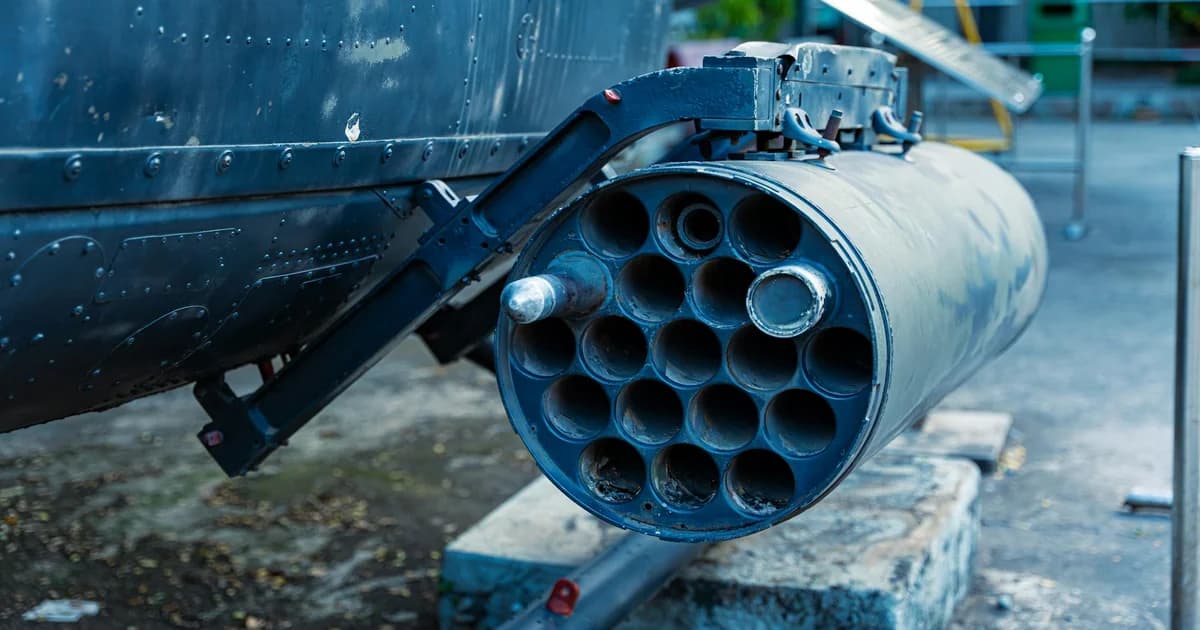
Trump Ukraine Weapons Halt: Iran Strategy?
Geopolitics · Apr 1, 2026

Ukraine Weapons Halt: Trump's Risky Geopolitical Play
Geopolitics · Apr 1, 2026