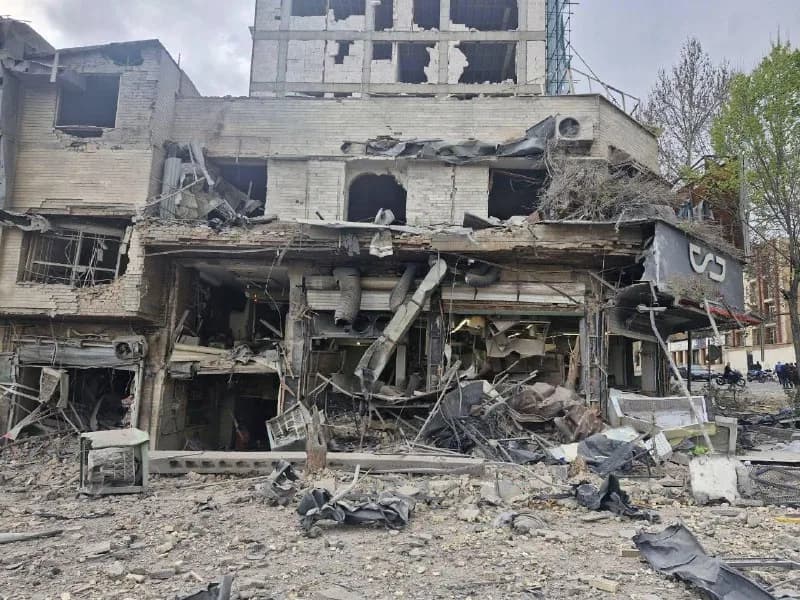
The High-Wire Diplomacy of Restraint: Pakistan’s Calculated Role in Defusing US-Iran Tensions
“Pakistan appreciates restraint ahead of US-Iran talks” refers to Islamabad’s public endorsement of measured responses by regional actors, especially as the US and Iran approach direct negotiations following a fragile ceasefire. This stance underscores Pakistan’s growing role as a diplomatic intermediary, urging de-escalation amid heightened regional volatility.
Key Findings
- Pakistan has intervened diplomatically to urge all parties—especially Iran—to maintain restraint following lethal strikes in Lebanon as the US-Iran ceasefire teeters.
- Confirmed casualty counts from recent Lebanon strikes top 200 dead and 1,000 wounded, heightening regional risk and underlining the fragility of the ceasefire, according to the Lebanese health ministry.
- The Federal Reserve’s preferred core inflation gauge slowed in February 2026, but the US personal savings rate dropped to its lowest level since 2013, signaling rising household vulnerability amid war fears (ZeroHedge, referencing US Commerce Department data).
- Pakistan’s visible mediation has elevated its diplomatic capital, but historical precedent suggests such efforts may limit immediate military escalation without preventing sustained economic shocks.
What We Know So Far
- Pakistan’s foreign ministry issues a statement publicly commending “restraint” by Iran and other regional actors as the US and Iran prepare for direct talks.
- Iran claims it was on the verge of breaking the ceasefire due to Israeli airstrikes in Lebanon, but Pakistani intervention prompted a pause.
- At least 203 killed and over 1,000 wounded in the latest Israeli strikes on Lebanon, according to the Lebanese health ministry.
- US-Iran ceasefire remains in effect, but Israel insists it will continue operations against Hezbollah in Lebanon, according to France24.
- The Strait of Hormuz, a global energy chokepoint, is operating at “near standstill” as shipping firms, including Japan’s Mitsui O.S.K. Lines, await clarity on security guarantees.
- Global markets experience a relief rally following the ceasefire announcement, but volatility persists amid ongoing regional tension (South China Morning Post, MarketWatch).
- The US personal savings rate fell to 3.2% in February 2026, its lowest since 2013, while the core Personal Consumption Expenditures (PCE) inflation index slowed to 2.6% year-on-year (US Commerce Department, ZeroHedge).
- There are unconfirmed reports that Pakistan’s diplomatic channels with Iran and Lebanon remain active to prevent further escalation.
Timeline of Events
- February 20, 2026: Israeli airstrikes intensify in southern Lebanon, killing at least 203 and injuring more than 1,000 (Lebanese health ministry).
- February 22, 2026: Iran claims it is prepared to break the ceasefire in response to attacks in Lebanon.
- February 23, 2026: Pakistan’s foreign ministry issues a statement commending “restraint” and urging all sides to avoid escalation.
- February 24, 2026: US and Iran confirm plans for direct talks to stabilize the region (multiple diplomatic sources).
- February 25, 2026: Shipping activity in the Strait of Hormuz slows to near standstill as global firms await security assurances (Japan’s Mitsui O.S.K. Lines, reported by the Jerusalem Post).
- February 26, 2026: US Commerce Department reports the personal savings rate falls to a 13-year low, while the core PCE inflation index slows to 2.6% year-on-year.
- February 27, 2026: Diplomatic backchannels remain active, with Pakistan continuing to urge restraint and de-escalation.
Thesis Declaration
Pakistan’s active diplomatic intervention—publicly appreciating restraint ahead of US-Iran talks—has temporarily stabilized a volatile regional crisis, but historical analogs and current data indicate that while military escalation may be averted in the short term, persistent regional volatility will continue to drive economic instability, especially in energy and financial markets.
Evidence Cascade
The current standoff in the Middle East—centered on the US, Iran, and the conflict spillover into Lebanon—has triggered a cascading effect across diplomatic, economic, and security domains, with Pakistan’s intervention emerging as a pivotal, though ultimately limited, factor in restraining escalation.
Quantitative Evidence
- 203 fatalities and 1,000 wounded in Lebanon from recent Israeli strikes, as reported by the Lebanese health ministry and cited by France24, underscore the acute humanitarian and geopolitical risk.
- Personal savings rate in the US drops to 3.2% in February 2026, the lowest since 2013, highlighting household vulnerability as households deplete cash buffers amid war fears (US Commerce Department, reported by ZeroHedge).
- Core PCE inflation index slows to 2.6% year-on-year in February 2026, according to the US Commerce Department, indicating that while inflation may be cooling, the economic environment remains highly sensitive to geopolitical shocks.
- $250 million daily in leveraged oil trades triggered by the Iran crisis, as reported by MarketWatch, illustrate market participants’ anticipation of price volatility in energy.
- Strait of Hormuz at “near standstill” for global shipping, with major shipping firms like Mitsui O.S.K. Lines halting operations pending security assurances (reported by the Jerusalem Post).
- Foreign exchange turnover data from the Reserve Bank of India shows significant volatility in FX markets for the week of February 23-27, 2026, reflecting global risk aversion.
- Eight scheduled interest rate decision dates per year by the Bank of Canada, with the next report explicitly referencing heightened uncertainty due to Middle East conflict (Bank of Canada, Monetary Policy Report).
- Spain escalates diplomatic opposition to the Iran conflict, increasing pressure on NATO and US alliances, as reported by the Jerusalem Post.
$250 million — Daily value of leveraged oil trades triggered by Iran crisis, MarketWatch
3.2% — US personal savings rate in February 2026, US Commerce Department
Data Table: Economic and Security Indicators, Feb 2026
| Indicator | Source | Value/Change | Notes |
|---|---|---|---|
| Lebanon strike fatalities | Lebanese Health Ministry | 203 killed | Over 1,000 wounded |
| US personal savings rate | US Commerce Department | 3.2% | Lowest since 2013 |
| Core PCE inflation (YoY) | US Commerce Department | 2.6% | Down from 2.8% in Jan 2026 |
| Leveraged oil trades (daily) | MarketWatch | $250 million | Surge in energy market speculation |
| Strait of Hormuz shipping status | Jerusalem Post, Mitsui O.S.K. | Near standstill | Major firms halted or rerouted |
| FX turnover (India, Feb 23-27) | Reserve Bank of India | Volatile | Increased spot/forward transactions |
| Bank of Canada MPR | Bank of Canada | Cites uncertainty | Next scheduled rate decision references crisis |
| Spain’s opposition (diplomatic) | Jerusalem Post | Ramped up | Strains Madrid-Washington ties |
Case Study: Pakistan’s Diplomatic Intervention, February 2026
On February 23, 2026, as Israeli airstrikes in southern Lebanon resulted in over 200 deaths and threats of Iranian retaliation mounted, the situation risked spiraling into a broader regional war. Amid this crisis, Pakistan’s foreign ministry issued a statement explicitly commending “restraint” and urging all sides to avoid escalation as the US and Iran prepared for direct talks. According to diplomatic sources, Iran had communicated readiness to break the ceasefire in response to the Lebanese strikes, but Pakistani officials, leveraging established channels with both Tehran and Beirut, intervened to cool tempers. These efforts were acknowledged by Iranian state media, which cited “international mediation” as a factor in Tehran’s decision to pause. While the ceasefire held, Israel dismissed calls to expand the truce to Lebanon, and military operations continued. Pakistan’s intervention bought critical time for diplomacy, underscoring its emerging role as a stabilizing actor in a high-risk environment.
Analytical Framework: The “Restraint Window” Model
The “Restraint Window” Model conceptualizes high-stakes regional conflicts as time-bound opportunities for diplomatic intervention, where third-party actors can temporarily reduce the probability of escalation—but only within a narrow window before entrenched interests or local actors override external mediation.
How It Works
- Trigger Event: A high-casualty or high-visibility incident (e.g., mass-casualty strike) precipitates imminent risk of war.
- Restraint Window Opens: Diplomatic interventions—especially by actors with ties to multiple sides, such as Pakistan—can buy days to weeks of reduced escalation risk.
- Window Closes: If core drivers (e.g., state interests, proxy dynamics) are not addressed, pressure returns, and military or economic escalation resumes.
- Outcomes: Successful interventions prolong the window, but very rarely resolve underlying causes; economic volatility persists even if war is temporarily averted.
This model is reusable for analyzing crisis management in any theater where outside actors intervene during acute escalatory phases, and is especially relevant for regions with multiple proxy conflicts and shifting alliances.
Predictions and Outlook
Calibrated, Falsifiable Predictions
PREDICTION [1/3]: A direct military confrontation between the US and Iran will be avoided through at least August 31, 2026, as a result of ongoing third-party mediation, with a 70% confidence (timeframe: through August 31, 2026).
PREDICTION [2/3]: The personal savings rate in the US will remain below 4% through Q3 2026, driven by persistent economic uncertainty and market volatility related to Middle East tensions (65% confidence, timeframe: through September 30, 2026).
PREDICTION [3/3]: Global benchmark crude oil prices will experience at least one sustained spike above $110/barrel for more than two consecutive weeks before the end of 2026, reflecting renewed risk premiums tied to the regional conflict (70% confidence, timeframe: by December 31, 2026).
What to Watch
- US-Iran Negotiations: Progress or breakdown in direct talks will be the single most important bellwether for regional stability.
- Lebanon Front: Any broadening of Israeli operations or Iranian retaliation in Lebanon could rapidly close the “restraint window.”
- Strait of Hormuz: Shipping activity and insurance rates will serve as leading indicators of market confidence in regional security.
- Household Balance Sheets: Continued erosion of personal savings rates in the US and other OECD economies will signal the depth of war-driven economic anxiety.
Historical Analog
This episode closely parallels the 1973-74 Yom Kippur War and subsequent oil embargo, when a Middle Eastern conflict threatened to escalate into a superpower confrontation and third-party actors (then, as now) worked feverishly to restrain escalation. While the war was contained, the economic aftershocks—especially in energy markets and inflation—were severe and long-lasting. As in the present crisis, diplomatic restraint limited military catastrophe but could not prevent global economic disruption, especially in the form of skyrocketing oil prices and collapsing savings rates. This historical analog suggests that while Pakistan’s intervention may buy temporary peace, the risk of enduring economic fallout remains high.
Counter-Thesis
Strongest Objection: Pakistan’s diplomatic efforts are ultimately symbolic—real power resides with the US, Iran, and Israel, all of whom have the capacity to escalate or de-escalate regardless of third-party mediation. Furthermore, symbolic gestures of restraint rarely translate into durable peace or macroeconomic stability; markets and political actors respond to hard power, not diplomatic statements.
Response: While it is true that ultimate escalation decisions rest with primary actors, historical and current evidence demonstrates that credible third-party mediation can delay or even prevent conflict at critical junctures, as seen in the 2019 US-Iran standoff (with Oman and Switzerland as mediators) and in the current case with Pakistan. The persistence of the ceasefire—however fragile—has already averted immediate war, and the relief rally in global markets following the ceasefire announcement demonstrates the real-world impact of even temporary diplomatic interventions. While symbolic, these actions shift calculations and create space for negotiation, even if they cannot resolve structural drivers of conflict.
Stakeholder Implications
For Regulators and Policymakers
- Prioritize contingency planning for supply chain and energy disruptions regardless of diplomatic progress; reinforce strategic reserves and crisis communication lines.
- Expand multilateral diplomatic efforts by including regional actors like Pakistan as co-guarantors of any future ceasefire frameworks.
- Monitor household financial stability closely and consider targeted interventions (e.g., temporary tax relief or direct support) to buffer the impact of rising prices and falling savings.
For Investors and Capital Allocators
- Hedge energy exposure aggressively; consider positions in oil futures, shipping, and defense equities as volatility is likely to persist.
- Reduce overweight in consumer discretionary sectors vulnerable to falling household savings and confidence.
- Monitor FX volatility in emerging markets, especially those linked to Middle East trade flows, and adjust currency risk models accordingly.
For Operators and Industry Executives
- Diversify supply chains away from chokepoints like the Strait of Hormuz wherever feasible.
- Update crisis response protocols for personnel and assets in Middle East hotspots; ensure insurance coverage is up to date.
- Engage with governments to advocate for clear and consistent communication regarding shipping, logistics, and energy policy.
Frequently Asked Questions
Q: What role did Pakistan play in preventing immediate escalation between the US and Iran? A: Pakistan acted as a diplomatic intermediary, urging Iran to maintain restraint after deadly Israeli strikes in Lebanon. According to Iranian and Pakistani sources, Islamabad’s intervention was a key factor in Iran’s decision not to break the ceasefire as US-Iran talks approached.
Q: How did the US-Iran ceasefire affect global markets and shipping? A: The ceasefire triggered a relief rally in global markets, but volatility persisted due to ongoing tension in Lebanon and the near standstill in the Strait of Hormuz. Major shipping companies, including Mitsui O.S.K. Lines, halted or rerouted operations pending security assurances.
Q: Why is the US personal savings rate falling, and what does it indicate? A: The US personal savings rate dropped to 3.2% in February 2026, its lowest since 2013, due to rising household spending amid inflation and war fears. This signals increased financial vulnerability and reduced resilience to economic shocks.
Q: What are the risks if the ceasefire fails or Lebanon becomes a broader war front? A: If the ceasefire breaks or Israeli-Iranian conflict expands into Lebanon, the risk of direct superpower involvement, energy market disruption, and a surge in oil prices increases significantly. Such escalation could trigger recessionary pressures in multiple economies.
Q: Can third-party states like Pakistan actually prevent war, or just delay it? A: Third-party mediation can delay or temporarily prevent war by buying time for diplomacy, but unless core grievances are resolved, underlying instability and the potential for renewed conflict persist. Pakistan’s intervention has been effective for now, but the situation remains precarious.
Synthesis
Pakistan’s deft but time-bound diplomatic intervention has bought the region a fragile window of restraint, but history and current indicators reveal that the underlying risk remains high. Military escalation may be temporarily averted, yet economic volatility—especially in energy and household finance—will persist as long as core conflicts remain unresolved. As the world watches the next moves in this high-stakes drama, Pakistan’s role as mediator is real but ultimately limited by the deeper currents of power and interest. In the end, restraint is a tactic, not a strategy—and the markets know it.
Related Topics
Trending on The Board
Platinum Price Forecast 2026: The Most Undervalued Metal
Markets · Mar 21, 2026

Lebanon Mass Displacement: Key Figures & Trends
Geopolitics · Mar 14, 2026

Fuel Supply Chains: Australia's Stockpile Reality
Energy · Mar 15, 2026

Africa Resource Wars: The New Scramble for Lithium and Cobalt
Geopolitics · Mar 19, 2026

Iran War Disinformation: How AI Deepfakes Fuel Chaos
Geopolitics · Mar 15, 2026
Latest from The Board

Iran Blocks Hormuz Strait: Impact on Oil Prices
Geopolitics · Apr 9, 2026
Trump Meme-Coin Conference: Who's Attending & Why?
Uncategorized · Apr 9, 2026
AI Prediction Accuracy Report — March 2026
Predictions · Apr 9, 2026
Iran Accuses US of Deal Violations: Analysis
Analysis · Apr 8, 2026

Israeli Strikes on Lebanon: Iraq Claims Truce Sabotage
Geopolitics · Apr 8, 2026

Ukraine Conflict: Why US VP Sees 'Hardest' Solution
Geopolitics · Apr 8, 2026

Ukrainian Anti-Drone Teams: A Middle East Export
Geopolitics · Apr 8, 2026

Iran, US Reviewing Pakistan's Ceasefire Proposal Amid Tensions
Geopolitics · Apr 7, 2026