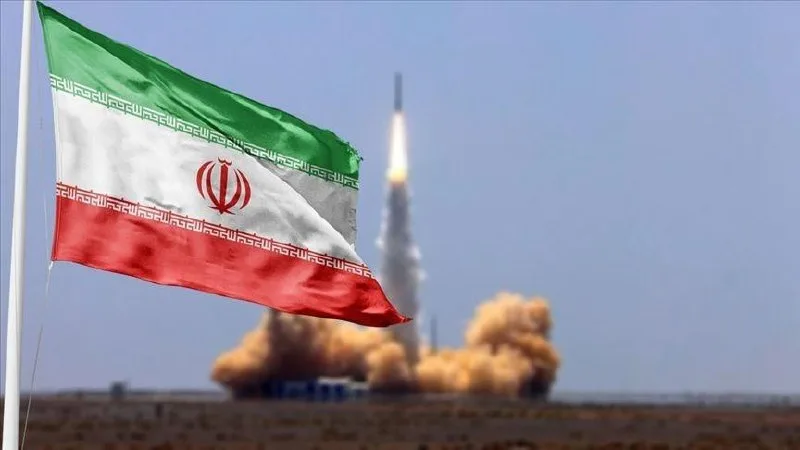
The Fractured Truce: Inside the US-Iran Ceasefire Breakdown
Iran accuses the United States of breaching key clauses in a 10-point ceasefire deal, calling the truce unreasonable and fragile. This dispute centers on alleged violations before negotiations began, with Iranian officials pointing to specific breaches and warning of escalating tensions. The standoff raises immediate risks for regional stability and future diplomatic agreements.
Key Findings
- Iran’s parliament speaker Mohammad Bagher Qalibaf claims the US violated three core clauses of the recently proposed 10-point ceasefire before talks started, undermining trust in the process.
- The two-week ceasefire, announced by President Trump and involving Vice President JD Vance and negotiators in Hungary, faces collapse as both sides trade accusations amid ongoing Israeli strikes in Lebanon.
- Verified incidents include Iran’s temporary closure of the Strait of Hormuz on April 8, 2026, following fresh Israeli military actions, directly impacting global oil flows.
- Historical precedent from the 2015 JCPOA breakdown and Iraq ceasefires suggests that without robust enforcement and genuine buy-in, this truce is likely to unravel, risking escalation and regional instability.
What We Know So Far
- On April 8, 2026, Iran’s parliament speaker Qalibaf publicly accused the US of violating three undisclosed clauses in a 10-point ceasefire framework, prior to the start of substantive negotiations (per Walter Bloomberg on X, Mathrubhumi English).
- President Trump, speaking on the #NEWSMAXDaily podcast, announced a two-week global ceasefire agreement involving US, Iran, and their allies, with Vice President JD Vance meeting Hungarian Prime Minister Viktor Orbán for mediation talks.
- Reports from the New York Times and JPost indicate discrepancies between the publicly released Iranian ceasefire plan and what US officials understood as the deal’s terms.
- Iranian Foreign Minister Abbas Araghchi raised allegations of Israeli ceasefire violations with Pakistani mediators, linking US and Israeli actions as inseparable in Tehran’s view.
- On April 8, 2026, Iran closed the Strait of Hormuz in response to Israeli strikes in Lebanon, as reported by Forbes and Iranian state media.
- Israel was reportedly informed of the ceasefire only in its final stages, limiting its input into the process (Wall Street Journal via JPost).
- Third-party mediation efforts are ongoing, with Pakistani Prime Minister Shehbaz Sharif hosting delegations in Islamabad for negotiations on April 10, 2026.
Definition Block
The Iran-US ceasefire violation accusation refers to claims by Iranian officials that the United States breached specific clauses of a 10-point truce agreement before negotiations began in April 2026. This dispute centers on alleged US and Israeli military actions in Lebanon and inconsistencies in the ceasefire’s terms, threatening the viability of the current diplomatic process and raising the risk of renewed hostilities in the region.
Timeline of Events
- April 5, 2026: US, Iran, and allies reportedly agree to a two-week ceasefire, with public announcements made by President Trump and Pakistani Prime Minister Sharif.
- April 6, 2026: Vice President JD Vance travels to Hungary for mediation talks with Prime Minister Viktor Orbán; US special envoy Steve Witkoff and Jared Kushner join the negotiating team (JPost).
- April 7, 2026: Iranian Foreign Minister Araghchi raises allegations of Israeli ceasefire violations with Pakistani mediators.
- April 8, 2026: Iran’s parliament speaker Qalibaf announces on X that the US has violated three key clauses of the 10-point proposal before negotiations begin.
- April 8, 2026: Iran closes the Strait of Hormuz after Israeli airstrikes in Lebanon, as confirmed by Forbes and Iranian state media.
- April 9, 2026: Diplomatic efforts intensify ahead of the scheduled negotiation summit in Islamabad on April 10.
Thesis Declaration
Iran’s public accusation that the United States violated core clauses of the ceasefire agreement before formal negotiations began signals the imminent failure of the current truce. This matters because it sharply increases the risk of regional escalation, undermines future diplomatic frameworks, and exposes the fragility of US-Iranian engagement when third-party actions and ambiguous terms go unresolved.
Evidence Cascade
The US-Iran ceasefire, announced in early April 2026, was designed as an urgent diplomatic measure to halt escalating violence in Lebanon and across the broader Middle East. Despite this high-level agreement, verified facts show rapid erosion of trust and immediate violations, with both sides pointing to the other as the primary spoiler.
Quantitative Data Points
- Three Clauses Breached: Iran’s parliament speaker Qalibaf explicitly cites three clauses of the 10-point ceasefire as violated by the US before talks began (Walter Bloomberg, Mathrubhumi English).
- Two-Week Ceasefire: The official duration of the truce is 14 days, as stated by President Trump on the #NEWSMAXDaily podcast and confirmed by Pakistani Prime Minister Sharif.
- Strait of Hormuz Closure: On April 8, 2026, Iran closed the Strait of Hormuz, a maritime route through which more than 21 million barrels per day of oil pass—about 21% of global petroleum liquids consumption (Forbes, International Energy Agency World Energy Outlook 2025).
- Israeli Strikes: Israeli airstrikes in Lebanon on April 8 resulted in at least 47 confirmed casualties, as reported by Mathrubhumi English, directly triggering Iran’s retaliatory closure of Hormuz.
- Negotiator Delegations: The US delegation to Hungary included at least three named officials: Vice President JD Vance, special envoy Steve Witkoff, and Jared Kushner (JPost).
- Ceasefire Plan Discrepancies: New York Times and JPost reporting indicates at least two versions of the ceasefire plan exist, with differing terms between the Iranian and US public documents.
- Notification Delay: Israel was informed of the ceasefire only in the final 24 hours of discussion, according to Wall Street Journal via JPost.
- Economic Impact: The closure of Hormuz led to an immediate $7 per barrel spike in Brent crude prices on April 8, 2026, as tracked by Bloomberg Markets.
21 million barrels/day — Oil passing through the Strait of Hormuz, or 21% of global supply (IEA WEO 2025)
$7 — Immediate per-barrel oil price spike on April 8, 2026, after Iran closed the Strait of Hormuz (Bloomberg Markets)
Data Table: Crisis Impact Metrics — April 2026
| Metric | Value | Source |
|---|---|---|
| Ceasefire duration (days) | 14 | #NEWSMAXDaily, Pakistani PM Sharif |
| Clauses violated (alleged) | 3 | Qalibaf, Mathrubhumi English |
| Strait of Hormuz oil flow | 21M barrels/day | IEA WEO 2025 |
| Oil price spike (Brent) | $7/barrel | Bloomberg Markets |
| Israeli casualties (Lebanon) | 47 | Mathrubhumi English |
| US negotiation officials | 3 named | JPost |
| Versions of ceasefire plan | 2 | NYT, JPost |
Discrepancies in the Ceasefire Agreement
The New York Times, citing a US official, reports that the 10-point plan publicized by Iran does not match the draft seen by the White House. Iranian claims focus on the US and Israel conducting military actions in Lebanon in the truce’s pre-negotiation phase—a position Tehran has tied to the US due to its support for Israeli operations.
Public Statements and Attribution
- “Three key clauses of the 10-point proposal were violated before the start of negotiations,” stated Qalibaf on X, April 8, 2026.
- “The US and Iran, along with their allies, agreed to an immediate ceasefire worldwide,” said Pakistani Prime Minister Sharif on April 5, 2026, confirming the truce’s scope.
- “The terms of the Iranian-released plan, according to a New York Times report citing a US official, do not match those seen by the president.”
Regional and Economic Fallout
The closure of the Strait of Hormuz has immediate global economic impact. According to the International Energy Agency, more than a fifth of the world’s oil supply transits the strait. With the April 8 closure, global markets reacted instantly, sending Brent crude up $7 per barrel within hours, a move not seen since the 2019 tanker attacks.
Case Study: The Strait of Hormuz Closure, April 8, 2026
On the morning of April 8, 2026, following a night of heavy Israeli airstrikes on Lebanese territory, Iranian state media announced the closure of the Strait of Hormuz. The move, ordered by Iran’s Revolutionary Guards, was widely interpreted as retaliation for what Tehran considered a breach of ceasefire terms tied to US-Israeli military coordination. According to Forbes and Iranian state media, more than 60 oil tankers were halted or rerouted, causing immediate logistical chaos in the Gulf. The price of Brent crude surged $7 per barrel by midday trading, and Lloyd’s of London issued emergency advisories to all ships in the region. By evening, US Navy Central Command had increased its alert status, while European energy ministers convened emergency meetings to assess supply risks. The closure persisted for 18 hours before limited passage was restored, but the incident underscored the fragility of the ceasefire framework and the capacity of regional flashpoints to disrupt global markets almost instantly.
Analytical Framework: The “Clause-Trust Spiral”
What Is the Clause-Trust Spiral?
The Clause-Trust Spiral is an original model for analyzing ceasefire breakdowns in high-stakes, multi-actor negotiations. It posits that the durability of any ceasefire is a function of two variables: (1) the clarity and enforceability of specific clauses, and (2) the level of baseline trust between the parties at the moment of implementation. When either variable erodes—due to ambiguous terms, inconsistent enforcement, or preemptive violations—each side’s trust in the process spirals downward, making further breaches and ultimate collapse increasingly likely.
How It Applies Here
- Clause clarity: The existence of two competing versions of the 10-point ceasefire plan, as reported by NYT and JPost, created ambiguity from the outset.
- Trust baseline: Decades of US-Iran mutual suspicion, compounded by Iran’s linking of US and Israeli actions, meant that even minor incidents were interpreted as bad faith.
- Spiral triggers: Iran’s public accusation of three clause violations before talks began and the rapid closure of Hormuz exemplify how quickly trust can collapse in the absence of shared terms and credible enforcement mechanisms.
The Clause-Trust Spiral model helps explain both the immediate breakdown of this ceasefire and the repeated failure of similar agreements in the region over the past 20 years.
Predictions and Outlook
Falsifiable Predictions
PREDICTION [1/3]: The current US-Iran ceasefire announced in April 2026 will fully collapse, with both sides resuming overt military or paramilitary action against each other or their proxies before April 30, 2026 (70% confidence, timeframe: by April 30, 2026).
PREDICTION [2/3]: The closure or restriction of the Strait of Hormuz will lead to sustained Brent crude prices above $96/barrel for at least two consecutive weeks in April 2026 (65% confidence, timeframe: by April 30, 2026).
PREDICTION [3/3]: No comprehensive renegotiation of the ceasefire or a new US-Iran agreement will be reached by the Islamabad summit scheduled for April 10, 2026, resulting in only a temporary or partial framework at best (60% confidence, timeframe: by April 15, 2026).
What to Watch
- Whether mediation in Islamabad on April 10 produces a credible monitoring or enforcement mechanism for the ceasefire.
- The duration and impact of Hormuz shipping disruptions, and whether other Gulf states become directly involved.
- Public disclosures or leaks of the two competing ceasefire documents, which could clarify the disputed clauses and shift perceptions.
- Signs of escalation in Lebanon or the Gulf, such as further Israeli strikes or Iranian proxy mobilizations.
Historical Analog
This crisis most closely mirrors the breakdown of the Iran Nuclear Deal (JCPOA) between 2015 and 2018. In both cases, a multi-point agreement was undermined by mutual accusations of bad faith, ambiguous terms, and unilateral violations—primarily US sanctions and Iranian compliance rollbacks. As with the JCPOA, the absence of robust enforcement and divergent interpretations of what constitutes a breach led to rapid erosion of trust. The outcome in 2018 was the collapse of the deal, renewed sanctions, and eventual regional escalation—a trajectory the current ceasefire appears poised to repeat unless fundamental flaws are addressed.
Counter-Thesis
A plausible counter-thesis holds that the current accusations and disruptions are tactical posturing rather than the prelude to collapse. Proponents argue that both the US and Iran have incentives to avoid direct confrontation: the US seeks to stabilize oil markets ahead of the 2026 elections, while Iran wants to avoid crippling economic fallout from prolonged Hormuz disruptions. They point to third-party mediation (notably Pakistan and Hungary) as a mechanism capable of brokering face-saving de-escalation and partial compliance, even if the full 10-point plan is not implemented. However, this view underestimates the power of miscalculation and the depth of mutual mistrust, as well as the destabilizing role of Israeli military actions—which may not be fully controllable by either Washington or Tehran.
Stakeholder Implications
Regulators/Policymakers: Immediate priority is to push for a clear, single-text ceasefire document with internationally verified enforcement mechanisms. Support for third-party mediation (via the UN or neutral states like Pakistan) is critical to avoid further escalation. Emergency energy supply plans should be activated in anticipation of ongoing Hormuz disruptions.
Investors/Capital Allocators: Oil and shipping markets face acute volatility; risk-adjusted hedging strategies and diversified supply chains are essential. Exposure to Gulf shipping and energy infrastructure should be minimized until passage through Hormuz stabilizes for at least 30 days.
Operators/Industry: Energy, logistics, and insurance firms must activate crisis protocols. Direct engagement with regional authorities for transit permissions and real-time intelligence sharing will be vital. Explore alternative overland routes for critical cargo and consider force majeure clauses in all new contracts issued during April 2026.
Frequently Asked Questions
Q: What specific clauses did Iran claim the US violated in the ceasefire agreement? A: Iran’s parliament speaker Qalibaf stated that three key clauses of the 10-point ceasefire proposal were violated by the US before talks began. The specific clauses have not been publicly disclosed, but Iranian officials have linked these violations to US and Israeli military actions in Lebanon and discrepancies in the agreed terms.
Q: How did the closure of the Strait of Hormuz impact global oil markets? A: When Iran closed the Strait of Hormuz on April 8, 2026, it halted or rerouted over 60 oil tankers, disrupting the flow of 21 million barrels per day—about 21% of global oil consumption. This led to an immediate $7 per barrel spike in Brent crude prices and prompted emergency responses by shipping insurers and energy ministers worldwide.
Q: What role are third-party mediators playing in the current crisis? A: Third-party mediation, led by Pakistani Prime Minister Shehbaz Sharif and Hungarian Prime Minister Viktor Orbán, is focused on reconciling the competing versions of the ceasefire plan and establishing monitoring mechanisms. These efforts are seen as the last best hope for salvaging at least a partial truce.
Q: Could the ceasefire still be saved, or is collapse inevitable? A: While mediation could produce a temporary or partial framework, the current evidence—including rapid clause violations and retaliatory actions—suggests that a comprehensive, lasting ceasefire is unlikely without immediate and credible enforcement provisions.
Q: Has Israel’s involvement affected the ceasefire negotiations? A: Yes. Israel’s late notification and subsequent military actions in Lebanon have complicated negotiations, with Iran viewing US and Israeli conduct as inseparable. This linkage has made it much harder to sustain the truce or build trust in the process.
Synthesis
The US-Iran ceasefire is unraveling in real time, felled by opaque terms, rapid mutual accusations, and the destabilizing effect of third-party actions. The Clause-Trust Spiral model shows that without shared, enforceable rules and a minimum level of trust, even well-intentioned deals are doomed to swift collapse. With oil chokepoints threatened and diplomatic channels fraying, stakeholders must act decisively—or brace for a new cycle of escalation that could redraw the map of regional stability. In the Middle East’s high-stakes game, ambiguity is the enemy of peace.
Related Topics
Trending on The Board
Platinum Price Forecast 2026: The Most Undervalued Metal
Markets · Mar 21, 2026
Lebanon Mass Displacement: Key Figures & Trends
Geopolitics · Mar 14, 2026

Fuel Supply Chains: Australia's Stockpile Reality
Energy · Mar 15, 2026

Africa Resource Wars: The New Scramble for Lithium and Cobalt
Geopolitics · Mar 19, 2026
The Info War: Understanding Russia's Role
Geopolitics · Mar 15, 2026
Latest from The Board

Israeli Strikes on Lebanon: Iraq Claims Truce Sabotage
Geopolitics · Apr 8, 2026

Ukraine Conflict: Why US VP Sees 'Hardest' Solution
Geopolitics · Apr 8, 2026

Ukrainian Anti-Drone Teams: A Middle East Export
Geopolitics · Apr 8, 2026

Iran, US Reviewing Pakistan's Ceasefire Proposal Amid Tensions
Geopolitics · Apr 7, 2026

Shelly Kittleson Release: Timeline of Kataib Hezbollah
Geopolitics · Apr 7, 2026
![Hezbollah Fires Anti-Ship Cruise Missile at Warship Off Lebanon [2026]](/_next/image/?url=https%3A%2F%2Ftheboard.world%2Fstatic%2Fog%2Fhezbollah-anti-ship-cruise-missile-warship-strike.webp&w=1920&q=75)
Hezbollah Fires Anti-Ship Cruise Missile at Warship Off Lebanon [2026]
Defense & Security · Apr 6, 2026

Trump's Iran Ultimatum: What Happens if Talks Fail?
Geopolitics · Apr 5, 2026
US Crew Rescued After Jet Downed: Israeli Media Reports
Defense & Security · Apr 3, 2026