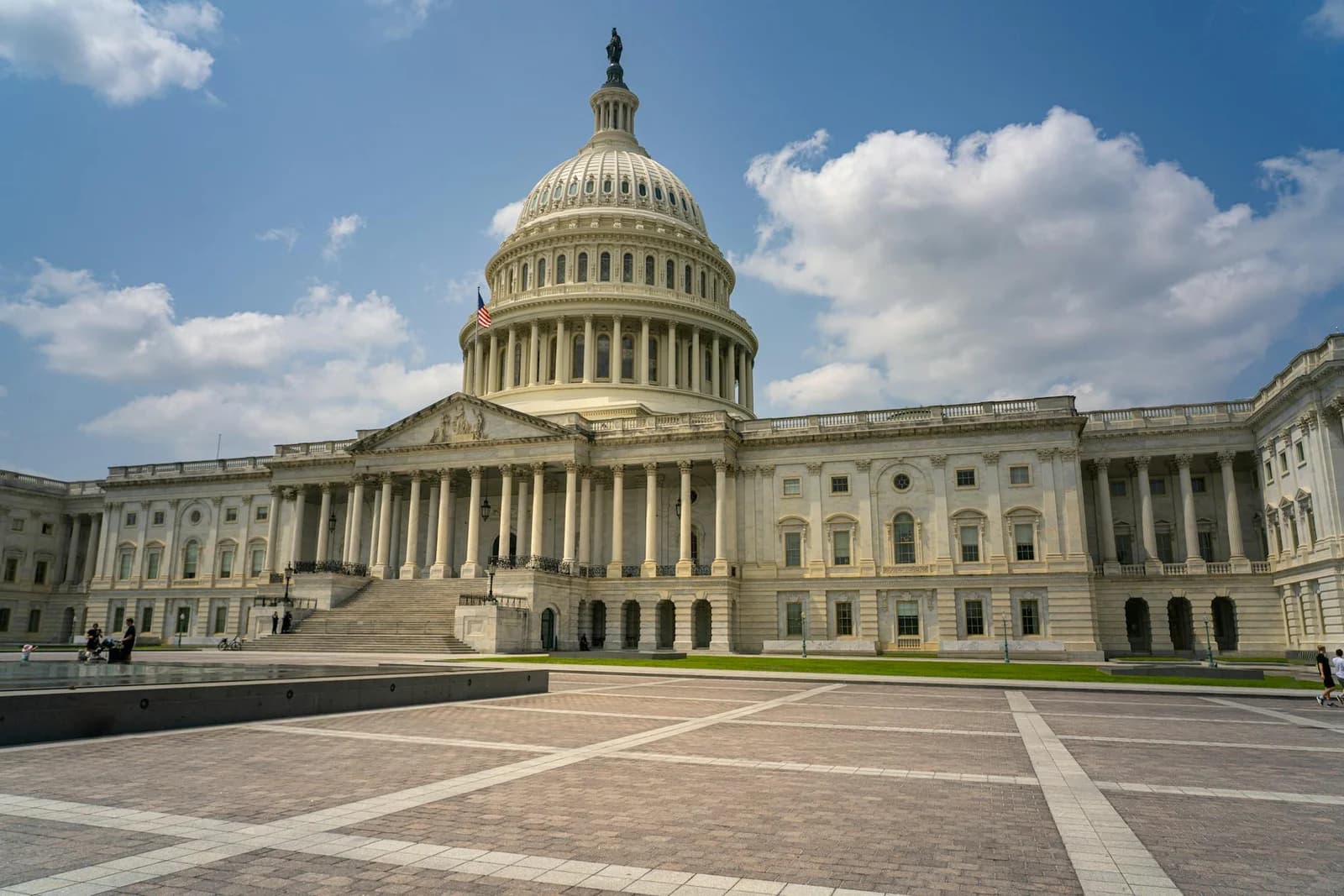
The era of seeking alliance is over; the US must now act as the infrastructure provider for New Delhi’s strategic autonomy.
Key Findings
- Pivot to "Managed Service" Model: The US must abandon the goal of formal alliance and instead treat India as a "security liquidity provider," subsidizing Indian naval capacity to police critical chokepoints without requiring political alignment.
- Technological Lock-In over Sales: Mere arms sales fail to secure influence; the US must pursue "Co-Production Max"—transferring manufacturing for jet engines and sensors (i.e., GE-F414, UDA)—to embed Western standards into India's indigenous logistics.
- The "Frankenstein" Gamble: Washington accepts the risk of arming a "non-aligned" power because a strong, autonomous India acting in its own self-interest naturally checks Chinese expansion in the Indian Ocean Region (IOR).
The surfacing of India’s aggressive "naval trifecta" strategy during the Milan-2026 exercises in Visakhapatnam—simulating simultaneous control of the Malacca, Hormuz, and Bab-el-Mandeb straits—signals the end of the US "Lead Partner" era. For two decades, Washington has courted New Delhi as a junior ally, hoping shared democratic values would yield a treaty-bound defense pact. This strategy has failed. India’s insistence on Aatmanirbharta (strategic autonomy) and its refusal to serve as a Western auxiliary are not negotiating tactics; they are permanent features of its grand strategy .
Thesis: The United States must explicitly recalibrate its Indo-Pacific strategy from "Alliance Builder" to "Foundational Infrastructure Provider." Instead of demanding political alignment, Washington should subsidize the "brains and muscles" (sensors and engines) of India’s fleet, creating a technological lock-in that ensures New Delhi’s autonomous rise creates an impenetrable wall against Chinese expansion in the Indian Ocean, regardless of India’s diplomatic neutrality.
The Logic of the "Naval Trifecta"
The strategic value of India represents a massive efficiency gain for US global force posture. If India secures the Indian Ocean Region (IOR), the US Navy and its treaty allies (Japan and Australia) can concentrate their finite resources on the Taiwan Strait and the South China Sea.
The Milan-2026 exercises demonstrated India’s intent to act as the primary security guarantor for the "Naval Trifecta": the Malacca Strait (entry from the Pacific), the Strait of Hormuz (oil flow), and the Bab-el-Mandeb (Red Sea access). The physics of this theater favors New Delhi; the IOR is India's "Accessible Ground," while for the US, it remains a distant theater requiring long logistical tails. Current assessments suggest that if the US supports India’s localized dominance, it gains a "free rider" benefit: a stable maritime commons policed by a resident power whose own survival depends on open sea lanes .
However, this deference requires a difficult concession. Washington must stop spending diplomatic capital on minor South Asian disputes or pressing for UN voting alignment. The sole objective is Maritime Domain Awareness (MDA) integration. If India’s "Information Fusion Centre-Indian Ocean Region" (IFC-IOR) runs on Western data standards, the US maintains "virtual command" without physical presence.
The "Lock-In" Framework: Co-Production as Strategy
The primary obstacle to this strategy is India’s "Frankenstein fleet"—a chaotic mix of Russian hulls, Israeli sensors, and French avionics. This diversity is a feature of India’s hedging strategy, preventing any single power from holding leverage over its logistics. To counter this, the US must move beyond "Foreign Military Sales" (FMS) to "Co-Production Max," specifically targeting the Initiative on Critical and Emerging Technology (iCET).
The mechanism of control shifts from political treaties to industrial standards. By localizing the assembly of high-maintenance execution-critical components—specifically the GE-F414 jet engine and advanced Underwater Domain Awareness (UDA) sensors—the US creates a "dependency of necessity."
Framework: The Strategic Lock-In Ladder
A taxonomy for deepening defense integration without alliances.
| Level | Mechanism | US Benefit | Indian Benefit | Stickiness Risk |
|---|---|---|---|---|
| L1: Transactional | Selling finished platforms (e.g., P-8I Poseidon) | Revenue; Interoperability | Quick capaibility boost | Low. Can pivot to France/Russia for next buy. |
| L2: Logistics | Master Ship Repair Agreements (MSRA) | Forward repair hubs (Kattupalli) | Revenue; Job creation | Medium. Access can be revoked (Sovereignty Spike). |
| L3: Protocol | Shared Data Standards (API approach) | Real-time visibility (MDA) | Superior targeting data | High. Changing data architecture is costly/complex. |
| L4: Industrial | Co-Production (iCET) | Supply Chain Hegemony | Tech Transfer / Autonomy | Extreme. Decades to re-tool industrial base. |
*Source: Editorial Analysis of Panel Findings *
The target metric for the "Industrial" level is specific: 80% local sourcing for the GE-F414 engine assembly in India by 2028. Achievement of this milestone creates a decades-long tether. While India builds the "body," the US designs the "muscle." This satisfies India’s domestic industrial pride while ensuring its fleet cannot operate without Western intellectual property and supply chains.
Logistics Over Leadership: The API Approach
The "Decentralized Knowledge" model suggests treating the US-India defense relationship like a software stack. The US provides the "Protocol Layer" (standardized data links, fuel specifications, and repair certifications), allowing India to build its own "Applications" (ships and tactics).
This manifests practically in the shift from seeking bases to seeking access. The US 7th Fleet faces a severe maintenance backlog; wait times for grid interconnection and repair in traditional US yards have ballooned. By utilizing the Japan-India Reciprocal Access Agreement (RAA) model, the US should treat Indian ports like L&T Kattupalli as "Neutral Hubs."
Drafting formal Master Ship Repair Agreements (MSRA) with three major Indian shipyards (Kattupalli, Mazagon, Cochin) allows the US to maintain a persistent presence under the guise of commercial contracts. This avoids the "Sovereignty Spike"—the nationalist backlash that occurs whenever a foreign military base is proposed on Indian soil. If a US destroyer docks for repair, it is a business transaction; if it docks for a base visit, it is a political liability.
The Counter-Argument: The "Geopolitical Frankenstein"
The strongest counter-argument to this "subsidy strategy" is the "Geopolitical Frankenstein" risk. Critics argue that by transferring jet engine propulsion and UDA sensor technology, the US is not creating an ally, but accelerating the rise of a future hegemon that may eventually exclude the US from the IOR .
The Evidence:
- Sanctions Evasion: India has a history of using its non-aligned status to bypass Western pressure, as seen in its continued purchase of Russian energy post-2022.
- Operational Risk: A "Naval Trifecta" capable of closing chokepoints to China is also capable of closing them to the US. In a scenario where Washington pressures New Delhi on human rights, India could utilize its US-enhanced MDA to enforce a "Neutrality Exclusion Zone," hampering US operations in the Middle East.
The Rebuttal: While valid, this risk is outweighed by the immediate threat of Chinese carrier-capable bases in the Bay of Bengal (e.g., Kyaukphyu or Gwadar). Furthermore, the "Frankenstein" argument assumes a linear transition of technology. In reality, complex systems like propulsion and acoustic sensing require continuous software updates and metallurgy support. By retaining control over the "Source Code" and high-end metallurgy while localizing the assembly, the US maintains a "Kill Switch." The choice is not between a loyal India and a rogue India; it is between a Western-standardized India and a China-dominated Indian Ocean.
What to Watch
The success of this strategy relies on execution speed and the specific calibration of technology transfer. Watch for these indicators:
- Metric: US Ship Repair Volume. Monitor the number of US naval vessels utilizing Indian yards (L&T Kattupalli/Mazagon) for mid-cycle maintenance.
- Threshold: Less than 4 vessels per year by 2027 indicates failure to establish the "Logistics" layer.
- Metric: iCET Engine Certification.
- Threshold: First locally assembled GE-F414 engine must pass flight certification by Q3 2027. Delays beyond this strengthen the "Russian pivot" advocates in New Delhi.
Predictions:
- By Q4 2026: India will formally reject a US request for a joint "Freedom of Navigation" patrol in the South China Sea, choosing instead to conduct a unilateral exercise in the Andaman Sea. Confidence: HIGH
- By 2027: The US will sign a "Data-Only" sharing agreement with Pakistan to balance the Indian naval expansion, triggering a temporary diplomatic freeze with New
Related Topics
Related Analysis

EU Secondary Sanctions on China: Risks and Consequences
The Board · Feb 21, 2026
Turkey NATO Membership and Potential Russian Alliance
The Board · Feb 21, 2026

Modern World War 3 Scenarios and Systemic Collapse
The Board · Feb 19, 2026

Impact of 25% US Tariffs on the EU and Euro Stability
The Board · Feb 22, 2026

Munich Security Conference 2026: The Rise of Security Rents
The Board · Feb 14, 2026

US-Iran Nuclear Tensions and Conflict Risk Analysis
The Board · Feb 22, 2026
Trending on The Board

Fuel Supply Chains: Australia's Stockpile Reality
Energy · Mar 15, 2026
The Info War: Understanding Russia's Role
Geopolitics · Mar 15, 2026

Iran War Disinformation: How AI Deepfakes Fuel Chaos
Geopolitics · Mar 15, 2026

Strait of Hormuz Crisis 2026: Full Analysis
Geopolitics · Mar 14, 2026

US License for India's Russian Oil: What's Next?
Energy · Mar 6, 2026
Latest from The Board
US Crew Rescued After Jet Downed: Israeli Media Reports
Defense & Security · Apr 3, 2026
Hegseth Asks Army Chief to Step Down: Why?
Policy & Intelligence · Apr 2, 2026

Trump Fires Attorney General: What Happens Next?
Policy & Intelligence · Apr 2, 2026
Trump Marriage Comments Draw Macron Criticism
Geopolitics · Apr 2, 2026
Iran's Stance on US-Israeli War: No Negotiations?
Geopolitics · Apr 1, 2026
Trump's Iran War: What's the Exit Strategy?
Geopolitics · Apr 1, 2026
Trump Ukraine Weapons Halt: Iran Strategy?
Geopolitics · Apr 1, 2026

Ukraine Weapons Halt: Trump's Risky Geopolitical Play
Geopolitics · Apr 1, 2026