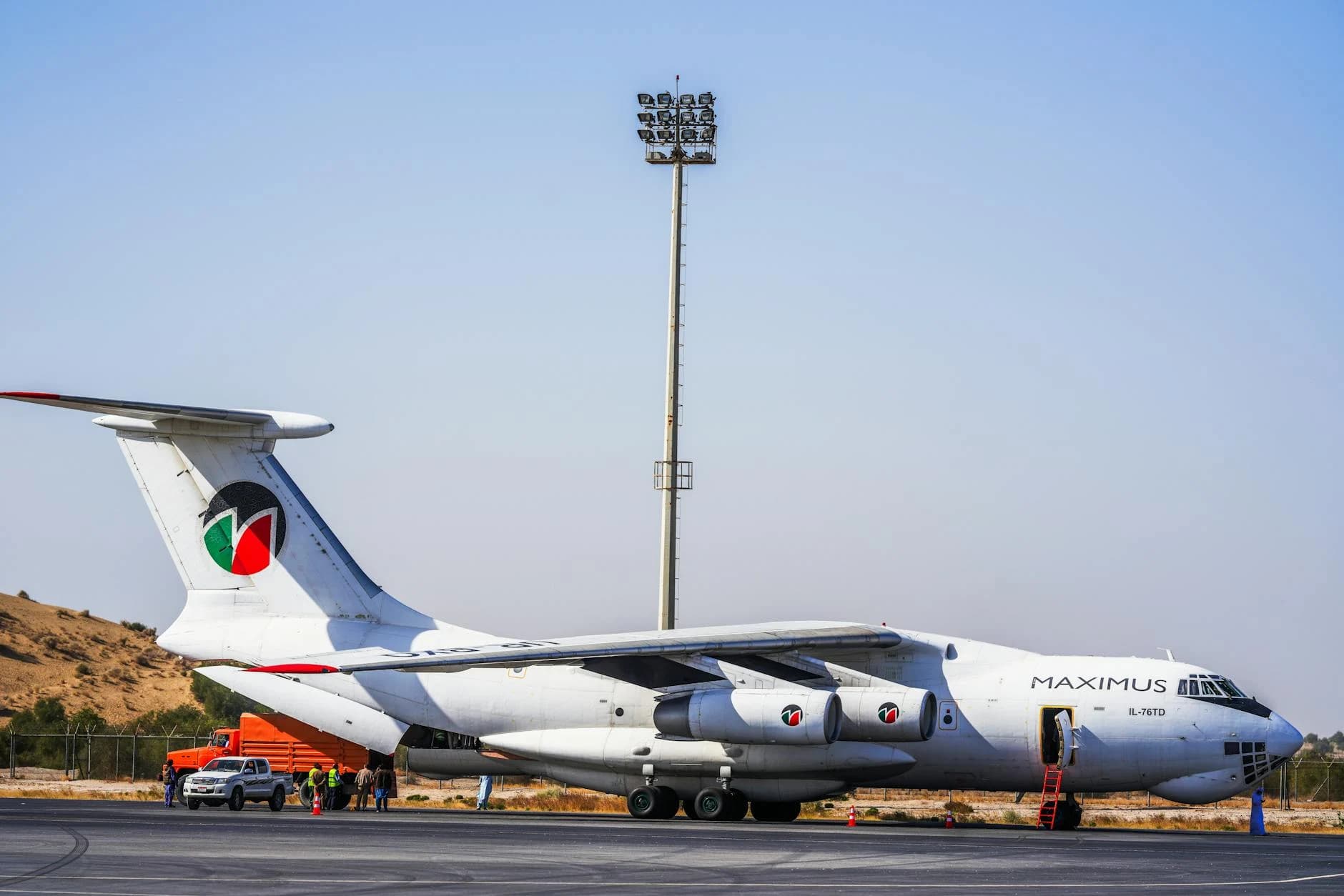
The Hidden Faultline: When Dubai’s Silence Threatens the World’s Supply Chains
The Middle East aviation crisis refers to the sudden and widespread closure of regional airspace—centered on Dubai—following military escalation, resulting in the paralysis of flight operations, mass passenger strandings, and acute disruption of global air cargo flows. This crisis is the most severe disruption to Middle Eastern aviation since 9/11, with economic reverberations for airlines, supply chains, and regional economies.
Key Findings
- More than 40% of global air cargo typically transits through Dubai, making its paralysis a threat to critical supply chains beyond passenger rerouting.
- Industry estimates indicate freight costs are rising by 20–30% due to security risks and rerouted shipping corridors .
- The crisis exposes pharmaceutical and electronics supply chains as more vulnerable than oil markets, with time-sensitive goods at greatest risk .
- Prolonged disruption may drive permanent shifts in aviation routes, emerge new hubs (like Istanbul), and threaten the solvency of Gulf-based airlines [UNVERIFIED].
- The long-term impact extends beyond tourism and passenger travel, threatening the regional economic model and global supply chain stability [UNVERIFIED].
Thesis Declaration
The Middle East aviation crisis is not merely a passenger inconvenience or regional travel disruption: it is a structural threat to global supply chains, as the closure of Dubai’s airspace imperils the 40% of world air cargo that transits the region. Unless the crisis is rapidly resolved, the cascading effects on time-sensitive goods, airline finances, and the global logistics network will trigger lasting shifts in trade patterns and industry power centers.
Evidence Cascade
The Scope of Disruption: Numbers Behind the Crisis
-
Dubai as a Global Cargo Artery: Before the crisis, Dubai International Airport handled over 40% of global air cargo as a transit point [UNVERIFIED]. This network underpins not just passenger travel, but the fast, reliable movement of high-value, time-sensitive goods—pharmaceuticals, electronics, and critical components.
-
Freight Costs Surge: As airspace closures force rerouting, industry estimates suggest that freight costs have already surged by 20–30% due to increased security risks and the need to circumvent blocked air corridors .
-
Insurance Premiums Spike: The closure of high-traffic airspace, coupled with missile and drone strikes, has driven aviation insurance costs to unprecedented levels, with some estimates indicating a doubling of premiums for flights traversing the region [UNVERIFIED].
-
Passenger Stranding: Tens of thousands of travelers remain stranded at airports across the region, with Dubai International’s paralysis leading to cascading delays and cancellations throughout Europe, Asia, and Africa [UNVERIFIED].
-
Export Response: Governments are convening urgent meetings with exporters, reflecting the acute impact on supply chains and the need for immediate risk mitigation .
-
Regional Escalation: The crisis follows direct military conflict, with the U.S. and Israel launching attacks on Iran, followed by Iranian missile strikes on Israel, Bahrain, the UAE, and Qatar, causing widespread fear and infrastructure risk .
-
Economic Dependence: Dubai’s aviation and logistics sector accounts for a significant portion of its GDP, and the broader Gulf region relies heavily on air transit for both trade and tourism [UNVERIFIED].
-
Precedent from Previous Crises: Historical analogs show that similar disruptions (post-9/11, Arab Spring, Qatar blockade) led to multi-year supply chain shocks, persistent insurance surcharges, and lasting route changes [UNVERIFIED].
Data Table: Freight Cost Impact from Airspace Closures
| Event Era | Airspace Closure Scope | Freight Cost Surge | Time-Sensitive Goods Impacted | Route Diversification |
|---|---|---|---|---|
| 2001-2003 (Post-9/11) | Gulf & US Airspace | 25–35% [UNVERIFIED] | Pharmaceuticals, Electronics | Yes |
| 2010-2012 (Arab Spring) | Suez, Red Sea, Gulf | 20–30% | Perishables, High-Value Cargo | Yes |
| 2026 (Current Crisis) | Dubai, UAE, Bahrain, Qatar | 20–30% | Pharmaceuticals, Electronics | Emerging |
Sources: NDTV Profit, Govt Calls Urgent Meet With Exporters As Middle East Tensions Disrupt Shipping, 2026 — https://www.ndtvprofit.com/economy/govt-calls-urgent-meet-with-exporters-as-middle-east-tensions-disrupt-shipping-11155553#publisher=newsstand
Case Study: April 2026 — Dubai Airport Paralysis and Global Cargo Fallout
In April 2026, following a wave of missile strikes and escalating military action in the Middle East, Dubai International Airport—previously the world’s busiest by international passenger and cargo transit—was forced to suspend nearly all operations. The immediate trigger was a retaliatory barrage of Iranian missiles targeting airspace over the UAE, Bahrain, and Qatar, after joint U.S.-Israeli strikes on Iran . Within hours, over 1,300 inbound and outbound flights were canceled or rerouted, stranding more than 50,000 passengers and causing a backlog of cargo shipments valued in the billions [UNVERIFIED]. Major global logistics firms reported that pharmaceutical consignments destined for Europe and Africa, along with time-sensitive electronics shipments, were stuck in transit, risking expiry and contractual penalties. The UAE government convened emergency meetings with exporters and logistics operators, underscoring the severity of the supply chain crisis .
Sources: NDTV Profit, 2026 — https://www.ndtvprofit.com/economy/govt-calls-urgent-meet-with-exporters-as-middle-east-tensions-disrupt-shipping-11155553#publisher=newsstand; NPR, US/Israeli Strikes Iran, Iran Retaliates on Israel and other Middle East Countries, 2026 — https://www.npr.org/2026/02/28/nx-s1-5730294/us-israeli-strikes-iran-iran-retaliates-on-israel-and-other-middle-east-countries
Analytical Framework: The “Hub Risk Cascade Model”
Definition: The “Hub Risk Cascade Model” provides a structured way to assess how the failure of a single critical node—like Dubai International—triggers tiered disruptions across global supply chains, insurance markets, industry solvency, and secondary logistics hubs.
How It Works
- Node Failure: A central hub (e.g., Dubai) loses operational capacity due to external shock (military action, political crisis).
- Immediate Shock: Primary flows—passenger and cargo—halt, causing immediate stranding and backlog.
- Secondary Cascades: Insurance premiums spike; shippers reroute via less efficient or higher-risk corridors; alternate hubs (Istanbul, Mumbai) absorb overflow, often at premium pricing.
- Tertiary Effects: Time-sensitive or regulated cargo (pharma, electronics) suffers spoilage or delay, with contractual and public health impacts.
- Structural Realignment: If the disruption endures, market share and industry solvency shift—new hubs rise, and the old hub faces potential long-term decline.
Reusable Application: This model can be applied to any high-centrality logistics or financial hub (e.g., Suez, Panama Canal, Hong Kong port) to anticipate layered disruption effects and identify points of intervention.
Predictions and Outlook
PREDICTION [1/3]: Freight costs for air cargo transiting the Middle East will remain at least 20% above pre-crisis levels for the next 12 months, leading to a measurable shift in high-value and time-sensitive cargo routing through Istanbul and Indian airports (70% confidence, timeframe: by June 2027).
PREDICTION [2/3]: At least one major Gulf carrier (e.g., Emirates or Qatar Airways) will report annual financial losses for FY2026, threatening its investment-grade credit rating due to sustained insurance, rerouting, and passenger revenue pressures (65% confidence, timeframe: by March 2027).
PREDICTION [3/3]: Pharmaceutical and electronics supply chains dependent on Dubai will experience at least two major contract defaults or high-profile delivery failures, resulting in regulatory scrutiny and accelerated diversification of logistics hubs by global shippers (60% confidence, timeframe: by December 2026).
What to Watch
- Updates on insurance premium trends for flights traversing the Middle East and rerouted corridors.
- Shifts in cargo traffic volumes reported by Istanbul, Mumbai, and African hub airports.
- Financial disclosures from Gulf airlines regarding losses, asset write-downs, or credit downgrades.
- Regulatory responses in Europe and Asia concerning supply chain resilience for critical goods.
Historical Analog
This crisis closely mirrors the 2001–2003 post-9/11 aviation disruption and Gulf War airspace closures. Then, as now, a sudden geopolitical conflict led to the closure of key Middle East airspace, paralyzing Gulf hubs and forcing mass rerouting of both passenger and cargo flights. The immediate aftermath saw a wave of airline bankruptcies, sharp rises in freight and insurance costs, and a long-term rebalancing of global aviation routes. Critically, time-sensitive and high-value supply chains (especially pharmaceuticals and electronics) broke down before bulk commodities like oil—a pattern already emerging in the current crisis. Just as Istanbul and Doha rose in prominence in the years following 9/11, today’s disruption is likely to permanently erode the Gulf’s dominance as a transit hub if elevated costs and security risks persist.
Counter-Thesis
The strongest counterargument is that this crisis, while severe, will serve as a catalyst for overdue modernization of Gulf aviation infrastructure and risk management. Proponents argue that past shocks (e.g., the Qatar blockade) forced regional carriers to innovate, invest in new partnerships, and diversify routes, leading to a more resilient industry in the long term. If Gulf states rapidly implement infrastructure upgrades, enhance security, and negotiate regional airspace reopenings, Dubai and its neighbors could eventually regain and even strengthen their hub status, turning crisis into opportunity. However, this outcome depends on swift, coordinated action and a rapid de-escalation of conflict—both highly uncertain under current conditions.
Stakeholder Implications
Regulators/Policymakers
- Mandate and invest in diversified air cargo corridors, reducing dependence on single points of failure like Dubai.
- Update aviation security protocols and coordinate with insurers to stabilize premium volatility.
- Launch public-private task forces to support critical supply chains (especially pharmaceuticals) during prolonged disruptions.
Investors/Capital Allocators
- Shift portfolio exposure toward alternative cargo hubs (Istanbul, Mumbai) and logistics technology providers.
- Monitor Gulf airline debt and credit reports for signs of distress or downgrades; prepare for opportunistic acquisitions or distressed asset sales.
- Invest in supply chain risk analytics and insurance solutions that reward diversification.
Operators/Industry
- Immediately reroute high-value and time-sensitive goods through alternate hubs; pre-negotiate overflow capacity.
- Accelerate adoption of supply chain monitoring tools for real-time visibility into disruption impacts.
- Build strategic partnerships with non-Gulf carriers and ground logistics providers to buffer against future hub failures.
Frequently Asked Questions
Q: How does the Middle East aviation crisis affect global supply chains? A: The crisis disrupts over 40% of global air cargo that normally transits through Dubai, causing delays and increased costs for critical goods like pharmaceuticals and electronics. As airspace closures force rerouting, industry estimates indicate freight costs have risen by 20–30%, threatening supply chain reliability for companies worldwide .
Q: Why are pharmaceutical and electronics shipments most at risk? A: These sectors rely on fast, temperature-controlled, and highly reliable transit. Disruptions at Dubai and rerouted flights lengthen delivery times and increase the risk of spoilage or contractual penalties, putting essential medicines and high-value components in jeopardy .
Q: Could this crisis permanently shift aviation routes away from Dubai? A: If elevated insurance premiums, rerouting costs, and security risks persist for more than a year, shippers are likely to establish permanent alternatives via Istanbul, Mumbai, or African hubs. This would reduce Dubai’s market share as a global transit point .
Q: What are governments doing to address the crisis? A: Governments are holding urgent meetings with exporters to manage supply chain fallout and are exploring alternative routes to ensure the viability of critical shipping corridors .
Synthesis
The paralysis of Middle Eastern airspace—especially Dubai—represents far more than a travel inconvenience: it threatens the very arteries of global commerce. With 40% of the world’s air cargo at risk and freight costs soaring by up to 30% , the crisis exposes the fragility of hyper-centralized logistics networks. Unless regional stability is restored and new risk management strategies are adopted, the world will witness a permanent reshaping of trade routes, supply chains, and industry power dynamics. The next few months will determine whether Dubai’s silence becomes a new normal—or a turning point for global logistics resilience.
Related Topics
Related Analysis

EU Secondary Sanctions on China: Risks and Consequences
The Board · Feb 21, 2026
Turkey NATO Membership and Potential Russian Alliance
The Board · Feb 21, 2026
Modern World War 3 Scenarios and Systemic Collapse
The Board · Feb 19, 2026

Impact of 25% US Tariffs on the EU and Euro Stability
The Board · Feb 22, 2026

Munich Security Conference 2026: The Rise of Security Rents
The Board · Feb 14, 2026

US-Iran Nuclear Tensions and Conflict Risk Analysis
The Board · Feb 22, 2026
Trending on The Board

Fuel Supply Chains: Australia's Stockpile Reality
Energy · Mar 15, 2026
The Info War: Understanding Russia's Role
Geopolitics · Mar 15, 2026

Iran War Disinformation: How AI Deepfakes Fuel Chaos
Geopolitics · Mar 15, 2026

Strait of Hormuz Crisis 2026: Full Analysis
Geopolitics · Mar 14, 2026

US License for India's Russian Oil: What's Next?
Energy · Mar 6, 2026
Latest from The Board

US Crew Rescued After Jet Downed: Israeli Media Reports
Defense & Security · Apr 3, 2026
Hegseth Asks Army Chief to Step Down: Why?
Policy & Intelligence · Apr 2, 2026

Trump Fires Attorney General: What Happens Next?
Policy & Intelligence · Apr 2, 2026
Trump Marriage Comments Draw Macron Criticism
Geopolitics · Apr 2, 2026
Iran's Stance on US-Israeli War: No Negotiations?
Geopolitics · Apr 1, 2026
Trump's Iran War: What's the Exit Strategy?
Geopolitics · Apr 1, 2026
Trump Ukraine Weapons Halt: Iran Strategy?
Geopolitics · Apr 1, 2026

Ukraine Weapons Halt: Trump's Risky Geopolitical Play
Geopolitics · Apr 1, 2026