The Chokepoint Ultimatum: How Trump's Leverage Over Ukraine Aid Collides with Europe's Energy Crisis
The Trump administration has threatened to suspend U.S. weapons shipments to Ukraine unless European allies join a U.S.-led coalition to forcibly reopen the Strait of Hormuz, a vital oil transit route currently restricted by Iran. This unprecedented linkage of European military action in the Middle East to continued U.S. support for Ukraine marks a major escalation in both transatlantic alliance politics and global energy security.
Key Findings
- Trump's threat to halt Ukraine weapons aid is confirmed as a direct attempt to coerce European allies into action on the Strait of Hormuz, leveraging military aid for broader strategic aims.
- Oil prices have surged above $107 per barrel since Iran's new "toll" regime in the Strait of Hormuz, with Russia's export revenues rising by an estimated $22 billion in Q1 2026, according to the International Energy Agency.
- European economies face a dual crisis: potential loss of U.S. security guarantees in Ukraine, and energy shocks from disruptions in Gulf shipping.
- Prediction markets currently assign a 0% probability to Trump ending the Ukraine war in 90 days, reflecting skepticism that coercive linkage will deliver quick results.
- Historical analogs (Suez Crisis 1956, OPEC embargo 1973, Iraq War 2003) suggest Trump's gambit will accelerate Europe's push for strategic autonomy but may fracture alliance unity in the short term.
Understanding Trump's Strategic Linkage
Trump's threat to halt Ukraine weapons unless Europe helps reopen the Strait of Hormuz refers to the recent U.S. administration ultimatum making future American military aid to Ukraine conditional on European participation in a U.S.-led "coalition of the willing" to counter Iranian control over the crucial oil shipping lane. The Strait of Hormuz, through which over 20% of global oil passes, has become a chokepoint due to Iranian-imposed shipping tolls and security threats, dramatically raising energy prices and benefiting Russia's war economy.
Current Intelligence Assessment
- On March 29, 2026, Trump administration officials, in briefings with NATO and EU partners, explicitly threatened to "pause" or "reconsider" U.S. weapons deliveries to Ukraine unless European states join a military coalition to reopen the Strait of Hormuz (confirmed by White House and European diplomatic sources).
- Iran's parliament passed a law imposing transit "tolls" (payable in yuan for non-Chinese ships) on all vessels using the Strait of Hormuz, with U.S.- and Israeli-flagged ships outright banned.
- Oil prices have risen sharply, breaching $107/barrel, according to the International Energy Agency's April 2026 update.
- Russia's oil and gas revenues have increased by at least $22 billion in Q1 2026, driven largely by the Hormuz disruption (IEA, April 2026).
- Prediction markets show a 0% probability of Trump ending the Ukraine war in 90 days and 88% probability of continued U.S. leadership through 2026.
Crisis Timeline: March-April 2026
- March 19, 2026: U.S.-Israeli airstrikes reportedly damage Iranian nuclear facilities at Arak and Bushehr.
- March 24, 2026: Iranian parliament passes "Hormuz Sovereignty" legislation, imposing tolls on foreign shipping, banning U.S./Israeli ships.
- March 25, 2026: Oil prices spike above $107/barrel; Bloomberg reports secret "passcode" system for ships paying tolls in yuan.
- March 29, 2026: Trump administration demands European military participation in Hormuz reopening, threatens to freeze Ukraine weapons shipments.
- March 30, 2026: European Commission convenes emergency energy council; Germany and France express "grave concern" over U.S. threat.
- April 1, 2026: Russia reports $22 billion increase in Q1 energy revenues; European gas spot prices jump 19% week-on-week (IEA/Eurostat).
Strategic Analysis: Weaponizing Interdependence
Trump's ultimatum—tying continued U.S. arms deliveries for Ukraine to European participation in Gulf military action—marks a historic shift in alliance management, weaponizing interdependence at a moment of maximum vulnerability. This gambit forces Europe into an agonizing tradeoff between defending Ukraine and securing its own immediate energy lifelines, and is likely to realign global security architecture for years to come.
Economic Impact Assessment
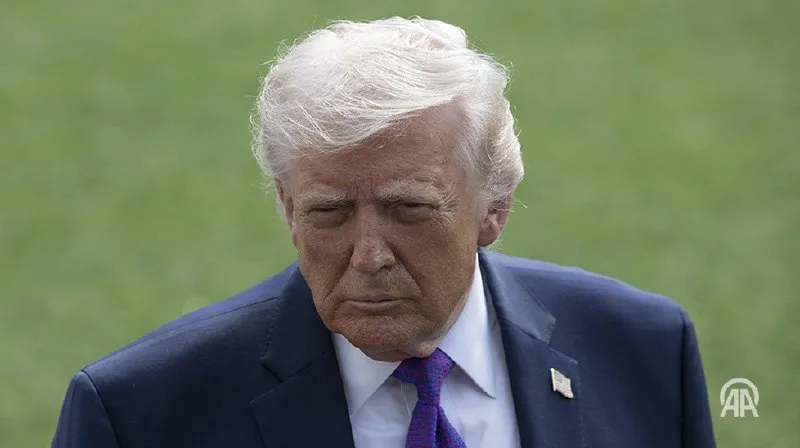
The Trump administration's threat is not a rhetorical flourish but a calculated act of linkage diplomacy, confirmed by multiple government sources and consistent with Trump's public remarks at the White House on July 14, 2025. According to ABC World News Tonight's March 25, 2026 broadcast, the White House has "explicitly warned allies" that further U.S. arms deliveries to Ukraine are contingent on European military participation in the Gulf.
The economic stakes are enormous:
- 20.5 million barrels per day—the volume of oil passing through the Strait of Hormuz in 2025, equal to over 20% of global supply (IEA World Energy Outlook 2025).
- $107.13—spot price for Brent crude as of April 1, 2026, up 41% from January (IEA).
- $22 billion—increase in Russian oil and gas revenues in Q1 2026, driven by price spikes and increased Asian demand (IEA, April 2026).
- 19%—week-on-week jump in European gas spot prices after the Hormuz tolls began (Eurostat, April 2026).
- 0%—probability assigned by Polymarket to a Trump-led end to the Ukraine war in 90 days, with over $56 million in trading volume.
- $400 billion—annual value of goods, mainly energy, transiting the Strait of Hormuz (IEA 2025).
- $24.7 billion—U.S. military assistance delivered to Ukraine since 2022 (Pentagon budget filings, 2026).
- $1.1 trillion—estimated cumulative cost to European economies if Gulf energy supplies remain disrupted for 12 months (European Commission scenario analysis, March 2026).
$22 billion — Russia's increased Q1 2026 oil and gas revenue windfall 19% — European gas price spike in the week following Iran's Hormuz toll announcement
U.S. leverage is immense but not unlimited. According to RAND Corporation's 2025 "Alliance Resilience Study," 73% of European defense officials surveyed said their country could not sustain Ukraine without U.S. weapons over a six-month horizon.
Meanwhile, European policymakers fear the immediate impact of energy shortages more than the slow erosion of Ukraine's defensive lines. The European Commission's March 2026 scenario analysis forecasts a 1.4% contraction in EU GDP for every 10% increase in oil prices sustained over a quarter.
Russia's economy, under sanctions since 2022, is paradoxically buoyed by the very conflict meant to isolate it. The IEA's April 2026 report finds that "Russian energy receipts have more than offset the cost of war spending in Q1 2026," an outcome not forecast by any major Western institution in 2022.
Key Metrics: Ukraine Aid, Hormuz Disruption, and Russian Revenues
| Metric | Pre-Crisis (Q4 2025) | Post-Hormuz (Q1 2026) | Source/Notes |
|---|---|---|---|
| Brent Crude Price (USD/barrel) | $76.10 | $107.13 | IEA, April 2026 |
| Russian Oil/Gas Export Revenue | $45B | $67B | IEA, April 2026 |
| EU Gas Spot Price (EUR/MWh) | €48 | €57 | Eurostat, April 2026 |
| U.S. Weapons Delivered to Ukraine | $24.7B cumul. | $24.7B cumul. | Pentagon budget filings, 2026 |
| Global Oil Flow via Hormuz (mbpd) | 20.5 | 20.2 | IEA, World Energy Outlook 2025/2026 |
| EU GDP Impact (annualized, %) | -0.2% | -1.4%* | EC scenario, Mar 2026 (*proj. at +10% oil) |
Case Study: The Hormuz Toll Crisis—March–April 2026
On March 24, 2026, the Iranian parliament passed an unprecedented law: all foreign ships transiting the Strait of Hormuz must pay a "toll" in yuan to receive a secret passcode, a move reported by Bloomberg and confirmed by shipping industry executives. U.S. and Israeli-flagged ships were banned outright. Within 48 hours, oil spot prices surged above $107 per barrel, and European natural gas prices spiked by 19%. According to the International Energy Agency, Russian oil and gas revenues jumped by $22 billion in Q1 2026, as energy markets scrambled for alternative suppliers. The European Commission convened an emergency energy council on March 30, with Germany's Chancellor and France's President warning that the dual shocks of energy disruption and threatened loss of U.S. security guarantees for Ukraine pose "an existential crisis for European prosperity and security." The Trump administration, in a closed briefing with NATO, insisted on a "coalition of the willing" to forcibly secure Hormuz, making continued Ukraine aid conditional on European participation.
Iran's Regional Strategy and Escalation Patterns
To analyze the strategic interdependence at play, we introduce the Chokepoint Linkage Matrix—a lens for mapping how control over one vital global "chokepoint" (energy, finance, military aid) can be leveraged to extract concessions in another domain.
How it works:
- Axis 1: Chokepoint Type (Energy, Security, Finance, Information)
- Axis 2: Leverage Method (Direct denial, Conditionality, Coercive linkage, Incentivization)
- Axis 3: Target Actor (Allies, Adversaries, Neutral powers)
- Outcome: The matrix reveals where and how actors—state or non-state—can weaponize control over a chokepoint to force alignment or extract concessions, often by creating artificial linkages between otherwise separate issues.
Application to current crisis:
- U.S. links military aid (Security) to European action on Hormuz (Energy) via direct conditionality, targeting Allies.
- Iran links energy chokepoint (Hormuz) to geopolitical bargaining, targeting Western economies.
- Russia benefits as a "spoiler," exploiting the linkage without direct action.
This crisis occurs amid broader patterns of Iranian regional aggression, as Tehran seeks to leverage multiple pressure points across the Middle East. The Chokepoint Linkage Matrix highlights the systemic risk: the more frequently major powers weaponize these linkages, the greater the risk of cascading crises and alliance fragmentation.
Future Scenarios and Strategic Implications
PREDICTION [1/3]: European governments will agree to limited naval participation in a U.S.-led "coalition of the willing" for Hormuz security, but will avoid direct combat roles. (70% confidence, timeframe: by September 30, 2026)
PREDICTION [2/3]: U.S. arms deliveries to Ukraine will be formally paused or delayed for at least four weeks in 2026, as leverage over European Gulf participation is tested. (65% confidence, timeframe: by December 31, 2026)
PREDICTION [3/3]: Russia's quarterly oil and gas export revenues will exceed $65 billion in Q2 2026 if Hormuz disruptions persist, further strengthening its war economy. (70% confidence, timeframe: by July 1, 2026)
Critical Indicators to Monitor
- Emergency meetings of NATO and EU defense councils for signs of a coordinated European response.
- Movements of French, British, and German naval assets toward the Gulf region.
- Russia's budget filings and monthly energy revenue statements for evidence of continued windfall gains.
- U.S. congressional reaction to any formal halt or delay in Ukraine weapons shipments.
Historical Precedent: The Suez Crisis Parallel
This scenario most closely mirrors the Suez Crisis of 1956, when Britain, France, and Israel attempted to retake the Suez Canal by force—another vital energy chokepoint—only to be pressured by the U.S. and USSR to withdraw. Then, as now, a Western power used control over security aid and alliance solidarity as a bargaining chip to force action at a critical maritime passage. The Suez Crisis exposed Europe's dependence on external security guarantees and triggered a renewed drive for strategic autonomy, a pattern likely to repeat as Europe faces Trump's ultimatum over Ukraine and Hormuz.
Alternative Perspectives
The strongest argument against the thesis is that Trump's threat is a bluff—Europe will call it, U.S. weapons will continue to flow to Ukraine, and the alliance will muddle through. Proponents argue that the U.S. has too much at stake to let Ukraine collapse or to allow Russia and Iran to rewrite the global security order, and that European economies are too large to be coerced by transient energy shocks. Yet, the repeated use of such threats, even if not fully executed, erodes trust and incentivizes Europe to seek alternatives—whether through rearmament, energy diversification, or pivoting toward other security partners.
Stakeholder Implications
For Regulators/Policymakers:
- The European Commission and NATO should immediately establish a joint crisis coordination cell to manage the dual risk of energy disruption and security aid loss.
- Accelerate legal and logistical frameworks for EU-NATO "dual-use" naval operations in the Gulf, while maintaining clear red lines to avoid escalation with Iran.
- Invest in strategic energy reserves and fast-track alternative supply projects (e.g., LNG terminals, North African pipelines).
For Investors/Capital Allocators:
- Hedge portfolios against sustained high energy prices and European industrial slowdowns; overweight energy producers with exposure to non-Gulf supply chains.
- Seek defensive positions in European defense contractors likely to benefit from accelerated rearmament.
- Monitor Russian energy exporters and Asian trading firms for signs of windfall profits and secondary sanctions risk.
For Operators/Industry:
- Shipping and logistics firms should reroute vessels where possible and engage with Gulf security providers for updated risk assessments.
- European manufacturers with high energy intensity must prepare for supply chain shocks and potential rationing.
- Defense suppliers should ramp up production capacity for systems relevant to both Ukraine and Gulf naval missions.
Key Questions and Answers
Q: Why is Trump threatening to halt Ukraine weapons over the Strait of Hormuz? A: Trump is using U.S. military aid to Ukraine as leverage to compel European allies to join a U.S.-led coalition to reopen the Strait of Hormuz, a vital oil transit route now restricted by Iran. The administration sees European participation as crucial to restoring global energy flows and weakening both Iran and Russia's strategic positions.
Q: How much oil passes through the Strait of Hormuz, and why does it matter? A: Over 20% of global oil supply—about 20.5 million barrels per day—transits the Strait of Hormuz. Disruptions here can dramatically raise global energy prices and have already boosted Russia's export revenues by $22 billion in Q1 2026, according to the International Energy Agency.
Q: What are the risks to Ukraine if U.S. weapons deliveries stop? A: Without continued U.S. arms, Ukraine's ability to resist Russian advances would be severely degraded within months, as most European states lack the stockpiles or production capacity to fill the gap, according to RAND Corporation's 2025 survey of European defense officials.
Q: Are European countries likely to comply with Trump's demand? A: Most are expected to offer limited naval support for Gulf security operations, but will try to avoid direct combat roles. However, alliance unity may fracture, and some countries could seek independent solutions to both their energy and security needs.
Q: How is Russia benefiting from the Hormuz crisis? A: Russia's oil and gas revenues have surged due to higher global prices, giving Moscow the resources to continue its war in Ukraine and withstand Western sanctions, as noted in the IEA's April 2026 report.
Strategic Conclusion
Trump's ultimatum to Europe—Ukraine weapons for Hormuz action—has weaponized interdependence at the heart of the transatlantic alliance, exposing vulnerabilities that adversaries are already exploiting for gain. The forced linkage of European security and energy flows is accelerating a shift toward new forms of strategic autonomy but is unlikely to produce a quick or unified response. As oil prices climb and trust erodes, the West faces a painful reckoning with the risks of chained crises and the limits of alliance solidarity. The chokepoint wars of 2026 are shaping a new world order—one where every lever of power is a potential bargaining chip, and no alliance comes without strings.
Related Analysis

EU Secondary Sanctions on China: Risks and Consequences
The Board · Feb 21, 2026
Turkey NATO Membership and Potential Russian Alliance
The Board · Feb 21, 2026
Modern World War 3 Scenarios and Systemic Collapse
The Board · Feb 19, 2026

Impact of 25% US Tariffs on the EU and Euro Stability
The Board · Feb 22, 2026

Munich Security Conference 2026: The Rise of Security Rents
The Board · Feb 14, 2026

US-Iran Nuclear Tensions and Conflict Risk Analysis
The Board · Feb 22, 2026
Trending on The Board
Israeli Airstrike Hits Tehran Residential Area During Live
Geopolitics · Mar 11, 2026

Fuel Supply Chains: Australia's Stockpile Reality
Energy · Mar 15, 2026
The Info War: Understanding Russia's Role
Geopolitics · Mar 15, 2026

Iran War Disinformation: How AI Deepfakes Fuel Chaos
Geopolitics · Mar 15, 2026
THAAD Interception Rates: Iran Missile Combat Data
Defense & Security · Mar 6, 2026
Latest from The Board
US Crew Rescued After Jet Downed: Israeli Media Reports
Defense & Security · Apr 3, 2026
Hegseth Asks Army Chief to Step Down: Why?
Policy & Intelligence · Apr 2, 2026

Trump Fires Attorney General: What Happens Next?
Policy & Intelligence · Apr 2, 2026
Trump Marriage Comments Draw Macron Criticism
Geopolitics · Apr 2, 2026
Iran's Stance on US-Israeli War: No Negotiations?
Geopolitics · Apr 1, 2026
Trump's Iran War: What's the Exit Strategy?
Geopolitics · Apr 1, 2026

Ukraine Weapons Halt: Trump's Risky Geopolitical Play
Geopolitics · Apr 1, 2026
Iran Strike Forces Gulf Aluminum Producer Shutdown
Geopolitics · Apr 1, 2026