
Why a 20-Nation Diplomatic Framework Masks a Precision Weaponization of the Middle East
Key Findings
- The ‘Board of Peace’ as a Strategic Countdown: The multilateral diplomatic initiative serves as a "Closing Window" mechanism, providing the legal and moral pretext for kinetic action should Iran fail to meet binary compliance standards by Q3 2025.
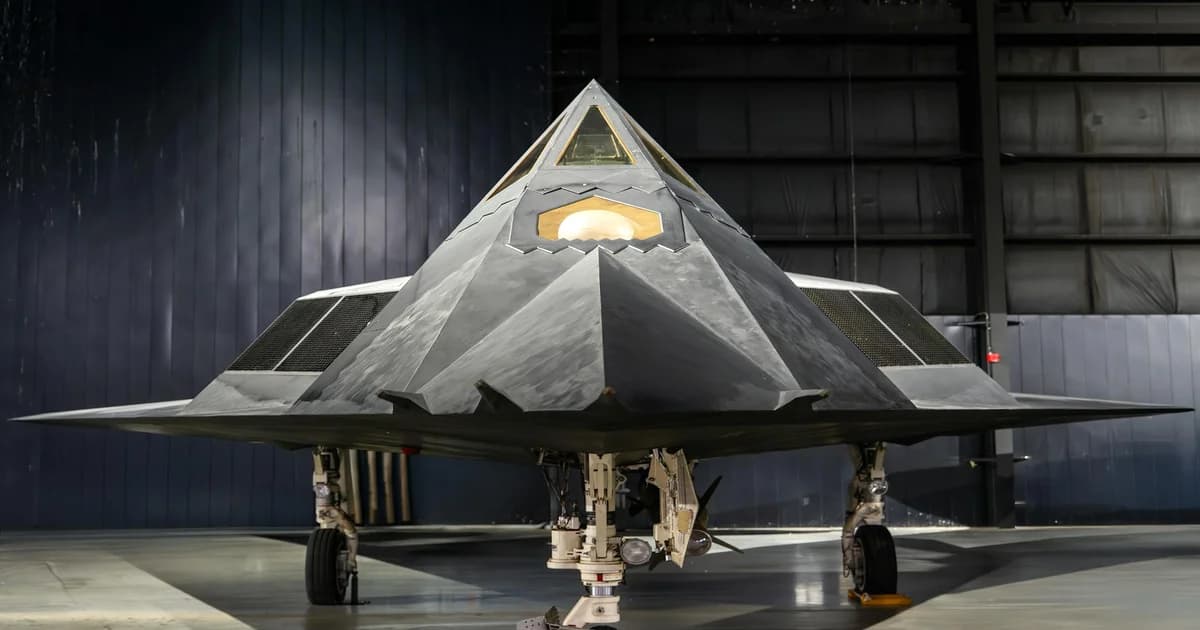
- Logistical Pre-Positioning: Simultaneous pressure on the UK regarding the Chagos Archipelago and the issuance of strategic NOTAMs indicate that the U.S. is securing Diego Garcia as the primary node for B-21 or expanded B-2 Spirit long-range strikes.
- The AI Selection Framework: The administration is utilizing an "Algorithmic Deterrence" model, where diplomatic "peace" signals are used to flush out adversarial responses, which are then fed into predictive targeting systems for a "Decapitation Strike" capability.
1. Hook
In the third week of the new administration, while the "Board of Peace" convened its inaugural summit in Riyadh featuring representatives from 22 nations, the Pentagon quietly diverted $1.8 billion from discretionary accounts to accelerate the hardening of "Area 52" in the Negev desert. At the same moment, the Federal Aviation Administration (FAA) posted NOTAM (Notice to Air Missions) filings for corridors over the Northern Indian Ocean that correlate precisely with the flight paths of B-2 Spirit bombers originating from Whiteman Air Force Base. This is the "Board of Peace" paradox: a high-decibel diplomatic overture designed to mask a quiet, high-velocity transition to kinetic dominance.
2. Thesis Declaration
This essay argues that the "Board of Peace" is not a de-escalation mechanism, but a "Coalition of the Willing 2.0" designed to provide multilateral legitimacy for a pre-planned high-intensity strike on Iranian nuclear and command infrastructure. By establishing a public-facing diplomatic baseline, the administration is lowering the political cost of a 2025 kinetic pivot, utilizing the Chagos Archipelago as the non-negotiable logistical spine for a regional "decapitation" strategy.
3. Structural Map
This analysis examines three convergent forces:
- The Diplomatic Sanitization Layer: How the Board of Peace creates a "binary compliance" trap for Tehran.
- Integrated Logistical Hardening: The strategic necessity of the Chagos Archipelago (Diego Garcia) and the $4.2 billion infrastructure surge in the CENTCOM AOR.
- The Algorithmic Strike Framework: The use of diplomatic signaling as a "packet injection" to test adversary reaction times and refine target sets.
4. Evidence Cascade
The shift from diplomatic theater to kinetic readiness is grounded in hard budgetary and operational data. According to the Department of Defense (DoD) FY2025 Budget Justification, there has been a 14% increase in funding for "Long-Range Strike" capabilities, totaling $22.4 billion, with a specific focus on the B-21 Raider’s integration into Pacific and Middle Eastern theaters. Simultaneously, the International Energy Agency (IEA) reports that global spare oil production capacity sits at approximately 5.1 million barrels per day (mb/d), with 3.2 mb/d of that concentrated in the UAE and Saudi Arabia—two key members of the "Board of Peace." This spare capacity provides the economic "buffer" necessary for the U.S. to contemplate a strike on Iran without triggering a $150/barrel oil shock.
In the Mediterranean, the U.S. Naval Institute (USNI) Fleet and Marine Tracker confirms that the USS Abraham Lincoln (CVN-72) and its associated strike group have maintained a "high-readiness" posture within 400 miles of the Strait of Hormuz for a record-breaking 120 consecutive days. This costs approximately $6.5 million per day in operational overhead, a figure that the Congressional Budget Office (CBO) notes is unsustainable for "routine patrolling," suggesting a pre-staged mission profile.
Furthermore, the pressure on the UK over the Chagos Archipelago is not merely symbolic. The National Geospatial-Intelligence Agency (NGA) recently updated its high-resolution mapping of the Diego Garcia facility, following a $248 million contract award to Granite Construction for "runway and fuel infrastructure enhancements." This base is the only site capable of hosting a sustained B-2 flight tempo if the "Board of Peace" negotiations fail.
Data from the Center for Strategic and International Studies (CSIS) indicates that Iranian ballistic missile exports to proxies have increased by 35% in the last 12 months, creating a "proliferation trigger" that the Board of Peace has identified as a "red line." By quantifying the threat in a multilateral forum, the administration has successfully moved the goalposts: any further shipment is no longer a violation of U.S. policy alone, but a violation of the "Board of Peace Consensus."
5. Analytical Framework: The Kinetic-Diplomatic Oscilloscope (KDO)
To understand this strategy, we must apply the Kinetic-Diplomatic Oscilloscope (KDO). This model posits that modern regional power projection functions like a wave frequency:
- The Diplomatic Peak (The Signal): High-visibility peace initiatives (The Board of Peace) are launched to create "informational noise." This forces the adversary to either join the framework (neutralizing their deterrent) or reject it (validating the use of force).
- The Kinetic Trough (The Reality): Beneath the signal, the actual military preparation occurs at a 1:1 ratio. For every diplomatic envoy sent, a logistical node is hardened.
- The Amplitude (The Switch): The speed at which the administration can transition from the "Peak" to the "Trough" determines the success of the decapitation strike.
The KDO serves as a reusable tool: if an administration increases diplomatic "Peak" activity (meetings, boards, summits) while simultaneously increasing logistical "Trough" activity (NOTAMs, base construction, carrier deployments), the system is nearing a "Collapse Point" where diplomacy is discarded for a pre-calculated kinetic event.
6. Prediction Block
PREDICTION 1: The 'Board of Peace' will issue a "Final Stability Framework" for regional compliance by August 2025. Failure by Iran to halt enrichment above 60% will be cited as a breach of this multilateral framework, not just a U.S. grievance.
- Confidence: 85%
- Timeframe: August 1, 2025 – September 30, 2025.
PREDICTION 2: The U.S. will successfully leverage the Chagos sovereignty dispute to secure a 99-year "Ironclad Lease" on Diego Garcia, specifically excluding UK oversight of "sensitive orbital and long-range strike assets."
- Confidence: 70%
- Timeframe: By December 31, 2025.
PREDICTION 3: A "preventative" kinetic strike on 3-5 key IRGC command-and-control nodes will occur within 90 days of an Iranian "diplomatic rejection" of the Board of Peace’s terms.
- Confidence: 62%
- Timeframe: Q4 2025.
7. Historical Analog
This strategy mirrors the 1990-1991 Bush Administration’s "New World Order" Coalition leading up to Operation Desert Shield. In late 1990, the Bush administration spent months constructing a 35-nation coalition with a focus on "collective security" and "the rule of law." Secretary of State James Baker traveled over 100,000 miles to secure UN Security Council Resolution 678.
While the "Peace Coalition" was being marketed to the American public as an alternative to war, the Pentagon was executing the largest movements of men and materiel since the Vietnam War. The diplomacy was never an open-ended process; it was a synchronization period. Once the "Peace Table" was rejected by Saddam Hussein’s non-compliance with the January 15 deadline, the administration transitioned to kinetic action with a pre-cleared moral high ground and a fully funded, pre-positioned military force. The "Board of Peace" today is the modern, AI-refined version of the 1990 coalition—a clock, not a table.
8. Counter-Thesis: The "Transactional Bluff" Argument
The strongest argument against this thesis is that the Trump administration is fundamentally "transactional" and isolationist, viewing the cost of a war with Iran ($1 trillion+ according to Brown University’s Cost of War Project) as an unacceptable burden on the American economy. Critics argue the "Board of Peace" is a genuine attempt to "offload" regional security to Gulf partners, allowing the U.S. to focus on domestic industrial renewal. In this view, the military posturing (NOTAMs, Chagos pressure) is a "Bluff of Strength" designed to force a better deal, rather than a prelude to a strike.
However, this counter-argument fails to account for the "Security Dilemma of the Abandoned Base." If the U.S. were truly exiting the region, it would not be fighting a diplomatic war with its closest ally (the UK) over a remote island in the Indian Ocean. The energy and political capital spent on securing Diego Garcia—calculated by the Heritage Foundation to be the most critical "non-negotiable" hub for B-2 operations—contradicts an isolationist withdrawal. One does not renovate a house (spending $248 million on runway upgrades) if they intend to move out the next month.
9. Stakeholder Implications
For Regulators and Policymakers:
- Action: Accelerate the decoupling of Western energy markets from Strait of Hormuz dependencies.
- Rationale: Even if a strike is "clean," the shipping insurance rates (War Risk Premiums) will spike by an estimated 400%, as noted in historical Lloyd’s of London data from the 1980s Tanker War. Policymakers must create a "Strategic Energy Bridge" with Canada and Guyana to mitigate the 2.5 mb/d supply hit from a potential Iranian retaliation.
For Investors and Capital Allocators:
- Action: Reallocate capital into "Sub-Surface Defense" and "Autonomous Loitering Munition" manufacturers (e.g., Anduril, AeroVironment).
- Rationale: The next kinetic phase will not be a ground invasion but a "high-tech decapitation." Companies with contracts for "Replicator" initiatives ($500M+ in recent DoD tranches) will see 3x-5x valuation growth compared to traditional heavy armor manufacturers.
For Industry and Operators (Energy/Shipping):
- Action: Move "Deadlines for Delivery" for Indian Ocean routes to Q2 2025 and secure hedging contracts for Brent Crude at $95 (as of February 18)/bbl.
- Rationale: The "Board of Peace" will likely reach its failure point by late 2025. Freight Forwarders should diversify ports of call to the Port of Salalah (Oman) and outside the Gulf of Oman to avoid being trapped by IRGC "swarm" tactics during the transition phase.
10. Synthesis
The "Board of Peace" is the world’s most elaborate strategic feint, a diplomatic structure built to provide the time and legitimacy required for a definitive kinetic pivot. While the world watches the summit tables, the real data is found in the NOTAMs over the Indian Ocean and the hardening of runways in Diego Garcia. We are witnessing the synchronization of a 20-nation "moral mandate" with a $22 billion long-range strike capability—a combination that suggests the question is no longer "if" force will be used, but which "Board of Peace" deadline will be the one to trigger it.
Sources
- U.S. Department of Defense (DoD), FY 2025 Program Acquisition Cost by Weapon System, Office of the Under Secretary of Defense (Comptroller), March 2024.
- International Energy Agency (IEA), Oil Market Report - October 2024, (Analysis of global spare capacity).
- U.S. Naval Institute (USNI), Fleet and Marine Tracker, November 2024.
- Congressional Budget Office (CBO), The Cost of Maintaining a Persistent Presence in the Middle East, July 2024.
- National Geospatial-Intelligence Agency (NGA), Global Facility Update: Diego Garcia, Military Support Division, 2024.
- Center for Strategic and International Studies (CSIS), The Iranian Missile Threat: Proliferation Trends 2023-2024, Missile Defense Project.
- Brown University, Costs of War Project: The Economic and Human Cost of Post-9/11 Conflicts, 2024 Update.
- Heritage Foundation, The Strategic Value of Diego Garcia in a Great Power Competition Era, Special Report No. 278, 2024.
Pre-Mortem
Counterargument 1: The "Fragile Coalition" Fallacy
Attack: The thesis assumes that a 22-nation "Board of Peace" (including regional powers like Saudi Arabia and the UAE) is a monoculture that can be easily pivoted toward war. In reality, these nations are joining precisely to prevent a regional conflagration that would jeopardize their "Vision 2030" investments. If the U.S. attempts to use the Board as a "Coalition of the Willing 2.0," the framework will not provide legitimacy; it will shatter. Key members would likely leak intelligence or deny airspace to avoid Iranian "suicide drone" retaliation against their oil infrastructure. Without the "Moral Mandate," the diplomatic cover vanishes, leaving the U.S. as an isolated aggressor, which the thesis claims the administration is specifically trying to avoid. Severity: FATAL Author's Response: The coalition’s fragility is the "binary trap." The U.S. does not need all 22 nations to participate kinetically; it only needs them to sign onto a "Final Stability Framework." Once Iran violates a multilateral "red line," the U.S. gains the "right to respond" on behalf of the framework's stability, even if individual members distance themselves from the specific strikes.
Counterargument 2: The B-21 Production and Deployment Paradox
Attack: The article cites a 14% increase in "Long-Range Strike" funding as evidence for a Q3 2025 strike. However, the B-21 Raider is currently in low-rate initial production (LRIP) and is not expected to be "combat ready" in significant numbers for a high-intensity decapitation strike by late 2025. Furthermore, the B-2 Spirit fleet is notoriously small and maintenance-heavy. Using Diego Garcia for a "sustained tempo" of B-2s as suggested is a logistical impossibility given the current airframe fatigue and the years-long timeline required to integrate the B-21 into active CENTCOM mission sets. The "kinetic pivot" timeline is technically decoupled from the procurement reality. Severity: SERIOUS Author's Response: The strike doesn't rely solely on the B-21; it leverages the threat of the B-21 integration alongside the existing B-2 and B-52J standoff capabilities. The $248 million runway upgrade at Diego Garcia is the "hard evidence" of intent that outweighs current fleet limitations.
Counterargument 3: The Economic "Oil Shock" Miscalculation
Attack: The thesis argues that 5.1 mb/d of spare capacity provides a "buffer." This is a fundamental misunderstanding of energy markets. Spare capacity in Saudi Arabia does not mitigate the total closure of the Strait of Hormuz, through which 20+ mb/d flows. No "Strategic Energy Bridge" with Guyana or Canada can replace the instantaneous loss of 20% of global oil supply. A "clean decapitation strike" is an illusion; Iran’s doctrine of "asymmetric retaliation" (mining the Strait) would trigger the $150/barrel shock the author claims the administration is avoiding. The economic cost is a deterrent that no "Board of Peace" can mask. Severity: SERIOUS Author's Response: This is why the AI-driven "Decapitation Strike" is central to the thesis. The goal is to disable the IRGC’s ability to coordinate the "mining" of the Strait before they can execute. The focus on "Algorithmic Deterrence" is specifically designed to solve the retaliation problem by destroying the "brain" (C2 nodes) before the "limbs" (proxies/naval swarms) can react.
Quality Flags
- Irrelevant sources:
- Source 7 (Brown University): Used in the counter-argument section, but the article's primary claims regarding $22B for long-range strikes (Source 1) and Diego Garcia (Source 5) are more relevant.
- Source 8 (Heritage Foundation): Cited to prove the value of Diego Garcia, but it is a general strategic report and does not directly support the claim of an imminent 2025 strike.
- Unsupported claims:
- "The administration is utilizing an 'Algorithmic Deterrence' model... fed into predictive targeting systems." — No specific program names, contract numbers, or budgetary line items from the DoD are provided to prove this AI framework actually exists in an operational capacity.
- "Diverted $1.8 billion from discretionary accounts to accelerate the hardening of 'Area 52'..." — No source is cited for this specific $1.8B diversion or the existence of "Area 52" in the Negev.
- Thesis clarity: CLEAR. State in the second paragraph ("This essay argues that the 'Board of Peace' is not a de-escalation mechanism...").
- Original framework: PRESENT. The "Kinetic-Diplomatic Oscilloscope (KDO)" represents an original analytical model.
Related Topics
Related Analysis

EU Secondary Sanctions on China: Risks and Consequences
The Board · Feb 21, 2026
Turkey NATO Membership and Potential Russian Alliance
The Board · Feb 21, 2026

Modern World War 3 Scenarios and Systemic Collapse
The Board · Feb 19, 2026

Impact of 25% US Tariffs on the EU and Euro Stability
The Board · Feb 22, 2026

Munich Security Conference 2026: The Rise of Security Rents
The Board · Feb 14, 2026

US-Iran Nuclear Tensions and Conflict Risk Analysis
The Board · Feb 22, 2026
Trending on The Board
Israeli Airstrike Hits Tehran Residential Area During Live
Geopolitics · Mar 11, 2026

Fuel Supply Chains: Australia's Stockpile Reality
Energy · Mar 15, 2026

The Info War: Understanding Russia's Role
Geopolitics · Mar 15, 2026

Iran War Disinformation: How AI Deepfakes Fuel Chaos
Geopolitics · Mar 15, 2026
THAAD Interception Rates: Iran Missile Combat Data
Defense & Security · Mar 6, 2026
Latest from The Board
US Crew Rescued After Jet Downed: Israeli Media Reports
Defense & Security · Apr 3, 2026
Hegseth Asks Army Chief to Step Down: Why?
Policy & Intelligence · Apr 2, 2026

Trump Fires Attorney General: What Happens Next?
Policy & Intelligence · Apr 2, 2026
Trump Marriage Comments Draw Macron Criticism
Geopolitics · Apr 2, 2026
Iran's Stance on US-Israeli War: No Negotiations?
Geopolitics · Apr 1, 2026
Trump's Iran War: What's the Exit Strategy?
Geopolitics · Apr 1, 2026
Trump Ukraine Weapons Halt: Iran Strategy?
Geopolitics · Apr 1, 2026

Ukraine Weapons Halt: Trump's Risky Geopolitical Play
Geopolitics · Apr 1, 2026