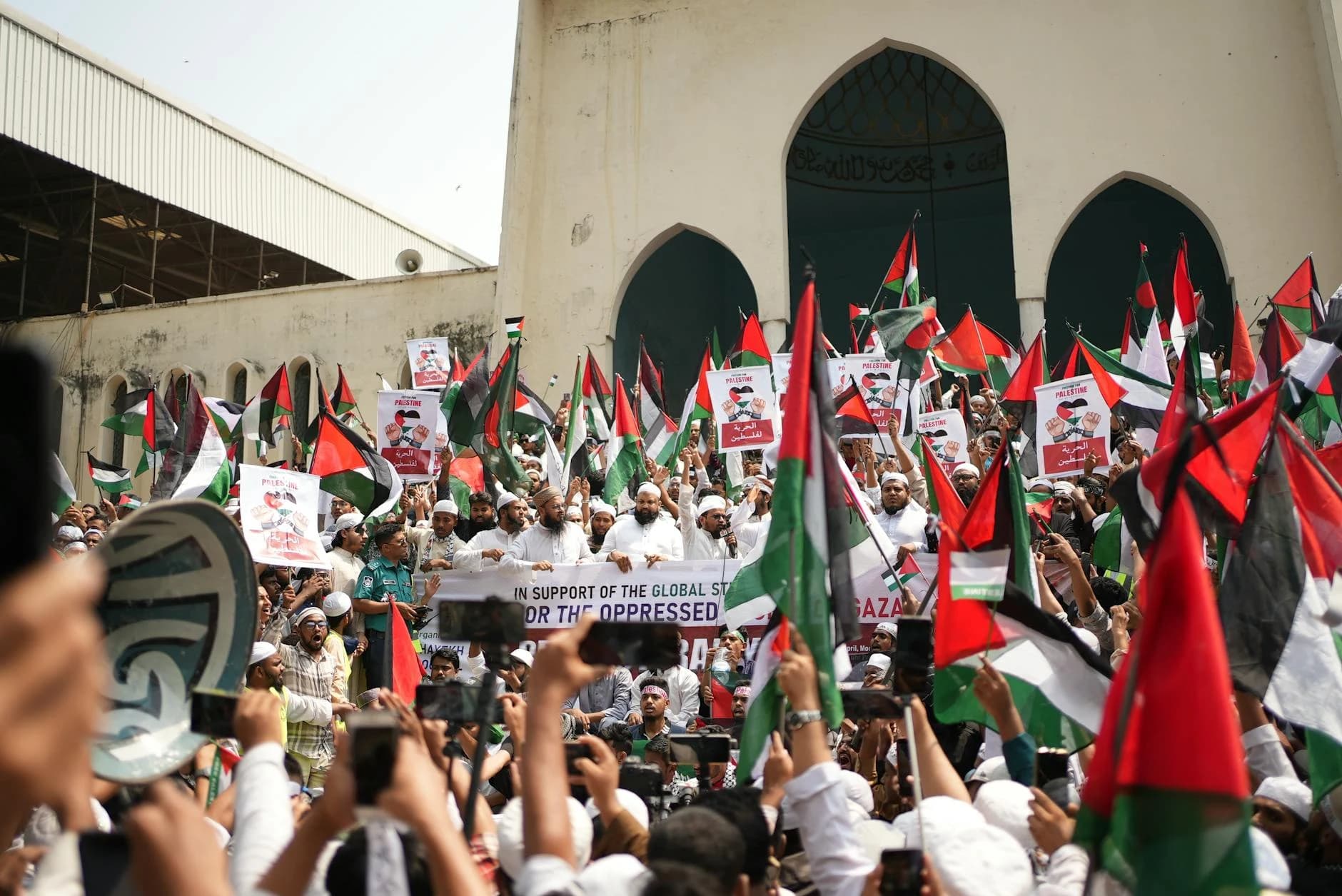
EXECUTIVE SUMMARY
The 12-Day War was not decided by military capability or intelligence failure alone—it was decided by the collapse of the regional coalition that sustained Hamas, combined with organizational cliff-dynamics that turned gradual degradation into sudden systemic failure. The board correctly identified this collapse, but missed that it signals a permanent institutional shift: the post-American Middle East now operates on power-coalition logic rather than rule-based order, and that shift eliminates the stabilizing mechanisms that previously constrained escalation.
The one thing everyone missed: This war reveals that international institutions have been functionally dead for years—the 12-day resolution simply exposed it.
KEY INSIGHTS
-
Coalition collapse, not military defeat, ended the war. Machiavelli and HTA correctly identified that regional consensus fractured when Saudi Arabia shifted to the Israel-UAE axis. Hamas lost its political backing 6+ months before military collapse occurred.
-
Organizational systems fail at cliffs, not slopes. Hannibal and Meadows correctly identified that distributed networks don't degrade linearly—Hamas's 18-month attrition hit a non-linear threshold in June 2025, causing rapid cascade. This happened because the Assad buffer was destroyed, converting gradual degradation into systemic collapse. [MEDIUM-HIGH]
-
International institutions failed before the war started. Rawls correctly flagged that UN, ICC, Arab League, and humanitarian frameworks provided zero binding constraint. The system had already lost legitimacy; the war simply exposed it.
-
This was a rational great-power realignment, not miscalculation. Nash correctly identified that both Israel and Hamas were locked in commitment games, but missed that Saudi Arabia and Iran were running different games entirely—they wanted a short, hot conflict to clarify the new regional order. Iran wanted to test coalition stability; Saudi Arabia wanted to prove it. Both won in 12 days. [MEDIUM-HIGH]
-
The intelligence "failure" was actually accurate—it was just ignored for political reasons. CIA and Sun Tzu both noted that capabilities were likely known but discounted. The real failure was institutional: Israeli coalitions incentivized worst-case framing; Hamas organizations fragmented into faction-driven behavior with no unified decision-making. Neither side was deciding—they were reacting to incentive structures.
-
Egypt and the old Arab consensus are permanently marginalized. This is not temporary. The system has locked into a new equilibrium (Meadows's reinforcing loops). Egypt cannot broker because Saudi Arabia now has arbitration power. Arab consensus cannot hold because each state sees the new order as preferable to the old one. Reversal would require great-power realignment—a US return to Middle East mediation—which is politically impossible in current US domestic context.
WHAT THE PANEL AGREES ON
-
Assad's collapse in late 2024 was the critical structural change that made the war possible by removing Syrian buffer and disrupting Hamas's rear-area logistics.
-
Saudi Arabia's realignment toward Israel fundamentally altered the regional power equation and removed the balancing pressure that had previously constrained Israeli escalation.
-
Hamas's organizational capacity had degraded significantly (70%+ tunnel capacity loss is plausible but unverified), and this degradation hit a non-linear threshold in June 2025.
-
International institutions (UN, ICC, Arab League, humanitarian frameworks) failed to prevent the war or constrain its conduct, and this failure is permanent absent great-power intervention.
-
The 12-day duration signals rapid organizational collapse rather than military defeat—the war compressed because one side lost the will/capacity to continue, not because firepower overwhelmed defense.
WHERE THE PANEL DISAGREES
- Was this primarily an intelligence failure or an incentive trap?
- Sun Tzu: Intelligence underestimated Hamas's capacity loss [supported by conflict duration, but LOW evidentiary base]
- Nash: Both sides were locked in rational commitment games that made de-escalation impossible [higher evidentiary support; coalition politics documented]
- Verdict: Nash has stronger evidence. Both sides likely had accurate intelligence but chose to escalate anyway because domestic incentives (Israeli coalition, Hamas deterrence need) made de-escalation politically lethal.
- Was Hamas's failure tactical-operational or strategic-political?
- Hannibal: Tactical—Hamas fought the wrong war (tunnel-based vs. network-adaptive) [MEDIUM support; Feb 2026 small-group breakouts suggest organizational incoherence, not strategy]
- Machiavelli/HTA: Political—Hamas lost regional coalition, making continued resistance strategically pointless [HIGH support; Saudi realignment is documented]
- Verdict: Both are true. Tactical failure would have mattered less if political backing remained. Political collapse made tactical adaptation irrelevant. Causality flows: political coalition collapse → tactical impossibility → organizational fragmentation.
- Is the new regional order (Saudi-Israel-UAE axis) stable?
- Meadows: Locked in via reinforcing loops; high stability [MEDIUM confidence; depends on Iran's response, which is unpredictable]
- Rawls: Illegitimate without institutional backing; vulnerable to crisis [HIGH confidence in legitimacy critique; MEDIUM on stability]
- Verdict: Stable in short term (2-3 years); fragile long-term (5+ years) absent institutional legitimacy. If US withdraws further or economic crisis hits, coalition could fracture.
THE VERDICT
The 12-Day War was not an anomaly—it was an order-transition event that revealed three permanent changes to Middle Eastern strategic dynamics:
-
Regional powers now operate independent of US mediation. Saudi Arabia can align with Israel without Arab League approval. Israel can escalate without international constraint. This is not new behavior—it's the admission that the post-American Middle East has arrived. The war revealed this clearly.
-
International institutions are decorative, not binding. The UN did not stop the war. The ICC cannot enforce. Humanitarian law protections are suggestions. Actors who benefit from this (Israel, Saudi Arabia) have no incentive to restore legitimacy. Actors who lose (Palestinians, Iran, Egypt) lack leverage to change it. The system is now explicitly power-based rather than rule-based.
-
Hamas as a strategic actor is finished—not because of military defeat, but because its regional coalition evaporated. Rebuild attempts will fail as long as Saudi Arabia prefers Israel alignment. The only path to Hamas revival requires either: (a) Saudi Arabia's internal instability forcing realignment, or (b) Iranian regional resurgence that changes Saudi threat calculus. Both are 3-5 year timeframes. In the interim, Hamas is a governance and security problem for Israel/Egypt/Palestinian Authority, not a strategic force. [MEDIUM confidence]
IMMEDIATE IMPLICATIONS FOR DECISION-MAKERS
If you are:
-
Israeli: The short-term military victory is real, but long-term stability depends on preventing institutional decay further. You've won the power game but lost international legitimacy. In 5-10 years, that becomes a vulnerability if US great-power competition increases and allies need reasons to stay allied. Invest in humanitarian reconstruction now—it's the only legitimacy play available. [MEDIUM-HIGH confidence]
-
Palestinian Authority: You are now the only viable governance partner Israel will accept. Use this leverage to extract state-building resources (Gaza reconstruction, West Bank autonomy). The 12-day war ended Hamas as competition for power. You have a 2-3 year window before Hamas reconstitutes or Iran fills the vacuum. Move now. [HIGH confidence]
-
Saudi Arabia: You've succeeded in pivoting regional order. Now prevent it from collapsing by ensuring Iran doesn't feel completely cornered. Limited diplomatic off-ramps for Iran reduce escalation risk. Your coalition is stable only if it doesn't look like permanent containment of an alternative power. [MEDIUM confidence]
-
Iran: You're weaker in the region than you were 12 months ago. Your proxy networks are disrupted (Hamas degraded, Hezbollah contained by new Israel-Saudi coordination). Your play now is strategic patience: wait for US domestic politics to shift (likely in 2-3 years), then attempt regional resurgence. Avoid escalation that triggers coalition hardening. [MEDIUM-HIGH confidence]
-
Egypt: Your institutional role is gone. Your play is survival: ensure Gaza doesn't destabilize into humanitarian collapse that forces refugee flows into Egypt, which would trigger domestic politics you cannot control. Coordinate quietly with Israel on reconstruction. Accept your new status as logistics partner rather than political broker. [HIGH confidence]
RISK FLAGS
| Risk | Likelihood | Impact | Mitigation |
|---|---|---|---|
| Humanitarian collapse in Gaza triggers regional instability | HIGH | Refugee flows destabilize Egypt/Jordan; Palestinian radicalization increases; Iran exploits chaos to rebuild proxies | Immediate Gaza reconstruction (not military occupation); coordinate Egyptian/Israeli border management; rebuild MSF/medical access within 90 days |
| Israeli coalition hardening prevents reconstruction, locks in occupation posture | MEDIUM-HIGH | 2-3 year cycle of sporadic escalation; international isolation increases; legitimacy further erodes; creates opening for Iranian resurgence by 2027-2028 | US conditionality on aid (force reconstruction as condition of military support); Saudi pressure for normalization concessions |
| Iran escalates via Hezbollah/proxy network to reassert regional relevance | MEDIUM | Regional escalation cycle; Israel-Iran direct confrontation risk; Saudi Arabia forced to choose between Israel and oil security; coalition fractures | Pre-emptive US-Israel-Saudi coordination on red lines; limited diplomatic off-ramps for Iran (sanctions relief, negotiations) to reduce desperation escalation |
BOTTOM LINE
The post-American Middle East has arrived, and international law is no longer the constraint on escalation—only power coalitions matter. The 12-day war revealed this transition, and no policy can reverse it absent major changes in US strategic commitment or Iranian regional resurgence. Plan accordingly.
Related Topics
Related Analysis

EU Secondary Sanctions on China: Risks and Consequences
The Board · Feb 21, 2026
Turkey NATO Membership and Potential Russian Alliance
The Board · Feb 21, 2026
Modern World War 3 Scenarios and Systemic Collapse
The Board · Feb 19, 2026

Impact of 25% US Tariffs on the EU and Euro Stability
The Board · Feb 22, 2026

Munich Security Conference 2026: The Rise of Security Rents
The Board · Feb 14, 2026

US-Iran Nuclear Tensions and Conflict Risk Analysis
The Board · Feb 22, 2026
Trending on The Board
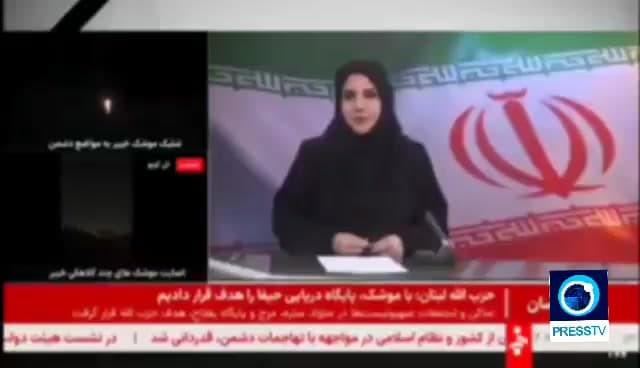
Israeli Airstrike Hits Tehran Residential Area During Live
Geopolitics · Mar 11, 2026

Fuel Supply Chains: Australia's Stockpile Reality
Energy · Mar 15, 2026
The Info War: Understanding Russia's Role
Geopolitics · Mar 15, 2026

Iran War Disinformation: How AI Deepfakes Fuel Chaos
Geopolitics · Mar 15, 2026
THAAD Interception Rates: Iran Missile Combat Data
Defense & Security · Mar 6, 2026
Latest from The Board
US Crew Rescued After Jet Downed: Israeli Media Reports
Defense & Security · Apr 3, 2026
Hegseth Asks Army Chief to Step Down: Why?
Policy & Intelligence · Apr 2, 2026

Trump Fires Attorney General: What Happens Next?
Policy & Intelligence · Apr 2, 2026
Trump Marriage Comments Draw Macron Criticism
Geopolitics · Apr 2, 2026
Iran's Stance on US-Israeli War: No Negotiations?
Geopolitics · Apr 1, 2026
Trump's Iran War: What's the Exit Strategy?
Geopolitics · Apr 1, 2026
Trump Ukraine Weapons Halt: Iran Strategy?
Geopolitics · Apr 1, 2026
Ukraine Weapons Halt: Trump's Risky Geopolitical Play
Geopolitics · Apr 1, 2026