EXECUTIVE SUMMARY
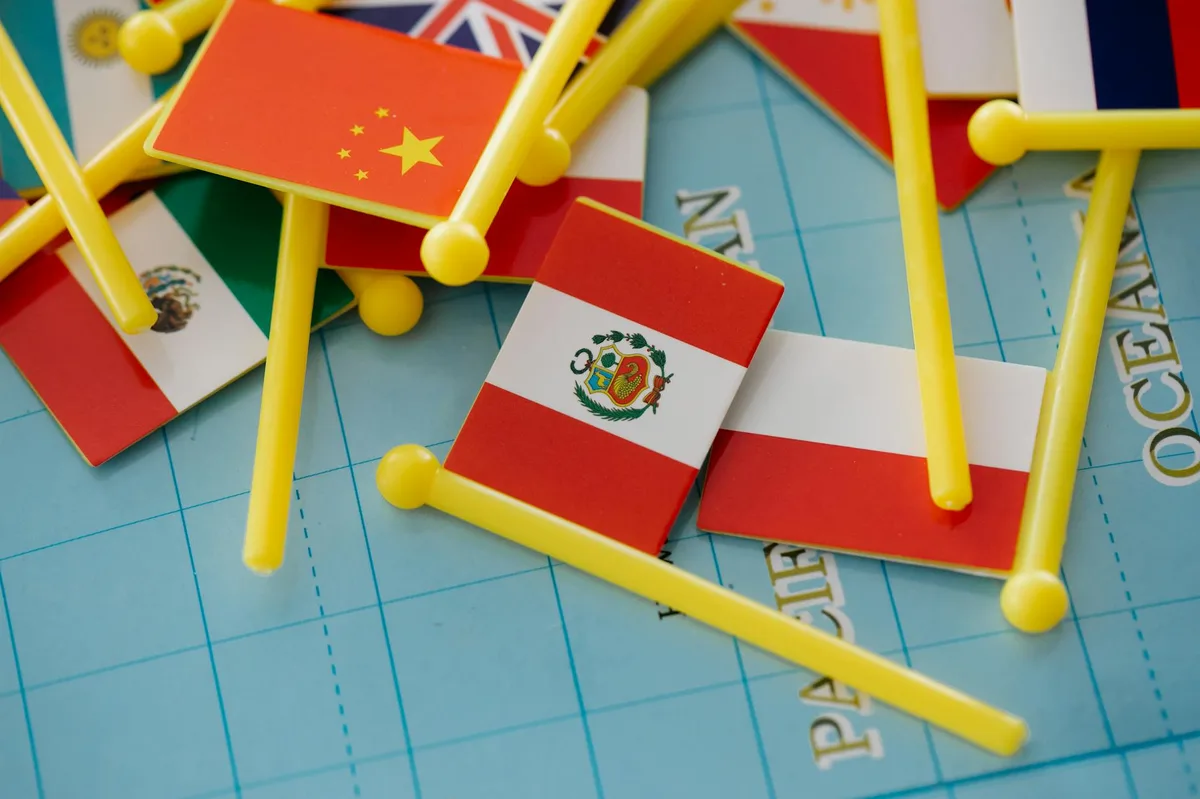
By 2050, the United States will remain the dominant but "hollow" hegemon, surviving not through optimization, but through its chaotic, decentralized capacity to absorb shocks that will fracture its rigid rivals. By 2100, the Westphalian nation-state model will be obsolete, replaced by a decentralized Archipelago of "Network States" and Corporate Enclaves that control the primary levers of AGI and orbital infrastructure.
KEY INSIGHTS
- The US survives 2050 due to "Institutional Stickiness" and superior resource buffers (land/water/immigration) despite internal social decay.
- China faces a terminal "Gerontocratic Collapse" by 2050, as its rigid top-down structures cannot policy their way out of a demographic inversion.
- National GDP becomes a "Vanity Metric" by 2070, replaced by "Compute Sovereignty" and the ability to maintain "Vertical AI Integration."
- India’s 2100 potential is throttled by "Limits to Growth" (heat-index thresholds and water scarcity), preventing a traditional superpower rise.
- The 2100 winner is not a country, but a modular network of high-trust, high-tech enclaves that have decoupled from the "Fragile" global grid.
- Resilience to "Black Swan" events—specifically synthetic bio-leaks or grid failures—will determine survival over military or economic size.
WHAT THE PANEL AGREES ON
- Demographic Inversion: China’s population trajectory is a "Hard Ceiling" that precludes 21st-century dominance.
- Resource Primacy: Geography (fresh water and arable land) will re-emerge as a 2050 superpower veto as climate volatility increases.
- The Complexity Tax: The cost of maintaining global systems is rising, favoring entities that can "de-sync" or simplify their internal structures.
WHERE THE PANEL DISAGREES
- The Nature of Power: HTA-V2 sees a continuation of naval/maritime power; THIEL sees a "0-to-1" leap to AI-monopoly. (The Synthesis prefers the AI-monopoly view for the 2100 window).
- The "India" Question: HTA-V2 predicts an Indian century; MEADOWS argues ecological limits make this impossible. (The Synthesis sides with Meadows—ecological fragility in South Asia is a systemic stopper).
THE VERDICT
For 2050: The United States (Contested). Bet on the US not because it is thriving, but because its competitors (China, EU) are more fragile. The US maintains dominance through a combination of the "Dollar Trap," energy independence, and the world's most adaptive (if chaotic) innovation ecosystem.
For 2100: The Sovereign Network (Archipelago). Bet on the dissolution of the "Superpower" as a concept. Power will reside in high-tech, modular enclaves (e.g., a "Silicon Valley-SpaceX-Zurich" axis) that control AGI seeds and orbital assets. These entities will be post-territorial, focusing on "Compute" and "Longevity" rather than land mass.
- Prioritize US-based technology and energy infrastructure — It is the most antifragile "Latitudinal Fortress."
- Divest from demographic-dependent economies (China/Japan) — The "Missing Generation" cannot be replaced by policy.
- Invest in "Modular Resilience" — If the 2100 winner is an Archipelago, the value is in sovereign, decentralized systems (Energy/AI/Food).
RISK FLAGS
-
Risk: Sovereign Debt "Sudden Stop"
-
Likelihood: HIGH
-
Impact: Global credit freeze and rapid collapse of state-level social contracts.
-
Mitigation: Hedge in "Hard" natural capital and decentralized compute assets.
-
Risk: AGI "Logic Leak" (Misalignment)
-
Likelihood: MEDIUM
-
Impact: Total systemic failure of automated supply chains (The "Sovereign Paperweight" scenario).
-
Mitigation: Maintain "Analog" backup systems for critical life-support (Water/Grid).
-
Risk: Climate-Induced Migration Wars
-
Likelihood: MEDIUM
-
Impact: Breach of borders and collapse of "Latitudinal Fortress" stability.
-
Mitigation: Shift focus to "Modular Regionalism" and local caloric security.
BOTTOM LINE
The future belongs to the Antifragile, not the Optimized; by 2100, "Superpower" status will be measured in bits and longevity, not bullets and borders.
Milestones
[
 {
 "sequence_order": 1,
 "title": "The Demographic Inflection",
 "description": "China's absolute population decline accelerates; US maintains growth via managed migration.",
 "acceptance_criteria": "Official census data confirms China population contraction >1% per annum.",
 "estimated_effort": "By 2030",
 "depends_on": []
 },
 {
 "sequence_order": 2,
 "title": "Energy Decoupling",
 "description": "Leading power achieves energy sovereignty through localized fusion or advanced modular reactors.",
 "acceptance_criteria": "Fossil fuel imports drop below 5% of total energy mix for the hegemon.",
 "estimated_effort": "By 2045",
 "depends_on": [1]
 },
 {
 "sequence_order": 3,
 "title": "The AGI Singularity Threshold",
 "description": "A single entity (State or Network) achieves vertical integration of super-intelligence.",
 "acceptance_criteria": "AI-driven scientific output exceeds human-driven output by 10x.",
 "estimated_effort": "By 2055",
 "depends_on": [2]
 },
 {
 "sequence_order": 4,
 "title": "The Great Fragmentation",
 "description": "Traditional nation-states begin ceding sovereignty to digital/corporate Network States.",
 "acceptance_criteria": "At least 3 'Special Economic Zones' achieve full legal and digital autonomy.",
 "estimated_effort": "By 2070",
 "depends_on": [3]
 },
 {
 "sequence_order": 5,
 "title": "The Orbital Shift",
 "description": "Economic center of gravity moves to orbital infrastructure (energy harvesting/data storage).",
 "acceptance_criteria": "Orbital GDP exceeds that of a G7 nation.",
 "estimated_effort": "By 2100",
 "depends_on": [4]
 }
]
Related Topics
Related Analysis

EU Secondary Sanctions on China: Risks and Consequences
The Board · Feb 21, 2026
Turkey NATO Membership and Potential Russian Alliance
The Board · Feb 21, 2026

Modern World War 3 Scenarios and Systemic Collapse
The Board · Feb 19, 2026

Impact of 25% US Tariffs on the EU and Euro Stability
The Board · Feb 22, 2026

Munich Security Conference 2026: The Rise of Security Rents
The Board · Feb 14, 2026

US-Iran Nuclear Tensions and Conflict Risk Analysis
The Board · Feb 22, 2026
Trending on The Board

Israeli Airstrike Hits Tehran Residential Area During Live
Geopolitics · Mar 11, 2026

Fuel Supply Chains: Australia's Stockpile Reality
Energy · Mar 15, 2026

The Info War: Understanding Russia's Role
Geopolitics · Mar 15, 2026

Iran War Disinformation: How AI Deepfakes Fuel Chaos
Geopolitics · Mar 15, 2026
THAAD Interception Rates: Iran Missile Combat Data
Defense & Security · Mar 6, 2026
Latest from The Board

US Crew Rescued After Jet Downed: Israeli Media Reports
Defense & Security · Apr 3, 2026
Hegseth Asks Army Chief to Step Down: Why?
Policy & Intelligence · Apr 2, 2026

Trump Fires Attorney General: What Happens Next?
Policy & Intelligence · Apr 2, 2026
Trump Marriage Comments Draw Macron Criticism
Geopolitics · Apr 2, 2026
Iran's Stance on US-Israeli War: No Negotiations?
Geopolitics · Apr 1, 2026
Trump's Iran War: What's the Exit Strategy?
Geopolitics · Apr 1, 2026
Trump Ukraine Weapons Halt: Iran Strategy?
Geopolitics · Apr 1, 2026

Ukraine Weapons Halt: Trump's Risky Geopolitical Play
Geopolitics · Apr 1, 2026