
EXECUTIVE SUMMARY
Direct, total war (invasion/regime change) remains a **** probability due to mutual survival incentives. However, the 45-year "Gray Zone" equilibrium is collapsing into a "Kinetic Transition" phase, where direct state-on-state strikes are becoming the new baseline. We are moving from a managed standoff to a high-fragility environment where a single tactical error triggers a regional firestorm.
KEY INSIGHTS
- The conflict has already transitioned from "proxy-only" to "direct-kinetic" signaling.
- Iran’s nuclear "breakout" has compressed the strategic decision cycle from years to weeks.
- Technical "friction"—sensor errors or autonomous drone mishaps—is now a more likely war trigger than deliberate policy.
- The US will not invade, but it is moving toward a "High-Impact Decapitation" posture to reset deterrence.
- "Strategic Patience" is being replaced by "Automated Escalation" due to AI-driven maritime defense systems.
- Global maritime insurance and energy chokepoints are the primary hostage in this "fragile" system.
WHAT THE PANEL AGREES ON
- No Appetite for Invasion: Neither side views "boots on the ground" as a viable win condition.
- Erosion of Red Lines: The historical "off-ramps" that prevented escalation are being ignored or bypassed.
- Proxy Autonomy: Tehran no longer has 100% control over its "Axis of Resistance," creating a "Principal-Agent" trap.
- Fragility: The system is "negatively convex"—small mistakes will lead to disproportionately large, non-linear outcomes.
WHERE THE PANEL DISAGREES
- The Nature of the "Win": Is Iran winning by "not losing" (Sunzi) or by "imposing unsustainable costs" (Nash)? Evidence suggests cost-imposition is the current priority.
- Rationality vs. Complexity: Some board members assume leaders are rational actors; others argue that system complexity (AI, sensors, "skin in the game") has rendered human rationality irrelevant.
THE VERDICT
Total war is unlikely, but a Direct Kinetic Exchange is imminent. You must prepare for a "Limited High-Intensity Conflict" that disrupts global energy and shipping without escalating to a land invasion.
- Monitor Logistics, not Carriers — Watch for US pre-positioning of "Sustainment Stocks" (fuel, blood, hospital ships). This is the only true indicator of a shift from deterrence to engagement.
- Price in Energy Volatility — The "Gray Zone" has ended. Expect a "Ring of Fire" response that targets maritime chokepoints (Hormuz/Bab al-Mandab) the moment direct strikes occur.
- Ignore Rhetoric, Watch the "Proportionality Ratio" — If the US response to a proxy strike exceeds 10x the damage taken, the transition to state-on-state war has begun.
RISK FLAGS
-
Risk: A "Lucky" Proxy Strike (e.g., a drone hitting a US carrier deck or crowded barracks).
-
Likelihood: HIGH
-
Impact: Instant transition to direct, non-proportional retaliatory strikes on Iranian soil.
-
Mitigation: Immediate US decoupling from fixed "sitting duct" positions in reach of short-range drones.
-
Risk: Nuclear Breakout Miscalculation.
-
Likelihood: MEDIUM
-
Impact: Israeli/US preemptive strike on Natanz/Fordow, triggering regional "total war."
-
Mitigation: Establish a "Hotline" for nuclear signaling to prevent a "Use it or Lose it" panic.
-
Risk: Autonomous System Collision (AI vs. AI).
-
Likelihood: MEDIUM
-
Impact: Kinetic escalation triggered by software, not humans.
-
Mitigation: Mandatory "Human-in-the-Loop" constraints for all maritime defensive batteries.
BOTTOM LINE
We are not "going" to war; we are drifting into a high-speed collision where a single technical error will act as the declaration.
Related Topics
Related Analysis

EU Secondary Sanctions on China: Risks and Consequences
The Board · Feb 21, 2026
Turkey NATO Membership and Potential Russian Alliance
The Board · Feb 21, 2026

Modern World War 3 Scenarios and Systemic Collapse
The Board · Feb 19, 2026

Impact of 25% US Tariffs on the EU and Euro Stability
The Board · Feb 22, 2026

Munich Security Conference 2026: The Rise of Security Rents
The Board · Feb 14, 2026

US-Iran Nuclear Tensions and Conflict Risk Analysis
The Board · Feb 22, 2026
Trending on The Board
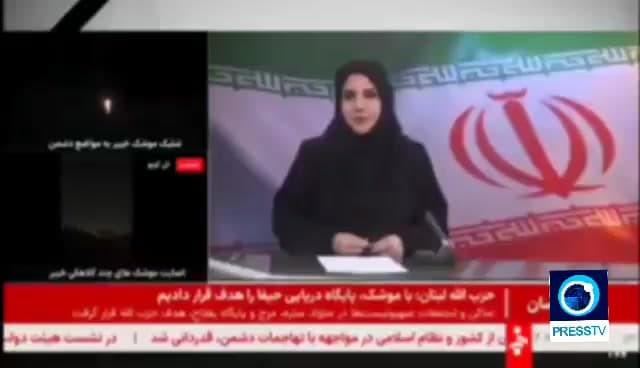
Israeli Airstrike Hits Tehran Residential Area During Live
Geopolitics · Mar 11, 2026

Fuel Supply Chains: Australia's Stockpile Reality
Energy · Mar 15, 2026

The Info War: Understanding Russia's Role
Geopolitics · Mar 15, 2026

Iran War Disinformation: How AI Deepfakes Fuel Chaos
Geopolitics · Mar 15, 2026
THAAD Interception Rates: Iran Missile Combat Data
Defense & Security · Mar 6, 2026
Latest from The Board
US Crew Rescued After Jet Downed: Israeli Media Reports
Defense & Security · Apr 3, 2026
Hegseth Asks Army Chief to Step Down: Why?
Policy & Intelligence · Apr 2, 2026

Trump Fires Attorney General: What Happens Next?
Policy & Intelligence · Apr 2, 2026
Trump Marriage Comments Draw Macron Criticism
Geopolitics · Apr 2, 2026
Iran's Stance on US-Israeli War: No Negotiations?
Geopolitics · Apr 1, 2026
Trump's Iran War: What's the Exit Strategy?
Geopolitics · Apr 1, 2026
Trump Ukraine Weapons Halt: Iran Strategy?
Geopolitics · Apr 1, 2026

Ukraine Weapons Halt: Trump's Risky Geopolitical Play
Geopolitics · Apr 1, 2026