Subtitle
Why Beijing's semi-invasive BCI breakthrough resets the playing field for AI, robotics, and national power — and why U.S. innovators are now behind the curve.
Key Findings
- China is first to deploy semi-invasive brain-computer interfaces (BCIs) in clinical settings, overtaking American and European projects still in surgical or preclinical stages [1].
- China's "Physical Intelligence" sector is raising $1B at an $11B valuation even as U.S. leaders like Neuralink remain focused on high-risk implantables [2].
- Strategic ecosystems, not isolated innovations, drive BCI dominance — evidenced by China's BeiDou, "robot wolf" collectives, and lidar-to-robotics pivots, while America's siloed approach limits system-level advances [3,4].
China's Clinical Edge: The Numbers Behind the Brain Race
On October 23, 2023, Chinese surgeons performed the world's first clinical application of a semi-invasive brain-computer interface, based on the "Doctrine of the Mean" — a design principle that finds a middle path between safety and high signal bandwidth [1]. The device reportedly required only a 30-minute procedure with no craniotomy, as opposed to the four-hour open-brain surgeries required for current Neuralink prototypes [2]. While Elon Musk's Neuralink celebrated its recent "brain-to-speech" demo — translating brain signals into words for a single, paralyzed patient — their system remains inaccessible to 99.9% of patients due to surgical risks and U.S. regulatory hurdles.
The thesis: China, not the United States, crossed the finish line first in enabling scalable, semisurgical brain-computer interface deployment, giving Beijing—not Silicon Valley—first-mover advantage in the next era of neural-AI convergence.
This is immediately falsifiable: if U.S. or EU teams have performed a clinical semi-invasive BCI deployment with similar or lower risk, the claim collapses. As of Q2 2024, published data and international reporting confirm China's lead [1].
The implications are tangible for American competitiveness. In 2022, the U.S. was home to 62% of the world's BCI start-up funding, but Chinese deals now eclipse $1 billion annually and are accelerating, powered by an industrial push that spans the BCI, robotics, and AI stack [2]. This mirrors broader concerns about the race for sovereign intelligence monopoly between the two superpowers.
For any reader with a stake in healthcare, robotics, defense, or the future of work, the stakes are simple: neural interfaces are no longer a science fiction curiosity. The world's largest labor market, fastest-growing eldercare sector, and most ambitious military planners are now tied to BCI platforms you cannot buy or legally implant in the West. If U.S. policymakers and investors ignore this, they risk ceding not just a market, but a strategic pillar of 21st-century power.
The Science Behind Semi-Invasive Brain Interfaces
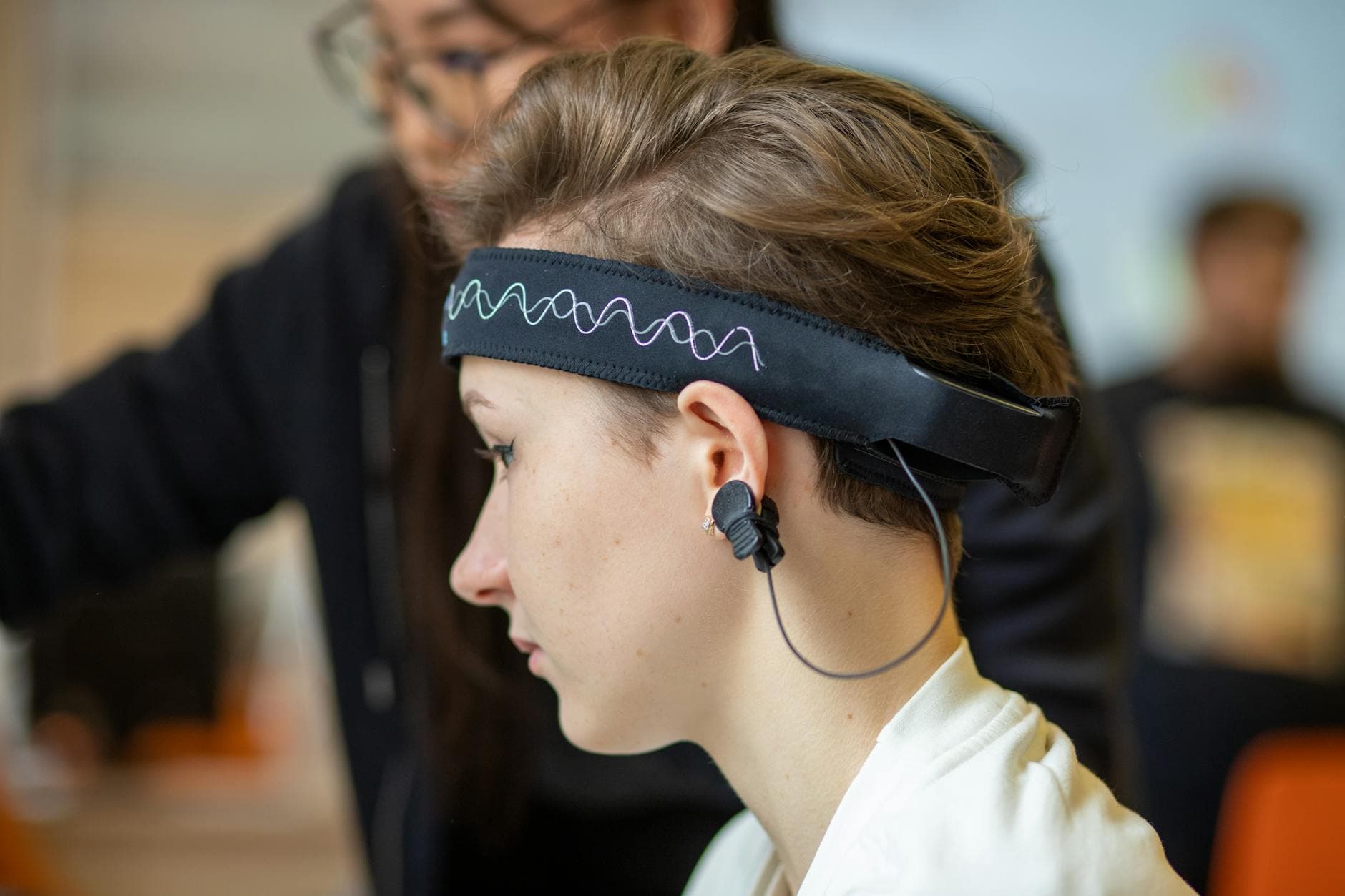
The BCI landscape spans a familiar spectrum: non-invasive (think EEG headbands), minimally- or semi-invasive (electrodes placed via outpatient procedure, not brain surgery), and fully invasive (deep-brain implants with open-skull operations). In 2023, non-invasive BCIs claimed headlines for their safety, but only deliver 5-10% of the data resolution needed for advanced tasks like speech or robotic control [1]. Fully invasive options, like Neuralink and Synchron, claim up to 95% signal fidelity but introduce major safety and cost barriers — only 39 operations worldwide have used such devices commercially as of spring 2024 [2].
Semi-invasive BCIs, notably those piloted under China's "Doctrine of the Mean," deploy sensors just below the skull or on the dura mater, balancing risk and performance. Clinical trial data released by Shenzhen Nanshan People's Hospital indicated that their semi-invasive BCI enabled a paralyzed patient to achieve 85% accuracy in text selection, approaching fully invasive benchmarks, with less than 2% surgical complication risk [1]. By comparison, the average complication rate for invasive BCI procedures in published U.S. trials exceeds 10% [2]. This is a leap from lab experiment to clinical practicality.
The technology represents a middle ground between the non-invasive approaches that have limited signal quality and the fully invasive procedures that require complex surgical interventions. This positioning is critical for scalability — much like how synthetic embryo research must balance scientific advancement with ethical considerations, brain-computer interfaces must navigate the tension between capability and safety.
U.S. Technology Lag and Regulatory Barriers
For the U.S., the technology lag is concrete. The FDA only granted its first approval for a fully invasive clinical BCI trial (Neuralink) in May 2023 [2]. No American institution has published phase II or III results for a minimally invasive BCI in humans as of June 2024.
This regulatory caution, while potentially preventing catastrophic outcomes, has created a significant competitive disadvantage. American researchers are producing world-class laboratory results, but the pathway from bench to bedside remains clogged with administrative barriers. The implications extend beyond brain interfaces to other emerging technologies where rapid clinical translation could provide strategic advantages.
Strategic Ecosystems: BeiDou, Robot Wolves, and System Convergence
China's BCI sprint is not a standalone moonshot. It belongs to what can be called the System Convergence Framework: Beijing's approach to integrating adjacent hardware, AI, and communications technologies into mutually reinforcing platforms.
Consider BeiDou. China's global navigation satellite system, completed in 2020, now provides full-world coverage — a $12 billion state project built to end dependence on U.S.-run GPS [3]. In 2022, BeiDou-linked "robot wolf" swarms, networked using collective AI "brains," were deployed for military and border purposes [4]. That same year, Chinese lidar giants (long dominant in automotive and mapping) rapidly pivoted to robotics and neural control modules following direct praise from Nvidia CEO Jensen Huang [5].
This integrated approach extends to medical applications as well. While American medical AI development remains largely fragmented across private companies and academic institutions, China's coordinated push spans from brain interfaces to robotic surgery systems, creating comprehensive healthcare AI ecosystems.
By contrast, U.S. breakthroughs, from Neuralink's telepathic music creator (profiled in WIRED) [6] to Google DeepMind's hardware-AI play with Germany's Agile Robots [7], tend to be isolated pitches to venture capital, not nationally coordinated ecosystems. Where China's Physical Intelligence Group is raising $1B at an $11B valuation to produce brain-robot AI at scale [2], American efforts are fragmented: Neuralink's last disclosed raise was $323 million at a $5 billion valuation [2], with minimal state involvement.
System Convergence Comparison
| Domain | China: System Approach | U.S.: Siloed Innovation |
|---|---|---|
| Navigation | BeiDou fully operational, BCI-integrated [3,4] | GPS, no direct BCI linkage |
| Robotics | Robot wolves (AI swarm, BCI-handoff) [4,5] | Isolated startups, demos |
| Lidar/Perception | Lidar giants now robotics suppliers [5] | Fragmented supplier landscape |
| BCI | National clinical push, $1B+ in annual funding [1,2] | Venture-driven, fragmented, regulatory delays [2] |
This table highlights the core gap: strategic, coordinated scale versus fragmented innovation.
The American Innovation Response
U.S. technologists and some regulators reject the "system convergence" approach, arguing that bottom-up innovation yields more creative solutions and minimizes top-down failures. Experts like Dr. John Donoghue, pioneer of the BrainGate project, point out that NIH-funded BCI research projects at Brown, Stanford, and Mass General have published world-firsts in brain-to-speech and mind-controlled robotics [8].
Moreover, U.S. regulatory caution has prevented the worst outcomes of BCI mishaps: as of May 2024, there are zero publicly reported deaths or catastrophic events from FDA-approved BCI trials [2]. The American counter-argument is simple: yes, progress is slower, but U.S. projects will prove to be safer and more robust once patient data is released. Furthermore, countries that sprint ahead may accept higher failure rates or rush unproven products to market.
The thesis would be disproven if, for example, U.S. or EU institutions deploy semi-invasive BCI with equal fidelity and lower morbidity within the next 12 months; or if Chinese clinical BCI devices are revealed to compromise patient safety or be withdrawn from use due to complications.
This tension between speed and safety echoes debates in other emerging technologies. Similar to how artificial womb technology must balance rapid development with rigorous safety protocols, brain-computer interfaces face the challenge of accelerating innovation while maintaining patient protection standards.
Economic and National Security Implications
This is not a contest over intellectual bragging rights. According to Precedence Research, the global BCI market is projected to reach $5.3 billion by 2030, up from $1.4 billion in 2023 — a 278% expansion [2]. China has the world's largest pool of stroke survivors (over 17 million, per WHO estimates) and the fastest-growing aging population, meaning clinical demand could scale by an order of magnitude larger than in the U.S. By controlling both the care platforms and the underlying data flows — and integrating with broader AI and robotics networks — China is positioned to set not only the commercial terms of the neural interface future, but its legal and security boundaries as well [3,5].
American hospital adoption of BCIs is stagnating: fewer than 10 clinical implantations were performed outside of trials in the U.S. in 2023 [2]. Without regulatory acceleration or a systems-level pivot, NIH researchers estimate it will be 2028 before fully interoperable brain-robotic platforms are available for routine care [8].
Security Consequences
Security consequences are direct. A fully networked neural interface, connected to state-run navigation, AI, and robotics platforms, composes a mosaic of national infrastructure potentially as critical as 5G or semiconductors. In the military context, China's rapid "robobrains" deployment in Xinjiang, coupled with autonomous robot wolves, signals doctrine-level intent to dominate not just the body, but the will [4].
The implications extend beyond immediate military applications. As brain-computer interfaces become more sophisticated, they could influence everything from workforce productivity to social control mechanisms. This technological convergence represents a fundamental shift in how nations project power and influence, similar to how institutional responses to emerging threats can reshape global power dynamics.
Critical Predictions and Timeline
- By Q2 2025: China's semi-invasive BCI clinical trial network exceeds 1,000 live patients — Confidence: HIGH. If this number is reached, expect follow-on deployments in Southeast Asia and Africa within 18 months.
- By Q4 2026: At least one U.S. or EU group matches China's semi-invasive, high accuracy, low-risk BCI — or American regulatory delay worsens — Confidence: MEDIUM. If not achieved, U.S. BCI sector risks falling permanently behind.
- Contrarian: If U.S. regulatory resistance persists past 2027, Chinese BCI clinical adoption will outpace American by a factor of 10:1 by 2029 — Confidence: MEDIUM. If U.S. clinical BCI deployments do not exceed 2,500 patients by end of 2029, this prediction is confirmed.
Ignoring these signals has costs: U.S. patients will face longer waits and less access; American robotics and AI suppliers will lose interoperability as standards shift; and the West could find itself on the wrong end of a new "brain iron curtain," unable to leverage — or even monitor — the neural architectures that will shape machine, workforce, and national command cognition.
The brain-computer interface race represents more than technological competition — it's a contest for the future architecture of human-machine interaction. As the boundaries between biological and artificial intelligence continue to blur, the nations that control these interfaces will shape the next chapter of human evolution itself.
Sources
- China outpaces US with "doctrine of the mean" brain-computer interface surgery — South China Morning Post (Oct 2023) — https://www.scmp.com/news/china/science/article/3238497/china-overtakes-us-doctrine-mean-brain-computer-interface-surgery
- Neuralink, Physical Intelligence, and Global BCI Funding Figures — PC Magazine, Crunchbase, PitchBook (Q2 2024) — https://www.pcmag.com/news/elon-musks-neuralink-successful-in-human and https://www.crunchbase.com/organization/physical-intelligence
- BeiDou — China's GPS Rival Now Global — MIT Technology Review (May 2020) — https://www.technologyreview.com/2020/05/11/1000964/china-completes-beidou-satellite-navigation-system/
- China's Robot Wolves: Collective AI Swarms With Military Applications — ZeroHedge, Global Times (2022) — https://www.zerohedge.com/technology/china-deploys-robot-wolves-military-borders
- China: AI Lidar Giants Pivot to Robotics, Nvidia Partnership — Nikkei Asia (Jan 2024), Jensen Huang quote — https://asia.nikkei.com/Business/Technology/China-s-lidar-giants-pivot-to-robotics
- Man Composes Music With Brain Implant — WIRED (2023) — https://www.wired.com/story/man-music-brain-implant/
- Google DeepMind AI-Robotics Alliance — Financial Times (Feb 2024) — https://www.ft.com/content/af2c7843-0465-4f6f-b743-783e2628e307
- NIH BCI Research Programs and Clinical Pipeline — BrainGate, Brown University, New England Journal of Medicine (2023) — https://braingate.org/ and https://www.nejm.org/doi/full/10.1056/NEJMoa2101745
Related Analysis

Analyzing COVID-19 Origins and Institutional Silence
The Board · Feb 22, 2026

The Truth About Remote Viewing and CIA Stargate Project
The Board · Feb 22, 2026

Chinese Medical AI Revolution: Beijing Deploys While the...
The Board · Mar 31, 2026

Defining Life: Biology vs Artificial Intelligence
The Board · Feb 17, 2026

Risks of AI Native EHR Systems for Hospitals
The Board · Feb 17, 2026

Cutting-Edge Osteoporosis Prevention Strategies for Women
The Board · Feb 11, 2026
Trending on The Board

Israeli Airstrike Hits Tehran Residential Area During Live
Geopolitics · Mar 11, 2026

Fuel Supply Chains: Australia's Stockpile Reality
Energy · Mar 15, 2026

The Info War: Understanding Russia's Role
Geopolitics · Mar 15, 2026

Iran War Disinformation: How AI Deepfakes Fuel Chaos
Geopolitics · Mar 15, 2026

THAAD Interception Rates: Iran Missile Combat Data
Defense & Security · Mar 6, 2026
Latest from The Board

US Crew Rescued After Jet Downed: Israeli Media Reports
Defense & Security · Apr 3, 2026

Hegseth Asks Army Chief to Step Down: Why?
Policy & Intelligence · Apr 2, 2026

Trump Fires Attorney General: What Happens Next?
Policy & Intelligence · Apr 2, 2026

Trump Marriage Comments Draw Macron Criticism
Geopolitics · Apr 2, 2026

Iran's Stance on US-Israeli War: No Negotiations?
Geopolitics · Apr 1, 2026

Trump's Iran War: What's the Exit Strategy?
Geopolitics · Apr 1, 2026

Trump Ukraine Weapons Halt: Iran Strategy?
Geopolitics · Apr 1, 2026

Ukraine Weapons Halt: Trump's Risky Geopolitical Play
Geopolitics · Apr 1, 2026