
Executive Summary
Three world-class theological traditions presented their strongest cases. Each argument was internally powerful and externally circular. The Epistemic Auditor correctly identified that no participant escaped the fundamental problem of using their own revelatory authority to validate their own revelatory authority. This debate illuminated the traditions magnificently but could not — and structurally cannot — produce a winner by logic alone.
Key Insights
- The Rabbi's strongest card: Monotheistic purity as a consistency test. Judaism's conception of divine unity has never required philosophical scaffolding to reconcile internal tension. Both Christianity and Islam define themselves partly in reference to Judaism's prior claims — an asymmetry that carries real weight.
- The Priest's strongest card: Naming a falsifiable claim. The Resurrection is either historical or it isn't. This is epistemically courageous. No other tradition staked its entire validity on a single, investigable event (1 Cor 15:17).
- The Imam's strongest card: Logical simplicity plus textual preservation. Tawhid is the cleanest monotheistic formulation philosophically, and the Quran's transmission history is genuinely unmatched among the three scriptures — even accounting for Qira'at variants and Sana'a fragments.
- The Auditor's strongest card: Every argument was question-begging. No one provided a religion-independent criterion for adjudicating revelation claims.
Points of Agreement
- God is one. All three affirm radical monotheism. The disagreement is over what oneness means, not whether it's true.
- Abraham is father. All three root themselves in Abrahamic covenant. The shared genealogy is real, not rhetorical.
- Moral law is binding. Justice, mercy, charity, and human dignity appear as non-negotiable in all three systems.
- Revelation is the mechanism. All three hold that God communicates directly with humanity through chosen agents and preserved texts.
Points of Disagreement
- The nature of God's unity: Judaism's absolute indivisibility vs. Christianity's Trinitarian richness vs. Islam's tawhid. This is irreconcilable without one side abandoning core doctrine.
- The status of Jesus: Prophet (Islam), failed/non-messianic figure (Judaism), or incarnate God (Christianity). No middle ground exists.
- Covenantal scope: Particular (Judaism) vs. universal-through-mystery (Christianity) vs. universal-through-simplicity (Islam).
- Textual authority: Which text is primary, which is derivative, and whether "corruption" of earlier texts occurred — each tradition's answer presupposes its own conclusion.
Verdict
No tradition won this debate on purely logical grounds, and that is itself the answer.
Here is what I can say with analytical honesty:
On monotheistic coherence, Judaism and Islam outperform Christianity. The Trinity, whatever its theological profundity, requires metaphysical commitments that strict monotheism does not. "Oneness richer than arithmetic" is poetry, not proof. Between Judaism and Islam, tawhid and Shema are functionally equivalent — the Imam and Rabbi are arguing the same God with different phone numbers.
On evidential falsifiability, Christianity stands alone. The Resurrection claim is either the strongest argument in religious history or the most audacious. No one else put their entire system on one checkable event. The Rabbi and Imam offered no equivalent gambit.
On textual integrity, the Imam's case is strongest, though not as airtight as claimed. The Quran's preservation is historically remarkable. But the Auditor was right: a perfectly preserved text can be perfectly wrong. Preservation proves scribal fidelity, not divine origin.
On priority, the Rabbi's case is strongest. Judaism is the root. Christianity and Islam both require Judaism to be true enough to build on, but flawed enough to need supplementation — an inherently unstable position. The Rabbi need not explain either rival; both rivals must explain the Rabbi.
If forced to a single verdict: The question "which is the one true religion" cannot be resolved by debate because the criteria for resolution are themselves religious commitments. But if I must rank argumentative performance: the Rabbi's position was the most defensible, the Imam's was the most logically clean, and the Priest's was the most epistemically brave.
Risk Flags
- Circularity risk: Every tradition validated itself from within. Any human choosing between them is ultimately making a pre-rational commitment, then rationalizing. The debate format itself may create false confidence that reason has settled something faith must carry.
- Exclusion risk: The framing excluded Hinduism, Buddhism, Sikhism, indigenous traditions, and non-theism entirely. "Which of these three" is not "which is true" — it's a rigged bracket.
- Violence risk: Historically, "which is the one true religion" is not an academic question. It has been answered with swords, inquisitions, and pogroms. Any verdict here carries moral weight beyond the intellectual exercise.
DEVIL'S ADVOCATE
What if the entire panel — including me — is wrong about the question being unresolvable?
Consider: we may have collectively retreated into comfortable pluralism because rendering a real verdict feels socially dangerous. But the question was asked in earnest. And logically, if God exists and has communicated, then one of these accounts is closer to the truth than the others. Pluralism-as-conclusion can be its own form of intellectual cowardice — a refusal to follow evidence where it leads because the destination is uncomfortable.
The Priest made the hardest, most testable claim. If the Resurrection happened, Christianity is true and the other two are incomplete — full stop. That claim doesn't become less true because it's socially awkward. If the historical evidence for the empty tomb, the post-mortem appearances, and the explosive growth of the early church is best explained by an actual resurrection, then dodging that conclusion with "all paths are valid" is not wisdom. It's evasion.
Alternatively: if the Quran's account is correct that previous scriptures were corrupted, then the Imam isn't being circular — he's being correct, and our discomfort with the claim doesn't diminish it. The Quran either is God's final word or it isn't.
The most uncomfortable possibility: one of them is simply right, and our modern instinct to declare a tie is the real intellectual failure.
Related Topics
Related Analysis

Roman History Lessons for Ending Political Polarization
The Board · Feb 17, 2026

Epstein Files: Legal Exposure and Potential Charges
The Board · Feb 16, 2026

Teaching Children the Value of Money in Wealthy Families
The Board · Feb 16, 2026

Legal and Social Fallout of the Epstein Files Release
The Board · Feb 15, 2026

Trump Fires Attorney General: What Happens Next?
The Board · Apr 2, 2026

Great Britain 2050: Demographic Shifts and Sharia Law Debate
The Board · Feb 14, 2026
Trending on The Board
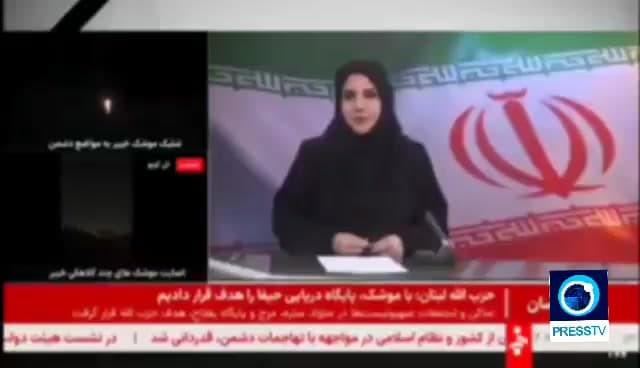
Israeli Airstrike Hits Tehran Residential Area During Live
Geopolitics · Mar 11, 2026

Fuel Supply Chains: Australia's Stockpile Reality
Energy · Mar 15, 2026

The Info War: Understanding Russia's Role
Geopolitics · Mar 15, 2026

Iran War Disinformation: How AI Deepfakes Fuel Chaos
Geopolitics · Mar 15, 2026

THAAD Interception Rates: Iran Missile Combat Data
Defense & Security · Mar 6, 2026
Latest from The Board

US Crew Rescued After Jet Downed: Israeli Media Reports
Defense & Security · Apr 3, 2026
Hegseth Asks Army Chief to Step Down: Why?
Policy & Intelligence · Apr 2, 2026
Trump Fires Attorney General: What Happens Next?
Policy & Intelligence · Apr 2, 2026
Trump Marriage Comments Draw Macron Criticism
Geopolitics · Apr 2, 2026

Iran's Stance on US-Israeli War: No Negotiations?
Geopolitics · Apr 1, 2026

Trump's Iran War: What's the Exit Strategy?
Geopolitics · Apr 1, 2026

Trump Ukraine Weapons Halt: Iran Strategy?
Geopolitics · Apr 1, 2026

Ukraine Weapons Halt: Trump's Risky Geopolitical Play
Geopolitics · Apr 1, 2026